本文整理了数本Advanced期刊本周(7.5-7.10)发表的电池材料类Early View论文。读者可依据题目和DOI号检索原文获取更多内容。
Advanced Materials
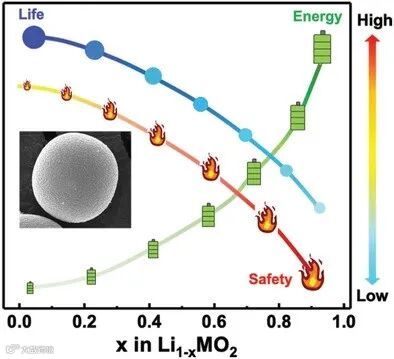
Unveiling the Stabilities of Nickel-Based Layered Oxide Cathodes at an Identical Degree of Delithiation in Lithium-Based Batteries
DOI: 10.1002/adma.202100804
Arumugam Manthiram (The University of Texas at Austin)
and coworkers
Distinctive insights into the stabilities of the LiNi1−x–yMnxCoyO2 (NMC) cathode family on the basis of the degrees of delithiation are reported. It is revealed that NMC cathodes with higher Ni content may suggest better overall stabilities under an identical degree of delithiation, which contrasts with the common belief that NMC cathodes with higher Ni contents have inherently reduced stabilities.
High-Entropy Metal–Organic Frameworks for Highly Reversible Sodium Storage
DOI: 10.1002/adma.202101342
Torsten Brezesinski (Karlsruhe Institute of Technology)
Ben Breitung (Karlsruhe Institute of Technology)
Yuan Ma (Karlsruhe Institute of Technology)
and coworkers
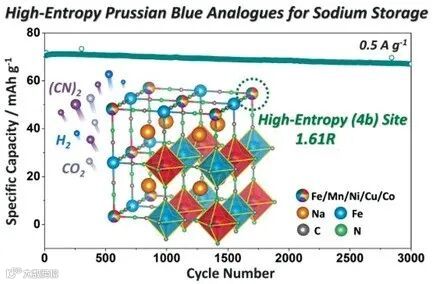
A high-entropy Prussian blue analogue, Nax(FeMnNiCuCo)[Fe(CN)6], is developed as a robust host structure for reversible sodium insertion. Battery cells using the new cathode active material show significantly improved cycling performance and stability, among others due to its nearly zero-strain operation.
Self-Assembly of 0D–2D Heterostructure Electrocatalyst from MOF and MXene for Boosted Lithium Polysulfide Conversion Reaction
DOI: 10.1002/adma.202101204
Renjie Chen(Beijing Institute of Technology)
Li Li (Beijing Institute of Technology)
and coworkers
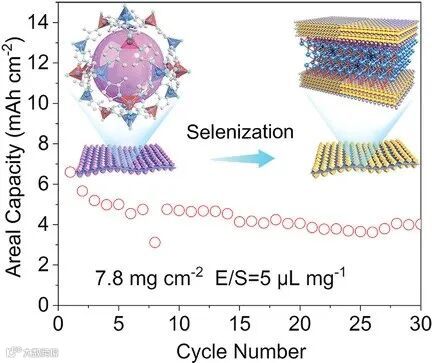
A 0D–2D heterostructure electrocatalyst from metal–organic framework and MXene is proposed as a catalytic cathode for lithium–sulfur batteries. The 0D CoZn-Se and 2D N-MXene co-catalysts form double lithiophilic–sulfiphilic binding sites, promote Li ion diffusion, and reduce the energy barrier of Li2S deposition/dissolution. The catalytic cathode exhibits ultralong cycle life and high area capacity under high sulfur loading and lean electrolyte operation.
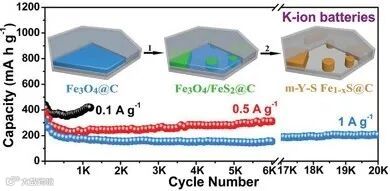
A Partial Sulfuration Strategy Derived Multi-Yolk–Shell Structure for Ultra-Stable K/Na/Li-ion Storage
DOI: 10.1002/adma.202100837
Wei Huang(Northwestern Polytechnical University)
Lunhui Guan (Fujian Institute of Research on the Structure of Matter, CAS)
Yi Zhao (Fujian Normal University)
and coworkers
A partial sulfuration strategy is developed to fabricate multi-yolk–shell structure for overcoming the barriers of high-capacity anodes. Integrating both the merits of yolk–shell structure for good structural stability and the multiple connection points for fast ion/electron transportation, as-designed composite delivers superior rate capability and long-term cyclability for K/Na/Li-ion storage, outperforming most reported yolk–shell structures and metal-sulfide based anodes.
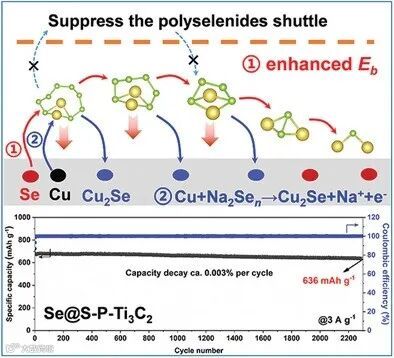
S-Decorated Porous Ti3C2 MXene Combined with In Situ Forming Cu2Se as Effective Shuttling Interrupter in Na─Se Batteries
DOI: 10.1002/adma.202008414
Wei Zhou(Beihang University)
and coworkers
S-decorated porous Ti3C2 MXene is used as effective selenium host, giving high capacity, rate capability, and long lifespan of Na─Se battery. The S-decorated interfaces combined with in situ forming Cu2Se facilitate the immobilization and transformation of polyselenides and thus lead to efficient surface-dominated capacitive behavior.
Advanced Energy Materials
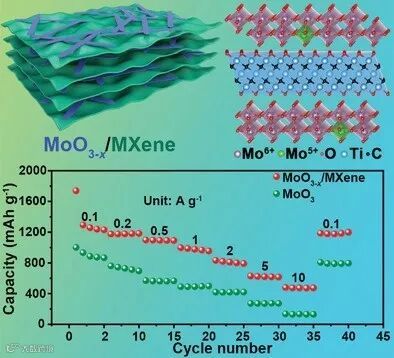
High-Capacity and Kinetically Accelerated Lithium Storage in MoO3 Enabled by Oxygen Vacancies and Heterostructure
DOI: 10.1002/aenm.202101712
Qiang Zhang(Tsinghua University)
Jun Yan (Harbin Engineering University)
Qian Wang (Harbin Engineering University)
and coworkers
Oxygen vacancies-rich MoO3−x/MXene heterostructure is prepared through hydrazine hydrate reduction and electrostatic assembly, which exhibits superior electrochemical lithium-ion storage performances such as ultrahigh discharge capacity (1258 mAh/g at 0.1 A/g) and outstanding rate capability (474 mAh/g at 10 A/g), benefitting from the introduction of oxygen vacancies and MXene nanosheets.
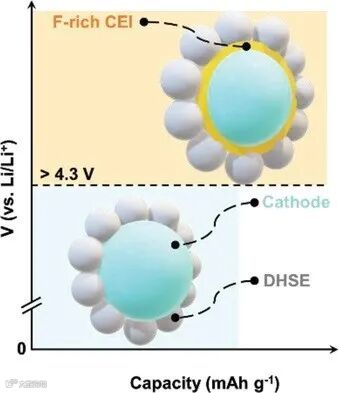
Advanced High-Voltage All-Solid-State Li-Ion Batteries Enabled by a Dual-Halogen Solid Electrolyte
DOI: 10.1002/aenm.202101446
Xueliang Sun (University of Western Ontario)
Yifei Mo (University of Maryland)
Tsun-Kong Sham (University of Western Ontario)
and coworkers
A dual-halogen solid electrolyte Li3InCl4.8F1.2 is developed with excellent electrochemical stability, which is contributed by F-containing interphases. Li3InCl4.8F1.2 exhibits great potential for high-voltage all-solid-state lithium-ion batteries.
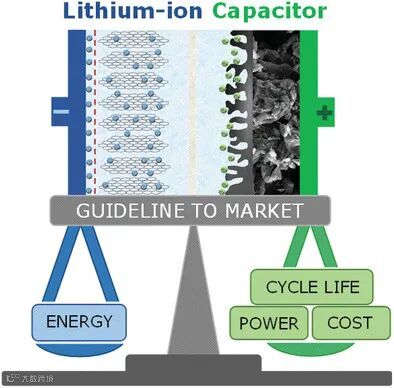
Unraveling the Technology behind the Frontrunner LIC ULTIMO to Serve as a Guideline for Optimum Lithium-Ion Capacitor Design, Assembly, and Characterization
DOI: 10.1002/aenm.202100931
Jon Ajuria (Basque Research and Technology Alliance)
and coworkers
The development of a well-balanced lithium-ion capacitor (LIC) in terms of energy, power, cycle-life, and cost is not trivial at all. In view of the fast-growing research community focusing on the area, this work aims to serve as a guideline for proper LIC design and assembly, as well as for a correct electrochemical characterization and reporting.
Advanced Functional Materials
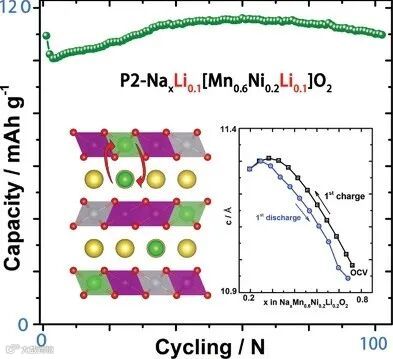
Structural Aspects of P2-Type Na0.67Mn0.6Ni0.2Li0.2O2 (MNL) Stabilization by Lithium Defects as a Cathode Material for Sodium-Ion Batteries
DOI: 10.1002/adfm.202102939
Philipp Adelhelm (Humboldt-University Berlin)
Payam Kaghazchi (Forschungszentrum Jülich GmbH)
and coworkers
The role of Li doping on the performance of Na0.67Mn0.6Ni0.2Li0.2O2 cathode material for Na-ion batteries is investigated by solid-state NMR, Operando X-ray diffraction, and density functional theory. The Li dopant reversibly migrates between transition metal and sodium layers and suppresses structural phase transitions upon de/sodiation.
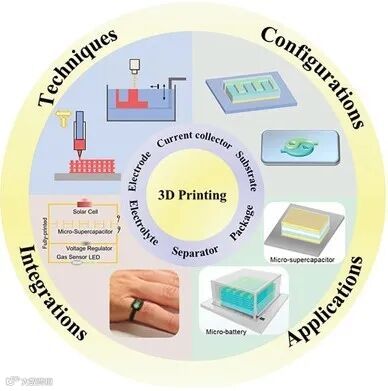
3D Printed Micro-Electrochemical Energy Storage Devices: From Design to Integration
DOI: 10.1002/adfm.202104909
Peng Cao(The University of Auckland)
Guanhua Zhang (Hunan University)
and coworkers
In this review, the applications of 3D printing techniques on different micro electrochemical energy storage devices such as micro-batteries, micro-supercapacitors, and metal ion hybrid micro-supercapacitors are reviewed. The process includes printing components (electrodes, current collectors, substrates, electrolytes, separators, and packages) with arbitrary shapes, fully printed devices with various configurations, and their integration for practical use.
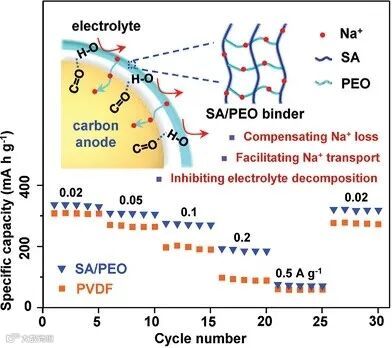
Rational Design of a Trifunctional Binder for Hard Carbon Anodes Showing High Initial Coulombic Efficiency and Superior Rate Capability for Sodium-Ion Batteries
DOI: 10.1002/adfm.202104137
Wen-Cui Li(Dalian University of Technology)
and coworkers
A trifunctional sodium alginate/polyethylene oxide (SA/PEO) binder is proposed for glucose-derived carbon anode, exhibiting excellent sodium storage properties. The initial Coulombic efficiency and capacity of the carbon anode using SA/PEO binder are 10% and 80 mAh g−1 higher than that of poly(vinylidene fluoride) (PVDF) binder, respectively, owing to synergic effects of extra Na+ sources, rich Na+ channels, and stable H-bonds.
N, O-Codoped Carbon Nanosheet Array Enabling Stable Lithium Metal Anode
DOI: 10.1002/adfm.202102354
Xiaolei Wang(University of Alberta)
and coworkers
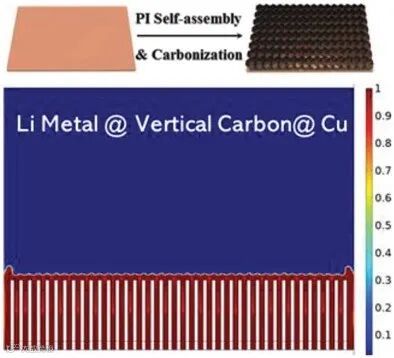
N, O-codoped vertical carbon nanosheet array is constructed on Cu foil (NOCA@Cu) as an efficient Li host through PI self-assembly and subsequent carbonization. Experiments and simulations indicate that 3D NOCA@Cu can confine Li plating in vertical porous channels and homogenize ion concentration and electrical field distributions throughout 3D electrode, leading to uniform Li deposition with high Coulombic efficiency and long cycle life.