Shalgi, R., Soferman, N. & Kraicer, P. F. Gases and electrolytes of human follicular fluid. Journal of Reproduction and Fertility 28, 335-& (1972).
Velazquez, A., Reyes, A., Chargoy, J. & Rosado, A. Amino acid and protein concentrations of human follicular fluid. Fertility and Sterility 28, 96-100 (1977).
Killian, G. J., Chapman, D. A., Kavanaugh, J. F., Deaver, D. R. & Wiggin, H. B. Changes in phospholipids, cholesterol and protein content of oviduct fluid of cows during the oestrous cycle. J Reprod Fertil 86, 419-426 (1989). https://doi.org:10.1530/jrf.0.0860419
Gardner, D. K., Lane, M., Calderon, I. & Leeton, J. Environment of the preimplantation human embryo in vivo: Metabolite analysis of oviduct and uterine fluids and metabolism of cumulus cells. Fertility and Sterility 65, 349-353 (1996). https://doi.org:10.1016/s0015-0282(16)58097-2
Lippes, J., Krasner, J., Alfonso, L. A., Dacalos, E. D. & Lucero, R. Human oviductal fluid proteins. Fertil Steril 36, 623-629 (1981). https://doi.org:10.1016/s0015-0282(16)45861-9
Kermack, A. J. et al. Amino acid composition of human uterine fluid: association with age, lifestyle and gynaecological pathology. Human Reproduction 30, 917-924 (2015). https://doi.org:10.1093/humrep/dev008
Ehrstrom, S., Yu, A. & Rylander, E. Glucose in vaginal secretions before and after oral glucose tolerance testing in women with and without recurrent vulvovaginal candidiasis. Obstetrics and Gynecology 108, 1432-1437 (2006). https://doi.org:10.1097/01.AOG.0000246800.38892.fc
Wagner, G. & Levin, R. J. Electrolytes in vaginal fluid during the menstrual cycle of coitally active and inactive women. Journal of Reproduction and Fertility 60, 17-27 (1980).
Alminana, C. et al. Isolation and Characterization of Equine Uterine Extracellular Vesicles: A Comparative Methodological Study. International Journal of Molecular Sciences 22 (2021). https://doi.org:10.3390/ijms22020979
Asaadi, A. et al. Extracellular Vesicles from Follicular and Ampullary Fluid Isolated by Density Gradient Ultracentrifugation Improve Bovine Embryo Development and Quality. International Journal of Molecular Sciences 22 (2021). https://doi.org:10.3390/ijms22020578
Mol, E. A., Goumans, M. J., Doevendans, P. A., Sluijter, J. P. G. & Vader, P. Higher functionality of extracellular vesicles isolated using size-exclusion chromatography compared to ultracentrifugation. Nanomedicine-Nanotechnology Biology and Medicine 13, 2061-2065 (2017). https://doi.org:10.1016/j.nano.2017.03.011
Théry, C. et al. Minimal information for studies of extracellular vesicles 2018 (MISEV2018): a position statement of the International Society for Extracellular Vesicles and update of the MISEV2014 guidelines. Journal of Extracellular Vesicles 8, 1535750 (2019). https://doi.org:10.1080/20013078.2018.1535750
Navakanitworakul, R. et al. Characterization and Small RNA Content of Extracellular Vesicles in Follicular Fluid of Developing Bovine Antral Follicles. Scientific Reports 6 (2016). https://doi.org:10.1038/srep25486
Hung, W. T. et al. Stage-specific follicular extracellular vesicle uptake and regulation of bovine granulosa cell proliferation. Biology of Reproduction 97, 644-655 (2017). https://doi.org:10.1093/biolre/iox106
Sohel, M. M. H. et al. Exosomal and Non-Exosomal Transport of Extra-Cellular microRNAs in Follicular Fluid: Implications for Bovine Oocyte Developmental Competence. Plos One 8, 16 (2013). https://doi.org:10.1371/journal.pone.0078505
Ferraz, M. et al. Follicular extracellular vesicles enhance meiotic resumption of domestic cat vitrified oocytes. Scientific Reports 10 (2020). https://doi.org:10.1038/s41598-020-65497-w
Gatien, J. et al. Metabolomic Profile of Oviductal Extracellular Vesicles across the Estrous Cycle in Cattle. International Journal of Molecular Sciences 20 (2019). https://doi.org:10.3390/ijms20246339
Alminana, C. et al. Deciphering the oviductal extracellular vesicles content across the estrous cycle: implications for the gametes-oviduct interactions and the environment of the potential embryo. Bmc Genomics 19 (2018). https://doi.org:10.1186/s12864-018-4982-5
Lopera-Vasquez, R. et al. Extracellular Vesicles from BOEC in In Vitro Embryo Development and Quality. Plos One 11 (2016). https://doi.org:10.1371/journal.pone.0148083
Qu, P. X. et al. Extracellular vesicles derived from donor oviduct fluid improved birth rates after embryo transfer in mice. Reproduction Fertility and Development 31, 324-332 (2019). https://doi.org:10.1071/rd18203
Qu, P. X. et al. Extracellular vesicles and melatonin benefit embryonic develop by regulating reactive oxygen species and 5-methylcytosine. Journal of Pineal Research 68 (2020). https://doi.org:10.1111/jpi.12635
Alminana, C. et al. Oviduct extracellular vesicles protein content and their role during oviduct-embryo cross-talk. Reproduction 154, 253-268 (2017). https://doi.org:10.1530/rep-17-0054
Franchi, A., Moreno-Irusta, A., Dominguez, E. M., Adre, A. J. & Giojalas, L. C. Extracellular vesicles from oviductal isthmus and ampulla stimulate the induced acrosome reaction and signaling events associated with capacitation in bovine spermatozoa. Journal of Cellular Biochemistry 121, 2877-2888 (2020). https://doi.org:10.1002/jcb.29522
Ferraz, M., Nagashima, J. B., Noonan, M. J., Crosier, A. E. & Songsasen, N. Oviductal Extracellular Vesicles Improve Post-Thaw Sperm Function in Red Wolves and Cheetahs. International Journal of Molecular Sciences 21 (2020). https://doi.org:10.3390/ijms21103733
Ferraz, M., Carothers, A., Dahal, R., Noonan, M. J. & Songsasen, N. Oviductal extracellular vesicles interact with the spermatozoon's head and mid-piece and improves its motility and fertilizing ability in the domestic cat. Scientific Reports 9 (2019). https://doi.org:10.1038/s41598-019-45857-x
Alcantara-Neto, A. S. et al. Porcine oviductal extracellular vesicles interact with gametes and regulate sperm motility and survival. Theriogenology 155, 240-255 (2020). https://doi.org:10.1016/j.theriogenology.2020.05.043
Tinning, H. et al. The role of CAPG in molecular communication between the embryo and the uterine endometrium: Is its function conserved in species with different implantation strategies? Faseb Journal 34, 11015-11029 (2020). https://doi.org:10.1096/fj.202000882RR
Nakamura, K. et al. Induction of IFNT-Stimulated Genes by Conceptus-Derived Exosomes during the Attachment Period. Plos One 11 (2016). https://doi.org:10.1371/journal.pone.0158278
Qiao, F. et al. Bovine uterus-derived exosomes improve developmental competence of somatic cell nuclear transfer embryos. Theriogenology 114, 199-205 (2018). https://doi.org:10.1016/j.theriogenology.2018.03.027
Wang, X. G. et al. Exosome-derived uterine microRNAs isolated from cows with endometritis impede blastocyst development. Reproductive Biology 19, 204-209 (2019). https://doi.org:10.1016/j.repbio.2019.06.003
Kusama, K. et al. Intrauterine exosomes are required for bovine conceptus implantation. Biochemical and Biophysical Research Communications 495, 1370-1375 (2018). https://doi.org:10.1016/j.bbrc.2017.11.176
Ruiz-Gonzalez, I. et al. Exosomes, endogenous retroviruses and toll-like receptors: pregnancy recognition in ewes. Reproduction 149, 281-291 (2015). https://doi.org:10.1530/rep-14-0538
Hua, R. W. et al. Small RNA-seq analysis of extracellular vesicles from porcine uterine flushing fluids during peri-implantation. Gene 766 (2021). https://doi.org:10.1016/j.gene.2020.145117
Giacomini, E. et al. Global transcriptomic changes occur in uterine fluid-derived extracellular vesicles during the endometrial window for embryo implantation. Human Reproduction 36, 2249-2274 (2021). https://doi.org:10.1093/humrep/deab123
Arruda, M. S., Petta, C. A., Abrao, M. S. & Benetti-Pinto, C. L. Time elapsed from onset of symptoms to diagnosis of endometriosis in a cohort study of Brazilian women. Human Reproduction 18, 756-759 (2003). https://doi.org:10.1093/humrep/deg136
Muth, D. C. et al. Potential role of cervicovaginal extracellular particles in diagnosis of endometriosis. Bmc Veterinary Research 11 (2015). https://doi.org:10.1186/s12917-015-0513-7
Liu, J. et al. Increased Exosomal MicroRNA-21 and MicroRNA-146a Levels in the Cervicovaginal Lavage Specimens of Patients with Cervical Cancer. International Journal of Molecular Sciences 15, 758-773 (2014). https://doi.org:10.3390/ijms15010758
Wu, Y. et al. Changes of miRNA Expression Profiles from Cervical-Vaginal Fluid-Derived Exosomes in Response to HPV16 Infection. Biomed Research International 2020 (2020). https://doi.org:10.1155/2020/7046894
Zhao, Z. Z. et al. miRNA profiling of primate cervicovaginal lavage and extracellular vesicles reveals miR-186-5p as a potential antiretroviral factor in macrophages. Febs Open Bio 10, 2021-2039 (2020). https://doi.org:10.1002/2211-5463.12952
Smith, J. A. & Daniel, R. Human vaginal fluid contains exosomes that have an inhibitory effect on an early step of the HIV-1 life cycle. Aids 30, 2611-2616 (2016). https://doi.org:10.1097/qad.0000000000001236



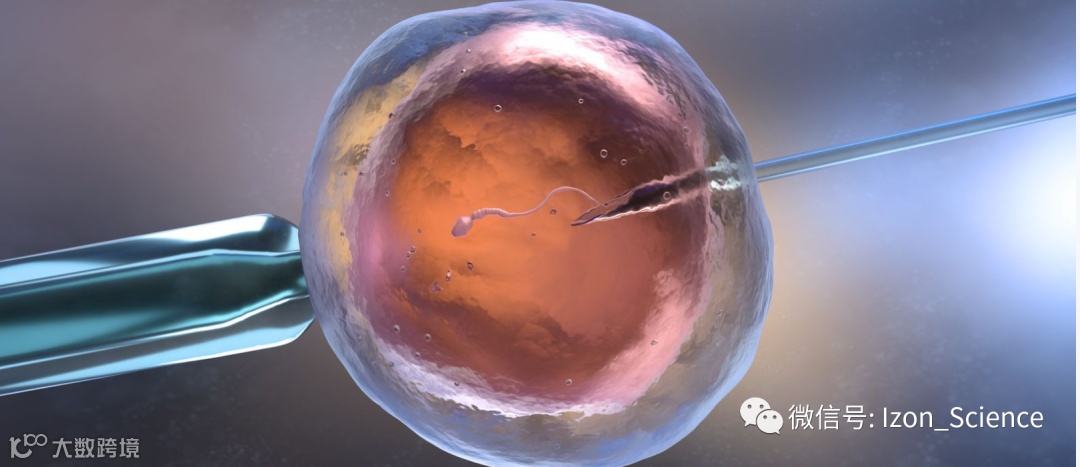 简介:无论是在辅助生殖学,病毒学或其他学科上,内生殖道是细胞外囊泡的潜在宝库。在本文中,我们将讨论内生殖道中细胞外囊泡的分离纯化和应用。
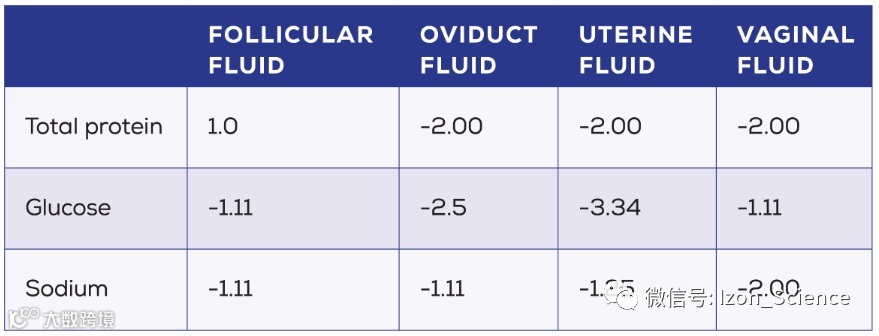 表1. 人类生殖道液体的成分比较。数值表示与血浆相比,每种生物液体的近似倍数变化。改编自[1-8]。