169. Don't let yesterday use up too much of today. 别留念昨天了,把握好今天吧。(Will Rogers) 170. If you are not brave enough, no one will back you up. 你不勇敢,没人替你坚强。171. If you don't build your dream, someone will hire you to build theirs. 如果你没有梦想,那么你只能为别人的梦想打工。172. Beauty is all around, if you just open your heart to see. 只要你给自己机会,你会发现你的世界可以很美丽。173. The difference in winning and losing is most often...not quitting. 赢与输的差别通常是--不放弃。(华特·迪士尼) 174. I am ordinary yet unique. 我很平凡,但我独一无二。175. I like people who make me laugh in spite of myself. 我喜欢那些让我笑起来的人,就算是我不想笑的时候。176. Image a new story for your life and start living it. 为你的生命想一个全新剧本,并去倾情出演吧!177. I'd rather be a happy fool than a sad sage. 做个悲伤的智者,不如做个开心的傻子。178. The future belongs to those who believe in the beauty of their dreams. 未来属于那些相信梦想之美的人。(埃莉诺·罗斯福) 179. Even if you get no applause, you should accept a curtain call gracefully and appreciate your own efforts. 即使没有人为你鼓掌,也要优雅的谢幕,感谢自己的认真付出。180. Don't let dream just be your dream. 别让梦想只停留在梦里。181. A day without laughter is a day wasted. 没有笑声的一天是浪费了的一天。(卓别林) 182. Travel and see the world; afterwards, you will be able to put your concerns in perspective. 去旅行吧,见的世面多了,你会发现原来在意的那些结根本算不了什么。183. The key to acquiring proficiency in any task is repetition. 任何事情成功关键都是熟能生巧。《生活大爆炸》 184. You can be happy no matter what. 开心一点吧,管它会怎样。185. A good plan today is better than a perfect plan tomorrow. 今天的好计划胜过明天的完美计划。186. Nothing is impossible, the word itself says 'I'm possible'! 一切皆有可能!“不可能”的意思是:“不,可能。”(奥黛丽·赫本) 187. Life isn't fair, but no matter your circumstances, you have to give it your all. 生活是不公平的,不管你的境遇如何,你只能全力以赴。188. No matter how hard it is, just keep going because you only fail when you give up. 无论多么艰难,都要继续前进,因为只有你放弃的那一刻,你才输了。 When Paul Jobs was mustered out of the Coast Guard after World War II, he made a wager with his crewmates. They had arrived in San Francisco, where their ship was decommissioned, and Paul bet that he would find himself a wife within two weeks. He was a taut, tattooed engine mechanic, six feet tall, with a passing resemblance to James Dean. But it wasn’t his looks that got him a date with Clara Hagopian, a sweet-humored daughter of Armenian immigrants. It was the fact that he and his friends had a car, unlike the group she had originally planned to go out with that evening. Ten days later, in March 1946, Paul got engaged to Clara and won his wager. It would turn out to be a happy marriage, one that lasted until death parted them more than forty years later. Paul Reinhold Jobs had been raised on a dairy farm in Germantown, Wisconsin. Even though his father was an alcoholic and sometimes abusive, Paul ended up with a gentle and calm disposition under his leathery exterior. After dropping out of high school, he wandered through the Midwest picking up work as a mechanic until, at age nineteen, he joined the Coast Guard, even though he didn’t know how to swim. He was deployed on the USS General M. C. Meigs and spent much of the war ferrying troops to Italy for General Patton. His talent as a machinist and fireman earned him commendations, but he occasionally found himself in minor trouble and never rose above the rank of seaman. Clara was born in New Jersey, where her parents had landed after fleeing the Turks in Armenia, and they moved to the Mission District of San Francisco when she was a child. She had a secret that she rarely mentioned to anyone: She had been married before, but her husband had been killed in the war. So when she met Paul Jobs on that first date, she was primed to start a new life. Clara, however, loved San Francisco, and in 1952 she convinced her husband to move back there. They got an apartment in the Sunset District facing the Pacific, just south of Golden Gate Park, and he took a job working for a finance company as a “repo man,” picking the locks of cars whose owners hadn’t paid their loans and repossessing them. He also bought, repaired, and sold some of the cars, making a decent enough living in the process. There was, however, something missing in their lives. They wanted children, but Clara had suffered an ectopic pregnancy, in which the fertilized egg was implanted in a fallopian tube rather than the uterus, and she had been unable to have any. So by 1955, after nine years of marriage, they were looking to adopt a child. Like Paul Jobs, Joanne Schieble was from a rural Wisconsin family of German heritage. Her father, Arthur Schieble, had immigrated to the outskirts of Green Bay, where he and his wife owned a mink farm and dabbled successfully in various other businesses, including real estate and photoengraving. He was very strict, especially regarding his daughter’s relationships, and he had strongly disapproved of her first love, an artist who was not a Catholic. Thus it was no surprise that he threatened to cut Joanne off completely when, as a graduate student at the University of Wisconsin, she fell in love with Abdulfattah “John” Jandali, a Muslim teaching assistant from Syria. Jandali was the youngest of nine children in a prominent Syrian family. His fat星,使地球处于一个椭圆轨道中运行,并且与太阳保持适当距离,适宜生命繁衍。当土星轨道倾斜20度将使地球轨道比金星轨道更接近太阳,同时,这将导致火星完全离开太阳系。[52] 土星是已知唯一密度小于水的行星,假如能够将土星放入一个巨大的浴池之中,它将可以漂浮起来。土星有一个巨大的磁气圈和一个狂风肆虐的大气层,赤道附近的风速可达1800千米/时。在环绕土星运行的31颗卫星中间,土卫六是最大的一颗,比水星和月球还大,也是太阳系中唯一拥有浓厚大气层的卫星。[53] 天王星是离太阳第七颗行星,51118km。体积约为地球的65倍,在九大行星中仅次于木星和土星。天王星的大气层中83%是氢,15%为氦,2%为甲烷以及少量的乙炔和碳氢化合物。上层大气层的甲烷吸收红光,使天王星呈现蓝绿色。大气在固定纬度集结成云层,类似于木星和土星在纬线上鲜艳的条状色带。天王星云层的平均温度为零下193摄氏度。质量为8.6810±13×10²⁵kg,相当于地球质量的14.63倍。密度较学联合会大会24日投票决定,不再将传统九大行星之一的冥王星视为行星,而将其列入“矮行星”。大会通过的决议规定,“行星”指的是围绕太阳运转、自身引力足以克服其刚体力而使天体呈圆球状、能够清除其轨道附近其他物体的天体。在太阳系传统的“九大行星”中,只有水星、金星、地球、火星、木星、土星、天王星和海王星符合这些要求。冥王星由于其轨道与海王星的轨道相交,不符合新的行星定义,因此被自动降级为“矮行星”。[59] 冥王星的表面温度大概在-238到-228℃之间。冥王星的成份由70%岩石和30%冰水混合而成的。地表上光亮的部分可能覆盖着一些固体氮以及少量 卫星拍月球经过地球,可见清晰月球背面 卫星拍月球经过地球,可见清晰月球背面 [60] 的固体甲烷和一氧化碳,冥王星表面的黑暗部分可能是一些基本的有机物质或是由宇宙射线引发的光化学反应。冥王星的大气层主要由氮和少量的一氧化碳及甲烷组成。大气极其稀薄,地面压强只有少量微帕。[61] 地球是离太阳第三颗行星,是我们人类的家乡,尽管地球是太阳系中一颗普通的行星,但它在许多方面都是独一无二的。比如,它是太阳系中唯一一颗面积大部分被水覆盖的行星,也是目前所知唯一一颗有生命存在的星球。质量M=5.9742 ×10^24 公斤,表面温度:t = - 30 ~ +45。[62] 英国科研人员在《天体生物学》杂志上报告说,如果没有小行星撞击等可能剧烈改变环境的事件发生,地球适宜人类居住的时间还剩约17.5亿年,不过人为造成的气候变化可能缩短这一时间。[63] 彗星是由灰尘和冰块组成的太阳系中的一类小天体,绕日运动。[64] 科学家使用探测器对彗星的化学遗留物进行分析,发现其主要成份为氨、甲烷、硫化氢、氰化氢和甲醛。科学家得出结论称,彗星的气味闻起来像是臭鸡蛋、马尿、酒精和苦杏仁的气味综合。[65-66] “67P/楚留莫夫-格拉希门克”彗星 “67P/楚留莫夫-格拉希门克”彗星 [67] 在太阳系的周围还包裹着一个庞大的“奥尔特云”。星云内分布着不计其数的冰块、雪团和碎石。其中的某些会受太阳引力影响飞入内太阳系,这学说,在原有的轨道(或称小天体轨道)上又增加了更多的天体运行轨道。这一模式称每颗行星都沿着一个小轨道作圆周运行,而小轨道又沿着该行星的大轨道绕地球作圆周运动。几百年之后,这一模式的漏洞越来越明显。科学家们又在这个模式上增加了许多轨道,行星就这样沿着一道又一道的轨道作圆周运动。哥白尼想用“现代”(16世纪的)技术来改进托勒密的测量结果,以期取消一些小轨道。在长达近20年的时间里,哥白尼不辞辛劳日夜测量行星的位置,但其测量获得的结果仍然与托勒密的天体运行模式没有多少差别。哥白尼想知道在另一个运行着的行星上观察这些行星的运行情况会是什么样的。基于这种设想,哥白尼萌发了一个念头:假如地球在运行中,那么这些行星的运行看上去会是什么情况呢?这一设想在他脑海里变得清晰起来了。一年里,哥白尼在不同的时间、不同的距离从地球上观察行星,每一个行星的情况都不相同,这是他意识到地球不可能位于星星轨道的中心。经过20年的观测,哥白尼发现唯独太阳的周年变化不明显。这意味着地球和太阳的距离始终没有改变。如果地球不是宇宙的中心,那么宇宙的中心就是太阳。的发现才使牛顿有能力确定运动定律和万有引力定律。哥白尼的日心宇宙体系既然是时代的产物,它就不能不受到时代的限制。反对神学的不彻底性,同时表现在哥白尼的某些观点上,他的体系是存在缺陷的。哥白尼所指的宇宙是局限在一个小的范围内的,具体来说,他的宇宙结构就是今天我们所熟知的太阳系,即以太阳为中心的天体系统。宇宙既然有它的中心,就必须有它的边界,哥白尼虽然否定了托勒玫的“九重天”,但他却保留了一层恒星天,尽管他回避了宇宙是否有限这个问题,但实际上他是相信恒星天球是宇宙的“外壳”,他仍然相信天体只能按照所谓完美的圆形轨道运动,所以哥白尼的宇宙体系,仍然包含着不动的中心天体。但是作为近代自然科学的奠基人,哥白尼的历史功绩是伟大的。确认地球不是宇宙的中心,而是行星之一,从而掀起了一场天文学上根本性的革命,是人类探求客观真理道路上的里程碑。哥白尼的伟大成就,不仅铺平了通向近代天文学的道路,而且开创了整个自然界科学向前迈进的新时代。从哥白尼时代起,脱离教会束缚的自然科学和哲学开始获得飞跃的发展。哥白尼的科学成就,是他所处时代的产物,又转过来推动了时代的发展。顺应时代变化 十五、六世纪的欧洲,正是从封建社会向资本主义社会转变的关键时期,在这一二百年间,社会发生了巨大的变化。14世纪ndali soon after. She held out hope, she would later tell family members, sometimes tearing up at the memory, that once they were married, she could get their 别让梦想只停留在梦里。181. A day without laughter is a day wasted. 没有笑声的一天是浪费了的一天。(卓别林) 182. Travel and see the world; afterwards, you will be able to put your concerns in perspective. 去旅行吧,见的世面多了,你会发现原来在意的那些结根本算不了什么。183. The key to acquiring proficiency in any task is repetition. 任何事情成功关键都是熟能生巧。《生活大爆炸》 184. You can be happy no matter what. 开心一点吧,管它会怎样。baby boy back. Arthur Schieble died in August 1955, after the adoption was finalized. Just after Christmas that year, Joanne and Abdulfattah were married in St. Philip the Apostle Catholic Church in Green Bay. He got his PhD in international politics the next year, and then they had another child, a girl named Mona. After she and Jandali divorced in 1962, Joanne embarked on a dreamy and peripatetic life that her daughter, who grew up to become the acclaimed novelist Mona Simpson, would capture in her book Anywhere but Here. Because Steve’s adoption had been closed, it would be twenty years before they would all find each other. Steve Jobs knew from an early age that he was adopted. “My parents were very open with me about that,” he recalled. He had a vivid memory of sitting on the lawn of his house, when he was six or seven years old, telling the girl who lived across the street. “So does that mean your real parents didn’t want you?” the girl asked. “Lightning bolts went off in my head,” according to Jobs. “I remember running into the house, crying. And my parents said, ‘No, you have to understand.’ They were very serious and looked me straight in the eye. They said, ‘We specifically picked you out.’ Both of my parents said that and repeated it slowly for me. And they put an emphasis on every word in that sentence.” Abandoned. Chosen. Special. Those concepts became part of who Jobs was and how he regarded himself. His closest friends think that the knowledge that he was given up at birth left some scars. “I think his desire for complete control of whatever he makes derives directly from his personality and the fact that he was abandoned at birth,” said one longtime colleague, Del Yocam. “He wants to control his environment, and he sees the product as an extension of himself.” Greg Calhoun, who became close to Jobs right after college, saw another effect. “Steve talked to me a lot about being abandoned and the pain that caused,” he said. “It made him independent. He followed the beat of a different drummer, and that came from being in a different world than he was born into.” Later in life, when he was the same age his biological father had been when he abandoned him, Jobs would father and abandon a child of his own. (He eventually took responsibility for her.) Chrisann Brennan, the mother of that child, said that being put up for adoption left Jobs “full of broken glass,” and it helps to explain some of his behavior. “He who is abandoned is an abandoner,” she said. Andy Hertzfeld, who worked with Jobs at Apple in the early 1980s, is among the few who remained close to both Brennan and Jobs. “The key question about Steve is why he can’t control himself at times from being so reflexively cruel and harmful to some people,” he said. “That goes back to being abandoned at birth. The real underlying problem was the theme of abandonment in Steve’s life.” Jobs dismissed this. “There’s some notion that because I was abandoned, I worked very hard so I could do well and make my parents wish they had me back, or some such nonsense, but that’s ridiculous,” he insisted. “Knowing I was adopted may have made me feel more independent, but I have never felt abandoned. I’ve always felt special. My parents made me feel special.” He would later bristle whenever anyone referred to Paul and Clara Jobs as his “adoptive” parents or implied that they were not his “real” parents. “They were my parents 1,000%,” he said. When speaking about his biological parents, on the other hand, he was curt: “They were my sperm and egg bank. That’s not harsh, it’s just the way it was, a sperm bank thing, nothing more.” Silicon Valley The childhood that Paul and Clara Jobs created for their new son was, in many ways, a stereotype of the late 1950s. When Steve was two they adopted a girl they named Patty, and three years later they moved to a tract house in the suburbs. The finance company where Paul worked as a repo man, CIT, had transferred him down to its Palo Alto office, but he could not afford to live there, so they landed in a subdivision in Mountain View, a less expensive town just to the south. There Paul tried to pass along his love of mechanics and cars. “Steve, this is your workbench now,” he said as he marked off a section of the table in their garage. Jobs remembered being impressed by his father’s focus on craftsmanship. “I thought my dad’s sense of design was pretty good,” he said, “because he knew how to build anything. If we needed a cabinet, he would build it. When he built our fence, he gave me a hammer so I could work with him.” Fifty years later the fence still surrounds the back and side yards of the house in Mountain View. As Jobs showed it off to me, he caressed the stockade panels and recalled a lesson that his father implanted deeply in him. It was important, his father said, to craft the backs of cabinets and fences properly, even though they were hidden. “He loved doing things right. He even cared about the look of the parts you couldn’t see.” His father continued to refurbish and resell used cars, and he festooned the garage with pictures of his favorites. He would point out the detailing of the design to his son: the lines, the vents, the chrome, the trim of the seats. After work each day, he would change into his dungarees and retreat to the garage, often with Steve tagging along. “I figured I could get him nailed down with a little mechanical ability, but he really wasn’t interested in getting his hands dirty,” Paul later recalled. “He never really cared too much about m189. It requires hard work to give off an appearance of effortlessness. 你必须十分努力,才能看起来毫不费力。190. Life is like riding a bicycle.To keep your balance,you must keep moving. 人生就像骑单车,只有不断前进,才能保持平衡。(爱因斯坦) 191. Be thankful for what you have.You'll end up having more. 拥有一颗感恩的心,最终你会得到更多。192. Beauty is how you feel inside, and it reflects in your eyes. 美是一种内心的感觉,并反映在你的眼睛里。(索菲亚·罗兰) 193. Friendship doubles your joys, and divides your sorrows. 朋友的作用,就是让你快乐加倍,痛苦减半。194. When you long for something sincerely, the whole world will help you. 当你真心渴望某样东西时,整个宇宙都会来帮忙。echanical things.” “I wasn’t that into fixing cars,” Jobs admitted. “But I was eager to hang out with my dad.” Even as he was growing more aware that he had been adopted, he was becoming more attached to his father. One day when he was about eight, he discovered a photograph of his father from his time in the Coast Guard. “He’s in the engine room, and he’s got his shirt off and looks like James Dean. It was one of those Oh wow moments for a kid. Wow, oooh, my parents were actually once very young and really good-looking.” Through cars, his father gave Steve his first exposure to electronics. “My dad did not have a deep understanding of electronics, but he’d encountered it a lot in automobiles and other things he would fix. He showed me the rudiments of electronics, and I got very interested in that.” Even more interesting were the trips to scavenge for parts. “Every weekend, there’d be a junkyard trip. We’d be looking for a generator, a carburetor, all sorts of components.” He remembered watching his father negotiate at the counter. “He was a good bargainer, because he knew better than the guys at the counter what the parts should cost.” This helped fulfill the pledge his parents made when he was adopted. “My college fund came from my dad paying $50 for a Ford Falcon or some other beat-up car that didn’t run, working on it for a few weeks, and selling it for $250—and not telling the IRS.” The Jobses’ house and the others in their neighborhood were built by the real estate developer Joseph Eichler, whose company spawned more than eleven thousand homes in various California subdivisions between 1950 and 1974. Inspired by Frank Lloyd Wright’s vision of simple modern homes for the American “everyman,” Eichler built inexpensive houses that featured floor-to-ceiling glass walls, open floor plans, exposed post-and-beam construction, concrete slab floors, and lots of sliding glass doors. “Eichler did a great thing,” Jobs said on one of our walks around the neighborhood. “His houses were smart and cheap and good. They brought clean design and simple taste to lower-income people. They had awesome little features, like radiant heating in the floors. You put carpet on them, and we had nice toasty floors when we were kids.” Jobs said that his appreciation for Eichler homes instilled in him a passion for making nicely designed products for the mass market. “I love it when you can bring really great design and simple capability to something that doesn’t cost much,” he said as he pointed out the clean elegance of the houses. “It was the original vision for Apple. That’s what we tried to do with the first Mac. That’s what we did with the iPod.” Across the street from the Jobs family lived a man who had become successful as a real estate agent. “He wasn’t that bright,” Jobs recalled, “but he seemed to be making a fortune. So my dad thought, ‘I can do that.’ He worked so hard, I remember. He took these night classes, passed the license test, and got into real estate. Then the bottom fell out of the market.” As a result, the family found itself financially strapped for a year or so while Steve was in elementary school. His mother took a job as a bookkeeper for Varian Associates, a company that made scientific instruments, and they took out a second mortgage. One day his fourth-grade teacher asked him, “What is it you don’t understand about the universe?” Jobs replied, “I don’t understand why all of a sudden my dad is so broke.” He was proud that his father never adopted a servile attitude or slick style that may have made him a better salesman. “You had to suck up to people to sell real estate, and he wasn’t good at that and it wasn’t in his nature. I admired him for that.” Paul Jobs went back to being a mechanic. His father was calm and gentle, traits that his son later praised more than emulated. He was also resolute. Jobs described one exampl What made the neighborhood different from the thousands of other spindly-tree subdivisions across America was that even the ne’er-do-wells tended to be engineers. “When we moved here, there were apricot and plum orchards on all of these corners,” Jobs recalled. “But it was beginning to boom because of military investment.” He soaked up the history of the valley and developed a yearning to play his own role. Edwin Land of Polaroid later told him about being asked by Eisenhower to help build the U-2 spy plane cameras to see how real the Soviet threat was. The film was dropped in canisters and returned to the NASA Ames Research Center in Sunnyvale, not far from where Jobs lived. “The first computer terminal I ever saw was when my dad brought me to the Ames Center,” he said. “I fell totally in love with it.” Other defense contractors sprouted nearby during the 1950s. The Lockheed Missiles and Space Division, which built submarine-launched ballistic missiles, was founded in 1956 next to the NASA Center; by the time Jobs moved to the area four years later, it employed twenty thousand people. A few hundred yards away, Westinghouse built facilities that produced tubes and electrical transformers for the missile systems. “You had all these military companies on the cutting edge,” he recalled. “It was mysterious and high-tech and made living here very exciting.” In the wake of the defense industries there arose a booming economy based on technology. Its roots stretched back to 1938, when David Packard and his new wife moved into a house in Palo Alto that had a shed where his friend Bill Hewlett was soon ensconced. The house had a garage—an appendage that would prove both useful and iconic in the valley—in which they tinkered around until they had their first product, an audio oscillator. By the 1950s, Hewlett-Packard was a fast-growing company making technical instruments. Fortunately there was a place nearby for entrepreneurs who had outgrown their garages. In a move that would help transform the area into the cradle of the tech revolution, Stanford University’s dean of engineering, Frederick Terman, created a seven-hundred-acre industrial park on university land for private companies that could commercialize the ideas of his students. Its first tenant was Varian Associates, where Clara Jobs worked. “Terman came up with this great idea that did more than anything to cause the tech industry to grow up here,” Jobs said. By the time Jobs was ten, HP had nine thousand employees and was the blue-chip company where every engineer seeking financial stability wanted to work. The most important technology for the region’s growth was, of course, the semiconductor. William Shockley, who had been one of the inventors of the transistor at Bell Labs in New Jersey, moved out to Mountain View and, in 1956, started a company to build transistors using silicon rather than the more expensive germanium that was then commonly used. But Shockley became increasingly erratic and abandoned his silicon transistor project, which led eight of his engineers—most notably Robert Noyce and Gordon Moore—to break away to form Fairchild Semiconductor. That company grew to twelve thousand employees, but it fragmented in 1968, when Noyce lost a power struggle to become CEO. He took Gordon Moore and founded a company that they called Integrated Electronics Corporation, which they soon smartly abbreviated to Intel. Their third employee was Andrew Grove, who later would grow the company by shifting its focus from memory chips to microprocessors. Within a few years there would be more than fifty companies in the area making semiconductors. The exponential growth of this industry was correlated with the phenomenon famously discovered by Moore, who in 1965 drew a graph of the speed of integrated circuits, based on the number of transistors that could be placed on a chip, and showed that it doubled about every two years, a trajectory that could be expected to continue. This was reaffirmed in 1971, when Intel was able to etch a complete central processing unit onto one chip, the Intel 4004, tronic amplifier. “So I raced home, and I told my dad that he was wrong.” “No, it needs an amplifier,” his father assured him. When Steve protested otherwise, his father said he was crazy. “It can’t work without an amplifier. There’s some trick.” “I kept saying no to my dad, telling him he had to see it, and finally he actually walked down with me and saw it. And he said, ‘Well I’ll be a bat out of hell.’” Jobs recalled the incident vividly because it was his first realization that his father did not know everything. Then a more disconcerting discovery began to dawn on him: He was smarter than his parents. He had always admired his father’s competence and savvy. “He was not an educated man, but I had always thought he was pretty damn smart. He didn’t read much, but he could do a lot. Almost everything mechanical, he could figure it out.” Yet the carbon microphone incident, Jobs said, began a jarring process of realizing that he was in fact more clever and quick than his parents. “It was a very big moment that’s burned into my mind. When I realized that I was smarter than my parents, I felt tremendous shame for having thought that. I will never forget that moment.” This discovery, he later told friends, along with the fact that he was adopted, made him feel apart—detached and separate—from both his family and the world. Another layer of awareness occurred soon after. Not only did he discover that he was brighter than his parents, but he discovered that they knew this. Paul and Clara Jobs were loving parents, and they were willing to adapt their lives to suit a son who was very smart—and also willful. They would go to great lengths to accommodate him. And soon Steve discovered this fact as well. “Both my parents got me. They felt a lot of responsibility once they sensed that I was special. They found ways to keep feeding me stuff and putting me in better schools. They were willing to defer to my needs.” So he grew up not only with a sense of having once been abandoned, but also with a sense that he was special. In his own mind, that was more important in the formation of his personality. School Even before Jobs started elementary school, his mother had taught him how to read. This, however, led to some problems once he got to school. “I was kind of bored for the first few years




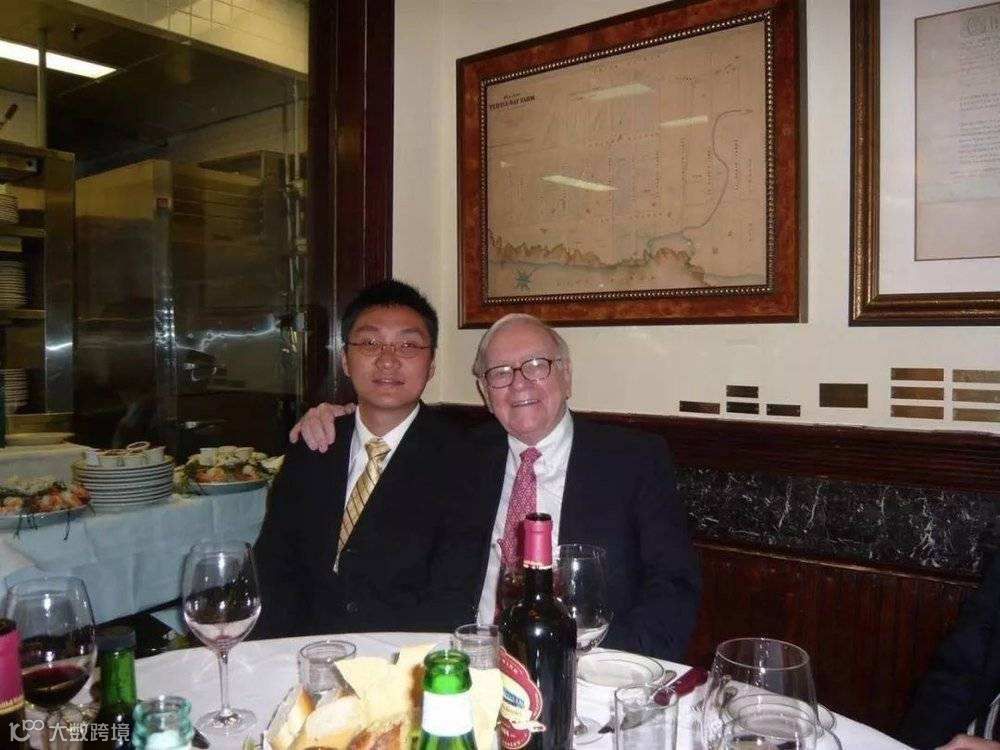 黄峥和巴菲特