


关于昆士兰大学的牧场山羊蛋白质营养补充的研发实验项目!
该项目的目标是发展对一系列补充剂的响应关系,生产者可以使用这些补充剂来增加牧场全雄山羊的活重。
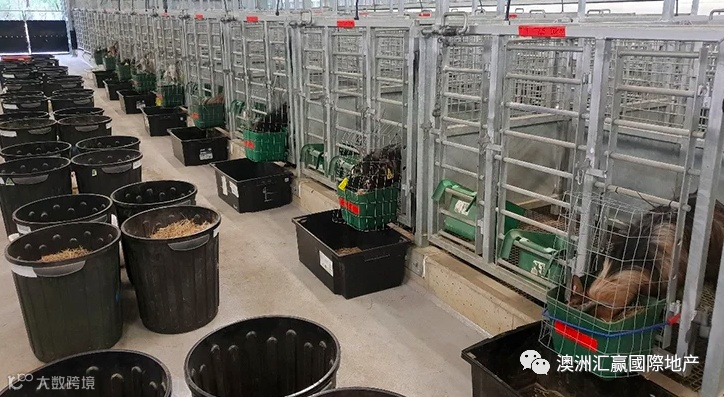
该项目在开始进行一系列补充试验之前,初步完成了对牧场山羊营养需求的审查。该项目目前已经完成了两项实验,实验对象是活重16 - 20公斤的全雄性牧场山羊,这些山羊来自昆士兰州迪兰班迪区的“Buffel Park”和“Bullindgie”站点。
在实验中,山羊被关在单独的羊圈里,在11周的时间里测量了它们的体重增加情况。两项试验均在日长增加的时段进行,以避免光周期下降对采食量的影响。
结果到目前为止
第一个实验于2019年完成,确定了山羊对不断增加的各种补充剂的反应;以植物为基础的蛋白粉,苜蓿,尿素或全棉籽,作为膳食氮的来源
第二项实验于2020年完成,确定了山羊对不断增加的卷小麦、卷高粱或苜蓿颗粒的反应。
在两个实验中,未补充饲料的山羊被喂食米切尔干草(4%粗蛋白,40%消化率),这些干草基本上维持了山羊的活重。
试验1中蛋白质补充剂摄入最高的山羊比未补充的山羊增重约50-60g /d,而试验2中高粱和小麦补充剂摄入最高的山羊比未补充的山羊增重约70-90g /d。
在两次试验的最后,山羊都被随意喂食了商业上可获得的颗粒,记录的平均生长速度为150-200克/天。来自这些实验的样本和数据分析目前正在进行中。
增加体重增加的潜力
实验表明,放牧山羊对补充剂的摄入量和活重反应存在很大差异,而且在吃低质量的基础日粮时,确实存在显著增加这类山羊活重的潜力。
在本项目内进行的其余实验将确定牧场全雄山羊幼羊补品的最佳粗蛋白含量。未来需要验证这些反应和放牧条件下不同摄食策略的经济性。
实验中产生的反应数据将被用于开发一个简单的补充剂成本计算器,以帮助生产者确定各种补充剂的相对成本,以实现牧场雄性年轻全羊的目标活体重增加。
该项目的全部结果和成本补充计算器预计将在2021年底向生产商提供。
英文全文如下:
The University of Queensland to undertake the research and development project, led by Simon Quigley.
The objective of the project is to develop response relationships to a range of supplements which may be used by producers to increase live weight gain of young entire male rangeland goats.
The project initially completed a review of the nutritional requirements of rangeland goats before commencing a series of supplementation experiments. The project has now completed two experiments with young entire male rangeland goats, 16–20kg live weight, sourced from ‘Buffel Park’ and ‘Bullindgie’ stations in the Dirranbandi district of Queensland.
During the experiments, the goats were maintained in individual pens with intake and live weight gain measured over an 11-week period. Both experiments were conducted during periods of increasing day length to avoid the effects of declining photoperiod on feed intake.
Results to date
The first experiment was completed in 2019 and determined the goats’ response to increasing amounts of various supplements; a plant-based protein meal, lucerne, urea or whole cottonseed, as sources of dietary nitrogen.
The second experiment was completed in 2020 and determined the response of goats to increasing amounts of rolled wheat, rolled sorghum or lucerne pellets.
In both experiments, non-supplemented goats were fed Mitchell grass hay (4% crude protein, 40% digestibility) on which they essentially maintained live weight.
Goats consuming the highest amounts of the protein supplements in experiment 1 gained approximately 50–60g/day above the non-supplemented goats, while goats consuming the highest amounts of the sorghum and wheat supplements in experiment 2 gained approximately 70–90g/day above the non-supplemented goats.
At the end of both experiments, the goats were fed a commercially available pellet ad libitum, with average growth rates of 150–200 g/day recorded. Samples and data analysis from these experiments are currently in progress.
Potential to increase live weight gain
The experiments demonstrate the wide variation in both intake and live weight responses of rangeland goats to supplements and also that potential does exist to significantly increase live weight gain of this class of goat, when grazing a low quality basal diet.
The remaining experiments to be conducted within the project will determine the optimum crude protein content of supplements for young entire male rangeland goats. Validation of these responses and the economics of the different feeding strategies under grazing conditions will be required in the future.
The response data generated in the experiments will be used to develop a simple cost-of-supplement calculator to assist producers determine the relative costs of various supplements to achieve a targeted live weight gain for young entire male rangeland goats.
Full results from the project and the cost-of-supplement calculator is anticipated to be available to producers in late 2021.
文章转发来自:MLA