
大数跨境

季度更新:中国的生猪周期对全球产生影响

季度更新:中国的生猪周期对全球产生影响 益牧堂水禽信息
2021-11-27
2
导读:中国拥有世界上一半的生猪,因此中国对全球生猪价格产生了深远的影响。在非洲猪瘟的危机之后,许多国家争相填补中国

中国拥有世界上一半的生猪,因此中国对全球生猪价格产生了深远的影响。在非洲猪瘟的危机之后,许多国家争相填补中国的空缺——但是现在中国的生猪存栏已经恢复,所以对来自远东的需求下降。生猪市场专家John Strak博士在他的季度更新报告中写道,结果是几乎所有地方的猪肉价格都很低。
今年7月初,我完成了对全球猪肉市场的定期评论,“…图表(全球生猪价格周期图表)表明,转折点不太可能出现在10月之前……值得注意的是中国——如果对该市场的出口大幅下降,可能足以将全球生猪价格的下跌速度拉得和上涨速度一样快。和以往一样,一切似乎都与中国有关。”
现在已是今年的最后一个季度,我们可以看到,中国确实在全球猪和猪肉市场引发了一场震动。全球猪肉价格的转折点就在我们身边,而中国对进口猪肉的需求已经大幅下降。尽管北美欧洲的生猪供应似乎正在萎缩,但由于大量生猪涌入中国市场,中国国内生猪价格暴跌,这可能是全球生猪价格在主要出口国国内市场走弱的原因。
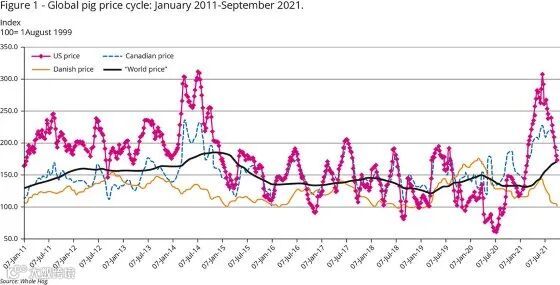
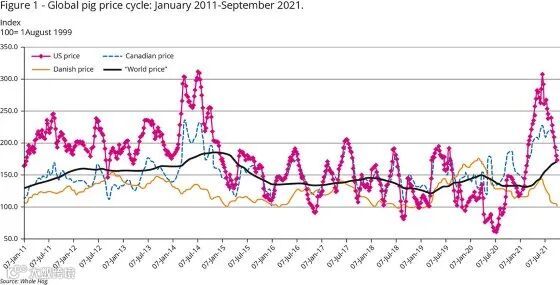
图1说明了这些要点。全球生猪价格指数已放缓上行趋势,即将回落。全球生猪价格指数的周变化率从较高的正百分比上升到仅为正(+0.02%)。下个月,该指数将处于负值区域——我们将进入周期的下行阶段。

中国生猪屠宰的最低点

我在7月份做的另一个预测是,估计中国养猪业何时会达到正常屠宰水平的低点。我认为这将在2021年底发生。
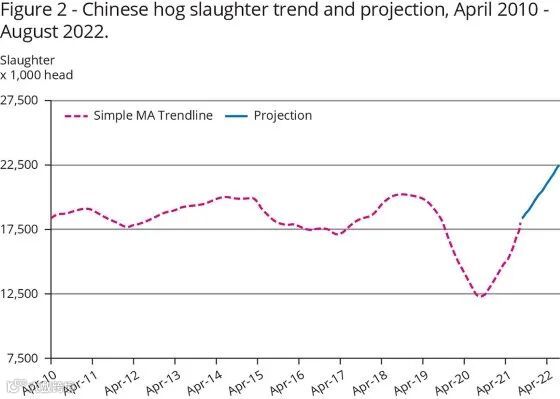
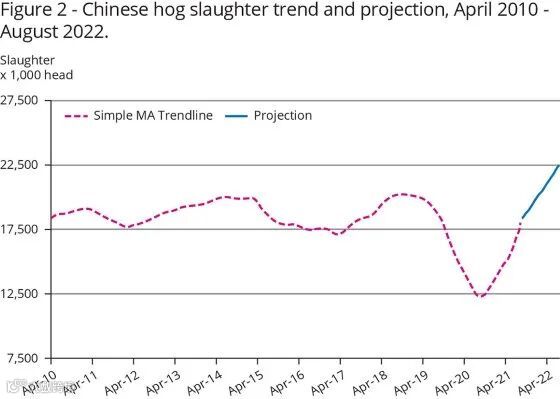
图2显示了中国每月生猪屠宰数据,它表明在屠宰数据中已经达到了屠宰数量范围的低点。屠宰数量激增,不是因为非洲猪瘟(ASF),而是因为饲料和能源价格,尤其是中国对非洲猪瘟供给的反应让所有人感到意外。图2中对2021年12月以后屠宰数据的预测仅做参考——随着生猪价格暴跌,中国将在2021年第4季度出现供应反馈循环:屠宰数量将会回落。

猪价循环之母

实际上,中国养猪业正处于所有生猪价格周期的中间阶段,我们正在实时地看到繁荣和萧条的过程。
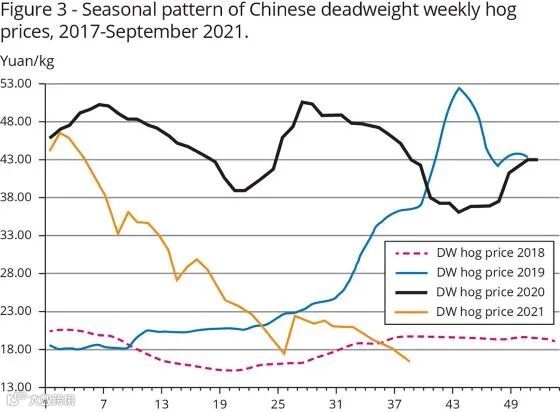
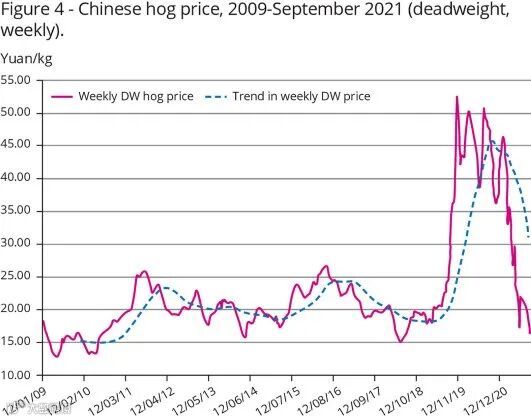
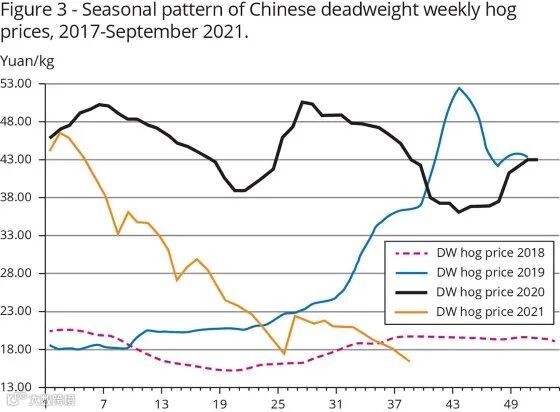
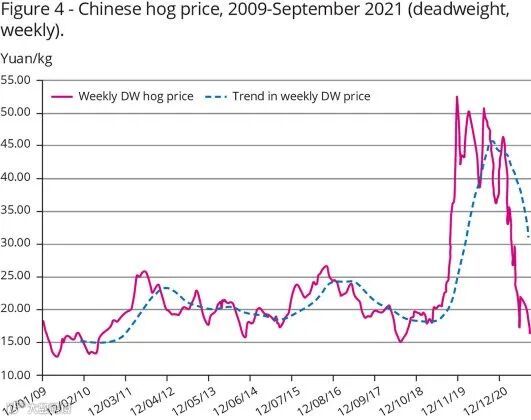
图3和图4说明了中国每周猪价的变化情况。在中国,猪肉价值链上的生产商和投资者遭受了严重的损失。无论这些参与者是大是小,情况都是如此。较大的商业单位将更有能力应对财务损失,但它们仍将受到沉重打击。这些大型企业往往是具有更广泛商业利益的大型企业集团的一部分,这可能会对波及到其他行业或部门——尤其是在地方和区域中。
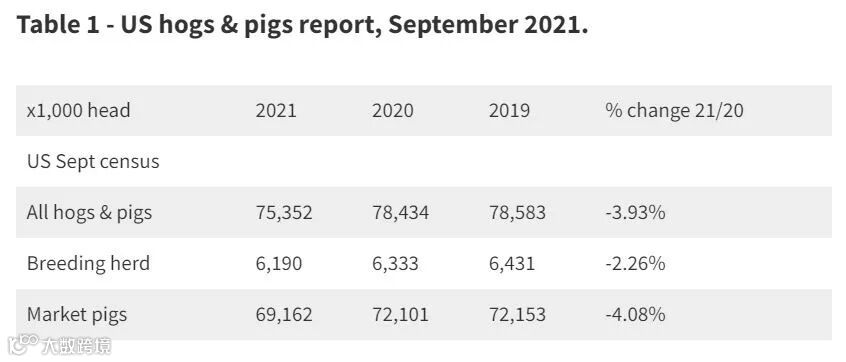
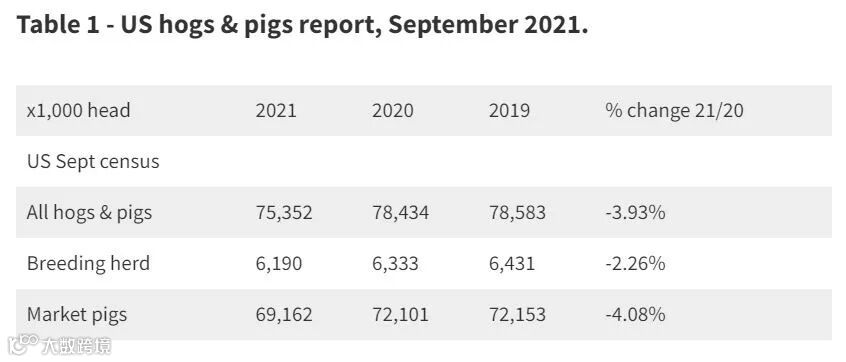
表1显示了2021年第2季度和第3季度美国农民对价格下跌的反应。根据9月份的普查,美国的繁殖种群减少了2%以上。(同样,欧盟的种猪群在2021年6月减少了约1.5%。)

美国生猪价格

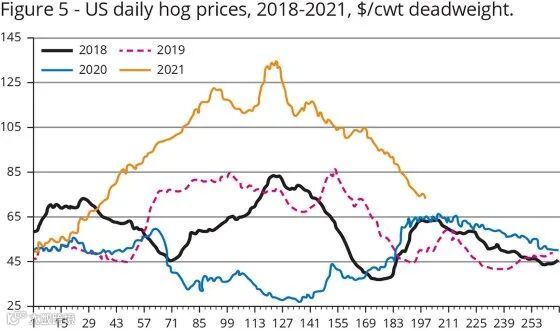
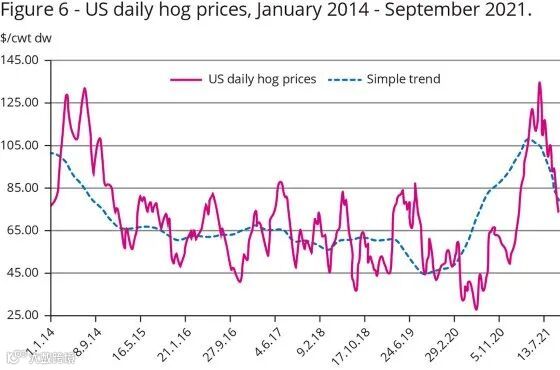
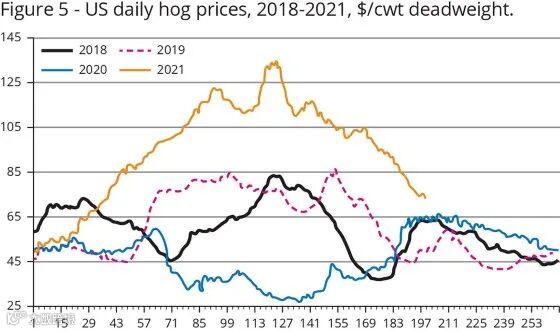
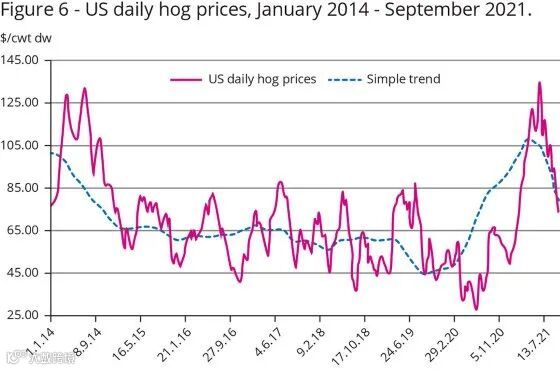
我曾预计2021年下半年美国生猪价格会更加坚挺。图5和图6显示了截至第3季度末的每日生猪价格数据。这些价格高于去年,并遵循正常的季节性模式,但从2021年5月的峰值水平大幅下跌,且没有中断。
 
这些图表显示了美国生猪价格的大幅下跌。美国经济已从新冠肺炎疫情中合理复苏,封锁政策似乎不是饮食、就业或增长的主要障碍,但据报道,美国养猪户的猪群患有猪繁殖与呼吸综合征(PRRS)。这种疾病以及饲料价格和出口市场的不确定性可能削弱了他们的信心。此外,又在多米尼加共和国海地发现了非洲猪瘟。

欧盟养猪户无意扩大规模

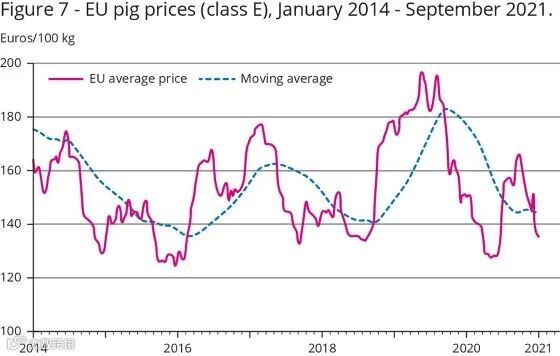
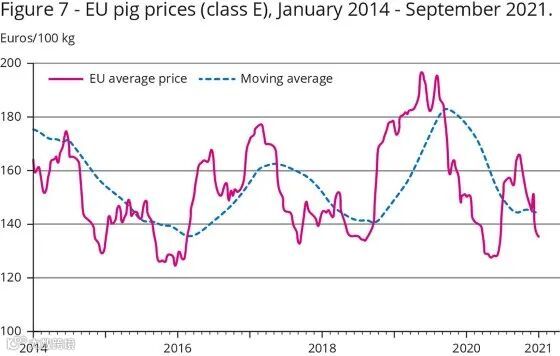
我在7月份的专栏文章中指出,欧盟养猪户无意扩张——非洲猪瘟、价格波动和低利润率都没有乐观的前景。如图7所示的欧盟生猪价格图表显示出波动性,但也显示出平稳的迹象。价格疲软,在这种水平上,大多数欧盟农民都在赔钱。
第2季度和第3季度中国猪肉进口需求的大幅下降,将对尚未完全从新冠疫情中恢复过来的欧洲养猪业造成沉重打击,包括了需求侧以及供给侧。在最新的普查结果中,只有西班牙和丹麦农民倾向于保持生猪数量稳定或增加。所有其他主要生猪生产成员国都在削减生猪产量。


养猪业的供给面并不强劲

美国对猪繁殖与呼吸综合征(PRRS)发病率的报道、中国猪瘟的持续存在、中国的生猪周期,以及猪瘟感染从野猪到欧洲或到达美洲的可能性,都意味着全球养猪业的供给远不够强劲。


猪生产者和加工者面临着最糟糕的两种情况。在中短期,由于低利润、疾病或生猪周期,供给正在收缩或可能收缩。然而,如果生产者过度缩减合同或新冠疫情后需求迅速强劲回升,那么价格仍可能强劲回升。


本地猪肉链的溢价

要对各种情形所提出的问题给出一个全面的答案并不容易。在全球经济低迷和繁荣的背景下,个别国家和地区很可能会实现自己的复苏,或者重返苦难。人们曾经可以依靠全球贸易来消除这些不同的影响,但由于海洋货运活动、新冠肺炎、动物疾病和地方政策等方面存在重大问题,我们没有常用的工具来帮助恢复平衡。


过去,全球贸易为企业提供了一个更加稳定的环境,因为供应链可以适应并绕过地区问题。现在,由于各种原因,这些应对措施现在不太容易付诸实施,反而有弹性的本地供应链将产生溢价。

Quarterly update: China’s pig cycle is felt across the planet
Dr John Strak
With half of the world’s pigs within its boundaries, China has a profound impact on pig prices on the planet. In the aftermath of the ASF crisis, many countries rushed to fill the Chinese voids – and now China is restocking its herds, the demand from the Far East drops. The result is low prices virtually everywhere, writes pig market expert Dr John Strak in his quarterly update.
In early July this year I ended my regular commentary on the global pork market by saying, “…. the chart (for the global pig price cycle) suggests that a turning point is unlikely before October… The caveat is China – if exports to that market drop sharply that might be enough to pull global pig prices down as fast as they went up. As ever, it seems, it’s all about China.”
And now that we have arrived in final quarter of the year we can see that China has indeed sent a tremor through the global pig and pork market. A turning point in global pig prices is just about with us and China’s demand for imported pork has collapsed. Even though it appears that the supply of pigs in North America and Europe is contracting, the collapse of domestic pig prices in China as a wall of pigs comes to market there may have been the reason why global pig prices have weakened in the major exporters’ home markets.
Figure 1 illustrates these points. The global pig price index has slowed its upward movement and is about to turn down. The weekly rate of change in the global pig price index has moved from high positive percentages to being only just positive (+0.02%). Next month the index will be in negative territory – we will enter the downward phase of the cycle.
Lowest point of Chinese pig slaughter
Another bit of crystal ball gazing that I did in July was to estimate when the Chinese pig sector will reach the lower end of its normal slaughter levels. I suggested that this would occur by the end of 2021.
Figure 2 presents the monthly hog slaughter data for China and it shows that this lower end of the kill number range has been reached in the slaughter data. Slaughter numbers have jumped, not because of African Swine Fever (ASF), but because feed and energy prices and, mostly, the size of China’s supply response to ASF have surprised everyone. The projection of kill data beyond December 2021 in Figure 2 should not be taken seriously – a feedback loop on supply in China will be underway in the 4th quarter of 2021 as pig prices collapse: slaughter numbers will fall back.
The mother of pig price cycles
In effect, China’s pig sector is in the middle of the mother of all pig price cycles and we are seeing boom and bust being played out in real time. Figures 3 and 4 illustrate what has been happening to Chinese weekly deadweight pig prices. Chinese producers and investors in the pork value chain in China have had their fingers seriously burnt. And this is the case whether these actors are large or small players. The larger commercial units will be better able to ride out the financial losses but they will still be hit hard. Those larger players are often part of large conglomerates with wider commercial interests and there may be ripples outward to other sectors – especially in local and regional circumstances.
Table 1 shows how US farmers have reacted to declining prices in the 2nd and 3rd quarter of 2021. The breeding herd in the United States is down by over 2% according to the September census. (Similarly, the EU’s breeding herd had declined by about 1.5% in June 2021.)
Hog prices in the United States
I had expected US hog prices to be firmer in the 2nd half of 2021. Figures 5 and 6 present the daily hog price data through to the end of the 3rd quarter. These prices have been higher than last year and have followed the normal seasonal pattern but the fall from their peak level in May 2021 has been sharp and uninterrupted.
The charts show how steep the fall in US hog prices has been. The US economy has made a reasonable recovery from Covid-19 and lockdown policies do not seem to be a major obstacle to appetites, employment or growth but US hog farmers are reported to be suffering from PRRS in their herds. This disease and uncertainties about feed prices and export markets may have sapped their confidence. The discovery of ASF in the Dominican Republic and Haiti will not have helped their outlook.
EU pig farmers are not inclined to expand
I noted in my July column that the EU’s pig farmers were not inclined to expand – ASF, the volatility of prices and low margins were not encouraging a positive outlook. The EU pig price chart shown as Figure 7 shows volatility but also shows signs of levelling off. But prices are weak and, at these levels, most EU farmers are losing money.
The collapse of China’s demand for pigmeat imports in the 2nd and 3rd quarter will have been a heavy blow to the European pig sector which has not fully recovered from Covid-19 – either on the demand side or the supply side. In the latest census results, only Spanish and Danish farmers seemed inclined to hold their breeding herd numbers steady or to increase them. All other major pig producing member states were cutting back.
Supply side of pig industry is not robust
Reports of Porcine Reproductive and Respiratory Syndrome (PRRS) incidence in the USA, the ongoing presence of ASF in China and China’s hog cycle, and the possibilities of ASF infections crossing from wild boar to commercial pigs in Europe or reaching America, mean that the supply side of the global pig industry is far from robust.
Pig producers and processors have the worst of both worlds in front of them. In the short and medium term supply is contracting or likely to contract because of low margins, disease, or the mechanics of the hog cycle. Prices, however, could yet recover strongly if producers contract too much and/or post-Covid demand comes back quickly and in strength.
The premium for local pork chains
A global answer to the questions raised by the various scenarios isn’t easy to compute. It’s likely that, against a background of global gloom and boom individual countries and regions will work out their own recovery, or their return to misery. Global trade (globalisation) could once be relied upon to smooth out these disparate effects but with major problems in ocean freight activity, Covid, animal disease and geo-politics in play we don’t have the usual tools to help restore equilibrium.
Globalisation and global trade used to offer businesses a more certain environment since supply chains could adapt and flow around regional problems. For a variety of reasons, those responses are less easy to put into play now and there will be a premium put on resilient local supply chains.
本文转载于:https://www.pigprogress.net/
Reproduced from: https://www.pigprogress.net/
联系我们

持续提供肉鸭养殖技术支持

王经理:13156860390(微信同号)

商务合作

刘经理:13156393215(微信同号)

点个在看你最好看

【声明】内容源于网络
0
0
益牧堂水禽信息
专注水禽产业 与养殖朋友同行 提供有价值的行情资讯与分析 提供实用的养殖管理技术 提供验证过的好产品
内容 6312
粉丝 0
益牧堂水禽信息 专注水禽产业 与养殖朋友同行 提供有价值的行情资讯与分析 提供实用的养殖管理技术 提供验证过的好产品
总阅读1.5k
粉丝0
内容6.3k