How do we eat the incumbent companies’ lunches?
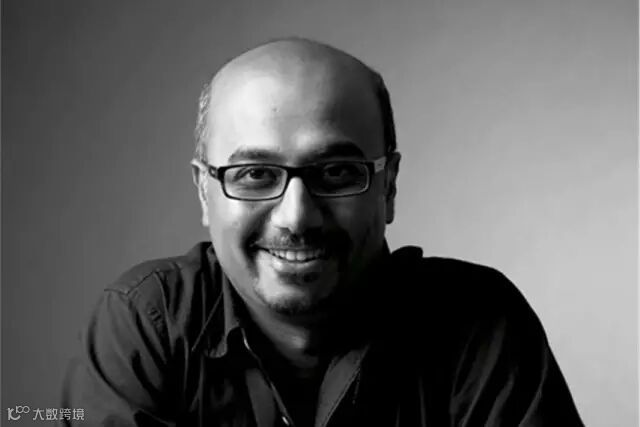
Sandipan Roy, Chief Strategy Officer, Isobar Asia Pacific
Imagine this…almost 5,000 start-ups, investors, incubators, venture capitalists, unicorn founders and academics met in the Silicon Valley over a few days with almost a maniacal zeal to start a revolution and overthrow the system that has produced some of the biggest companies in the world
Terrifying and yet energizing…
A couple of weeks ago, I was to be in some global meetings in Silicon Valley so I took advantage of that to attend the Startup Grind Global Conference.
For those unfamiliar with the event, founders of WhatsApp, Chobani, Coursera, Tinder, and Waze; investors like Vinod Khosla, Ben Horowitz, Justin Kan as well as strategists, academics, data scientists and thought leaders from Singularity, IBM Watson, Google, Airbnb, Netflix and HBX, just to name a few, got together to inspire, exchange ideas and pitch in the beautiful Fox Theatre and other venues across Redwood City, California.
Everything held over those couple of days was intimate, authentic and passionate. While I don’t much care for chatting with other human beings, especially strangers, I shockingly saw myself shedding all inhibitions and getting caught up in the swirl of energy, passion and authenticity
My pitch to everybody was quite simple – my world is all about consulting and executing for big legacy incumbents who run the risk of getting disrupted by these very people, and I wanted to spend time in their world to see how they did it.
Remarkably, that worked. We talked, we drank and we exchanged contacts. Most importantly, I learnt so much just listening to the fireside chats, presentations and keynotes by some of the most successful entrepreneurs in the world.
Here are the top five things I picked up:
1. Set yourself a target that you will not achieve unless you innovate
What is your 10x? What is your moonshot? When you set yourself a 10x target, you approach the problem in a very different manner. And the solution that you get, even if it isn’t able to solve the problem, will be radically different and better. Singularity University, one of the founders of this 10x thinking, talked about how they approached investment with this approach. Their core question – how would your business model change if we gave you a billion dollars instead of a couple of million?
Notes for incumbent companies: I, personally, don’t like the term ‘moonshot’ as it seems like something that will fail many times before it doesn’t. How do we make the success of innovation more predictable so that it is funded, institutionalized and scaled?
2. Be the General of Rebellion
Ben Horowitz of Andreessen Horowitz walked in wearing a T-shirt with the words “General of Rebellion” on it, and made a very inspiring presentation on how culture was at the core of any rebellion. He drew from the life of Toussaint L’Ouverture, the Haitian slave who led the only successful slave revolt in history, and quoted his learnings from leaders like Steve Jobs, Larry Page, Reed Hastings and Mark Zuckerberg to inspire the start-ups. Horowitz shared four big pieces of advice – “keep what works”, “create shocking rules”, “include other cultures” and “make decisions that show priorities”.
Notes for incumbent companies: Disruption needs culture and culture often needs disruption. Incumbents generally develop a few different models for innovation and disruption. Find yours and build a culture around it.
3. Disruption is not an event. It’s a process
Many incumbent companies and industries wake up to disruption when it has gone past being a process, into becoming an event. Disruption creeps up in parts of the market you’re not interested or attracted to, and then slowly spreads its tentacles to grab your entire business. While technology isn’t always the reason for disruption, it most definitely determines the speed of it. Co-founder of Evernote, Phil Libin, made a fantastic presentation using the rock, paper, scissors game to illustrate how the start-up scissors would eventually cut the incumbent paper, before the paper even knew it.
Notes for incumbent companies: How do you disrupt yourself while disruption is still a process and not a final event? The challenge is to go back to your business model and look at where value will continue to be created and where it will be destroyed.
4. Growth counts for nothing without engagement and monetization
I believe the mindlessness of ‘so many million acquisitions’ seems to have been sorted out. It was very clear from the conversations going on that funding just a growth model was a thing of the past. While a growth mindset was absolutely critical to the pitch, investors seemed to have woken up to the fact that a blind obsession with growth would push us towards another dot com bubble, before we even realized. Nir Eyal made a fantastic presentation, based on his book, Hooked, which is a must read if you want to go beyond vanity metrics. His approach of triggers, action, variable rewards and investments should be a go-to framework for anybody interested in habit formation for their products
Notes for incumbent companies: Build habits, not just plain usage because habits are hard to switch, while usage can be replicated.
5. Finally, be the impact that you wish to see in the world
That was pretty much a common theme from everyone. None of the startups I met, VCs I heard from, or unicorn founders I learnt from, wanted to do anything unless they were very clear about the impact they would have on the world. Being stubbornly devoted to who they were, seemed like a highly-scalable and sustainable model. Pivots were allowed but had to be authentic and answer the proverbial “is this how I want to impact the world?”. And it was great to see that this wasn’t some fluffy hindsight mantra of only the successful, but was also deeply embedded within the entire community
Notes for incumbent companies: Far too often, we disrespect the value of big ideas as we get caught up with inexpensive experimentation. Build a massively transformational idea and pursue that relentlessly in everything you do.
“Who’s disrupting you when you aren’t disrupting yourself”. Ask yourself this question and I sure hope you have a real answer for it. Good luck!