
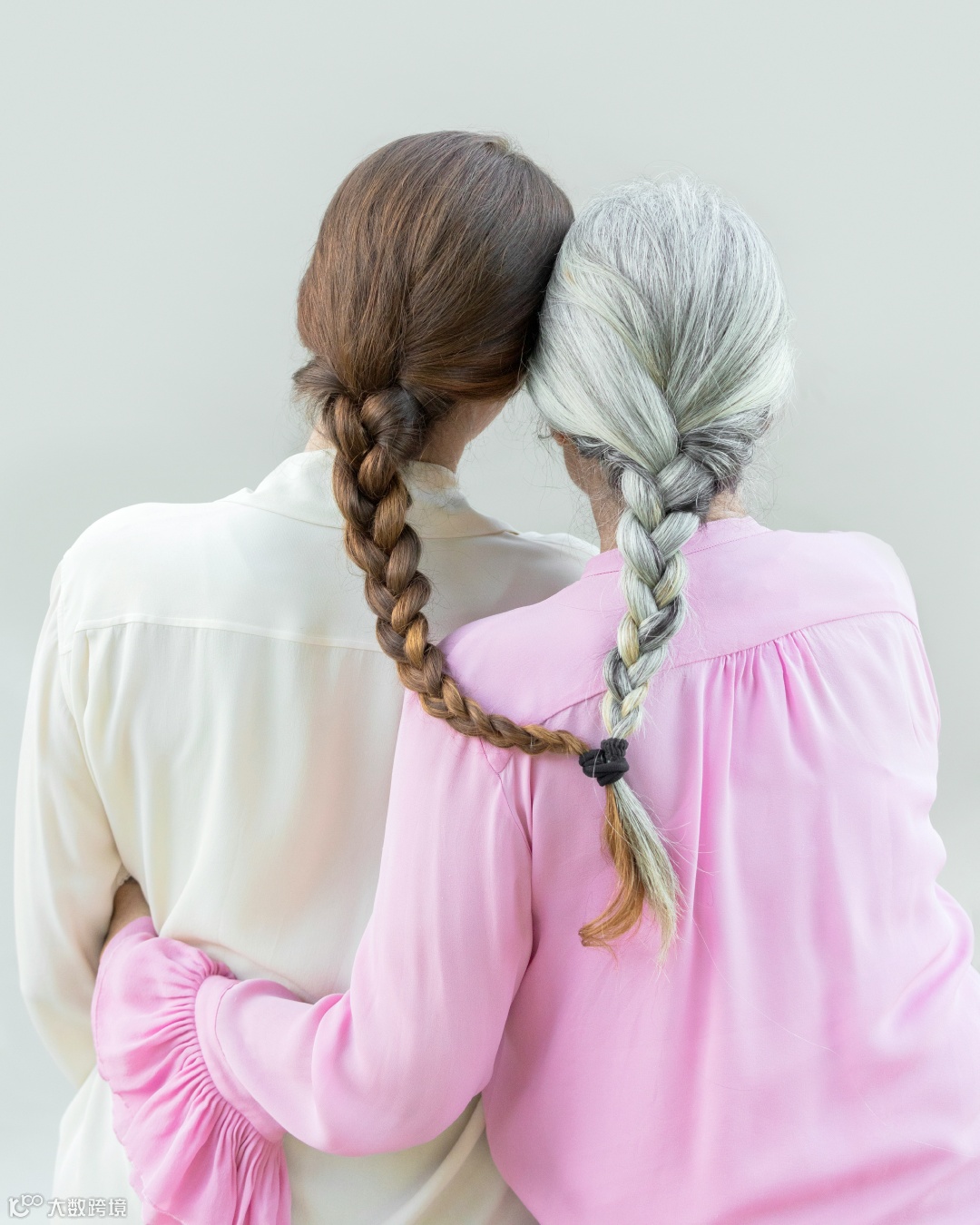
A recent study from IKEA reveals that age is no predictor of affinity or connection, showing that 21% of us find a sense of belonging from shared values versus just 11% who feel that belonging results from being part of a similar age group.
Gen Alpha (born early 2010s-2025) will constitute the largest generation– some 2bn individuals by 2025 – with surprisingly mature tastes and sophisticated digital understanding. Gen X and Boomers, the most valuable but perhaps the most under-valued generation, are re-defining what it means to be middle (or old) aged, maturing on their own terms and resisting stereotypes.
We see a shift in familial responsibility – in the West caring responsibilities are falling heavily on the “sandwich” generation – whilst traditionally dutiful young adults in developing economies seek to carve out their own identity beyond the family unit.
In some cohorts, gender is becoming a greater determinant of attitudes than age or generation. Data reported in the Financial Times shows a 30 percentage point gap between young men and women’s liberal vs conservative worldviews in the US and Germany. Similar patterns appear internationally.
Younger generations are also turning back to religion and spirituality to manifest better fortune in an uncertain world, where the usual routes to success aren’t delivering as they once did. In India, young people are returning to temples whilst in China, traditional rituals are being digitized for a new generation. The Buddhist and Taoist ritual of knocking on wooden fish has been translated into an app-based version. Within this trend we see a huge blurring of interests and attitudes across our subtrends.
I. THE NEW OLD AGE
Gen X and the Baby Boomer generation boast the greatest spending power yet their commercial influence is routinely overlooked by marketers. Mature audiences and savvy brands are reframing conversations around what it means to ‘age.’
Emphasizing the freedom and fun available in retirement, global fast food chain Taco Bell launched The Cantinas, a pop up “early retirement community” where consumers of any age can embrace a “slow living, senior-at-heart lifestyle” complete with tea breaks, aerobics, crochet classes and early-to-bed at 8 p.m. The perfect venue to try out the “Eclectic Grandpa” aesthetic.
In France, Vieux (“old”) magazine satirizes youth-obsessed publications and features middle-aged and above only personalities.
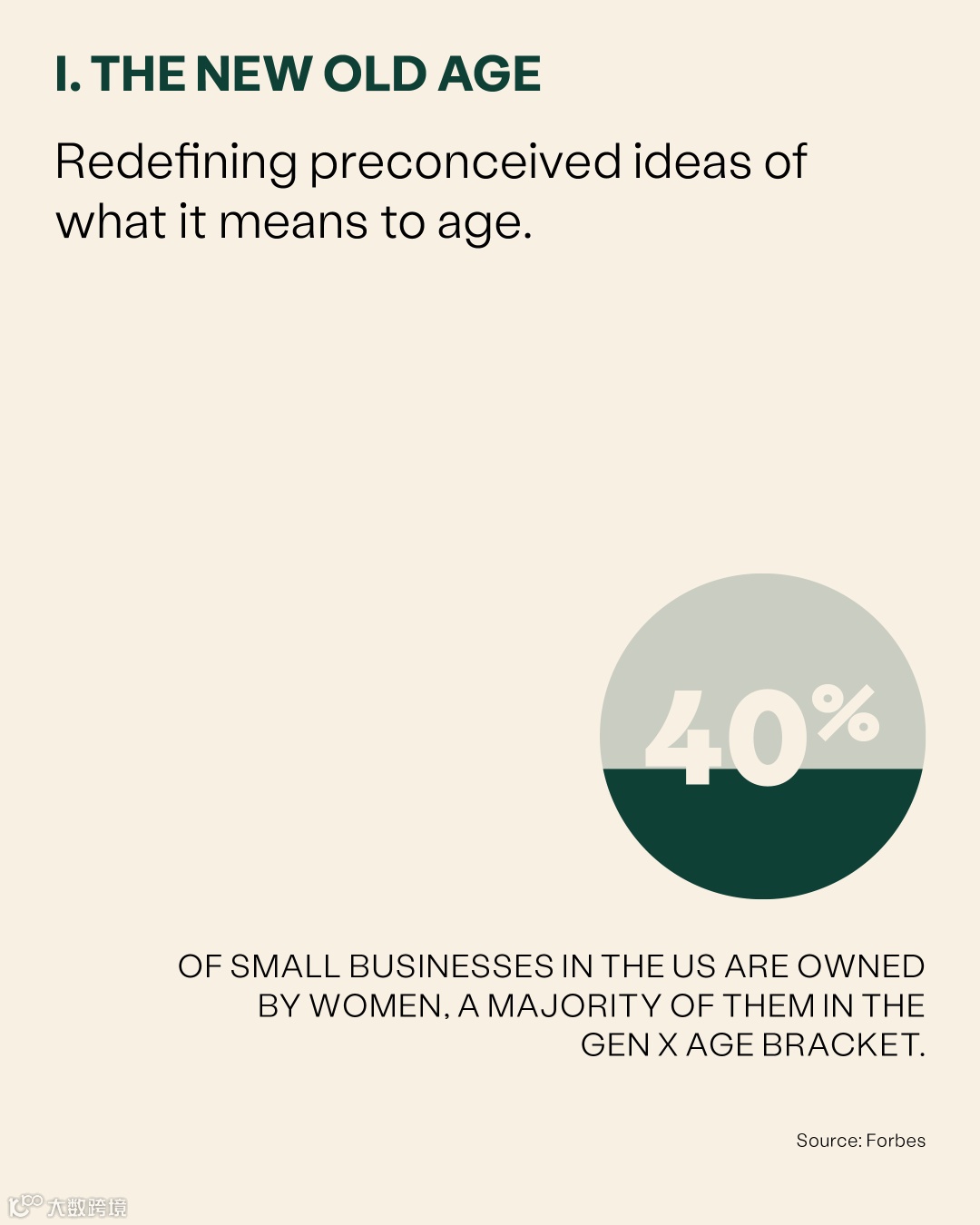
“Silver Start Ups” are also on the rise; studies have shown that Gen X women are the fastest growing group of entrepreneurs in the US; meanwhile over 50s founded almost 12% of new companies in Poland in 2023 as empty nesters seek a new lease of life in a world where access to customers and resources has been transformed.
Meanwhile, from supplements to skincare, the menopause economy is booming and pharma-grade skincare treatments are now the norm at home. The elixir of youth remains a (complex) pursuit – at one end of the scale some research suggests diabetes drug Ozempic could delay ageing (BBC) whilst recent movies such as “The Substance” starring Demi Moore and “Shell” starring Elisabeth Moss portray ageing as a literal horror show, following on from 2021’s “Old” by M. Night Shyamalan.
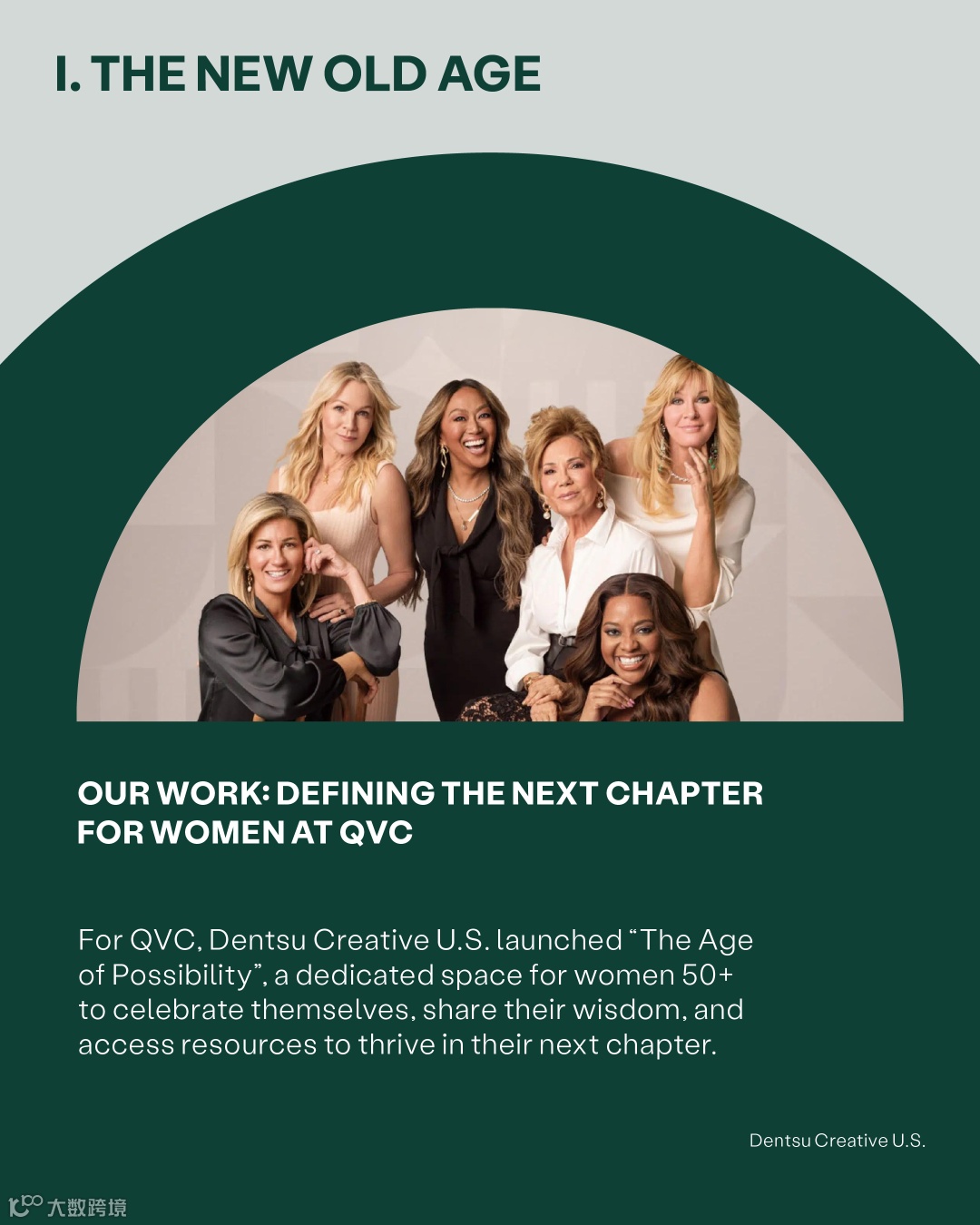
OUR GLOBAL WORK: DEFINING THE NEXT CHAPTER FOR WOMEN AT QVC
Women over 50 are often misrepresented as “out of touch”, which could not be further from the truth. For QVC Dentsu Creative US launched The Age of Possibility, a dedicated space for women 50+ to celebrate themselves, share their wisdom, and access resources to thrive in their Next Chapter. The campaign launched with 50 inspiring women at a Las Vegas summit, and an activation on The Sphere. The response was overwhelmingly positive, earning a +400% increase in media coverage impressions and widespread gratitude from women finally seeing their potential recognized in advertising.
II. LEARNING THE ALPHA-BET
By 2025 Gen Alpha will be the biggest generational cohort, reaching 2bn people. While, as we note, generational cohorts may be becoming less and less relevant, there is no denying that is a group who are more technically sophisticated, and more demanding in their purchasing behaviors than their elders. “95% of their parents learn about brands from them” while “49% of parents’ purchasing decisions were influenced by their child’s opinion” according to a study by DKC.
Exposure to online content and advertising is driving an accelerated maturity and with it challenges for brands to navigate responsibly such as Gen Alpha’s obsession with luxury skin-care and the rise of the “Sephora Kids”. Tween beauty brands like Bubble built their fame from TikTok up and have amassed an ambassador program of 7,000 fans (with a waitlist of 41,000). So blurred are the boundaries between playtime and sophisticated skincare that the brand even introduced its own plushie, as well as a limited edition Disney partnership.
Yet such is the concern over the impact of constant online connectivity on younger generations, that parents and policy makers around the world are taking steps to limit young people’s access to mobile phones, as anxiety spirals among young people around the world.
Recent studies have shown that not only are Gen Alpha adopting mature skincare habits, their brains have matured differently due to the extended Covid lockdown. This phenomenon seems particularly acute among young girls; MRI scans showed that the brains of adolescent girls who experienced lockdown appeared 4.2 years older than normal.
Gen Alpha however are in no rush to adopt all the behaviors of their elders; recent data from Global Web Index reveals that interest in attending university has declined significantly among 12-15 year olds, particularly among those with an interest in gaming, coding and STEM.
These new codes are being literally codified in a new lexicon to the befuddlement of even their Gen Z counterparts. Slang like “Fanum tax”, “Sigma”, “Rizz” and “Ohio” is creating memes, music and media for marketers to decipher.
OUR GLOBAL WORK: A VOYAGE OF SELF-DISCOVERY FOR TIKTOK
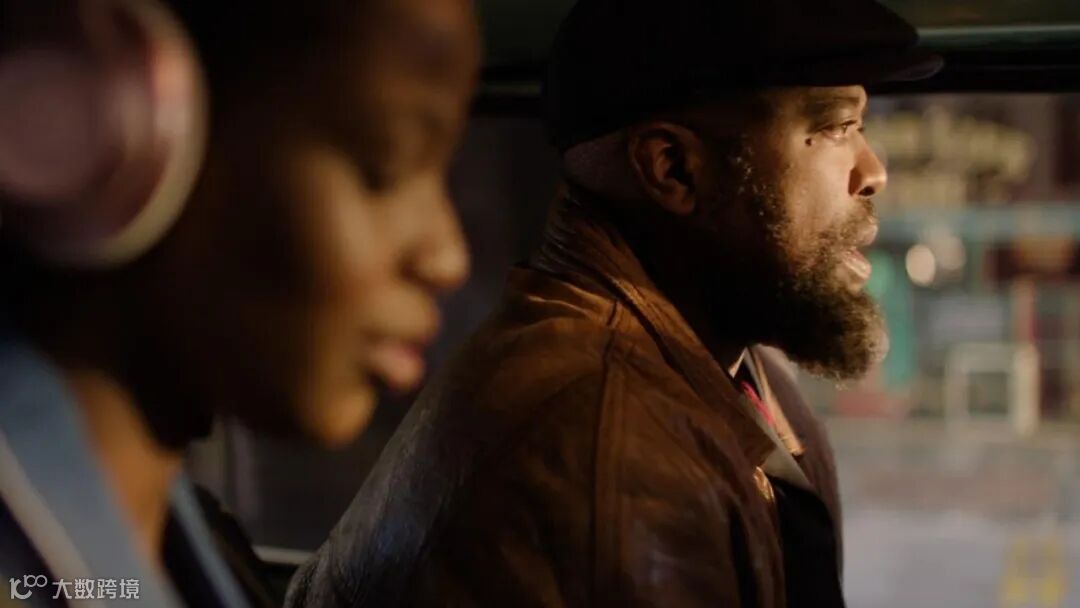
To debunk the notion that TikTok is just about Gen Z culture, the Discover Yourself campaign by Dentsu Creative South Africa featured the dynamic of a father and his teenage daughter, demonstrating how the platform is a useful search tool that transcends generations.
III. THE BLENDED HOME
By 2030, 1 in 6 people in the world will be aged 60 years or over (WHO, 2024) while birthrates are dropping around the world. An ageing population has created a cohort who are simultaneously raising children and caring for their own ageing parents. In response, Sweden has introduced a grandparental “maternity leave” to help even out responsibilities. Amazon is introducing term-time only working options to help with childcare.
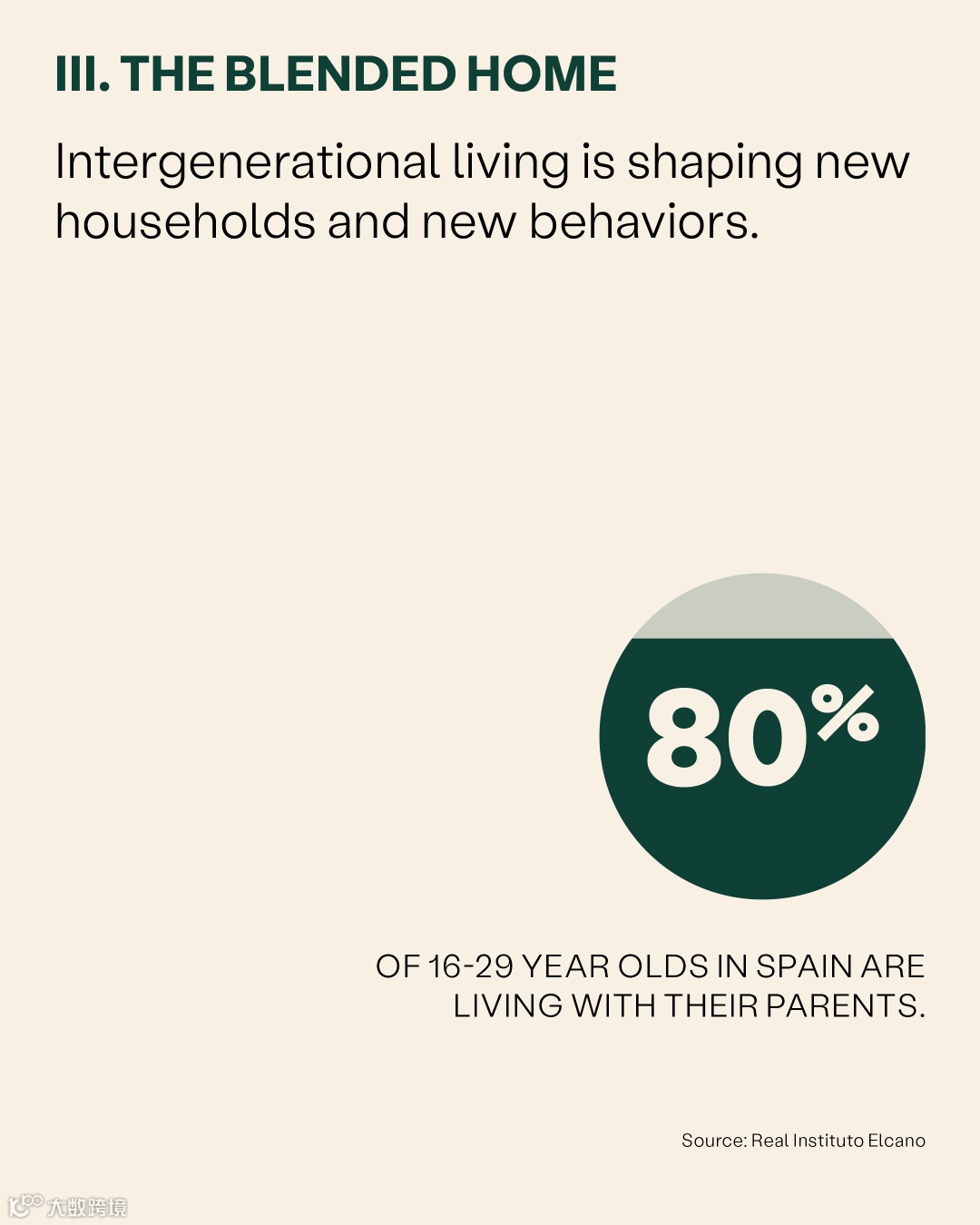
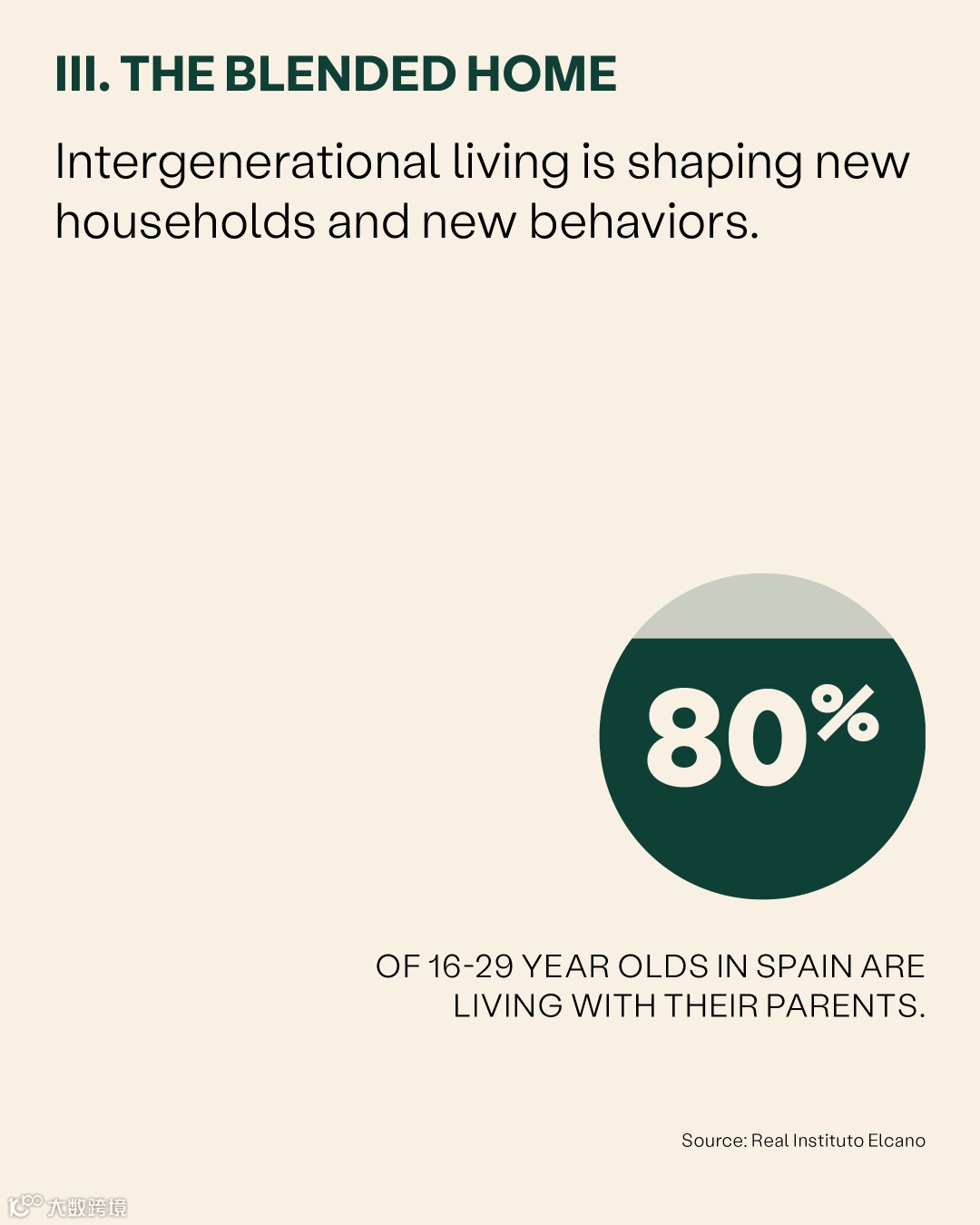
In Western markets, reversing longtime trends, more adult children are living with their parents than ever, due to an unprecedented cost of housing crisis. In the UK, Figures from the Office of National Statistics (ONS) revealed that 5 million adults (including 10% of those in their early 30s) in England and Wales were living at home with their parents, with similar patterns seen around the world. In the US, adult children living at home quadrupled in the decade post 2011, while in Spain, more than 80% of 16-29 year olds live at home.
As the cost of living and cost of housing continues to accelerate, parental income and their potential inheritance plays an ever more important role in determining future quality of life, with mature economies around the world becoming “inheritocracies” in response to the huge cost of climbing the property ladder.
Meanwhile in markets where intergenerational living has traditionally been more commonplace, we see rapidly changing attitudes.
In the Philippines we see young adults start to carve out their own identity beyond the family unit. Where there has been significant pressure on the older child or “panganay” (with support groups on Reddit) and a tradition of staying with the family until married, there is now new shift towards leaving the family home to strike out on your own at a younger age.
In the face of a dramatic housing crisis that prohibited 120,000 young people in education from affording a home, combined with a loneliness epidemic that saw 500,000 seniors living in isolation, Dentsu Creative Portugal and MEO designed a digital platform that connected students and lonely elderly people under one roof, changing everybody’s lives for the better.
OUR WORK…
LOST IN TIME
NONPROFIT ORGANIZATION: JIAN AI ELDERLY CHARITY CENTER
CREATIVE AGENCY: DENTSU CREATIVE
Presenting Lost in Time, one-of-a-kind artworks created by those suffering from Alzheimer’s.
Partnering with Jian Ai Charity, a non-profit focused on elderly brain health, we carried out clock-drawing test on hundreds of seniors suffering from Alzheimer's. The clock drawings reflected the different phases of early, middle, and advanced symptom advancement. We turned the clock drawings into an evocative timepiece collection, campaign and exhibition, offering a window into the time lost by those with the Alzheimer’s disease and their distorted world.
On World Alzheimer’s Day, a display in the Shanghai metro was launched. It garnered over 17 million people walked through the display in 40 days. On World Health Day, we held an online auction. In 5 days, the watch was bid for at 20 times the regular price of an electronic watch.
Though there is no known cure available for this condition, the sooner the disease is recognized and accepted, the better opportunity for slowing its advancement. Bringing diagnostic testing out of the hospital and into everyday life will benefit more people.
Read more: Lost in Time, Found in Cannes!
WHAT IT MEANS FOR BRANDS & BUSINESSES…
WE DON’T NEED NO EDUCATION?
In a world where 12 year-olds have more sophisticated skincare regimes than their parents and more advanced technology skills than previous generations thought possible, we may want to consider who educates who. As college costs soar, a shift away from formal higher education may result in new approaches to internships, reverse mentoring and lifelong learning.
DESIGNING FOR NEW HOUSEHOLDS
As intergenerational living increases, sectors from home building to interiors to packaged goods will need to adapt to differently shaped households, with different needs and spending patterns – and often different tastes and values coexisting within the household. IKEA have published their insights and advice on adapting to intergenerational living while D.R. Horton, a US homebuilding business, has introduced a range of “MultiGen” design concepts.
SECOND LIFE (AGAIN)
As life expectancy increases, while many crave early retirement, others will be just starting out (again). Brands who understand and respond to the new middle age with both empathy and enablement will reap the rewards; perhaps matching late life entrepreneurs with enterprising young coders and creators.
The content of this article is sourced from the Dentsu Creative Trends Report 2025: Fragment Forward.
Tap ‘Read More’ or below link to visit our global website and download the full report.
www.dentsucreative.com/news/dentsu-creative-trends-2025
The Togetherness Deficit | CREATIVE TRENDS
Curiouser and Curiouser | CREATIVE TRENDS