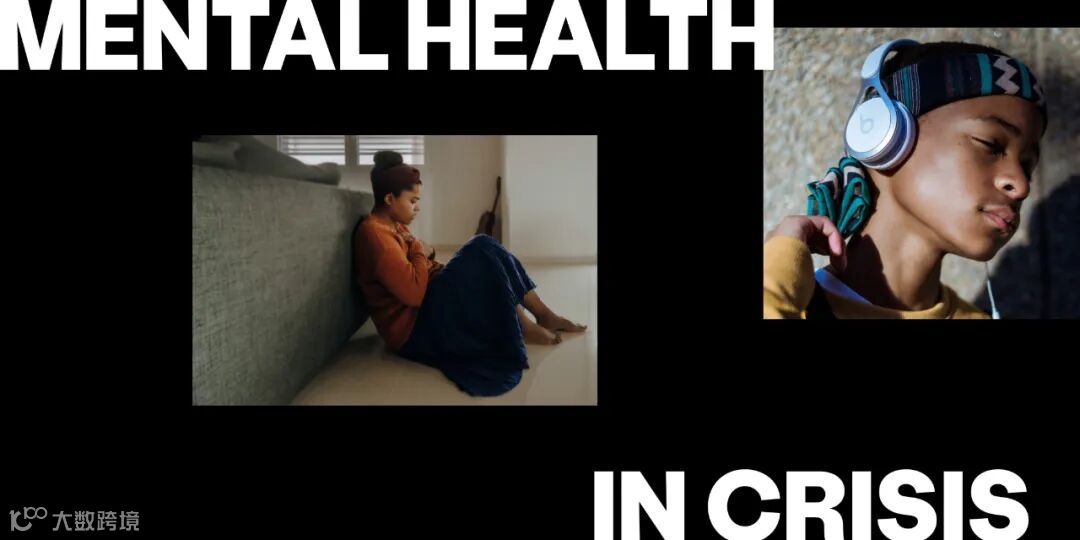
Rising anxiety levels fuelled by a bleak economic outlook are powering a mental health crisis around the world.
We see the gamification of mental health and self analysis, while there is a range of drinks inspired by Myers Briggs personality types. Meanwhile Europe is facing a “mental health recession” as post pandemic anxiety meets a cost of living crisis meets an over burdened health service.
Mental health and anxiety, amidst a volatile world, are fuelling trends across every category from interiors to cleaning to food and drink, as consumers seek solace in cocooning themselves from the outside world. In parallel, an epidemic of loneliness continues post Pandemic, the May 2021 American Perspectives Survey finds that Americans report having fewer close friendships than they once did.
1 in 5 of Gen Z globally say they or someone in their household is suffering from mental health condition.
Of Europeans say that “uncertainty” best describes their emotional state, while “fear” “anger” and “frustration” also feature highly in their list of feelings.
According to a survey across 15 countries, around 60 percent of employees have experienced at least one mental-health challenge at some point in their lives.
As consumers seek to deduce what makes them tick and where they should put their energy they are looking to personality diagnostics to help them hack their well being. Dimensional is one such app, measuring over 200 personality traits across 10 metrics or dimensions in order to create your unique “Signature” which then offers insights and practical advice based on your personality.
More playful platforms like Spotify’s End of Year Wrapped are increasingly becoming a social media moment.
Whilst in recent years tech has been identified as a contributor to poor mental health, on the flipside, consumers are finding comfort and support in pocket therapy especially where traditional health services are stretched.
Thankfully as health becomes increasingly digitised privacy functions are improving to match. The group-therapy app Chill Pill offers a “world of future friends and better days” but does not permit the sharing of any personally identifying information.
The Myers-Briggs Type Indicator (MBTI), once the preserve of corporate development activities, has become something of an obsession for young South Koreans particularly for dating.
Paradise Group is a Tourism company offering holiday recommendations based on your MBTI type whilst the Jeju Beer Company launched a series of cans emblazoned with the letter codes of the 16 personality types.
SELF SOOTHING IN SURPRISING WAYS
In an uncertain world, we sometimes turn to strange places for solace. The #CleanTok hashtag has over 62 billion views in TikTok, as Gen Z seek a sense of calm and control through watching others go through the ritual of cleaning house and restoring order.
The link between a physical and emotional sense of order is well documented, with Gen Z taking things to the next level via a vicarious self soothing.

Our society is facing a mental health crisis with no signs of reversal but to be clear, the COVID-19 pandemic did not cause it. This crisis long predated COVID-19——the pandemic merely broke its surface and revealed the cracks underneath——and now, there’s no going back. The pandemic caused mental health issues to surface, the uncertain economic outlook exacerbated them and now, everyone has no choice but to respond, either by taking a step back or rolling up their sleeves. A first response came in the form of “quiet quitting.” In March 2022, Gen Z and millennial employees began to reject hustle culture and the idea of “going above and beyond” at work. — Giulietta Vento, Strategist, DENTSU CREATIVE US
Controversy over the matter ensued as “quiet quitting” was deemed exaggerated. Regardless, declining mental health was at its root because young employees were seeing their wages stagnate while the cost-of-living sky-rocketed, and realized sacrificing their mental health for work was no longer “worth it.” As a result, this year saw employers prioritize employee well-being as a strategic imperative. Goldman Sachs moved to unlimited PTO to signal their care for employee health, while companies attempting the four-day work week saw 67% of employees feeling less burned-out and reported resounding success in productivity.
As employee well-being becomes a top priority the deluge of mental health apps that flooded the market pre-pandemic are pivoting strategies. They are targeting employers, who pay a fee for employee access, over individual patients.
Headspace Health, for instance, rolled out a new product experience that brings together meditation and on-demand therapy. The integrated app makes it easier for employees to access support and reduces complexity and administrative burden for employers. Ami, a mental health startup and Meta’s first investment in Asia, aims to make mental healthcare more accessible for employees through counseling sessions on messaging platforms like WhatsApp.
As well as integrating with employers and becoming more pervasive, tech is seemingly becoming more effective in supporting mental health although, not everyone is sold. It's no longer just apps that help track your mood or remind you to take your medication, but now there are also tools diagnosing and treating mental health conditions in new ways. Thymia, a UK-based, AI-driven start-up, uses mobile video games to detect the danger signs of mental illness. Some doctors familiar with depression and technology, however, ask if the service will really provide all the information that a clinician needs.
While there are doubts about technology, there is no doubt that the stigma around mental health is breaking down worldwide through greater debate and representation in media. While TV shows in the West have actively been destigmatizing mental health and disability for quite some time, in Asia, the Netflix series “Extraordinary Attorney Woo” takes a first stab at bringing more attention to autism in Korea.
Some argue that a stereotypical depiction of disability inspires further narrow- mindedness, however, autistic viewers themselves finally felt represented. In the West, the entertainment industry has a long history of misrepresenting mental illness with strugglers often portrayed as “unpredictable” and “dangerous.”
Yet, with celebrities like Selena Gomez and Jonah Hill opening up about mental health in their respective documentaries, vulnerability is normalized as a strength and powerful tool for self-acceptance. Celebrities addressing heavier issues creates a seismic shift in the larger mental health conversation at a time when it is needed the most.
What does this all mean for brands in 2023? More and more consumers will be looking to brands they can trust for support. From brands, consumers will appreciate care whose primary objective is not sales or self-interest. They will turn away from apathy or tokenistic support and towards a sense of authentic validation. However, the type of validation consumers seek is subtle, creating an intimate understanding between consumer and brand, it is not for display – it is quietly powerful. Brands that act from a place of authenticity to bring consumers small moments of joy, self-care, validation, or support will gain their trust. Finally, brands that lean into showing audiences they are not alone and reminding them it’s normal to struggle will play in rich emotional territory.
Amid the mental health crisis, people are prioritizing “The Joy Imperative” to take a hiatus and get out of the chaos and this will be another opportunity for brands to capitalize on.
“People are leaping for the moment, taking back their life. They’re not thinking about the future right now instead letting the future think for itself.” — Cristina Urban, Strategy Lead, DENTSU CREATIVE Italy.
Set against a darker macro-economic crisis we see the desire for small moments of joy and play. “Pickleball”, a playful and silly racket game is one of the fastest growing sports in the world while small luxuries such as flowers have become everyday acts of self care, no longer something to be saved for special occasions. Silliness and surrealism act as coping strategies when the world feels unstable, while the #cluttercore trend — a maximalist outpouring of colour, clutter and idiosyncratic personal decor — acts as a joyful check to years of impeccably restrained interiors.
Meanwhile, consumers are finding moments of self-care in a host of simple ways; recent data from Global Web Index shows that 52% improved their mental health by spending time with friends and family, 50% watched TV and 38% spent more time cooking and baking.
“The Happiness Report” found that 90% of people are more likely to remember ads that are funny and 72% of people would choose a humorous brand over the competition. Despite this, only 20% of brands report using humor in offline ads and 18% report using the tactic in online ads.
88% of people say that they are looking for new experiences to make them smile and laugh.
44% of US Gen Z-ers agree that finding ways to celebrate themselves has become more important to them now than before the COVID-19 pandemic.
THE PURSUIT OF FEEL-GOODNESS
Earlier this year luxury department store Selfridges created an in-store pop-up and content dedicated to challenging “the conventional (and oft-clichéd) notions of wellness with a spirit of ‘feel-goodness’, that’s inclusive, forward-thinking and, above all, joyful.” Activations included an in-store sensory reality pod; an immersive online experience and literal retail therapy sessions. Reinforcing the sentiment, fellow British department store John Lewis shifted their brand platform “Never knowingly undersold” for the first time in nearly 100 years to “For All Life’s Moments” responding to the desire for everyday celebration and plan to reconfigure stores to reflect ‘moments’ rather than traditional ‘departments.’
Building on the ‘dopamine design’ trend, media platforms are responding to the desire for mood-uplifting content. National Public Radio (NPR) in the US created the Joy Generator microsite offering soothing sounds and visuals to help people reframe their thinking and seek out more moments of pleasure. Similarly, “The Joy Report” is a podcast dedicated to sharing stories of climate solutions and environmental justice. Success stories are grounded in intersectionality, joy and optimism. “The earth and its ecosystems thrive on diversity and so does climate action.”
Pickleball is currently the fastest growing sport in the United States, growing 11.5% on average over the past five years, with a 21.3% growth rate between 2019 and 2020 alone. It’s relatively simple rules and accessible format are credited for its success and brands are tuning into consumers’ desire for play. Kraft Heinz’s pickle brand Calussen sponsored a two-hour sports comedy segment called “Pickled” featuring celebrity players whilst Anheuser-Busch InBev have just purchased a Major League Pickleball team.

THE JOY IMPERATIVE:
A PERSPECTIVE
“At lunchtime I bought a huge orange — the size of it made us all laugh. I peeled it and shared it with Robert and Dave — They got quarters and I had a half. And that orange, it made me so happy, as ordinary things often do.” — Wendy Cope, The Orange
Throughout our lives, we tend to celebrate the big moments. Walking on stage for graduation, winning the match, holding your baby for the very first time. We chase big. And yet, in a notable shift, consumers are increasingly finding joy in the simple pleasures of life. As COVID stripped modern living of its graduations, weddings, reunions and other highlights, in turn it encouraged a newfound appreciation for everyday happenings. Languishing in lockdowns afforded space of mind for people to uncover happiness in previously overlooked things — houseplants, neighbourhood walks, even dusty cookbooks. Now, as the spectre of soaring inflation and imminent recession affects spending for major events and holidays, this behaviour and attitudinal shift is set to accelerate into 2023.
Consumers are demonstrating a strong desire to make the most of every moment, no matter how mundane. A 2022 global survey found roughly half of respondents agreed or strongly agreed that they “love any excuse to have a celebration.” The rapid rise of the social media app BeReal, which encourages its users to post whatever they are doing each day at a random time, no matter how ordinary their location or activity, demonstrates the appeal of sharing unremarkable moments with friends. Meanwhile, florists are noting the surge in gifting flowers outside of traditional gifting periods.
“We don’t just see orders for special occasions like Christmas, Valentine’s Day and Mother’s Day – the big traditional peaks in our industry. We see a lot of people sending flowers to say ‘thank you’ or ‘just because.’” — Founder, Bloom & Wild Flowers.
These data points highlight an increasing societal acceptance of marking the mundane, uniquely human elements of life. Living in the moment isn’t new – as far back as the nineteenth century, Emily Dickinson wrote “Forever – is composed of Nows.” But the concept’s deep roots in culture indicate this recent shift is likely to have a more meaningful, wide-reaching impact on consumer behaviour than more ephemeral trends. It also finds common ground with the popular mindfulness movement that champions present-centred appreciation of the ordinary. The Joy Imperative has a few implications for brands looking to meet consumers on their level. There is potential to acknowledge and play into the small, nuanced and empathetic moments of the category or product experience.
Alternatively, brands can play a more involved role in helping consumers actively pursue these moments. In 2022, the popular meditation app, Calm, launched a new feature, ‘Move,’ encouraging users to be active for small bursts of time to experience micro-doses of happiness. The Joy Generator site, brings together interactive stories, videos, and audio centred around bringing more joy to life. Its home screen reads, “Feeling blah? Science shows you can boost happiness by taking time for small moments of delight.” At a time when we may all feel more “blah”, those moments are to be recognised and cherished even more. In challenging times, consumers will reward those brands who can identify those moments, empathise with them, and most importantly enable them.
OUR WORK...
KFC UNHAPPY MEAL
Brand: KFC
Creative Agency: DENTSU CREATIVE
When people were locked down amidst PCR test and social disconnections, so were their emotions. People needed an outlet to express their frustrations.
Introducing KFC Unhappy Meal, a kids meal promotion came with a Psyduck toy for the Children's Day. To cheer up all at that special moment, KFC put stickers on the dancing Psyduck’s moving hands with funny or motivating messages that allowed all to unlock their creativities as well as happiness. The naive look of the Psyduck with the catchy tune and funny hand move resonated with both kids and adults and soon became a meme and internet sensation as people started posting short videos and voicing their own feelings.
The Psyduck craze hit the number one social topic with over 65M interactions and 370M video views. KFC earned free promotions worth hundreds of millions. The meal combos were sold-out either in-stores or deliveries.
WHAT IT MEANS FOR BRANDS...
01
SEIZE THE MOMENT ECONOMY
Brands who can understand, be present in, and enhance the little moments of joy and connection that keep us going in tough times will thrive; the opportunity is to connect data, empathy and technology to connect the right message with the right individual in the right moment.
02
FUNNY BUSINESS
With good news stories in short supply, humour, silliness and surrealism will help brands lift spirits and provide much needed levity. As we explore later, silliness and surrealism are also emerging as tools to foil the algorithm.
03
BRANDS IN ACTION
As a cost of living crisis meets a cost of goods crisis head on brands will struggle to both demonstrate empathy and maintain margin. Decades of data show that emotional brand connections increase price elasticity, but consumers’ spending power has seldom been so constrained. Many will be looking to brands to take practical action to support their customers and communities.
For full report, please visit DENTSU CREATIVE global website below.
www.dentsucreative.com/news/trends-2023