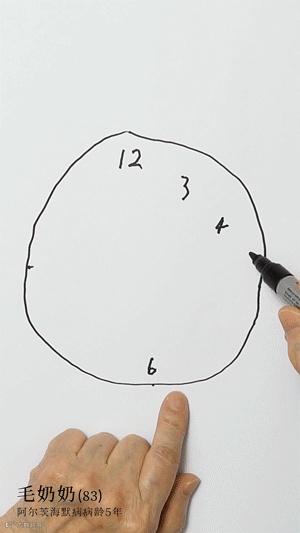
A senior with Alzheimer’s was taking the clock-drawing test. She paused and pondered, struggling to picture the right clock in her mind.
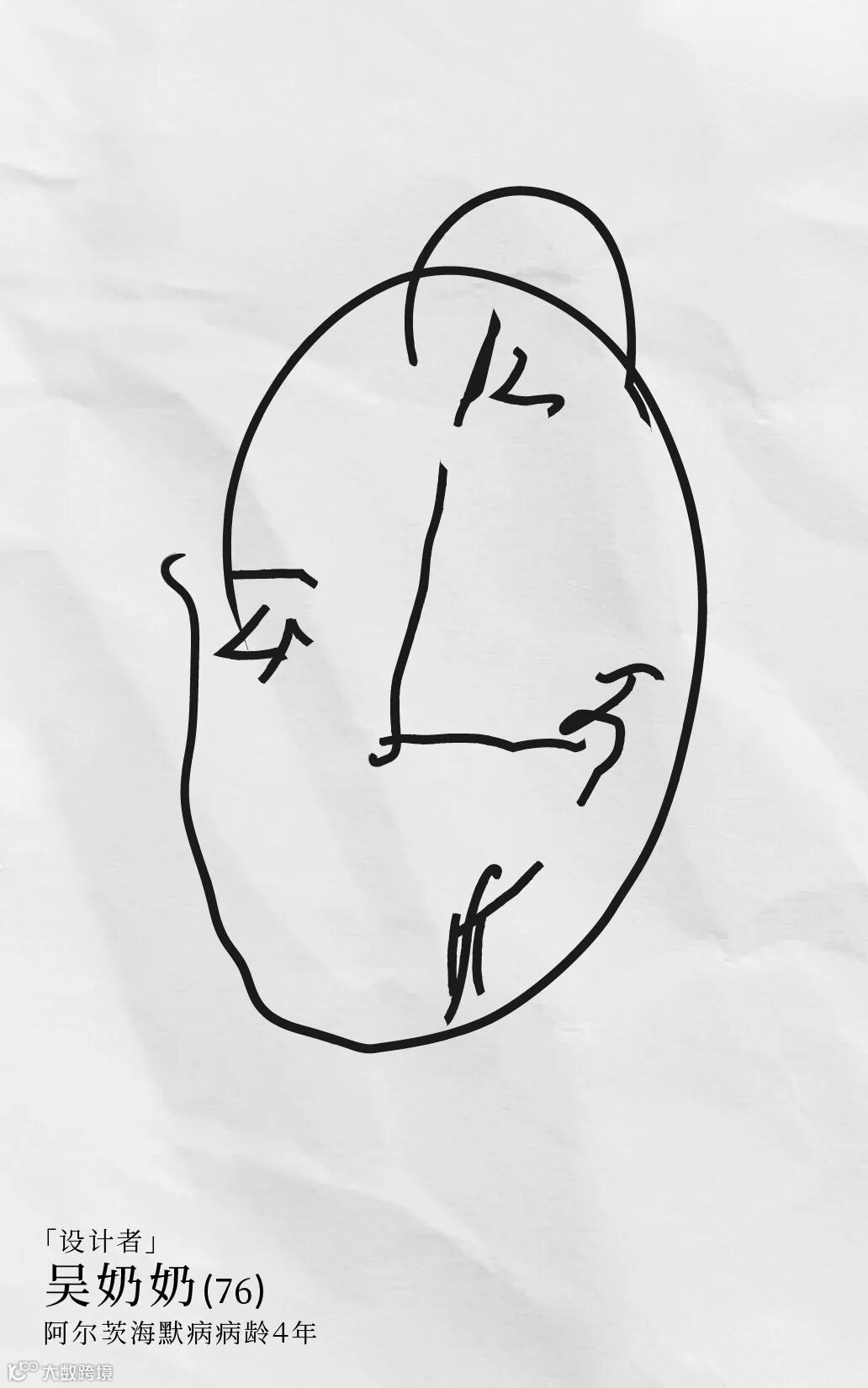
Grandma Wu, aged 76, was diagnosed with Alzheimer’s four years ago.
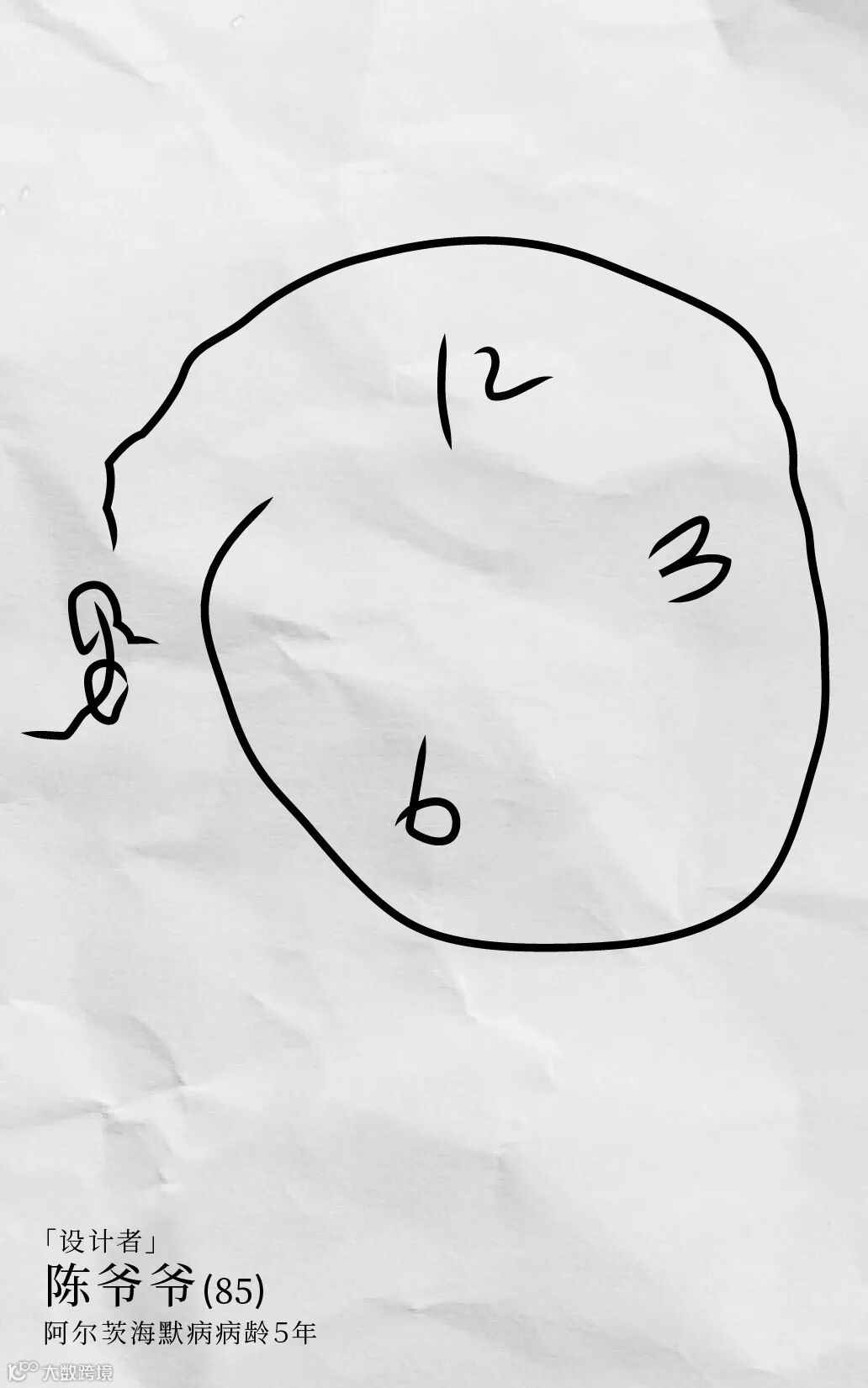
Grandpa Chen, aged 85, was diagnosed with Alzheimer’s five years ago.
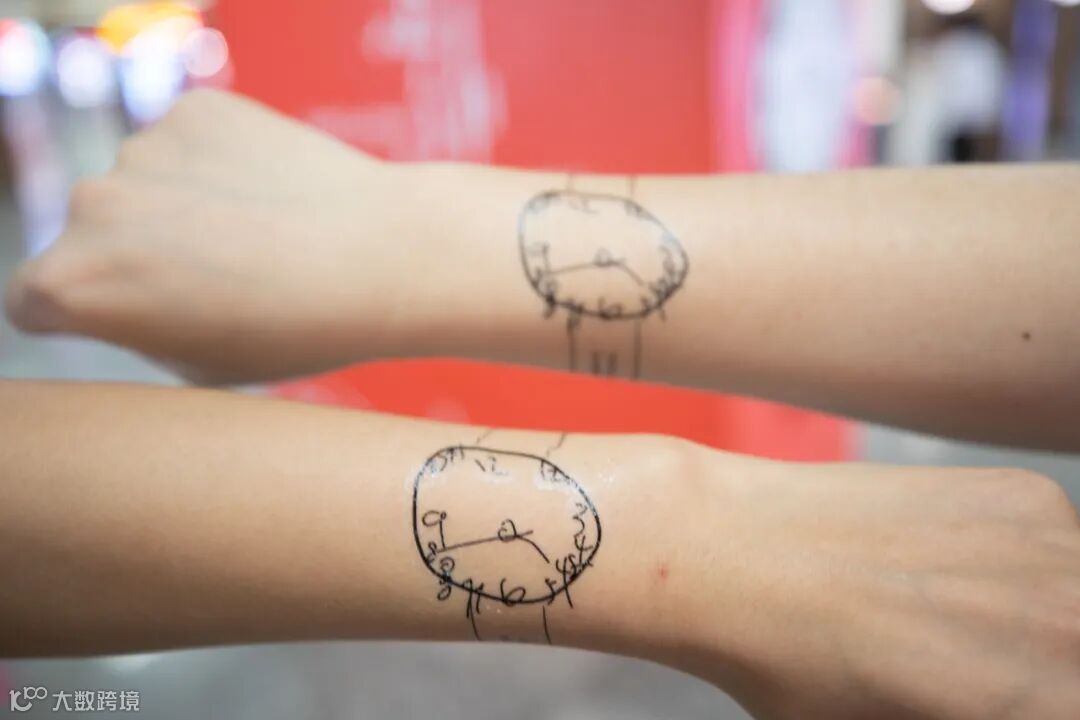
They pictured the distorted time from their fading memories and cognition capabilities.
And this is the Clocking-Drawing Test, an internationally recognized tool that can quickly screen for Alzheimer’s disease effectively.
Through drawing a clock, putting in the numbers, and setting the clock hands, the test examines multiple domains of cognitive function, from spatial navigation to memory, abstract thinking, mathematics, temporal navigation, and more.
When memory, execution, or visuospatial ability are off, the clock people draws can be distorted and unimaginable.
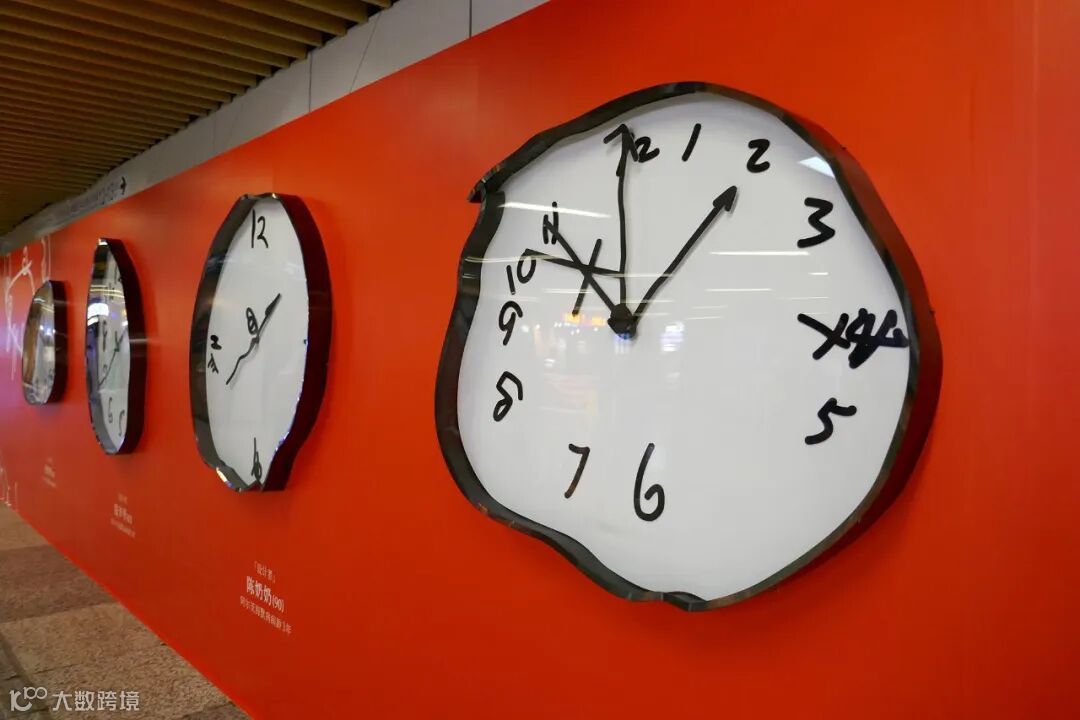
World Alzheimer's Day on September 21st takes place during China Brain Health Month, when we collected clock drawings from Alzheimer’s patients and turned them into real timepieces.
In collaboration with Jian Ai Charity, DENTSU CREATIVE teamed up with STDecaux, to host the exhibition “Lost in Time, Found in Love” in the metro station.
In a lost world and distorted time caused by Alzheimer’s, seniors experience a failure to track the passage of time and the lost ebbs and flows of perception. They gradually forget their family members and are disrupted by the loss of memories.
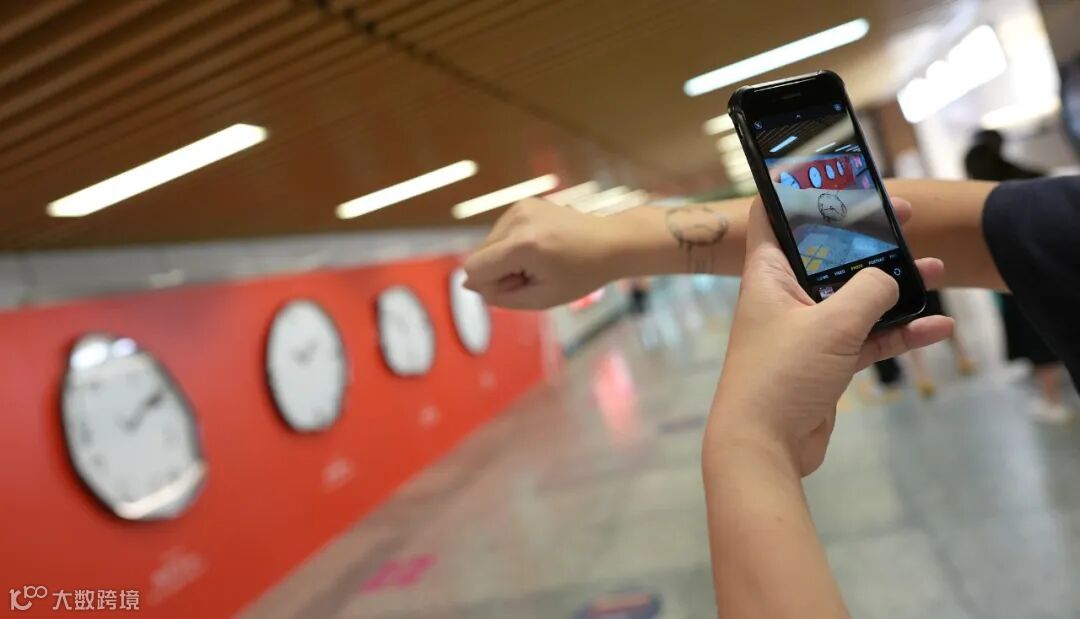
In the hustle and bustle of Xujiahui metro station in Shanghai, the “Lost in Time, Found in Love” exhibition displayed five abnormal clocks, offering a window for passers-by into the distorted world of Alzheimer’s patients, learning more about Alzheimer’s and CDT while making preventions as well as caring for the brain health of themselves and their loved ones.
We also created watch stickers for people to try on. Feeling ourselves in the distorted time never being so real, we know it’s the best time for us to take care of the senior’s health.
Despite the fact that time is lost in a world distorted by Alzheimer’s, we hope people can still find love in a paralleled real life.
The exhibition is located close to Exit 11 of Xujiahui Metro Station and will run until September 27th.
And the “Lost in Time, Found in Love” campaign continues with the physical wearable "lost watch” in production and out soon. Stay tuned.
WHAT IS ALZHEIMER’S DISEASE?
Alzheimer’s disease (AD) is the most common cause of a decline in cognitive ability. Incidence rates of AD increasing with age makes the disease the third health killer threatening the elderly after cardiovascular diseases and cancer.
The cognitive impairment in spatial and temporal navigation, as well as dysfunctions in language and emotion processing, together gradually lead to the loss of independence in the basic activities of daily life. In recent years, the prevalence of AD has increased among young people.
China has over 10 million people suffering from Alzheimer's, the highest number of any country in the world. However, according to statistics, the stigma against dementia and the lack of awareness of AD have undermined 70% of patients’ timely diagnosis and access to early treatment before it’s too late to control the disease.
WHY THE CLOCK-DRAWING TEST (CDT)?
First, it breaks boundaries between cultures and languages that can be approachable to everyone with simple instructions.
Second, it only needs a piece of paper and a pen.
Third, the test involves multiple domains of cognition.
Draw a circle = The ability to execute
Draw the numbers with the right angular distance = The ability in spatial dimension
Draw the hour and minute hand for a specific time = The ability in temporal dimension
The test also involves drawing shapes, memorization, arraying, abstract thinking, concentration, and more.
Founded in 2012 in Shanghai, Jian Ai Charity is the nation’s first 4A social organization that focuses on brain health, championing the prevention, intervention, and care of cognitive disorders.
-ENDS-