
There’s no business without show business.
Today’s CMOs agree entertainment will be a key component of brand building and are looking to build their brands in the spaces and places that matter most, investing in platforms, creating culture, conversations and content to engage audiences that are harder than ever to interrupt.
CULTURAL CAPITAL:
BY THE NUMBERS
79%
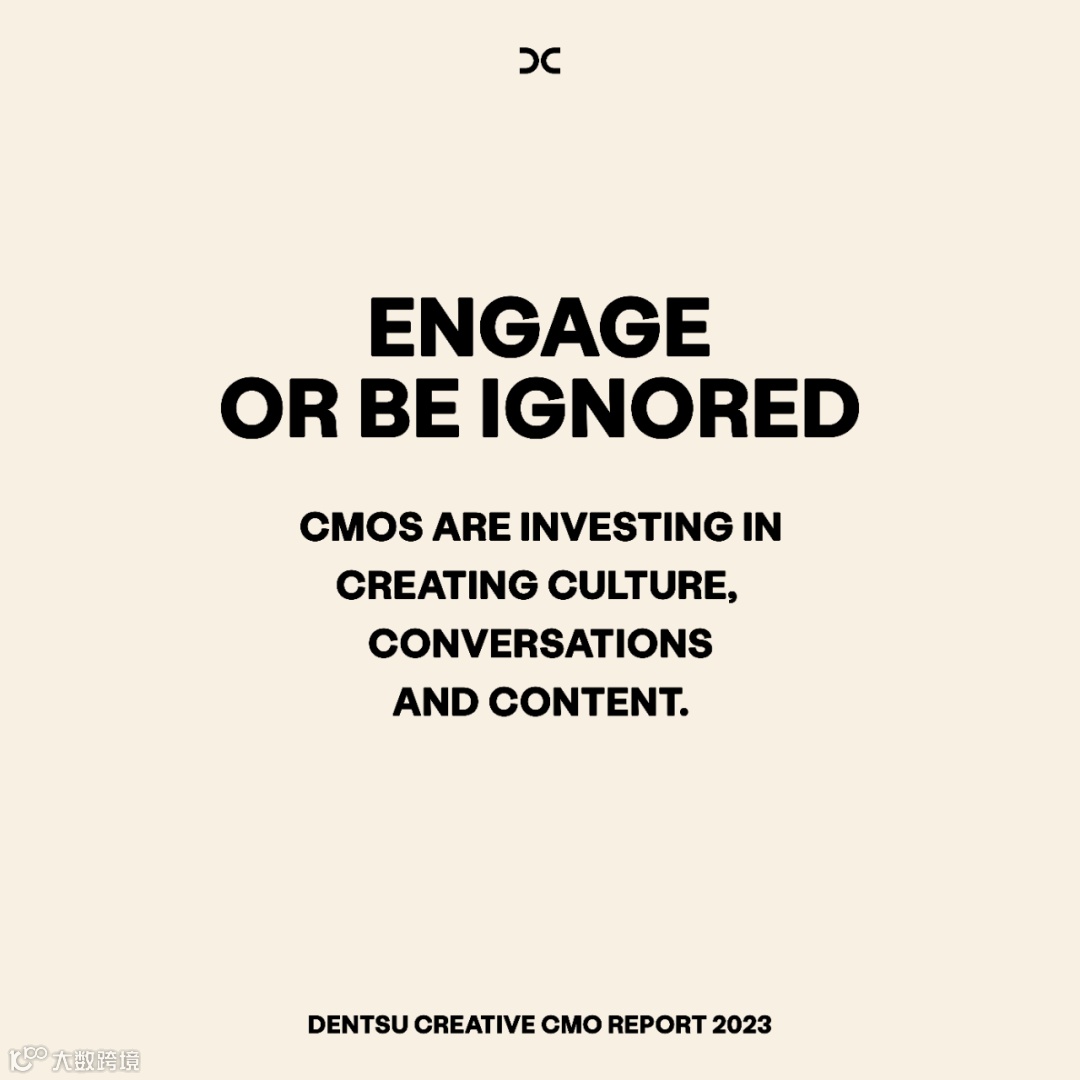
79% of CMOs agree that ‘in a world where advertising is easier to ignore, it’s more important than ever to entertain and engage.’
86%
86% agree brands should aspire to create culture and build their own audiences, creating content and entertainment properties consumers actively choose to spend time with. Even within advertising campaigns, there is a powerful desire to entertain, to create moments of joy and optimism in a challenging economic and cultural climate.
58% agree that advertising doesn’t entertain enough; marketers in China (75%) and Italy (72%) are most likely to agree on the need to entertain.
38%
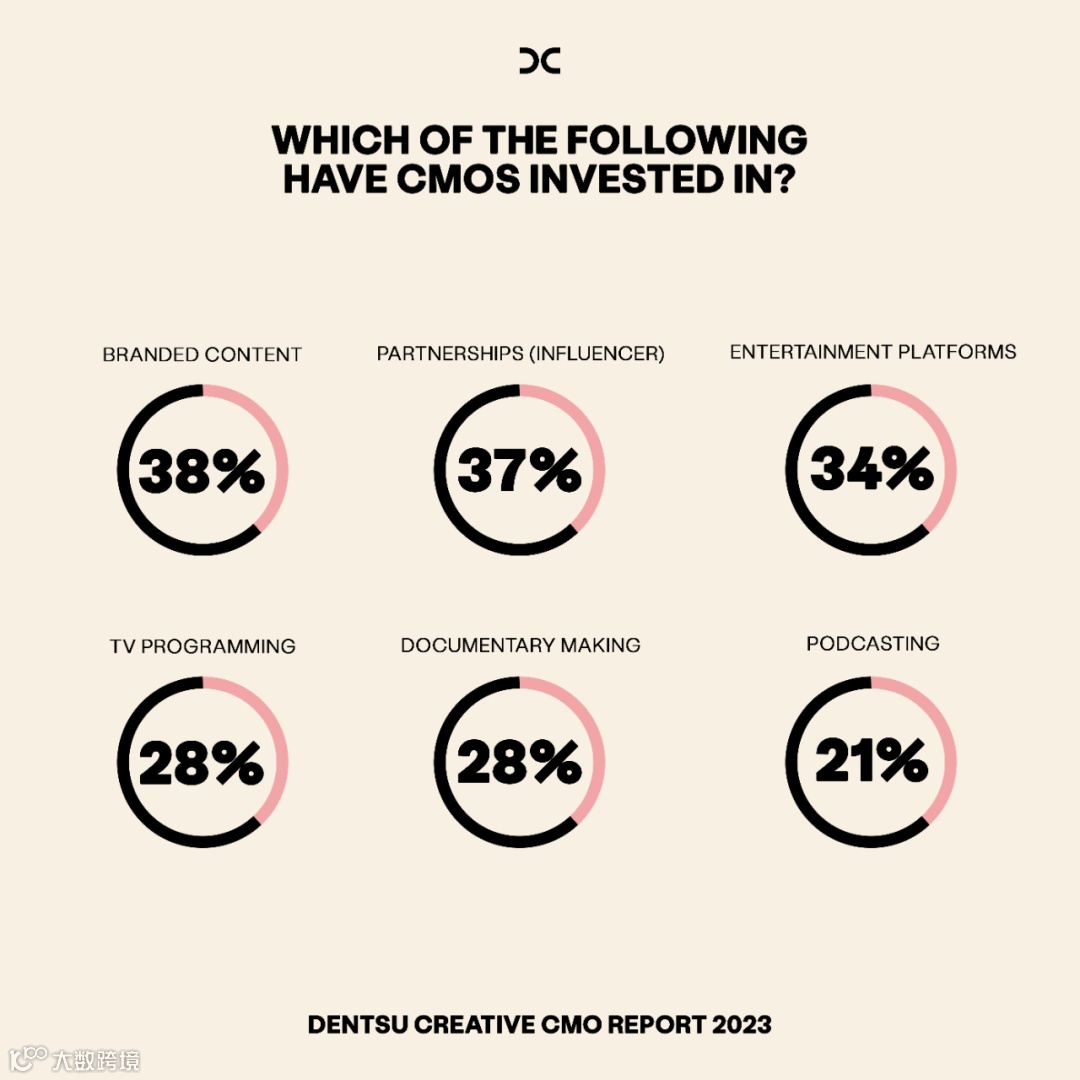
When we asked where CMOs are investing their money today, 38% say they have already invested in ‘branded content’ as an entertainment marketing tactic. 37% have invested in TV Programming, 34% in Influencer partnerships, 33% in Publishing, and 32% in Entertainment Platforms, and IP.
Respondents in China (41%) and Brazil (40%) are most likely to have invested in Entertainment Platforms and IP, with Canada most likely to invest in TV Programming (48%), alongside the UK (40%). When asked which platforms they see as having the highest potential for creativity, it is interesting to note that well-established social platforms such as YouTube and Instagram dominate, with 54% of clients agreeing that YouTube has very high potential for creative expression, closely followed by Instagram at 51%.
CULTURAL CAPITAL:
WHAT IT LOOKS LIKE
CONNECTING CONTENT
AND COMMERCE
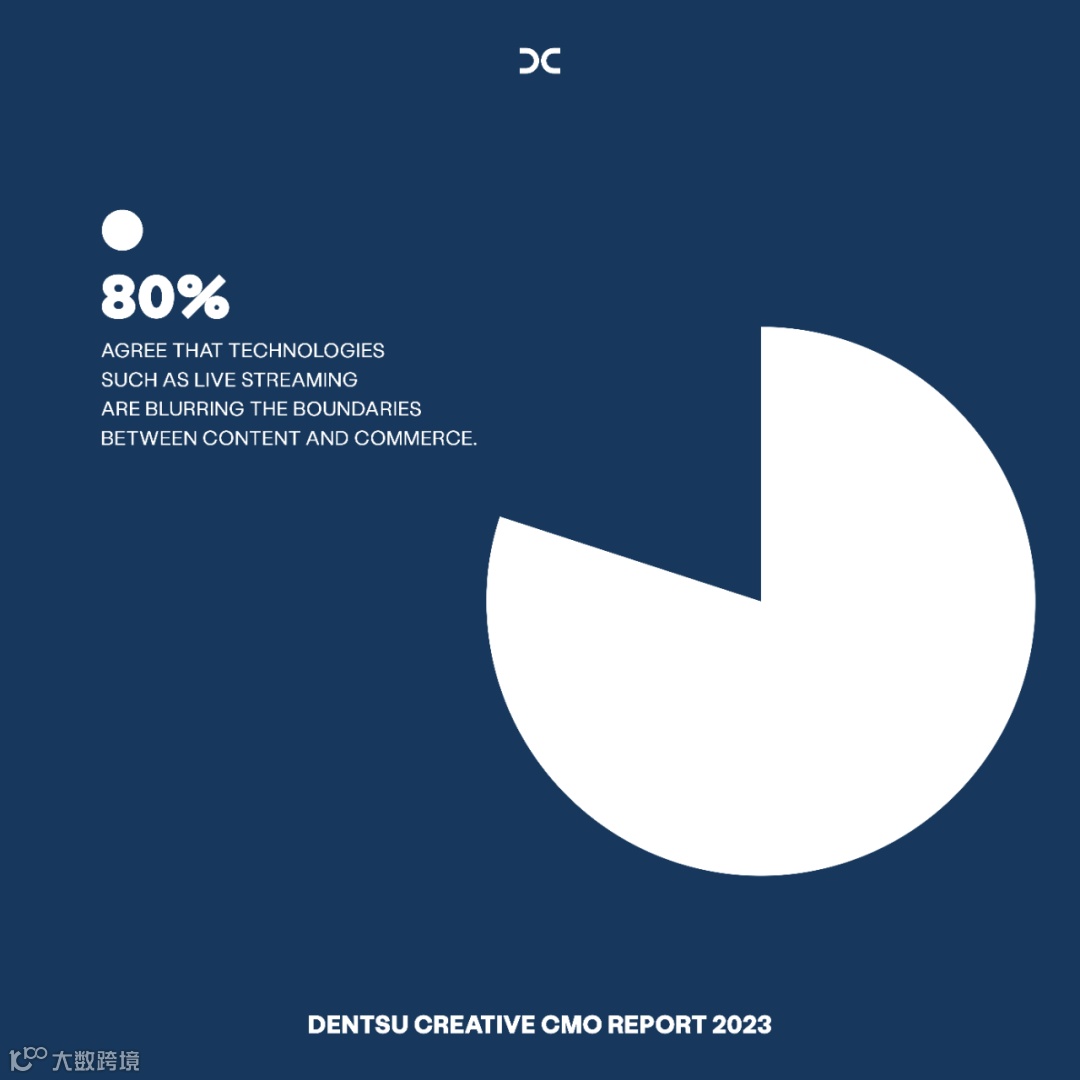
In terms of the highest potential for creativity, streaming platforms such as Netflix and HBO also feature prominently at 42%, while TikTok is making rapid gains on traditional TV, at 38% each. Increasingly TikTok is not viewed as a social media platform but an entertainment channel, setting the standard for brands connecting content and commerce. By courting a young and global audience, it is increasingly stealing attention away from both traditional and streaming platforms. 80% agree that technologies such as live streaming are blurring the boundaries between content and commerce as never before. The rise of social commerce, live streaming, and immersive entertainment properties spawning their own merchandise and retail concepts have created a world where content and entertainment properties play a powerful role at every stage of the path to purchase.
THERE'S NO BUSINESS WITHOUT
SHOW BUSINESS
CMOs agree entertainment will be a key component of brand building in 2023 and beyond; and that it’s a skill set in high demand.
OUR WORKS...
Explore the flavors without leaving your hometown with KFC's extensive menu featuring Beijing's soy paste noodles, Wuhan's hot dry noodles, Chongqing's Dandan noodles, and more.
In a decentralized media landscape, we decided to engage everyone in advertising the local dishes from their hometowns as well as the offerings on the KFC menu. But which influencers should we use to start the challenge?
Meet the 400,000 Influencers of KFC, hailing from 9000+ stores across China. Through their distinctive dialects and talents, these influencers created short videos to share the most authentic local flavors with the world.
Echoed people’s nostalgia for local food, the #Chinese Food Challenge# quickly relayed the food culture to nearly 120 million people on social media. 892,000 users on Weibo engaged in a discussion of hometown food.
Engage or be ignored.