Over the course 2023 and 2024, Denstu Creative China pulled off the feat of scooping two Lions—one Bronze in Creative Commerce for its KFC Re:Store campaign and a Bronze in the Outdoor category for charity group Jian Ai.
This was achieved under the leadership of chief creative officer Chris Chen, a seasoned leader with over 30 years of industry experience and 11 years at Dentsu Group.
Having served twice as a jury member for Cannes Lions, Chen regards the awards as a benchmark, and a target to strive for. He told Campaign that winning an award brings him immense joy, primarily because it provides a platform to showcase Chinese creativity to the world and engage in cultural dialogue. This year, Chen delivered an address at Cannes on China’s Gen Z which received received feedback from global colleagues who found their preconceptions of China challenged from what they usually consume in media coverage about China.
Chris Chen spoke at Cannes Lions 2024
Chen founded a start-up in Taipei then moved the company to Shanghai in 2002. This agency clinched a Gold for in Campaign's Greater China Digital Agency of the Year in 2012. Then, Trio was acquired by the dentsu in 2013, and he formally moved to lead the dentsu’s creative team in China in 2020.
Campaign Asia Pacific sat down with him as he shared insights behind dentsu’s award-winning work, his views on the Cannes experience, and his thoughts on the current state of creativity in China.
Campaign: Dentsu Creative China won two awards at Cannes over the past two years. Could you provide more details about the winning campaigns?
Chen: Last year, we won a Bronze Lion for a metaverse KFC fried chicken store (KFC Re:Store). This concept emerged in response to the behavioural shifts among Chinese youth following the Covid pandemic. We used to think that technology changes and people don't, but in fact, people are changing. A significant 70% of young Chinese individuals now prefer online social interactions over offline ones, marking a substantial behavioural transformation. Our subsequent global survey revealed that online spending by Chinese youth significantly outstrips that of their counterparts in other major markets, including Japan, the UK, and the US.
We didn’t just produce a campaign, what we really built is a platform. To date, this Re:Store has attracted two billion visitors, generating over six billion online interactions, which I think is very impressive. That's why we won the Creative Commerce Lion.
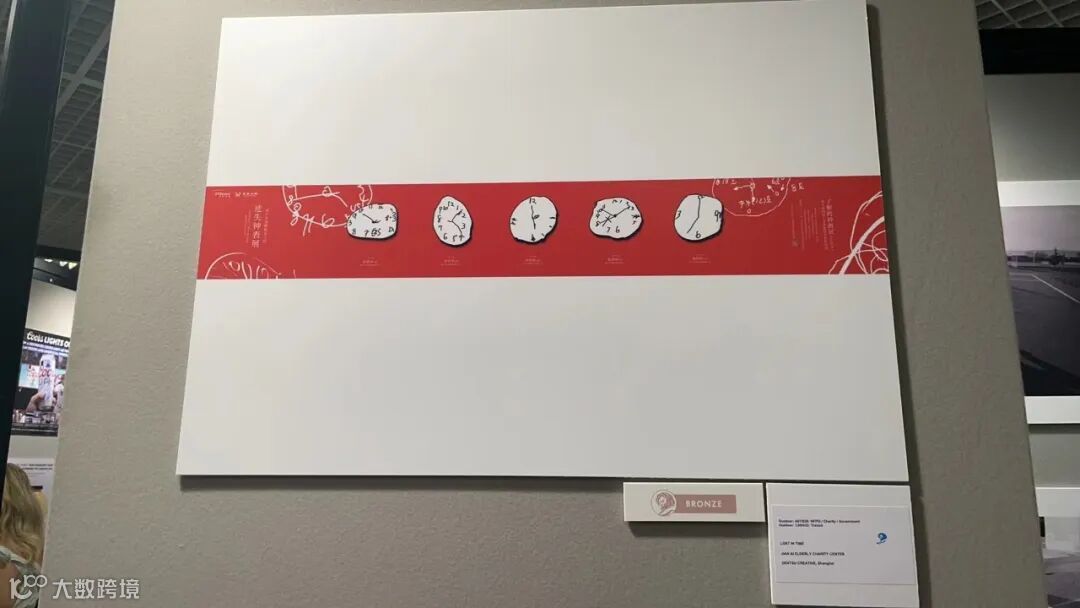
Lost in Time was an attempt. Both our ECD and I have family members who suffered from Alzheimer's disease. Our team felt a strong urge to raise awareness about the condition. Despite the lack of a cure, we believe there are still ways to manage the illness.
Our success in securing Cannes Lions for two consecutive years can be attributed firstly to dentsu’s global network, who supported us. Having served twice as a judge at Cannes Lions, I’ve learned that the judges are from all over the world. The challenge lies in finding a universal language that resonates with everyone. In these two instances, one involving ESG and the other commerce, we’ve been exploring diverse fields.
As a creative leader and veteran, could you share your experiences at Cannes this year? Have you noticed any changes at Cannes over the years?
I've been to the Cannes Lions six times, except for 2021, when I didn't go. In 2018, I had the opportunity to be a speaker, and in 2019, I served as a jury member. [The 2020 live event was cancelled due to the pandemic, and the 2021 event was held online.] In 2022, I reprised my role as a jury member. In 2023, we won a Lion and this year 2024 we won a Lion and I was joining as a speaker.
The KFC Re:Store project team
Over the past few years, I’ve observed significant changes at Cannes Lions. My first visit in 2017 felt more like a technology exhibition than an advertising festival, with discussions on machine learning and big data. However, post-pandemic in 2022, I noticed a shift back towards discussions about humanity.
In the last two to three years, I’ve noticed a change in the creative community’s anxiety about technology. Initially, the advent of programmatic and big data caused considerable anxiety. Post-Covid, the focus shifted back to humanity, but by 2023, with the rise of AI, the anxiety returned. This year, I’ve noticed a mix of topics being discussed. After the AI anxiety, people have started exploring other topics. For instance, this year the CCO of dentsu Italy shared insights about Lo-Fi.
The Lost in Time project team
Generative AI is a buzzword at the moment. How do you see its impact on creative work in your team?
To be honest, I’m in the minority who aren’t overly anxious, because I enjoy experimenting with new technologies. I’ve always enjoyed these things. Undoubtedly, generative AI has a significant impact on our content production. Having embarked on my digital journey in 1999, I don’t experience much anxiety myself.
There will soon be an AI tool launch at dentsu, designed like an app store with different tools, such as a KFC expert and a Red/Xiaohongshu expert. The aim is to encourage our staff to learn through a professional model. I urge the entire team to embrace this. We all need to learn and utilise AI, as it represents the trend of the future.
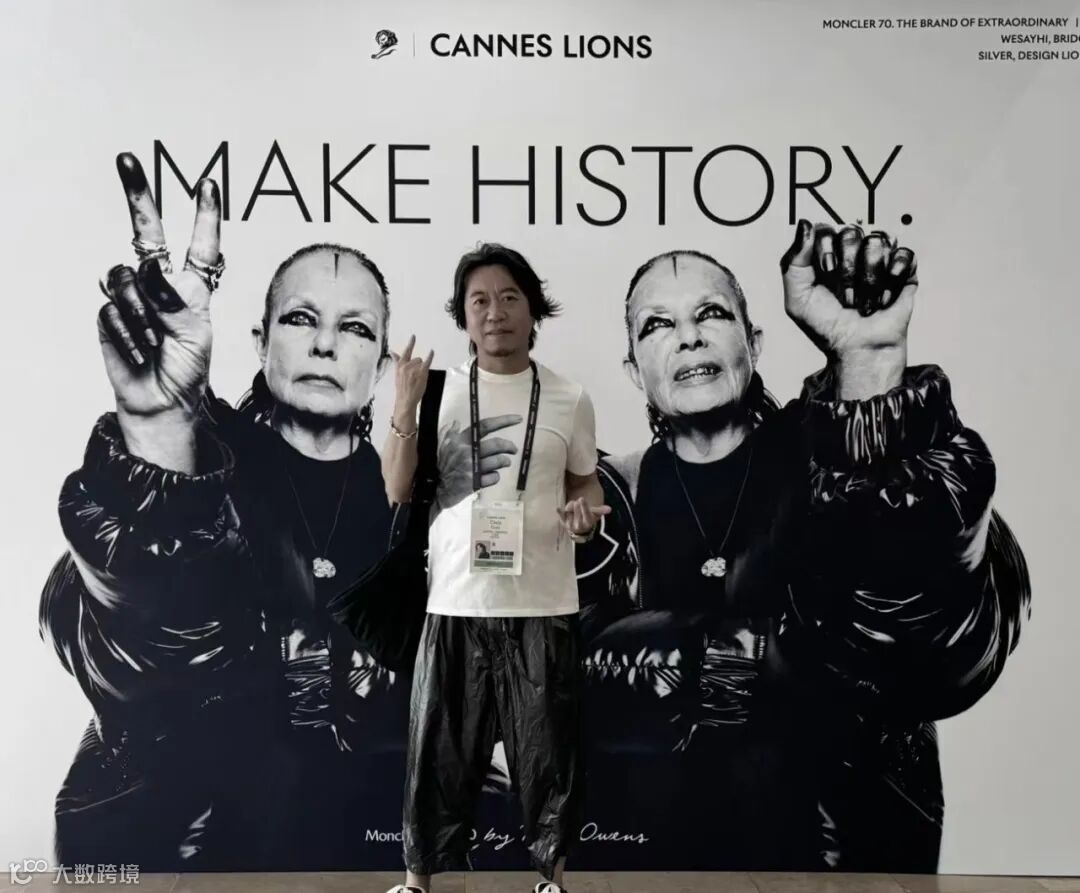
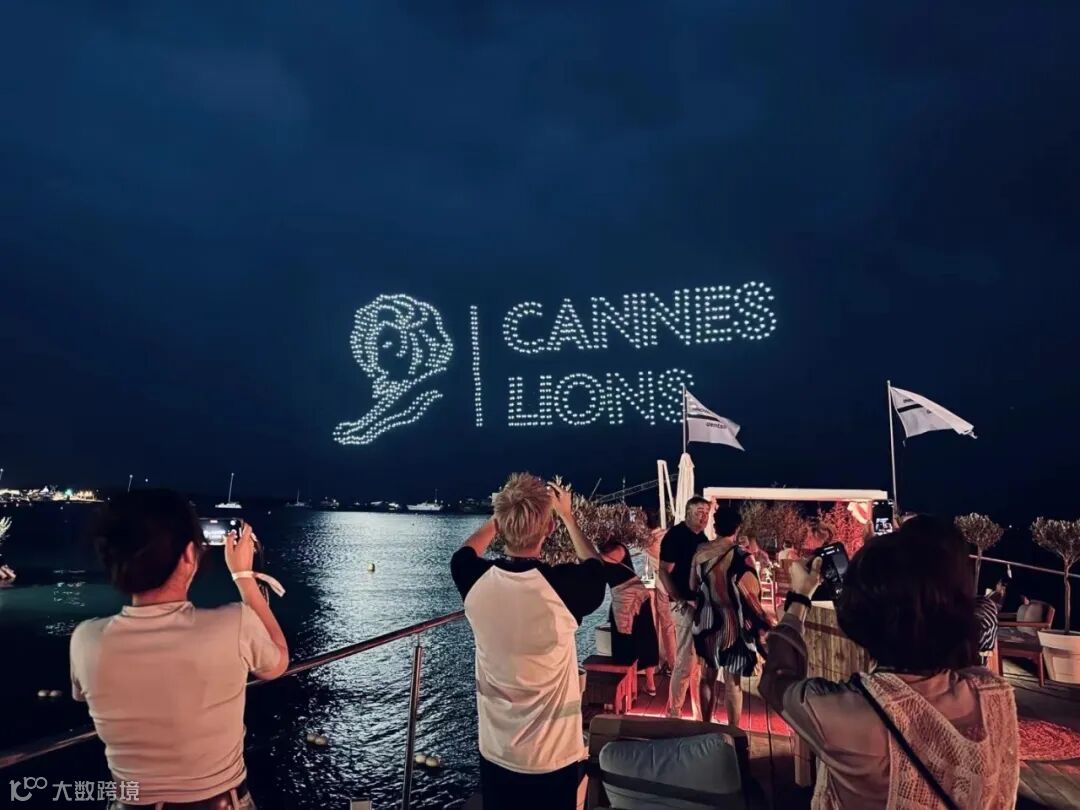
Chris Chen @ Cannes 2024
From our observation, the dentsu’s creative team loves public service advertising and ‘for good’ campaigns such as Pangolin and Ant Forest. Are there any standout projects that you consider to be exceptional, even if they didn’t receive a Lion at Cannes?
We’ve been supporting an initiative called ‘Angel Restaurants’, given that KFC has several outlets in China that employ individuals with hearing impairments. As part of this initiative, we’ve developed a range of tools to facilitate the ordering process and even teach you to use simple sign language.
We derive immense satisfaction from undertaking such purpose-driven projects and I consistently motivate our team in this direction. Another such endeavour is for Haleon’s Fenbid brand, a painkiller designed to alleviate menstrual pain, specifically for young women. This initiative, titled ‘A Letter from the Mountains’, is envisaged as a long-term project.
Brand and purpose-led campaigns are interconnected. It’s no longer something you do just to win an award. It should be a very natural integration with the brand.
I like the content, which is very direct but can touch people’s hearts. And that’s already in our DNA, B to B to S, business to business to society. That’s the DNA of dentsu's creative team.
Earlier this year, Chun Yin Mak, the CEO of dentsu China, revealed plans to broaden the scope of the dentsu Z team beyond Dentsu Creative to include customer experience transformation, client management, and media capabilities. How is dentsu nurturing young creative talent?
Dentsu Z was launched more than three years ago (in 2021), with a focus on Gen Z, who make up 20% of China’s population and contribute to 40% of its consumption. Given that young people value authenticity, it’s more effective to have a team of young individuals targeting a young audience. However, our aim is to bring together a diverse group of people.
In the first year, we selected ten individuals from a pool of 1,800 applicants. Approximately 200 candidates participated in offline interviews, following which we invited 40 to join a two-day bootcamp. The final ten selected are exceptional and unique in their own ways. Some are influencers while others excel at gaming, resulting in a team with varied talents.
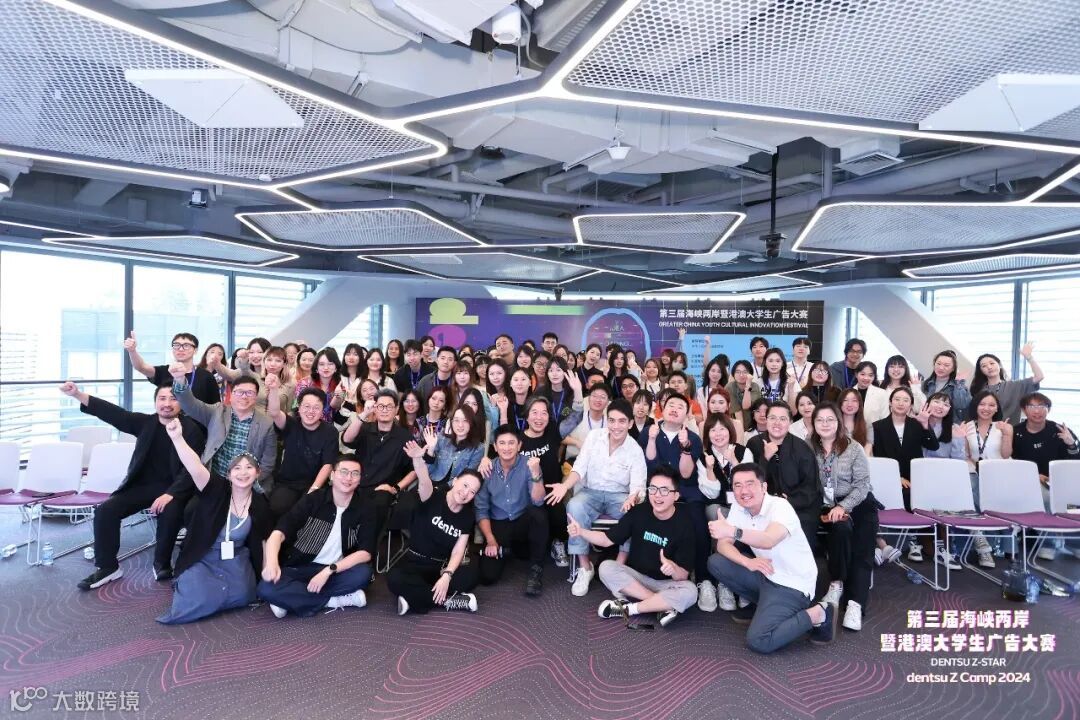
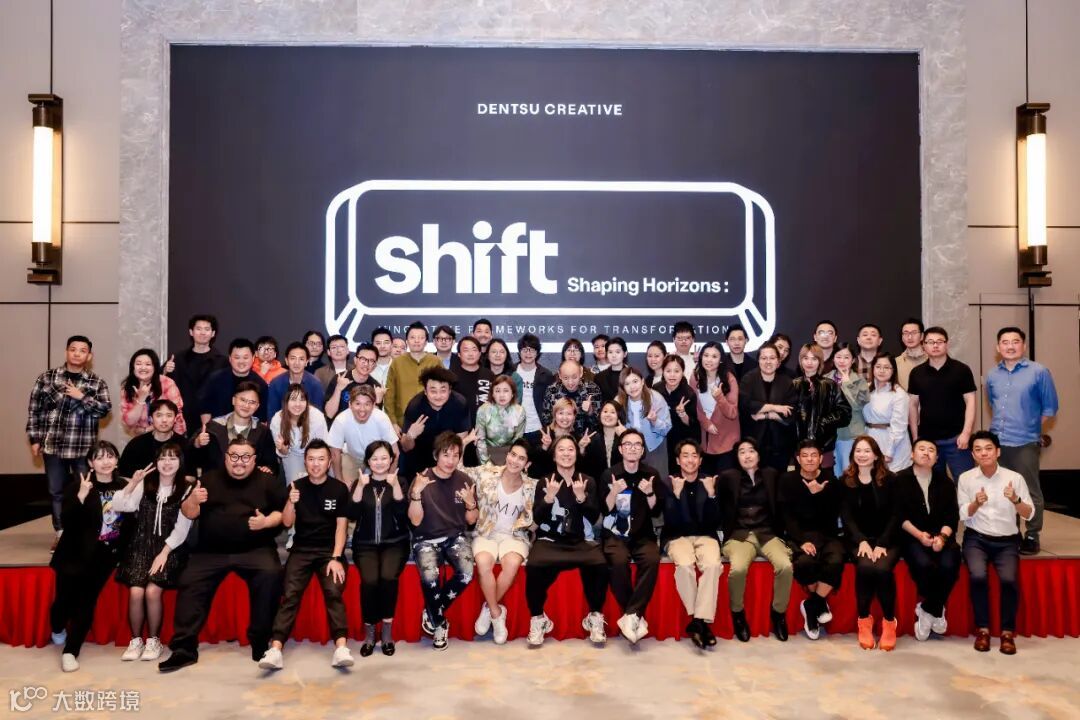
Chris Chen at dentsu Z Camp 2024
We didn't use the criteria that ad agencies used to find art directors and copywriters. We looked for storytellers, cultural observers and social players.
I conduct weekly meetings with them. This generation of young people is truly passionate about their interests. Hence, it’s unnecessary to confine them to the office when there’s no pressing work. I see myself more as an incubator for their growth.
Every two years, they publish a Gen Z trends report that readers find insightful. Data alone can’t provide insights; it requires human interpretation. Many studies on Chinese youth merely compile data, but the dentsu Z report focuses on the human aspect.
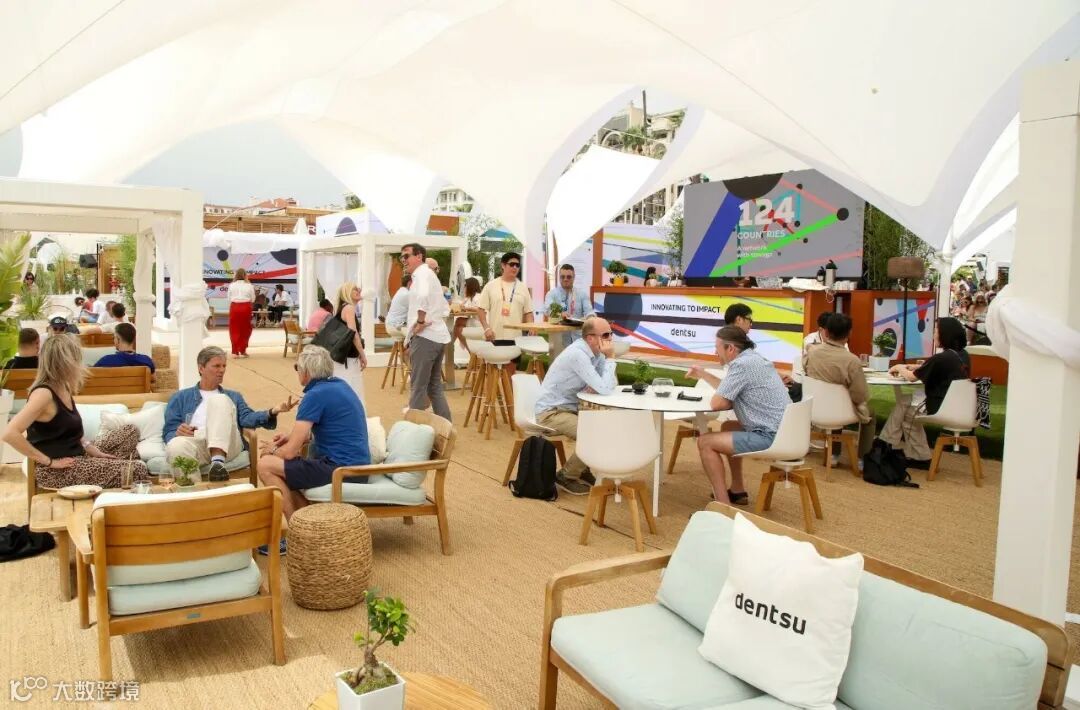
dentsu beach house @ Cannes
There are some opinions suggesting that brands in China may not place as much importance on the Cannes Lions as before. What is your perspective on this?
If there is a chance, one should truly appreciate the global energy at Cannes. Having spent 34 years in the ad industry, I’ve found the last three years to be the most transformative at Cannes.
[It] offers a window into diverse perspectives. I return every year and I’m always eager to share these insights. Media sometimes has many stereotypes. Hence, I believe it’s crucial for Chinese creative work to gain more exposure on the international stage because it can help us to change misconceptions.
Lost in Time @ Cannes Lions 2024
We hear that clients tend to favour short-term projects with higher conversion rates. As a creative leader in the Chinese Mainland market, do you agree?
The focus for most has shifted towards transactions and conversions, especially in the past couple of years when the economy has been challenging. Pursuing higher conversion rates is a vital goal. Currently, the trend of decentralisation, particularly in China, is gaining momentum.
For example, the content decentralisation of Douyin and Kuaishou, the knowledge decentralisation of Red/Xiaohongshu and Zhihu, and the commerce decentralisation of Pinduoduo and WeChat. The challenge lies in establishing a purpose and then unleashing brand value in this decentralised landscape. If this issue can be addressed effectively, I believe there’s a greater chance of winning awards.
Moreover, we have certain commercial advantages in China in areas such as commerce and creative data. Nevertheless, I continue to advocate for the creative community to explore and experiment more.
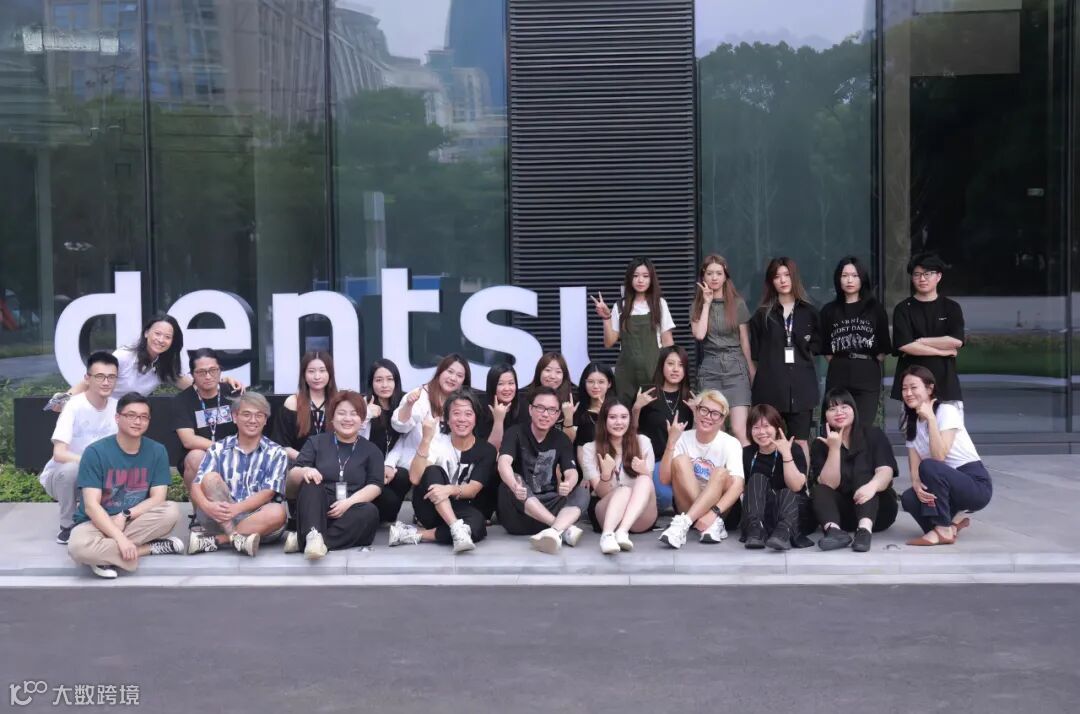
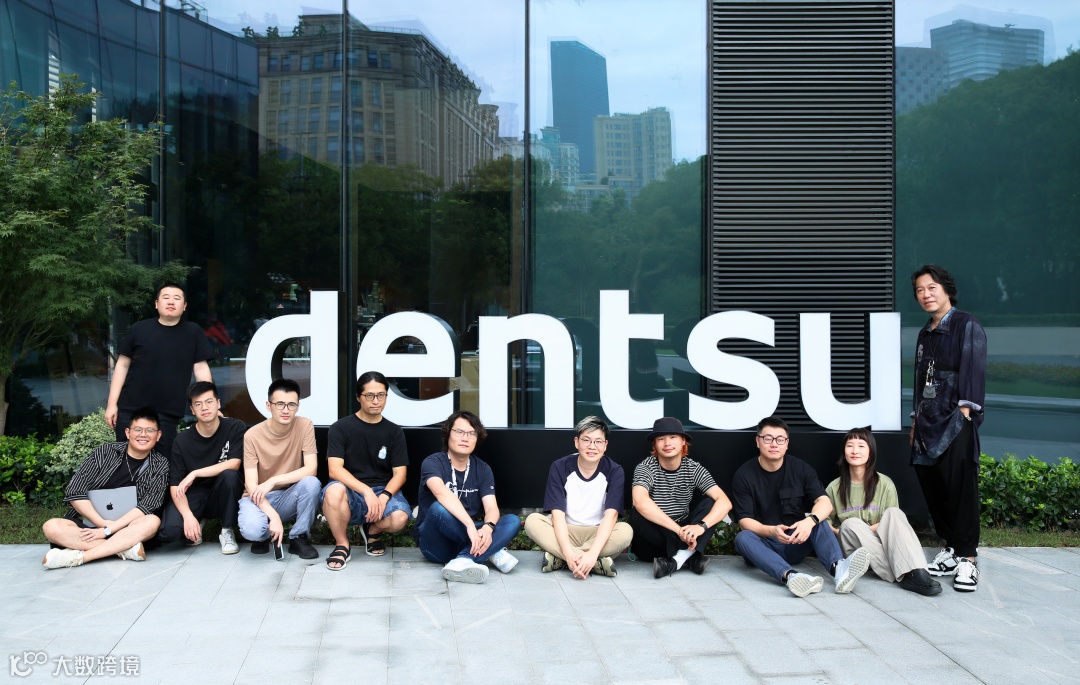
Chris Chen & Dentsu Creative China team
Dentsu Creative stands out as one of the few agency groups in Chinese Mainland that has won Lions at Cannes. How do you perceive the competition posed by local boutique agencies in China?
There have always been all sorts of challenges in our business, so when someone said earlier that creativity is dead, I thought, we're not in the funeral business, we're in advertising.
In fact, I founded a start-up, Trio Digital Integrated, which was later acquired by dentsu in 2013. At the time, we had a team of over 100 people. However, once we reached a certain size, I found that I could no longer offer my team anything more. We had already won Gold for the Campaign AOY Greater China Digital Agency of the Year award (in 2012) and then I won Greater China Agency Head of the Year (in 2016) & Greater China Creative Person of the Year (in 2019).
Over the past 11 years in dentsu, I’ve come to appreciate the wider vision that a large platform can provide. Of course, everyone has different objectives. Local hot shops are indeed excellent.
I often aspire to take our team out into the world. I believe creatives need a breath of fresh air rather than sitting in front of a computer. So the advantage of a big agency group is that it can provide you with more nutrients.
So, I'm not afraid of competition. Competition doesn't stop from the beginning to the end, and I certainly agree that 4A has to get out of its own way. We are like a creative hub, and in the future, we will be like ‘solutionists’, someone who helps brands solve problems, and you may need diverse talents to help you solve (different problems).
In the past, we prioritised specialisation, but now we value generalists and well-rounded talents more. That’s something that the 4As can offer.
dentsu beach house @ Cannes
What motivated you to choose the advertising industry and stick with it for so many years?
From my early years in primary and secondary school, I had already determined that my career path would either be in design or music. So I went straight to look for a job in an advertising agency. After nearly a decade in the industry, I became fascinated with the internet. There was no place to learn it in Asia, so I used my savings from those ten years to study in New York.
In 2002, I ventured to Shanghai to start a business. My first clients included Coca-Cola, Nokia, China Mobile, and Sony. Back then, it was hard to survive.
In fact, I ran away to pursue my music dream, and released an album in Taipei, which was shortlisted for the Golden Melody Award. However, I was faced with a choice between a career in advertising or music.
I think creativity is better as a job, and music is better as a hobby. While all my friends are still in the music industry, I returned to advertising.
Explore more insights and updates on Asia Pacific and global news on the Campaign website.
-ENDS-