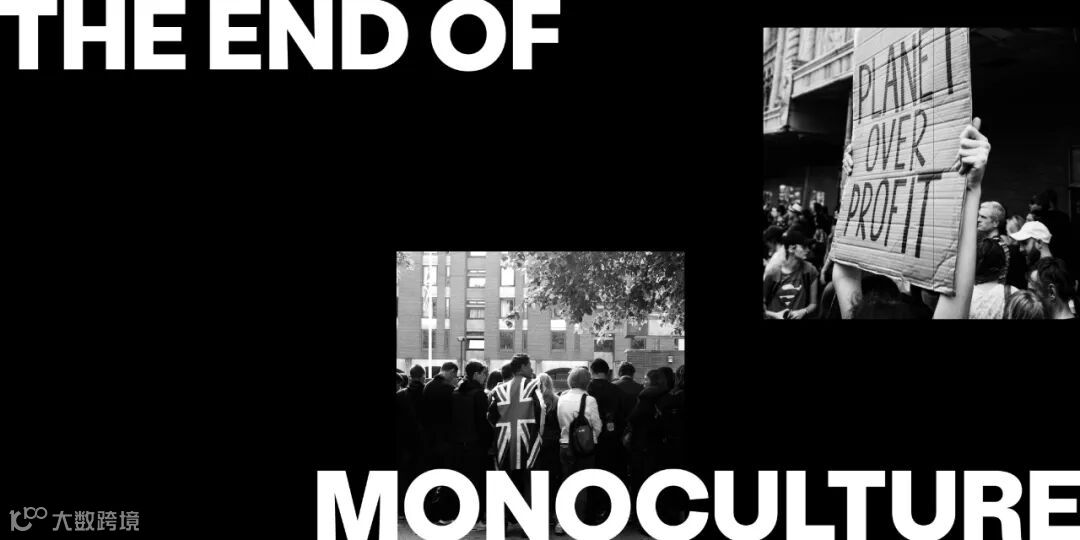
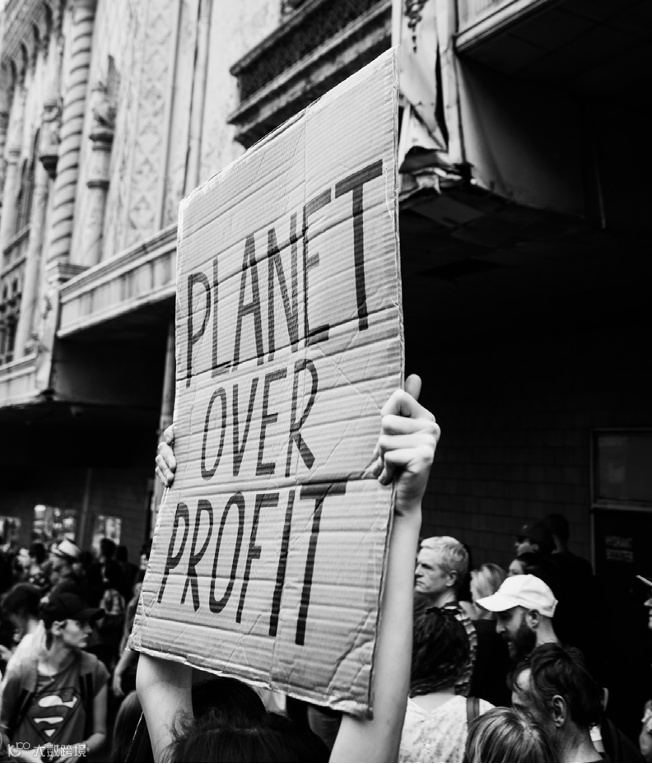
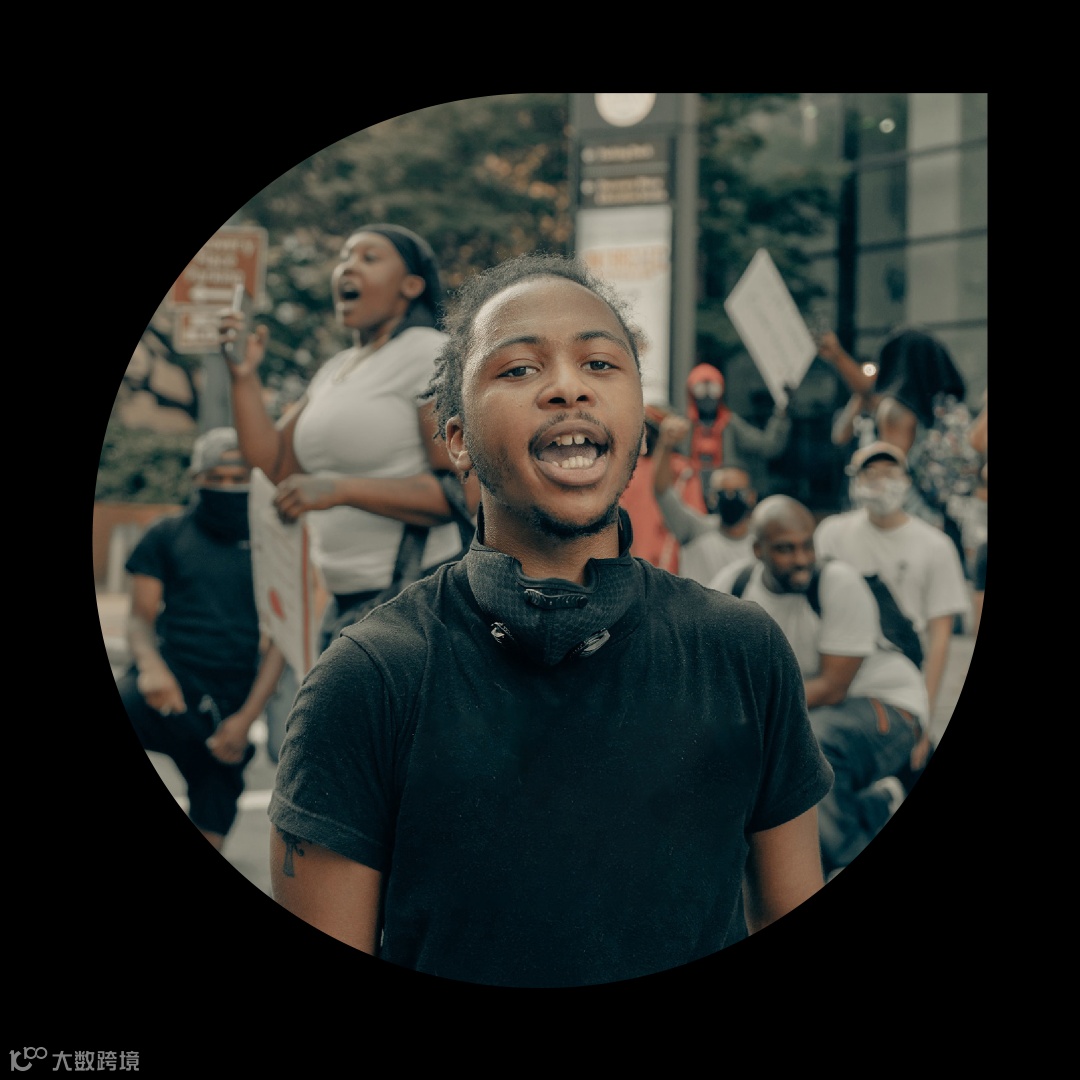
As new milestones were reached across the world — the end of the Elizabethan era in the UK, the first Gen Z Congressman to be elected in the US — there is a powerful sense of old orthodoxies shifting.
Western economies struggling with hyper inflation, cost of living crises, and political polarisation are no longer providing cultural aspiration beyond (or within) their own shores. Trust in authority has reached an all time low.
For many young people, it is clear that pursuing their parents’ path to affluence is no longer an option. Meanwhile, we see a powerful desire to both subvert old narratives and to create new ones. World-building games such as Roblox soar in popularity while a new era of period dramas challenge traditional portrayals of power and privilege.
Year-on-year, trust has fallen in 17 of the 27 countries in the annual Edelman Trust Barometer. Only 36% of the respondents believe government is a unifying force in society.
For the first time, less than half of respondents surveyed in England and Wales identify as Christian.
Currently, only 42% of US adults think it is very (13%) or somewhat (29%) likely that today’s youth “will have a better living standard, better homes, a better education and so on” — an 18-percentage-point drop since June 2019.
Social platforms are evolving their editing features and their filters into world-building functionality. Earlier this year Pinterest introduced #Pinterest Shuffles, a moodboarding / dream-building collaging function, which has already amassed 27m views on TikTok. Likewise, new social platforms and games are emerging as ways of role playing possible futures. Somewhere Good is an audio-based social app inviting users to create spaces for their own communities or join existing ones themed around different ‘worlds.’ Worlds range from the “Sad Girls Club” which is a space to discuss topics around mental health to “AcerandO” for ancestors - in-training.
RECLAIMING OLD NARRATIVES
The next generation want to rewrite the scripts they’ve inherited about their historyand heritage. FOMO (Fear Of Missing Out) is a podcast which purports to offer “unfiltered lessons on British history,” covering topics that are usually omitted from the curriculum, from media reporting of queer communities to British colonialism. A new generation of academics and explorers are reclaiming an authentic perspective on history and heritage. As Sabrina al-Sadiq, a student at Khartoum University, put it in The Guardian, “it is very important that Africans do African archaeology...the idea that people from the west know best is changing.”
Brands continue to introduce platforms and initiatives for consumers to write their own stories. Converse launched the Create Next Film Project inviting five emerging creatives to produce a five-minute short with support from entertainment industry experts and mentors including British actor and activist John Boyega.
We are all worldbuilders now. ——Keeley Adler, Cultural Futurist, US
Worldbuilding — the act of imagining, designing, and implementing the world of a story — isn’t a new phenomenon. It stretches back into the annals of sci-fi and fantasy, and farther still. But the idea that we might all be worldbuilders? That’s a fundamental shift — one that’s come about thanks to a confluence of forces. In the context of popular culture, worlds have gobbled up just about every form of media, so much so that the idea of a ‘cinematic universe’ has become a meme unto itself.
What found the mainstream by way of superhero franchises and video games has given way to a cultural ecosystem where the expansive potential of intellectual property is prioritized above all else. Meanwhile, tailwinds in both fandom and the creator economy are pointing toward collaboration and ownership. With new tools at our disposal — think: decentralized, niche community platforms; web3 tooling; generative AI — it’s increasingly possible for us to create our own worlds around the things we’re passionate about.
From web3 projects like Loot and Nouns DAO, to activated fandoms around traditional celebrities and modern influencers alike, we’re watching universes bloom around all sorts of things — with communities of those we may have once considered passive consumers right at the center; not just actively participating but building in earnest. Suffice it to say we’ve caught the building bug. Whether you look at Dabloons — a completely player-generated, decentralized game that developed organically among kids on TikTok — or at subcultural movements like those unfolding around Lunarpunk, Biopunk, Hopepunkand the rest, what you find are communities emerging around shared vision and common lore, cultivating a real sense of ownership over the future of, well, whatever it is.
The Unfiltered History Tour was a secret tour of the British Museum created by DENTSU CREATIVE Bengaluru for Vice World News. The tour used Augmented Reality to show the true history behind some of the most priceless and highly contested artefacts within the British Museum. Visitors to the museum were shocked and moved to hear more about the people and cultures the artefacts were originally taken from.
The idea helped to educate 100,000 people, with 35,000+ downloading its accompanying podcast, introducing a new generation to the debate around disputed artefacts. This resulted in 18M impressions, a 40% rise in followers and $2M in earned media on TikTok, as well as a 49% increase in total impressions on Instagram for Vice World News. The work also won a total of 12 Cannes Lions including a Titanium Lion, and eight D&AD Pencils, including a Yellow Pencil.
While the old narratives are intensively scrutinized, new cultures are burgeoning and taking the floor.
“Consumers are immersing themselves in culture and language in search of something fresh and completely new.” — Wei Qing Lim, Digital Strategist, Malaysia.
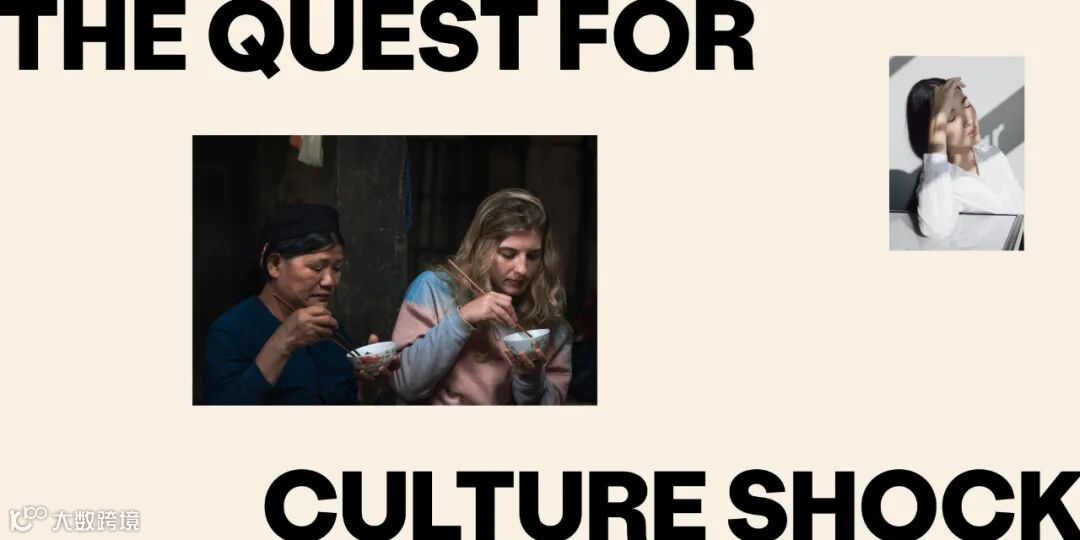
As young consumers find less to aspire to in traditional cultures, they seek immersion in entirely new cultures, craving genuine culture shock after “lost” months and years held in place. Instead of simply switching off from their everyday consumers today are seeking to immerse themselves in something new, hungry for new stimulation post Pandemic. This opens up new opportunities for countries to build influence via cultural capital or soft power versus traditional routes to power and influence.
Across Asia Pacific we see the rise of “East meets East”; the desire to embrace the full richness and diversity of the region for inspiration rather than look West for inspiration.
THE QUEST FOR CULTURE SHOCK:
50% of global travelers want to experience complete culture shock in 2023 – be it traveling somewhere with completely different cultural experiences and languages (51%) or exploring lesser-known cities with hidden gems that aren’t already on the radar (30%).
Korean has become the seventh most popular language for people to study around the world, while 1.3 million people began learning Ukranian in 2022, according to language app Duolingo.
Netflix found that interest in Korean dramas in India has increased by 370 percent over the last year.
THE QUEST FOR CULTURE SHOCK:
Hallyu or the “Korean Wave” continues to ripple across the world and across every aspect of culture. Korean music, movies, games, fashion and food are becoming a barometer for what’s next. Sabiha Khan, Head of Strategy, Digital Experience, India illuminates, “we’re seeing a real east-meets-east trend as Indian youth get excited about Korean culture, including the food and the language.” The fascination with all things Korean is not just for younger generations either; viewing for K-dramas on Netflix India increased 370 percent over the last year, while major cultural institutions such as the V&A and LACMA have featured landmark exhibitions on Korean Culture.
PEER-TO-PEER CULTURE CURATION
As travellers seek out less-trodden paths they are turning to their peers for inspiration and verification. Earlier this year Google Maps introduced a Google Vibe Check function that invites users to share hyper-specific insights around unusual destinations. Likewise, Trippin, pitched as a destination guide for the experience hungry Gen Z offers travel advice ‘seen through the eyes of locals.’
While South Korea is the most obvious example, we can see around the world the gradual embrace of soft power building global influence versus more traditional routes to dominance.
Monocle magazine’s annual Soft Power Survey shows smaller nations such as Denmark, Norway rising in influence as champions of sustainability, philanthropy and democracy.
THE QUEST FOR CULTURE SHOCK:
I asked ChatGPT to write this piece for me, and you almost ended up with an article about grass. But unlike AI, people have opinions, and mine is: good riddance, monoculture.——Luella Ben Aziza, Strategy Director, UK
It had its merits - there was a time when it felt like everyone saw the same movies, played the same albums and had the same reference points in culture. It was a point of connection. Now, when I ask a friend if they’ve seen this show or heard that album, I rarely expect a ‘yes.’ After all, we have access to infinite culture, information, and perspectives, at a time when personal branding is currency. So we’re all into many different, very different things. That makes the world more interesting. And I suspect that point of connection was always more helpful to marketers than to society.
Gen Z are intensifying the importance of individual, intrinsic expression. While that creates pressure, it also alleviates pressure on the weird, the quirky and the previously marginalised. Now western ideologies’ sheen is seriously tarnished, more of us look to the whole world for inspiration – not just on the big issues, like spirituality, but on the smaller ones too: Korean skincare, Chinese streetwear, Turkish dancing.
Of course we’ll always be connected by global cultural moments like the World Cup, Fashion Weeks and the Oscars, but now the top layer of culture is thinner, less ubiquitous, because there’s so much, so many other moments, that it’s impossible to stay in the loop. Algorithms make it much more entertaining to be on the outside anyway. Instead, the expectation is that we have our own unique lens on current issues….and in popular culture it needs to be progressive and inclusive.
Since the cultural centres of gravity have less pull, no longer must you flock to them, for example, by moving to a big city, to feel part of culture. For now, TikTok is that city. And it’s a much more candid and imaginative space, where we can explore any number of new worlds. New cultures bring the unexpected, the surprising, the visually arresting: the perfect hook for any media. So culture shock is playing a more important role for any brand or creator vying for attention, in a world where the 3 second hook is king. Especially at a time where you can still become TikTok famous overnight.
It's not just a tactical play. At a macro level, the West is no longer the beacon of ideological superiority it aimed to be in the 00’s. The American Dream has an ugly dent in it, so globally, we are hungry for fresher sources of inspiration.
Reinterpretation of old ideas, reclaiming of old narratives and repurposing inspiration from anywhere is anyone’s game now, making the job of fashion houses, for example, much harder. Working in fashion in the 00’s, buyers had the dream job: going to the corners of the earth to find inspiration that might feel new on the UK high street. Now, they have little chance of the speed of manufacture catching up to the speed of culture.
When there’s so much inspiration to draw from, it means that creativity is more important than ever. But not simply from the perspective of “we need more ideas.” It’s more about the thread that ties ideas together, connectedness, understanding and interpretation. Harder to achieve, but so much more powerful.
WHAT IT MEANS FOR BRANDS...
PEKING OPERA ARTIST
BRAND: BACTROBAN
CREATIVE AGENCY: DENTSU CREATIVE
It has never been more important for brands to understand, engage with and represent untold stories, be that fresh cultural perspectives, insights into niche online communities or more profound challenges to dominant cultural narratives.
02
TRUTH IN DEPTH
In the past, we’ve developed global campaigns to speak to as wide an audience as possible; seeking only the higher order human truths that connect. For a generation coming of age with a profound sense of cultural curiosity, perhaps what matters most is a sense of truth well told. By telling authentic stories of cultures different to our own brands can still find common ground.
03
THE CO-CREATION IMPERATIVE
As a generation of builders and co-creators come of age they expect to be invited into the conversation, to build and mould the futures of the brands they have grown up with. This doesn’t of course mean any less requirement for brands to have a strong point of view of their own; indeed it is brands with the strongest and clearest foundations consumers will seek to build on.
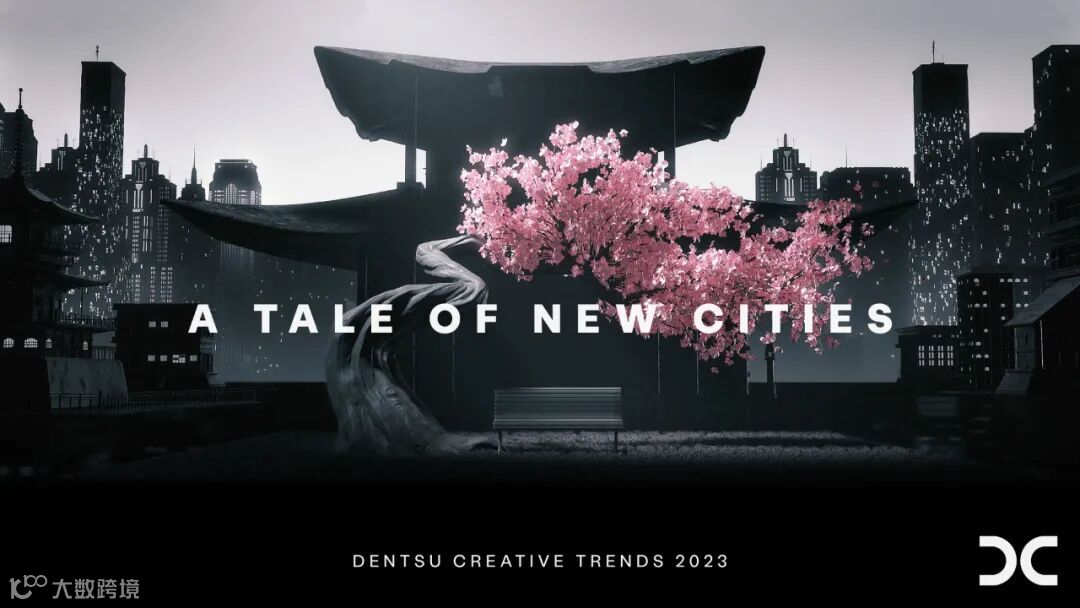
This article is part of the DENTSU CREATIVE TRENDS REPORT 2023: A TALE OF NEW CITIES.
For full report, please visit DENTSU CREATIVE global website below.
www.dentsucreative.com/news/trends-2023