


如今,如果不使用 Next.js 或 Nuxt.js,现代大型项目是无法想象的。
但是,尽管如此,如果任务是快速创建这样的结构,那么这里描述的方法非常适合此目的。
今天,我们将创建一个位于服务器上的包含 5 个组件的小型登陆页面应用程序。
让我们开始吧!
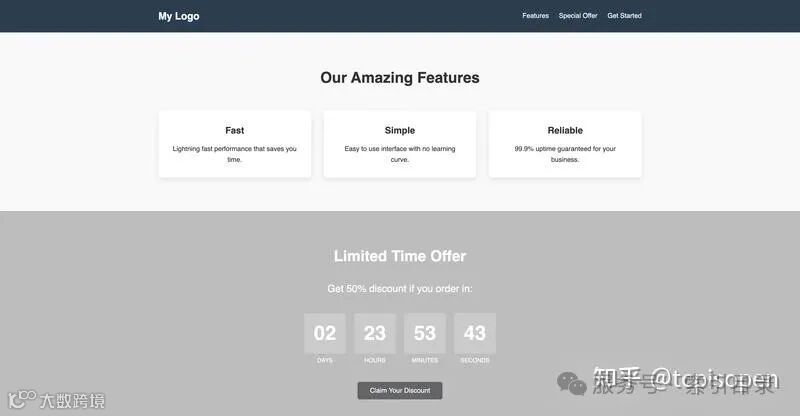
应用程序结构
我们的应用程序将具有与现代 SSR 应用程序一样的结构(当然没有 BFF 等),但渲染将发生在客户端,并通过浏览器显示。
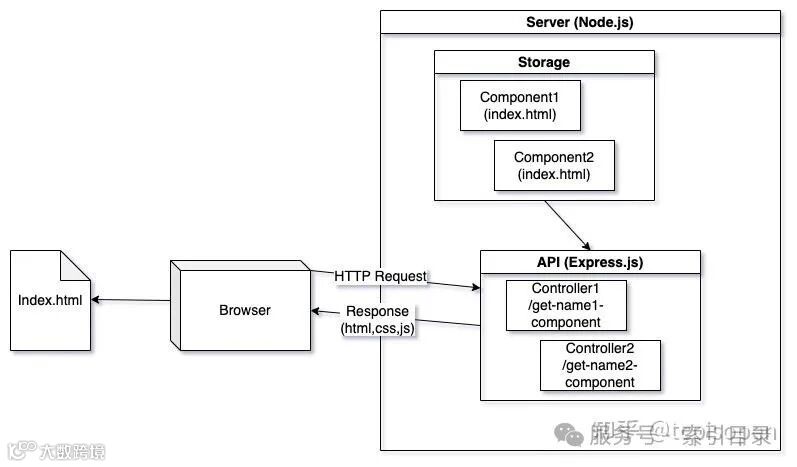
我们的架构中没有数据库的概念,因为数据将存储在 HTML 文件中。但如果我们在落地页上进行注册,我们就会有一个.json能够兼容现代数据库的文件,但这个例子应该在 10 分钟内完成,因此扩展功能毫无意义。
从哪里开始创建应用程序?
首先,让我们创建两个文件global.css和global.js。它们将包含那些不依赖于服务器的样式和脚本。
全局.css
* {
  margin: 0;
  padding: 0;
  box-sizing: border-box;
  font-family: Roboto, sans-serif;
}

body {
  line-height: 1.6;
  color: #333;
}

.container {
  width: 100%;
  max-width: 1200px;
  margin: 0 auto;
  padding: 0 20px;
}

.section {
  padding: 80px 0;
  text-align: center;
}

.section h2 {
  font-size: 36px;
  margin-bottom: 30px;
}
global.js
console.log("Global scripts loaded");因此,可以不连接 global.js,但总的来说,如果我们在 js 上有共同点,那么作为示例会很棒。配置常量、实用函数等。
现在,我们将创建index.html,其中我们将连接登陆页面所需的所有模块。
<!DOCTYPE html>
<html lang="en">
  <head>
    <meta charset="UTF-8" />
    <meta name="viewport" content="width=device-width, initial-scale=1.0" />
    <title>My Landing Page</title>
    <link rel="stylesheet" href="global.css" />
  </head>
  <body>
    <script src="https://unpkg.com/json5/dist/index.min.js"></script>
    <script src="https://unpkg.com/dompurify/dist/purify.min.js"></script>
    <script src="https://unpkg.com/hmpl-js/dist/hmpl.min.js"></script>
    <script src="global.js"></script>
  </body>
</html>
该网站本身目前看起来是空的,所以让我们创建我们的组件!
⚙️ 服务器配置
对于服务器,我们当然会选择 Node.js 平台。您可以选择任何平台,它对网站来说并非必需。框架将使用 Express.js。
应用程序.js
const express = require("express");
const path = require("path");
const bodyParser = require("body-parser");
const cors = require("cors");

const PORT = 8000;
const app = express();

const getRoutes = require("./routes/get");

app.use(express.json());
app.use(bodyParser.urlencoded({ extended: false }));
app.use(cors({ origin: true, credentials: true }));

app.use(express.static(path.join(__dirname, "src")));

app.get("/", (_, res) => {
  res.sendFile(path.join(__dirname, "src/index.html"));
});

app.use("/api", getRoutes);

app.listen(PORT, () => {
  console.log(`Server is running on http://localhost:${PORT}`);
});
路线/get.js
const express = require("express");
const expressRouter = express.Router();
const path = require("path");

const components = {
  title: "CTA",
  header: "Header",
  features: "Features",
  promo: "Promo",
  cta: "CTA",
  footer: "Footer",
};

Object.entries(components).forEach(([name, folder]) => {
  expressRouter.get(`/get-${name}-component`, (_, res) => {
    res.type("text/html");
    res.sendFile(path.join(__dirname, `../components/${folder}/index.html`));
  });
});

module.exports = expressRouter;
描述了几个 js 文件之后,我们现在可以在components文件夹中创建我们的应用程序部分。
路线可以任意命名,但是为了方便起见,我将其命名为/api/get-${name}-component
⌨️ 编写第一个组件
让我们从横幅广告开始,因为这是落地页的第一个内容块。我们将直接从 URL 处的服务器路由执行此操作http://localhost:8000/api/get-features-component。
组件/功能/index.html
<div id="features-component">
  <section id="features" class="section features">
    <div class="container">
      <h2>Our Amazing Features</h2>
      <div class="features-grid">
        <div class="feature-card">
          <h3>Fast</h3>
          <p>Lightning fast performance that saves you time.</p>
        </div>
        <div class="feature-card">
          <h3>Simple</h3>
          <p>Easy to use interface with no learning curve.</p>
        </div>
        <div class="feature-card">
          <h3>Reliable</h3>
          <p>99.9% uptime guaranteed for your business.</p>
        </div>
      </div>
    </div>
  </section>
  <style>
    .features {
      background: #f9f9f9;
      padding: 80px 0;
      text-align: center;
    }
    .features h2 {
      font-size: 36px;
      margin-bottom: 30px;
    }
    .features-grid {
      display: grid;
      grid-template-columns: repeat(3, 1fr);
      gap: 30px;
      margin-top: 50px;
    }
    .feature-card {
      background: white;
      padding: 30px;
      border-radius: 8px;
      box-shadow: 0 5px 15px rgba(0, 0, 0, 0.1);
      opacity: 0;
      transform: translateY(20px);
      transition: all 0.6s ease;
    }
    .feature-card h3 {
      margin-bottom: 15px;
      font-size: 22px;
    }
    @media (max-width: 768px) {
      .features-grid {
        grid-template-columns: 1fr;
      }
    }
  </style>
  <script>
    const animateFeatures = function () {
      const elements = document.querySelectorAll(
        "#features-component .feature-card"
      );
      elements.forEach((element) => {
        const elementPosition = element.getBoundingClientRect().top;
        const screenPosition = window.innerHeight / 1.3;

        if (elementPosition < screenPosition) {
          element.style.opacity = "1";
          element.style.transform = "translateY(0)";
        }
      });
    };

    window.addEventListener("load", animateFeatures);
    window.addEventListener("scroll", animateFeatures);
  </script>
</div>
现在,让我们看看它会是什么样子:
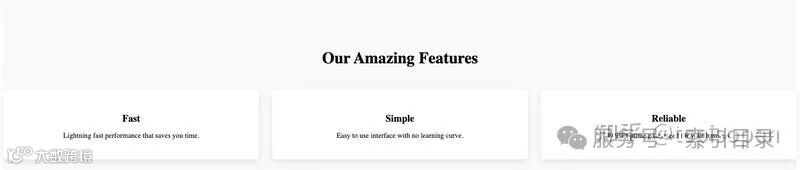
是的,服务器上的组件看起来不太好,因为我们编写的样式只针对它。但是,当我们将所有这些组件部署到生产站点时,所有字体和其他内容都会连接起来,站点看起来会很好。
✅ 让我们把剩下的写完
一切正常,现在我们可以完成所有组件的编写,并使用 HMPL 将它们连接到我们的index.html。我们还将完成以下组件的编写:
标头:
http://localhost:8000/api/get-header-component促销:
http://localhost:8000/api/get-promo-component行动号召:
http://localhost:8000/api/get-cta-component页脚:
http://localhost:8000/api/get-footer-component
您可以在本站的代码库中找到完整的列表,我不会直接复制粘贴代码,因为这篇文章篇幅太长了。代码库的链接如下。
将所有内容连接到我们的网站
让我们将服务器请求的组件添加到我们的 html 中并附加生成的 html。
<!DOCTYPE html>
<html lang="en">
  <head>
    <meta charset="UTF-8" />
    <meta name="viewport" content="width=device-width, initial-scale=1.0" />
    <title>My Landing Page</title>
    <link rel="stylesheet" href="global.css" />
  </head>
  <body>
    <script src="https://unpkg.com/json5/dist/index.min.js"></script>
    <script src="https://unpkg.com/dompurify/dist/purify.min.js"></script>
    <script src="https://unpkg.com/hmpl-js/dist/hmpl.min.js"></script>
    <script src="global.js"></script>
    <script>
      const body = document.querySelector("body");
      const template = `
        <main>
            <!-- Header Component -->
            {{#request src="http://localhost:8000/api/get-header-component"}}{{/request}}
            <!-- Features Component -->
            {{#request src="http://localhost:8000/api/get-features-component"}}{{/request}}
            <!-- Promo Component -->
            {{#request src="http://localhost:8000/api/get-promo-component"}}{{/request}}
            <!-- CTA Component -->
            {{#request src="http://localhost:8000/api/get-cta-component"}}{{/request}}
            <!-- Footer Component -->
            {{#request src="http://localhost:8000/api/get-footer-component"}}{{/request}}
        </main>
      `;
      const { response } = hmpl.compile(template)();
      body.append(response);
    </script>
  </body>
</html>值得注意的是,您可以为我们的组件添加加载器,或者通过interval属性为促销添加间隔请求。
️ 结果
现在,让我们看看我们在 10 分钟(多一点)的工作中完成了什么:
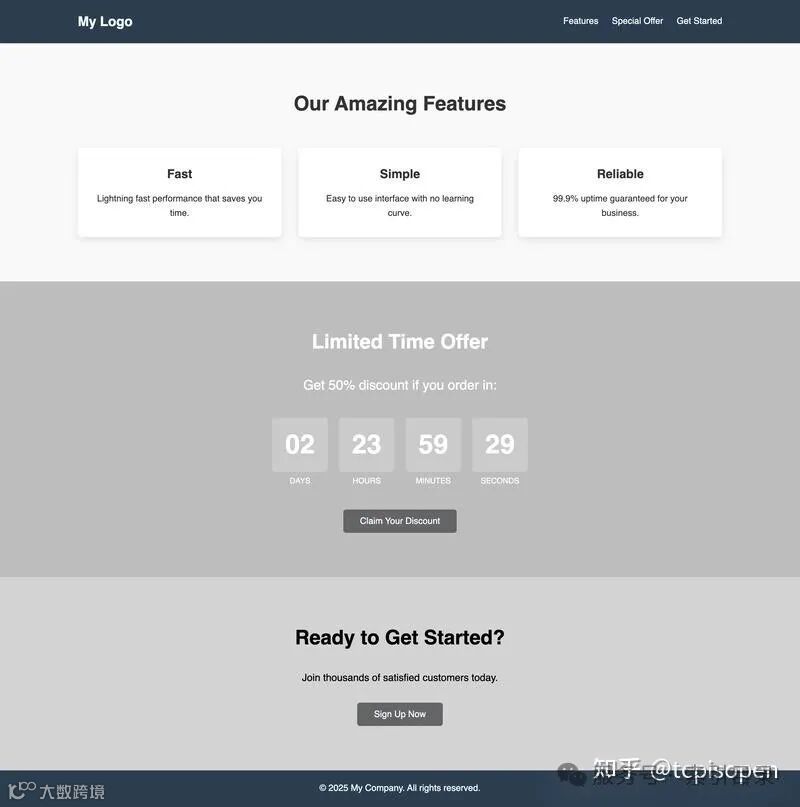
对我来说,它看起来非常漂亮,因为没有特别关注风格等。
️ 结论
在本文中,我们仅用 10 分钟就创建了一个小巧但非常酷炫且功能强大的客户端应用程序,它使用了 SSR 方法。使用 Next.js 也可以实现同样的效果,但前提是我们必须连接框架并完全依赖其结构。在这里,我们只需连接一个模块即可获得相同的效果(无需索引 robots)。