

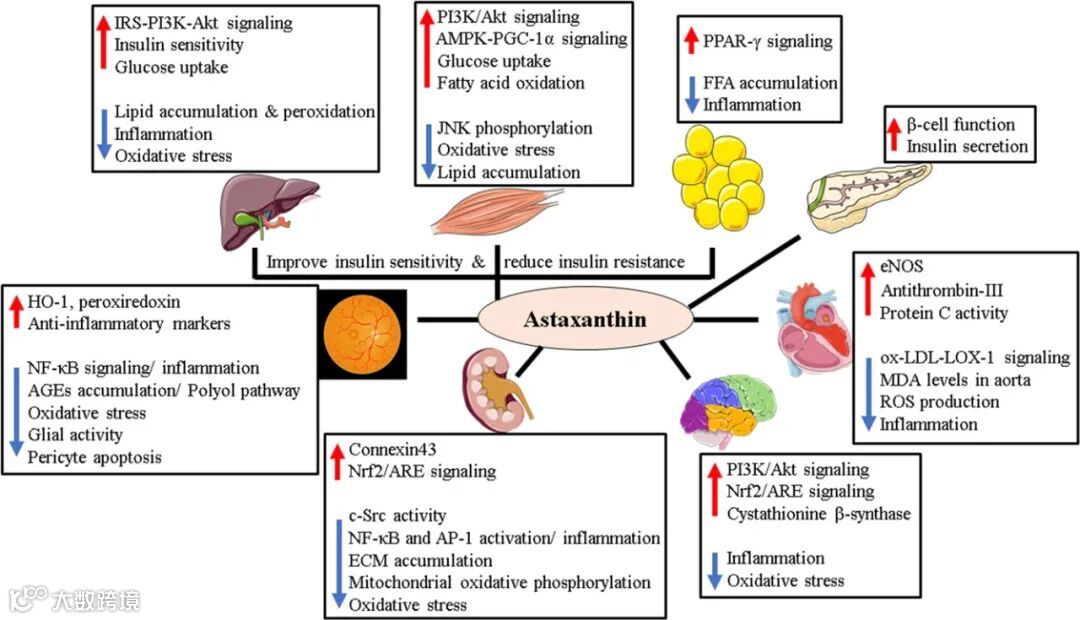
Figure 1 Antidiabetic mechanisms of astaxanthin in various tissues. Upward and downward arrows indicate respectively increase and decrease of the corresponding parameter by astaxanthin treatment. Akt, protein kinase-B; AMPK, 5′ adenosine monophosphate-activated protein kinase; ARE, antioxidant response elements; ECM, extracellular matrix; eNOS, endothelial nitric oxide synthase; FFA, free fatty acids; IRS, insulin receptor substrate; JNK, c-Jun N-terminal kinase; Nrf2, nuclear factor erythroid 2–related factor 2; ox-LDL, oxidized low-density lipoprotein; PGC-1α, peroxisome proliferator-activated receptor gamma coactivator 1-α; PI3K, phosphatidylinositol 3-kinase; PPAR-γ, peroxisome proliferator-activated receptor gamma.
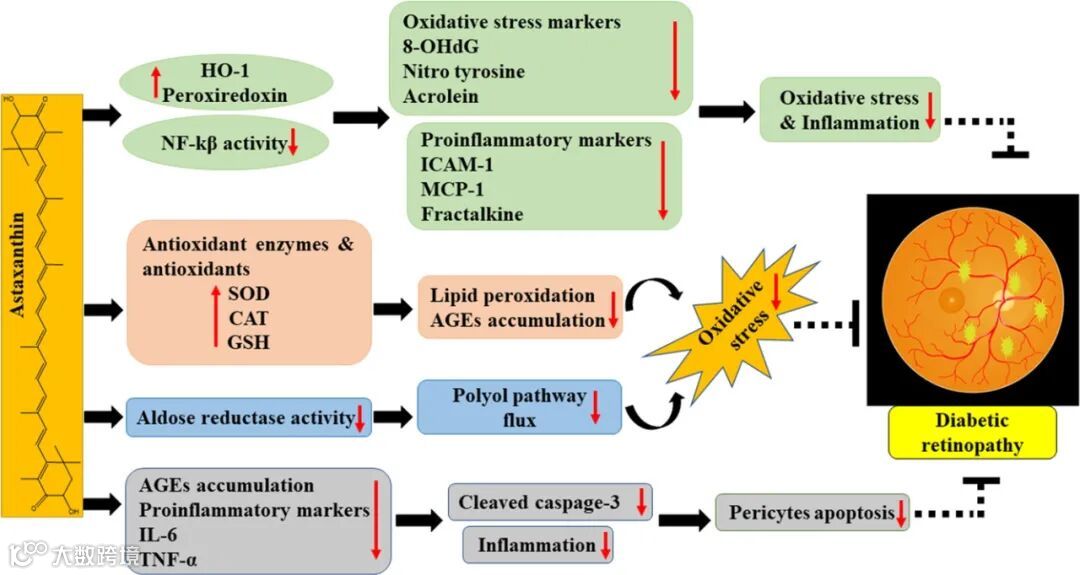
Figure 2 An overview of astaxanthin's effect against diabetic retinopathy by acting on multiple molecular targets. Upward and downward arrows indicate respectively increase and decrease of the corresponding parameter by astaxanthin treatment. AGEs, advanced glycation end-products; CAT, catalase; GSH, glutathione; HO-1, heme oxygenase 1; ICAM-1, Intercellular adhesion molecule-1; IL-6, interleukin 6; MCP-1, monocyte chemoattractant protein-1; NF-κB, Nuclear factor kappa-light-chain-enhancer of activated B cells; SOD, superoxide dismutase; TNF-α, tumor necrosis factor α.
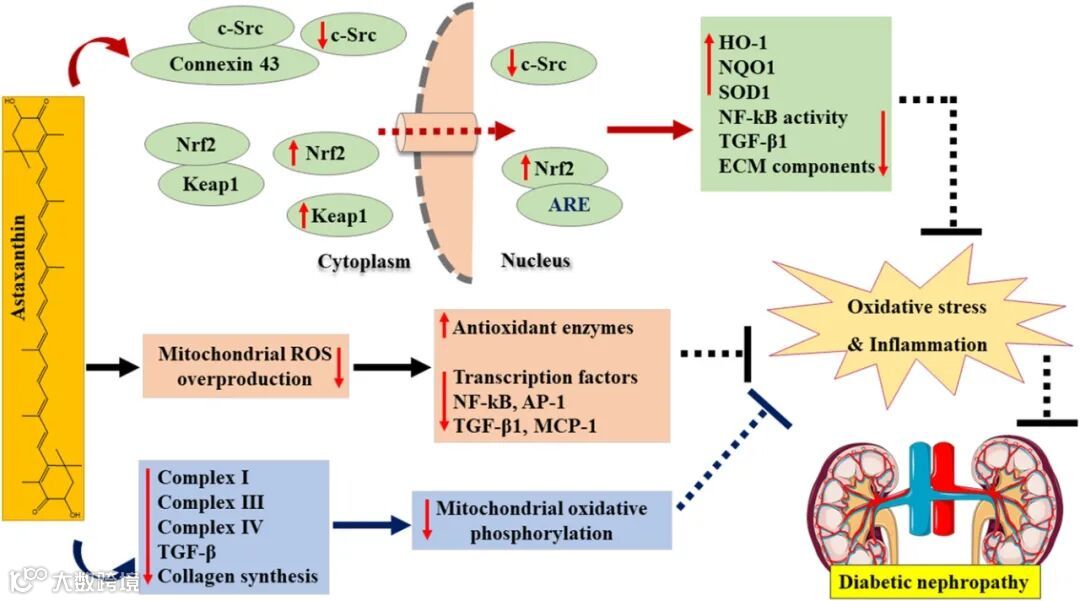
Figure 3 Nephroprotective mechanisms of astaxanthin during diabetes mellitus. Upward and downward arrows indicate respectively increase and decrease of the corresponding parameter by astaxanthin treatment. AP-1, activator protein-1; ARE, antioxidant response elements; ECM, extracellular matrix; HO-1, heme oxygenase 1; Keap1, Kelch-like ECH-associated protein 1; NQO1, NAD(P)H:quinone oxidoreductase; MCP-1, monocyte chemoattractant protein-1; NF-κB, Nuclear factor kappa-light-chain-enhancer of activated B cells; Nrf2, nuclear factor erythroid 2–related factor 2; ROS, reactive oxygen species; SOD1, superoxide dismutase 1; TGF-β1, transforming growth factor β1.
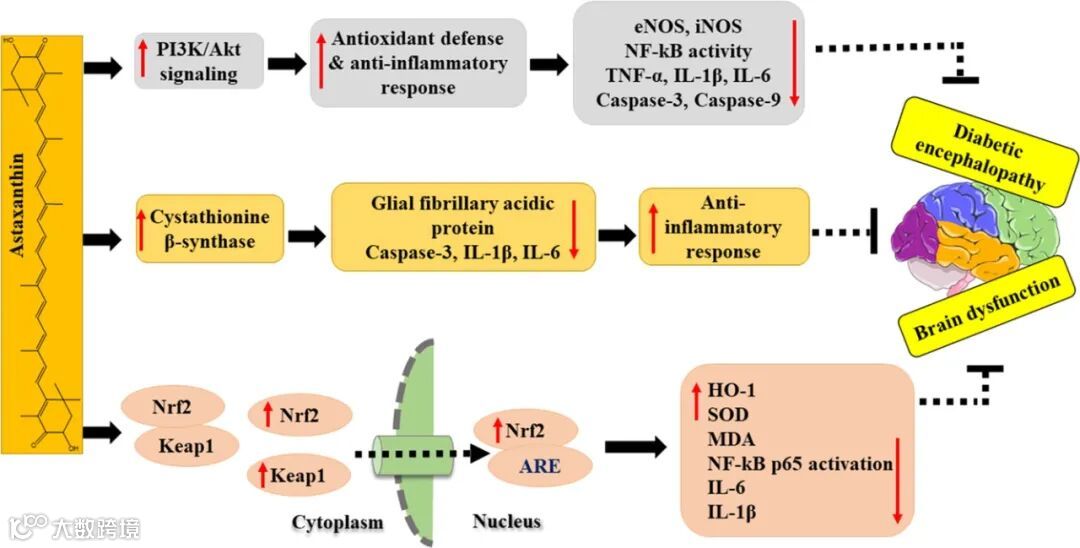
Table 1. Effects of astaxanthin against 𝛽-cell dysfunction and insulin resistance.
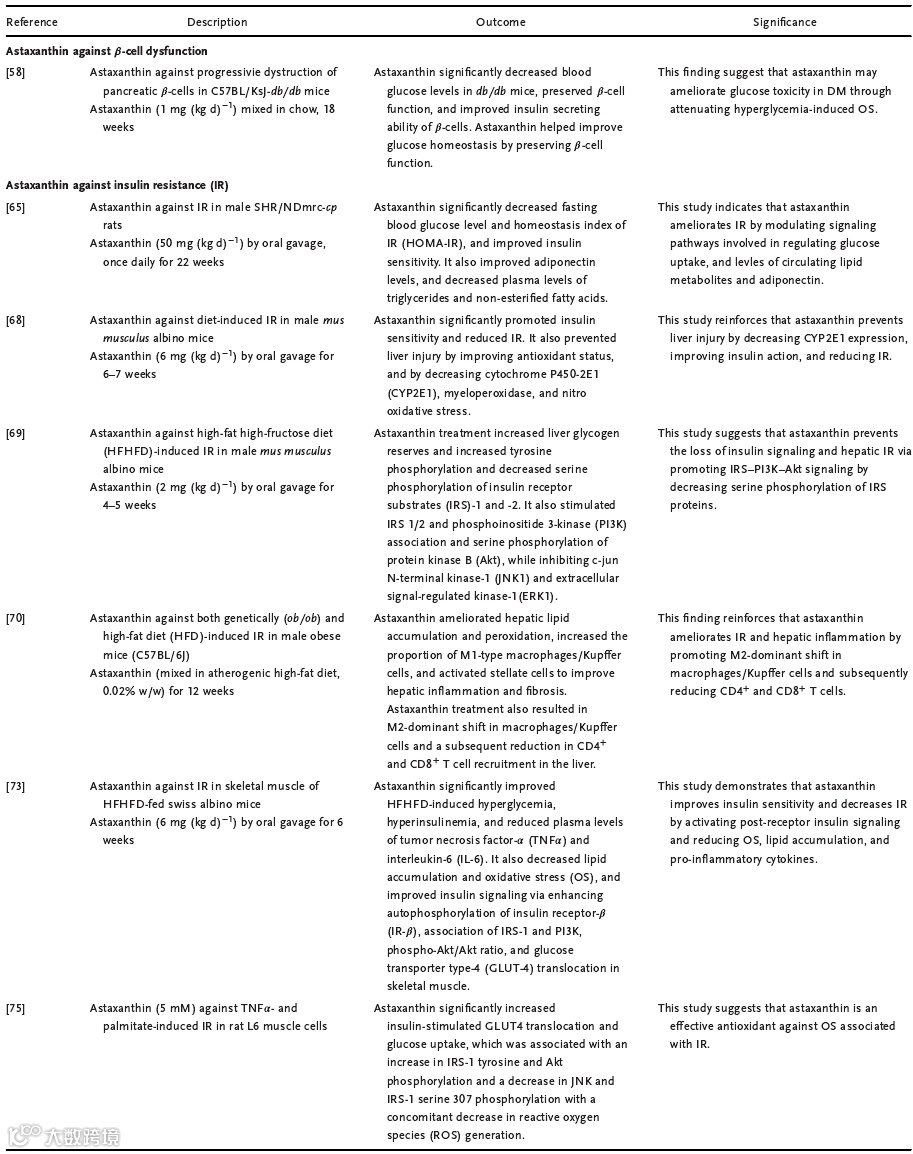
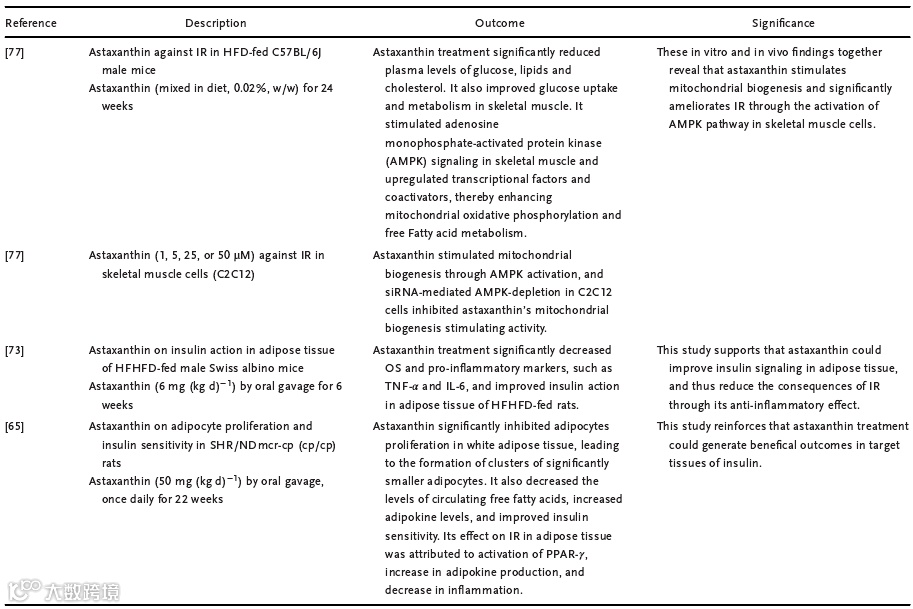
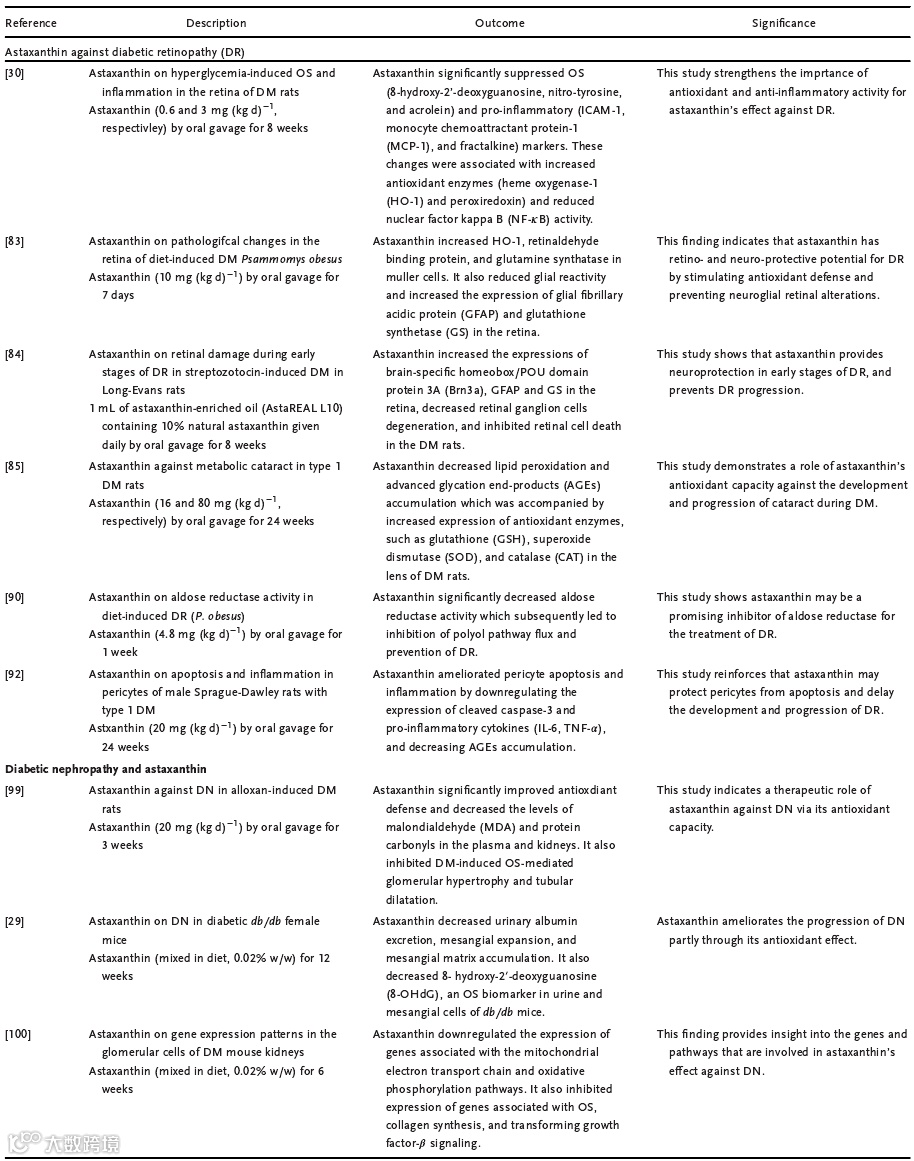
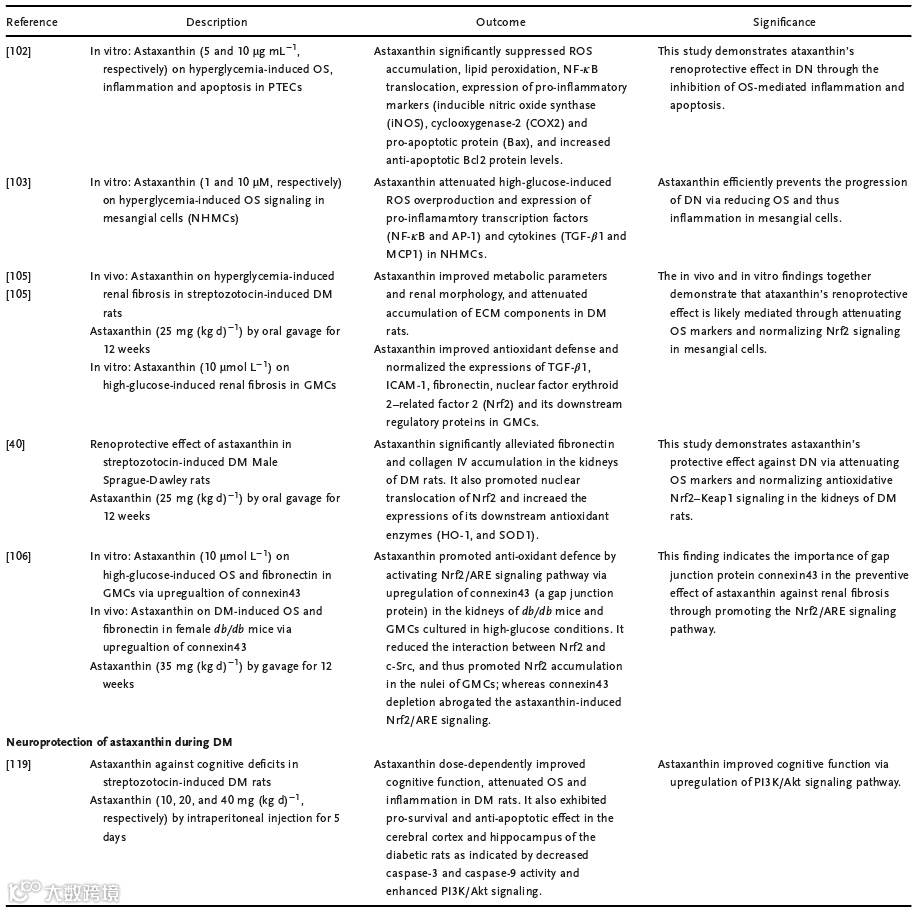
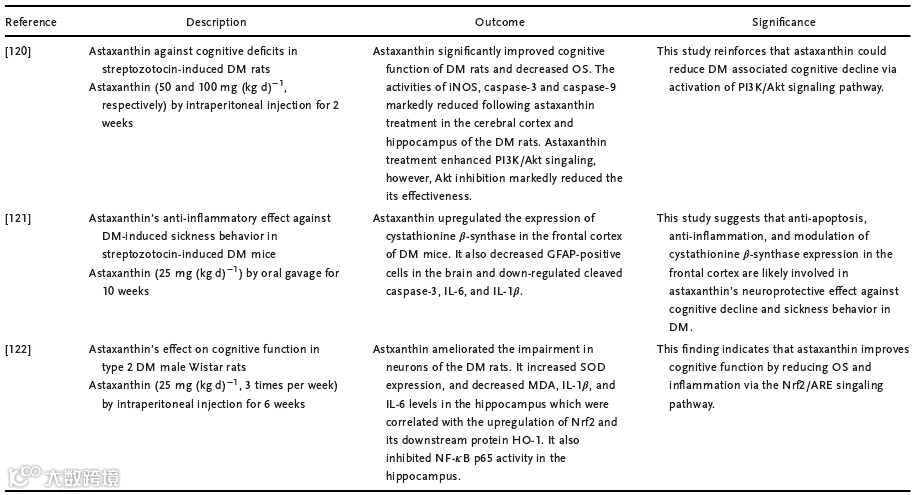
Table 3. Protective effects of astaxanthin against macrovascular complications of DM.
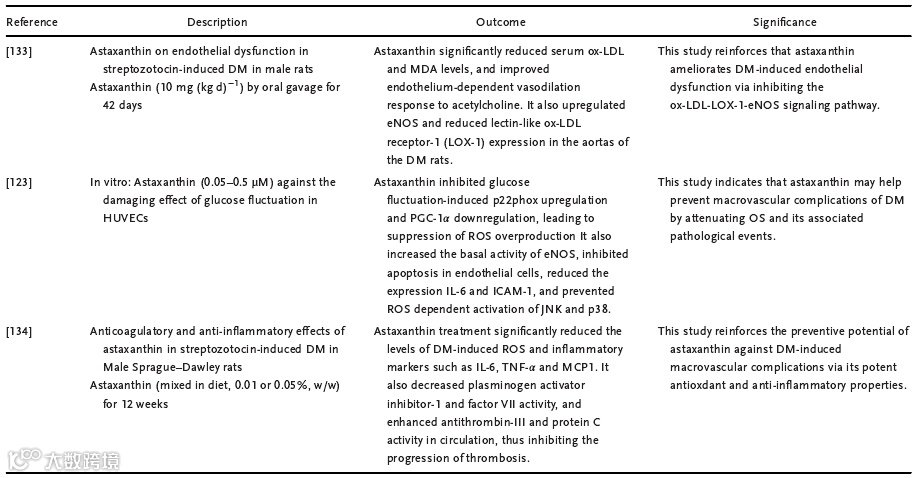
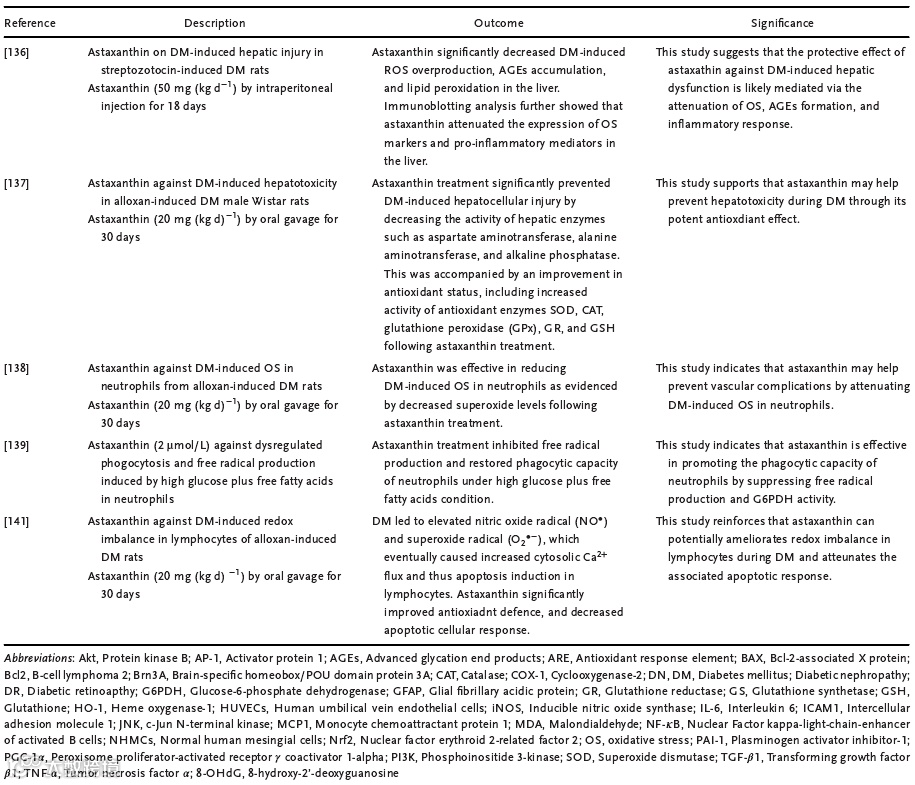
Table 4. Protective effects of astaxanthin against diabetic complications in other tissues.
https://doi.org/10.1002/mnfr.202100252

郑家荣,男,现任深圳大学高等研究院特聘教授。2009年于香港大学生命科学院获得博士学位,随后在美国纽约石溪大学医学院从事博士后研究, 曾任北京大学工学院特聘研究员、澳门科技大学助理教授、美国纽约石溪大学研究助理教授。研究方向主要包括两方面:1)食品加工过程有害物质形成的调控策略及其调控机理;2)抗慢性病天然产物衍生物开发及其抗病机制。
近年来,在国际高水平期刊发表论文70余篇,总引用次数超过4800次(谷歌学术),H指数33,曾担任英国皇家化学学会子刊RSC Advances副主编,同时是多家国际学术期刊编委及审稿人。作为课题负责人承担国家科技部重点研发计划(1205万元)和广东省重点研发计划,以核心人员报批广东省“珠江人才计划”引进创新创业团队和深圳市高层次人才团队(孔雀团队),目前团队总经费超过5000万元以上。

版权声明
本公众号推送文章仅为学术交流使用,‘原创’为原创编译之标记,不表示本平台对文本主张版权。作者团队或单位如需使用编译文本,可联系编辑开放白名单。凡是注明“转载”的稿件,均已注明直接来源,如需使用,请联系版权人。如有侵权,请联系我们,我们会尽快删除。