
大数跨境

《食品工业科技》F5000论文展播:不同产地黑果枸杞中原花青素和花青素含量研究

《食品工业科技》F5000论文展播:不同产地黑果枸杞中原花青素和花青素含量研究 食品工业科技编辑部
2022-10-24
2

不同产地黑果枸杞中原花青素和花青素含量研究



目的:黑果枸杞因高营养价值备受青睐,但生态环境恶化和过度开发破坏导致野生资源量减少。原花青素和花青素含量均为衡量黑果枸杞营养价值的指标之一,本文对青海、新疆、内蒙古和北京等不同产地的黑果枸杞中原花青素和花青素含量均进行了研究,为生产高品质黑果枸杞提供参考。


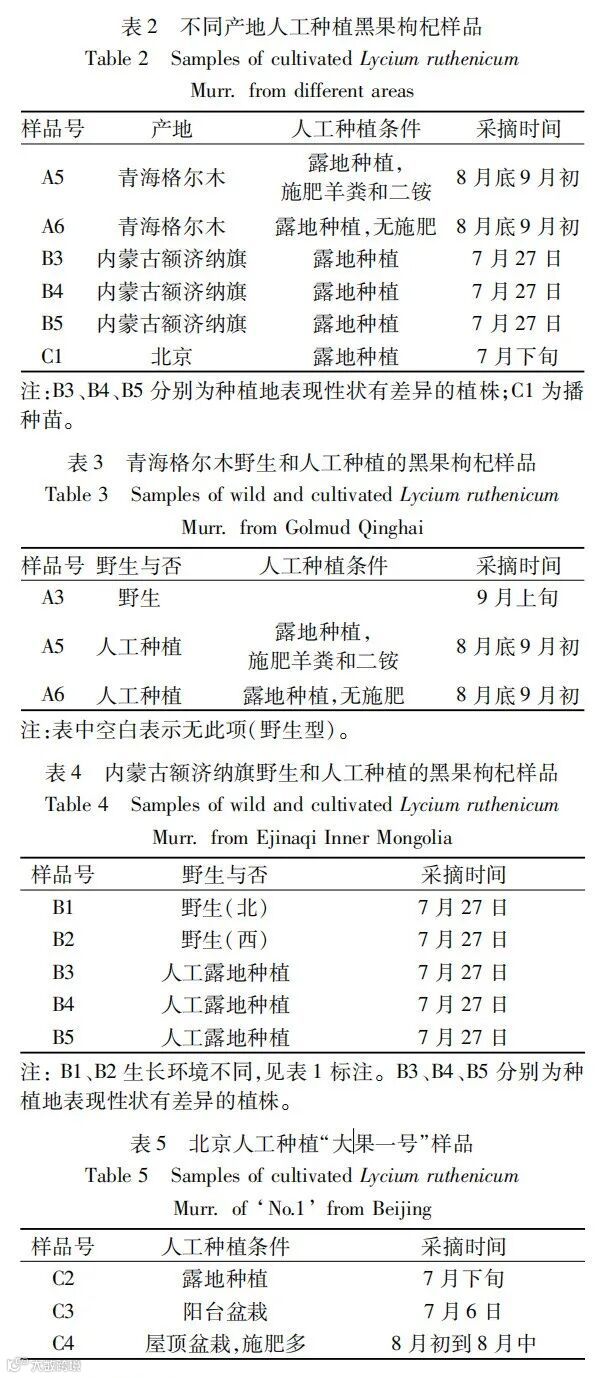
方法:在溶剂提取法基础上,采用香草醛-盐酸显色改良法测定不同产地黑果枸杞果实原花青素的含量,采用消光系数改良法测定花青素含量。试验材料为6种来自新疆和青海各地的黑果枸杞成熟干燥果实,5种来自内蒙古的黑果枸杞成熟鲜果烘干并恒重,4种来自北京人工种植的黑果枸杞成熟鲜果烘干并恒重。其中,‘大果一号’是在青海格尔木选择的果实直径大综合性状表现好的品种,将其作为北京引种栽培的试验材料。试验数据采用Excel 2007软件整理、绘图,用SPSS 18.0统计软件进行分析,方差分析采用Duncan法。


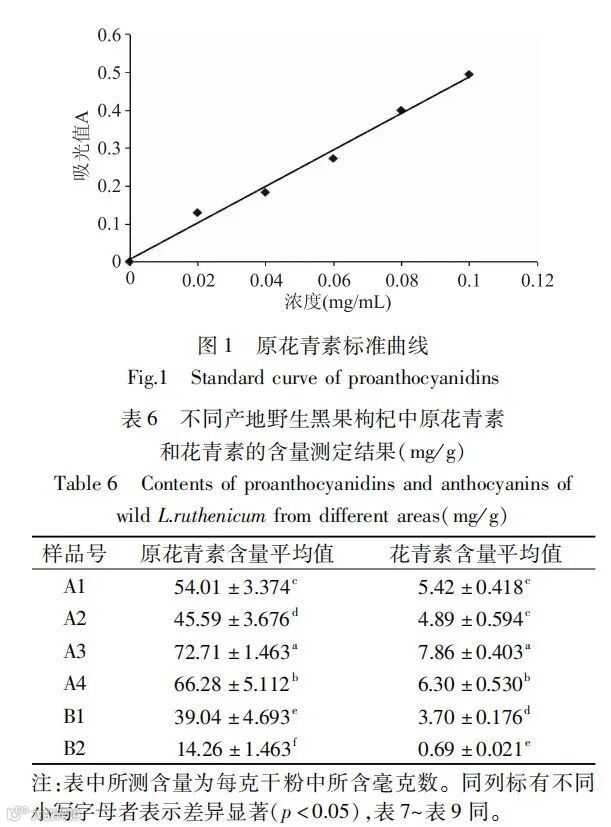
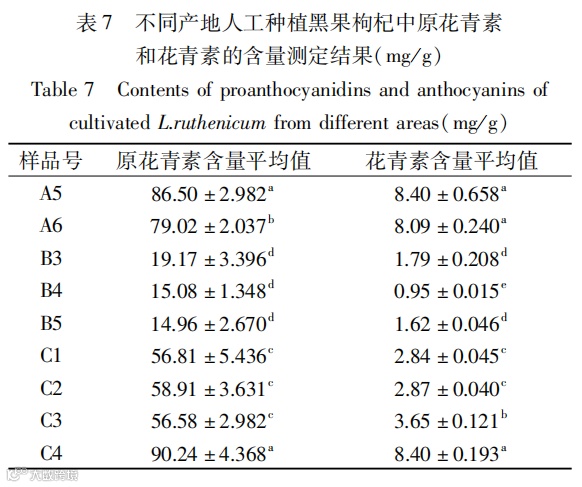
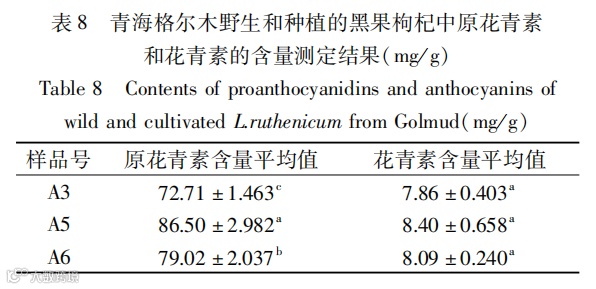
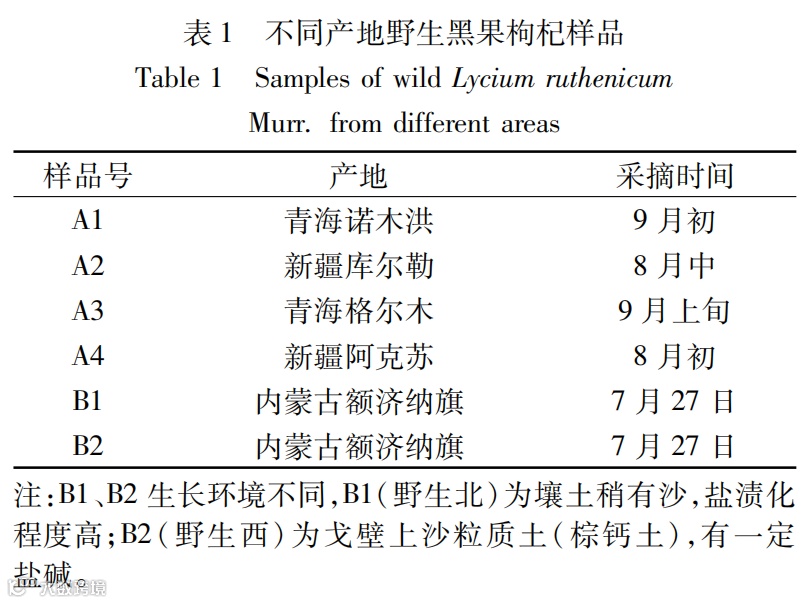
结果:1. 不同产地野生黑果枸杞中原花青素含量差别较大,范围为14.26 ~72.71 mg/g。其中含量最高的为A3号样品(72.71 mg/g),来自青海格尔木,显著高于其他地区(P<0.05)。原花青素含量大小顺序为:青海格尔木>新疆阿克苏>青海诺木洪>新疆库尔勒>内蒙古额济纳旗。花青素含量范围为0.69~7.86 mg/g,含量顺序与原花青素相同。说明在此五个地域,青海格尔木是最适宜黑果枸杞生长发育的产地,其果实中原花青素和花青素含量均最高。2. 不同产地人工种植的黑果枸杞中原花青素含量差别较大,范围为14.96~90.24 mg/g。其中含量最高的为C4号样品(90.24 mg/g),来自北京屋顶盆栽‘大果一号’且施肥多;其次为A5号样品(86.50 mg/g),来自青海格尔木露地栽培且施肥,均显著高于其他样品含量(P<0.05)。C2号含量高于C1,说明同为北京栽培,‘大果一号’品种果实中原花青素含量高于播种苗。C4样品含量显著高于C2和C3(P<0.05),说明模仿原产地高钾施肥有助于显著提高果实原花青素含量。花青素含量范围为0.95~8.40 mg/g,其中含量最高为A5和C4号样品(8.40 mg/g)。由此说明选择性状表现好的品种(如‘大果一号’)引种至北京栽培,且适当增大施肥量可使其原花青素和花青素含量达到原产地区人工栽培水平。3. 青海格尔木野生和人工种植的黑果枸杞中原花青素含量最高的为A5号样品(86.50 mg/g),为露地种植且施肥,显著高于A3(野生状态)和A6(露地种植无施肥)(P<0.05)。A5和A6号含量显著高于A3(P<0.05)。由此可知,人工种植条件下得到的果实中原花青素含量均高于野生状态下果实中原花青素含量,且露地种植同时施肥条件下含量显著高于无施肥条件下的含量。


结论:试验所测黑果枸杞烘干果实中的原花青素含量范围为14.26~90.24 mg/g(1.4%~9.0%),花青素含量范围为0.69~8.40 mg/g。黑果枸杞果实中含量更高、营养价值更高的是原花青素。不同产地野生黑果枸杞中,原花青素和花青素含量依次为青海格尔木>新疆阿克苏>青海诺木洪>新疆库尔勒>内蒙古额济纳旗。人工露地种植并重度施肥条件下黑果枸杞原花青素含量显著高于野生,人工栽培黑果枸杞可能是一种更好的方式。此外,在水、肥、阳光充足的条件下,选择性状表现好的品种,可实现北京人工栽培的黑果枸杞果实原花青素和花青素含量达到原产地人工栽培的水平。 


Objectives: Lycium ruthenicum is favored for its high nutritional value. But the wild resources are reduced due to the deterioration of ecological environment and overexploitation. The contents of proanthocyanidins and anthocyanins are one of the indexes to measure the nutritional value of L. ruthenicum. In order to provide a reference for the production of high-quality L. ruthenicum, the proanthocyanidins and anthocyanins contents of L. ruthenicum from different producing areas including Qinghai, Xinjiang, Inner Mongolia and Beijing were studied.

Methods: Based on the method of traditional solvent extraction, the proanthocyanidins contents of L. ruthenicum from different producing areas were determined by improved spectorphotometry with vanillin-Hydrochloric acid as the color-developing agent. The anthocyanins contents were determined by improved extinction coefficient method. Samples of L. ruthenicum were selected including six kinds of mature dry fruits from Xinjiang and Qinghai, five kinds of mature fresh fruits from Inner Mongolia dried and constant weight, and four kinds of mature fresh fruits from cultivated L. ruthenicum in Beijing dried and constant weight. ‘No.1’ was selected in Golmud Qinghai with large fruit diameter and good traits. It was the variety of L. ruthenicum introduced and cultivated in Beijing. The experimental data were collated and plotted by Excel 2007, and analyzed by SPSS 18.0. Duncan method was used for analysis of variance.

Results: 1. The proanthocyanidins contents of wild L. ruthenicum from different producing areas varied greatly, ranging from 14.26 mg/g to 72.71 mg/g. The highest was A3 (72.71 mg/g) from Golmud Qinghai. It was significantly higher than that in other places, in which the contents were Aksu Xinjiang>Nomhon Qinghai>Kuerle Xinjiang>Ejinaqi Inner Mongolia. The anthocyanins content range was 0.69~7.86 mg/g, and the order of content was the same as that of proanthocyanidins. The results showed that among the five areas, Golmud Qinghai was the most suitable place for the growth and development of L. ruthenicum, and the contents of proanthocyanidins and anthocyanins in its fruits were the highest. 2. The proanthocyanidins contents of cultivated L. ruthenicum from different producing areas varied greatly, ranging from 14.96 mg/g to 90.24 mg/g. The highest was C4 (90.24 mg/g), which was ‘No.1’ cultivated on the roof of Beijing with heavy fertilizer, followed by A5 (86.50 mg/g), which was from cultivated L. ruthenicum in Golmud Qinghai with fertilization. And the proanthocyanidins contents of C4 and A5 were significantly higher than others (P<0.05). The content of C2 was higher than C1, indicating that the proanthocyanidins content of ‘No.1’ cultivated in Beijing was higher than that of seedings cultivated in Beijing. The content of C4 was significantly higher than C2 and C3 (P<0.05), indicating that simulating the soil environment of the origin by applying more potassium fertilizer could significantly increase proanthocyanidins content in L. ruthenicum fruits. The anthocyanins content range was 0.95 ~8.40 mg/g, and the highest content was A5 and C4 (8.40 mg/g). The results showed that if a variety of L. ruthenicum with good traits (such as ‘No.1’) was introduced and cultivated in Beijing, with proper fertilization, its proanthocyanidins and anthocyanins content could be equal to those cultivated in the origin. 3. The highest proanthocyanidins content of wild and cultivated L. ruthenicum from Golmud Qinghai was A5 (86.50 mg/g), which was cultivated in the open field with fertilization. It was significantly higher than A3 (wild) and A6 (cultivated in the open field with no fertilization) (P<0.05). And the proanthocyanidins contents of A5 and A6 were significantly higher than A3 (P<0.05). The results showed that the proanthocyanidins content of cultivated L. ruthenicum was higher than that of wild L. ruthenicum. And the content of L. ruthenicum cultivated in the open field with fertilization was significantly higher than that with no fertilization.

Conclusions: The results showed that proanthocyanidins and anthocyanins content range in L. ruthenicum was 14.26~90.24 mg/g (1.4%~9.0%) and 0.69~8.40 mg/g (dry powder). It means proanthocyanidins was the one which had higher content and nutritional value in L. ruthenicum fruits. The content of proanthocyanidins from wild L. ruthenicum in Golmud Qinghai was significantly higher than that in other places, in which the contents were Aksu Xinjiang>Nomhon Qinghai>Kuerle Xinjiang>Ejinaqi Inner Mongolia. The contents of proanthocyanidins from L. ruthenicum cultivated in the open field with heavy fertilization was significantly higher than that form wild L. ruthenicum. It shows that artificial cultivation of L. ruthenicum is a better way. In addition, the contents of proanthocyanidins and anthocyanins from cultivated L. ruthenicum with good traits in Beijing can be equal to those in the origin under the condition of abundant water, light and fertilizer.


图表赏析


作者简介


王四清  教授

王四清,男,博士,北京林业大学教授,研究方向为花卉栽培生理。主持或参加多个省部级课题,培养硕士博士十多名,在国际及国内各种学术期刊上发表学术论文数十篇。获得国家发明专利2项,获得省部级科技进步奖多项。


《食品工业科技》青年编委专栏征稿

《食品工业科技》青年编委专栏征稿:食品营养素包埋与递送 


《食品工业科技》青年编委专栏征稿:杂粮与主粮复配的营养学基础 


详细内容请点击文末“阅读原文”。


编辑:王婕
主编:冯媛媛

版权声明

《食品工业科技》具有以上论文在全世界范围内的复制权、发行权、翻译权、汇编权、广播权、表演权、信息网络传播权、转许可权及以上权利的邻接权,且作者已授权期刊同论文著作权保护期。如需转载,可联系《食品工业科技》编辑部010-87244116,或直接在文末撰写转载来源。




食品工业科技官方网站:
http://www.spgykj.com


点亮“在看”,为《食品工业科技》助力

【声明】内容源于网络
0
0
食品工业科技编辑部
《食品工业科技》编辑部与作者、读者的交流平台。《食品工业科技》既是反映当前国内外食品工业技术水平的窗口,又是新技术应用推广的桥梁,面向科研、生产,满足各层次需求。
内容 2790
粉丝 0
食品工业科技编辑部 《食品工业科技》编辑部与作者、读者的交流平台。《食品工业科技》既是反映当前国内外食品工业技术水平的窗口,又是新技术应用推广的桥梁,面向科研、生产,满足各层次需求。
总阅读4.0k
粉丝0
内容2.8k