百合多糖的纯化及其对肠道菌群失调小鼠的调节作用

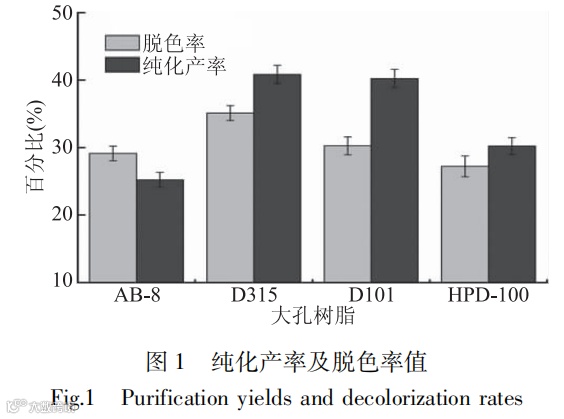
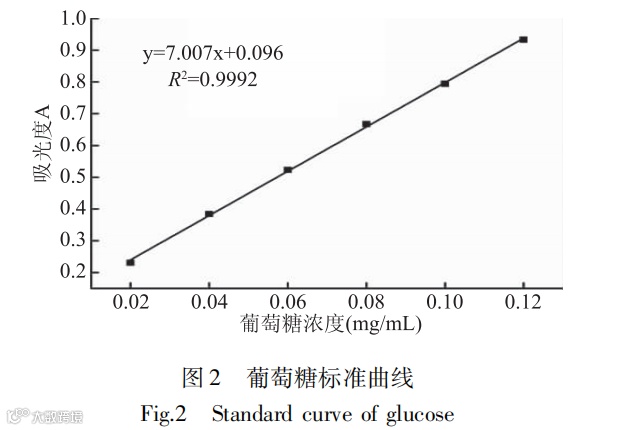
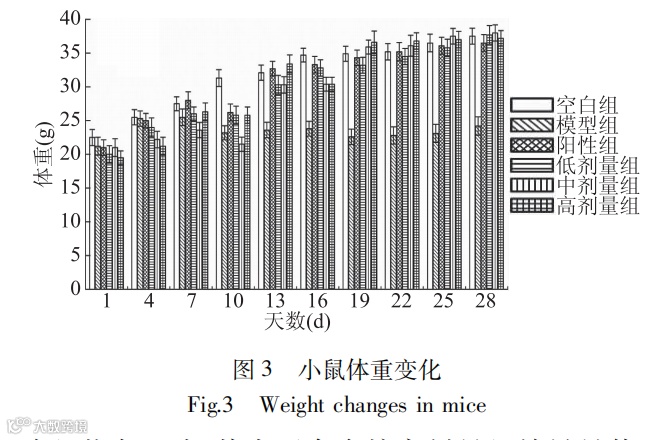
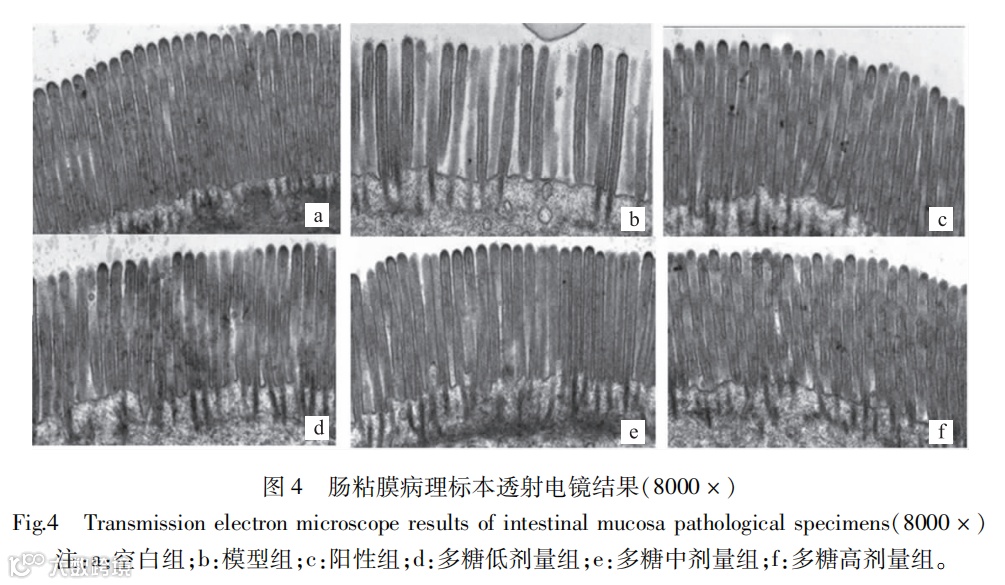
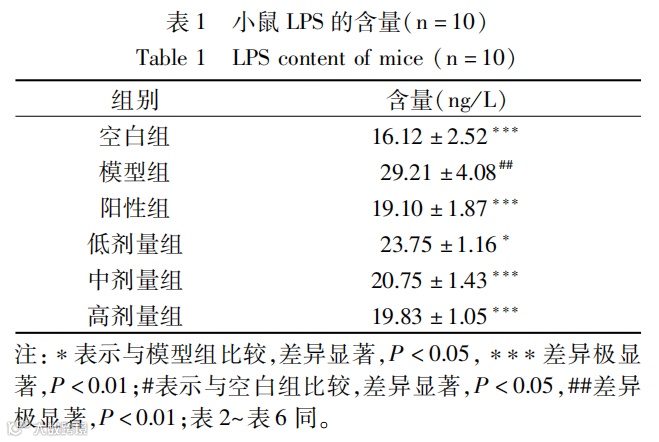
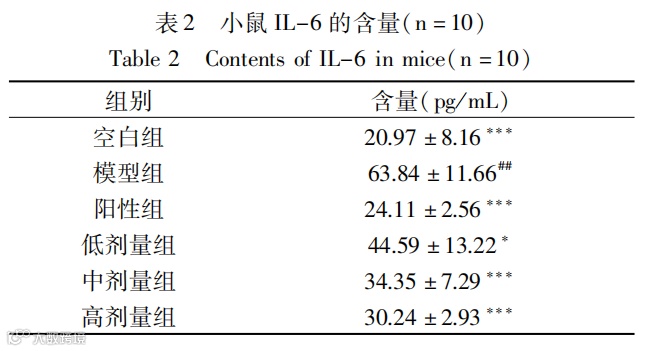
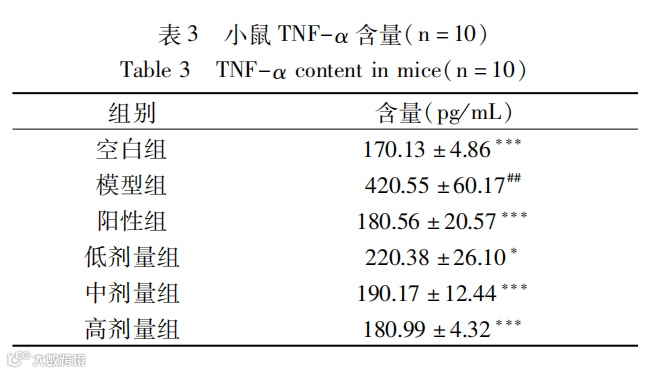
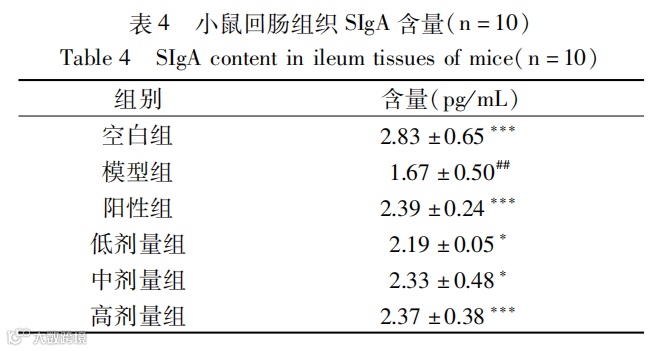
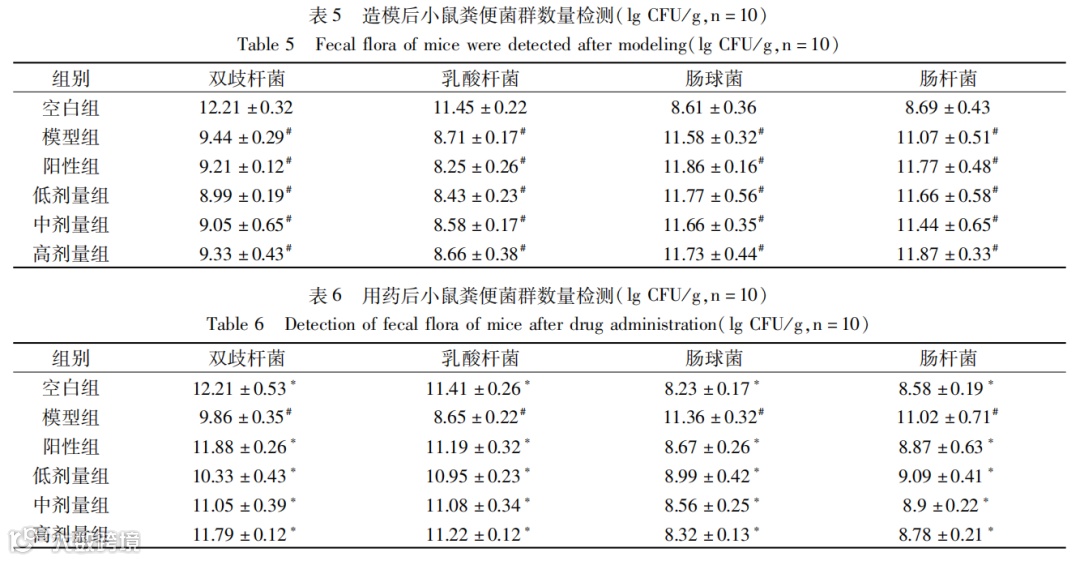
摘要:目的:对百合多糖进行纯化并探究其对肠道菌群失调小鼠的调节作用。方法:以产率、脱色率、多糖含量为指标比较AB-8、D315、D101、HPD-100四种大孔树脂对百合多糖的纯化效果,采用苯酚-硫酸法检测其多糖含量。动物实验分为空白对照组(生理盐水10 mg/kg)、模型组(盐酸林可霉素10 mg/kg)、阳性对照组(丽珠肠乐10 mg/kg)、百合多糖低、中、高剂量组(50、100、200 mg/kg);以血清中LPS、IL-6、TNF-α及回肠组织SIgA的含量、菌群数量为指标,评价纯化后的百合多糖对肠道菌群失调小鼠的调节作用;采用透射电镜观察小鼠肠粘膜绒毛形态。结果:D315大孔树脂纯化效果最佳,纯化后百合多糖的产率、脱色率、糖含量分别为40.82%±1.28%、35.11%±1.12%、82.56%±1.18%。药理实验结果显示百合多糖高剂量组效果最佳,与模型组相比,高剂量组小鼠血清中LPS、IL-6、TNF-α的含量极显著降低(P<0.01),回肠组织SIgA含量极显著增加(P<0.01);肠杆菌、肠球菌的数量显著降低,乳酸杆菌、双歧杆菌的数量显著增加(P<0.05);模型组小鼠肠粘膜微绒毛排列疏松且破损严重,经百合多糖治疗后小鼠肠粘膜微绒毛排列茂密整齐,无断裂现象。结论:百合多糖是一种调节肠道菌群的活性成分,具有研究和开发价值。
图片来源于图司机

Abstract: Objective: To purify Lily Polysaccharide and investigate its regulation effect on intestinal flora dysregulated in mice. Methods: The purification effects of four macroporous resins AB-8, D315, D101 and HPD-100 on Lily Polysaccharides were compared by the yield, decolorization rate and polysaccharide content. The content of polysaccharides was detected by phenol-sulfuric acid method. The animal experiments were divided into control group (Saline 10 mg/kg), model group (Lincomycin hydrochloride 10 mg/kg), positive group (Lizhu Intestine 10 mg/kg), the low dose group, medium dose group and high dose group of Lily Polysaccharide (50, 100, 200 mg/kg); The contents of LPS, IL-6, TNF-α in the serum, and the contents of SIgA in the ileal tissue, and the number of intestinal flora were used as indicators that evaluate the effects of purified Lily Polysaccharide on the regulation of intestinal flora dysregulated in mice. The morphology of intestinal mucosa microvilli of mice was observed by transmission electron microscope. Results: The results showed that the purification of D315 macroporous resin was the best, and the yield, decolorization rate and polysaccharide content of purified Lily Polysaccharide were 40.82%±1.28%, 35.11%±1.12% and 82.56%±1.18%, respectively. The results of pharmacological experiments showed that the high dose group of Lily Polysaccharide had the best effect. Compared with the model group, the content of LPS, IL-6, TNF-α in the serum of mice in the high-dose group was significantly decreased (P < 0.01), and the content of SIgA in ileal tissue was significantly increased (P < 0.01); The number of Enterobacter and Enterococcus was significantly decreased, and the number of Lactobacillus and Bifidobacteria was significantly increased (P < 0.05); The intestinal mucosa microvilli of mice in the model group were loosely arranged and broken, while the intestinal mucosa microvilli of mice treated with lily polysaccharide were densely and neatly arranged without broken. Conclusion: Lily Polysaccharide is an active ingredient for regulating intestinal flora, which has research and development value.
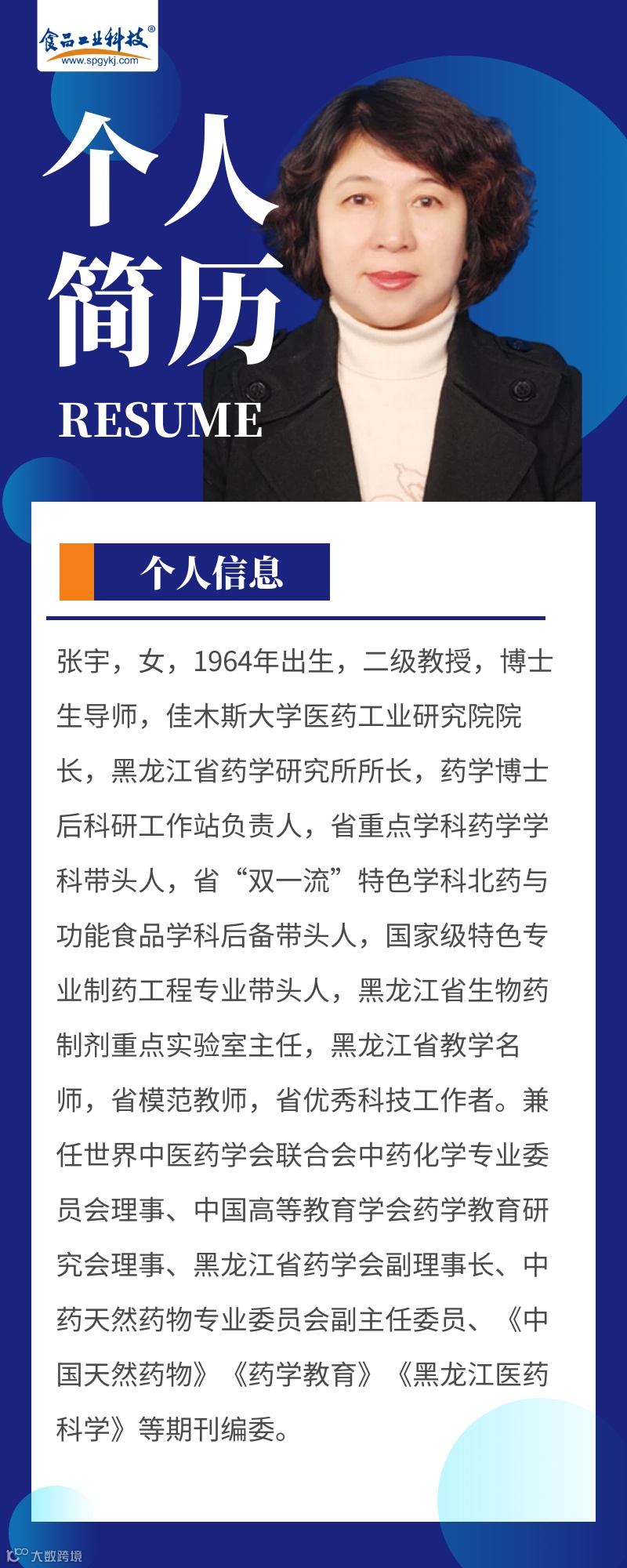
《食品工业科技》特邀主编专栏征稿

版权声明
《食品工业科技》具有以上论文在全世界范围内的复制权、发行权、翻译权、汇编权、广播权、表演权、信息网络传播权、转许可权及以上权利的邻接权,且作者已授权期刊同论文著作权保护期。如需转载,可联系《食品工业科技》编辑部010-87244116,或直接在文末撰写转载来源。