

退化和正常窖泥微生物多样性的比较分析



目的:在酿造白酒的过程中,泥窖是发酵的基础,窖泥中含有非常多样的微生物类群,决定了产出白酒口感的优与劣。对正常窖泥与退化窖泥中的微生物菌群结构进行比较分析,有助于找到退化窖泥与正常窖泥的特征微生物,进而探究白酒品质与微生物的关系。本文应用高通量测序技术及生物信息学方法,对正常窖泥与退化窖泥中微生物进行了高通量测序与生物信息学分析。
方法:利用高通量测序与生物信息学分析,来研究正常窖泥与退化窖泥的微生物多样性,并进行比较分析。首先,使用土壤DNA提取试剂盒,对窖泥样品的总DNA进行提取;接下来,以之为模板,通过PCR方法,扩增细菌的16S rRNA V3-V4区片段;使用MiSeq PE300 平台,对获得的PCR产物进行高通量测序;测序后,将获得的双末端序列,进行质控后,以去掉低质量序列与接头,然后使用QIIME平台,按照97%的相似度划分分类操作单元(Operational Taxonomic Unit,OTUs),使用RDP(Ribosomal Database Project)数据库在门、纲、目等分类单元上进行注释,以分析窖泥的微生物菌群结构,并基于QIIME内置脚本分析窖泥菌群的α与β多样性。
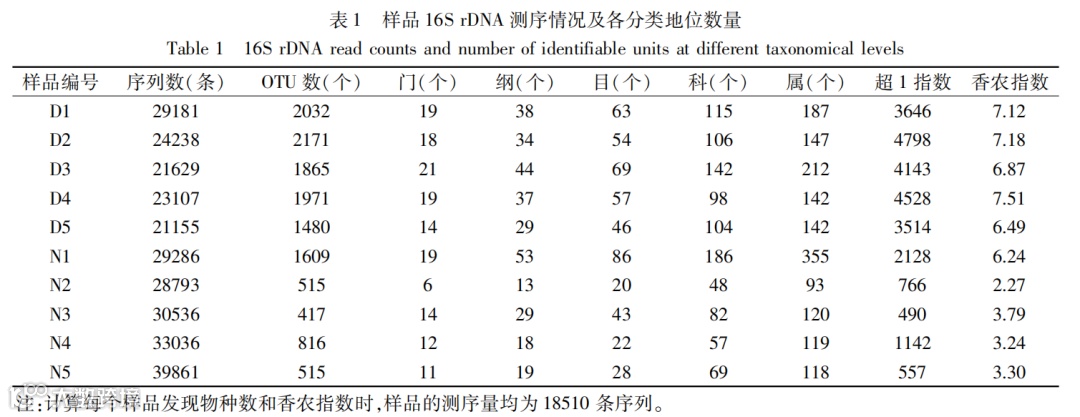
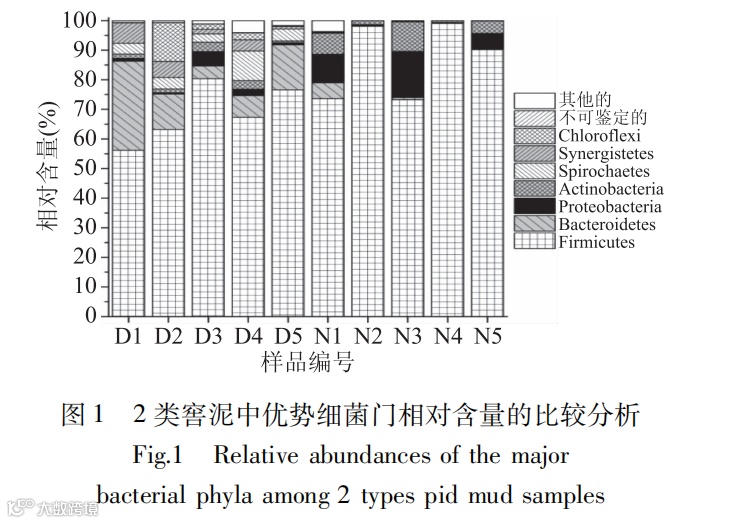
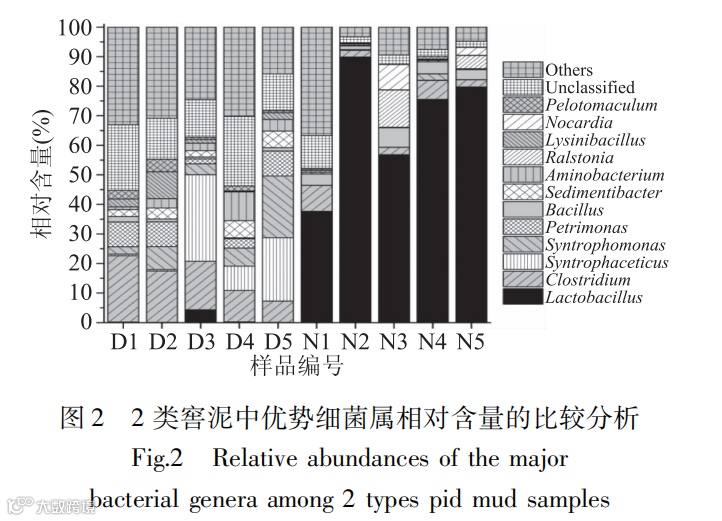
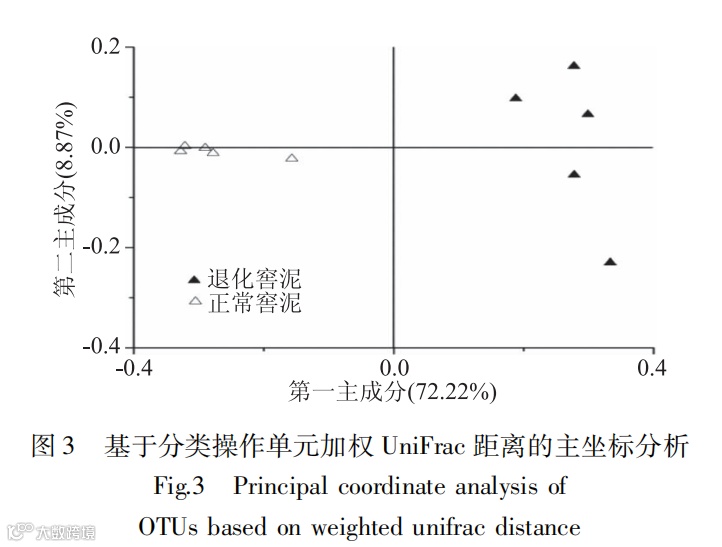
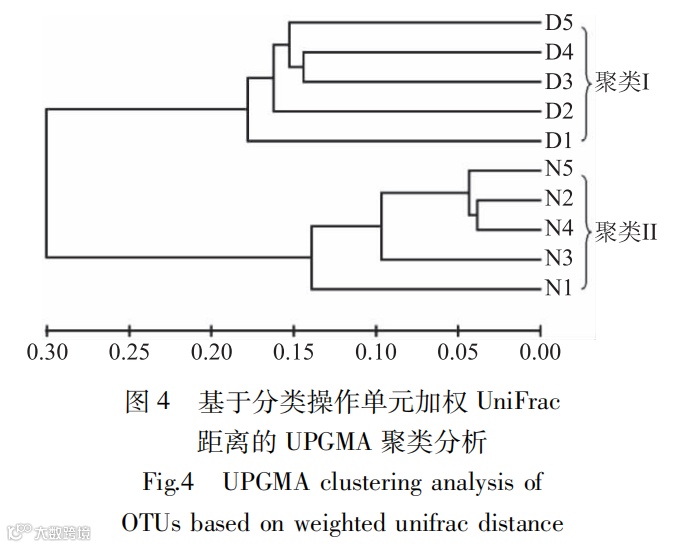
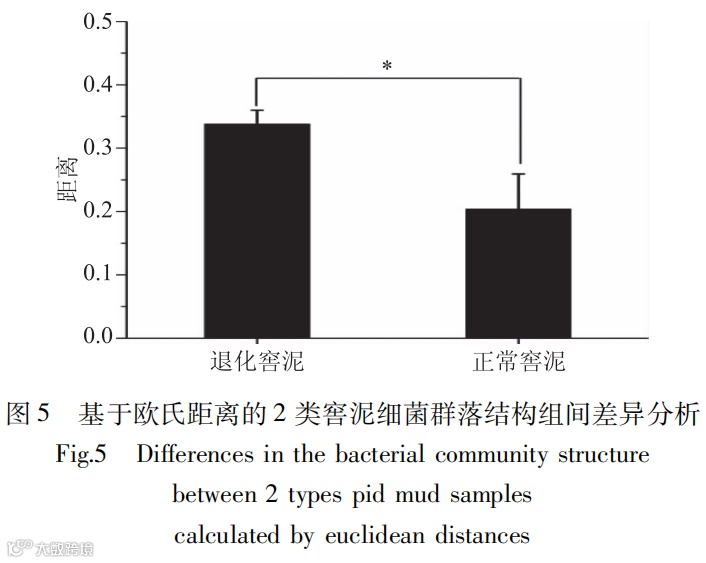
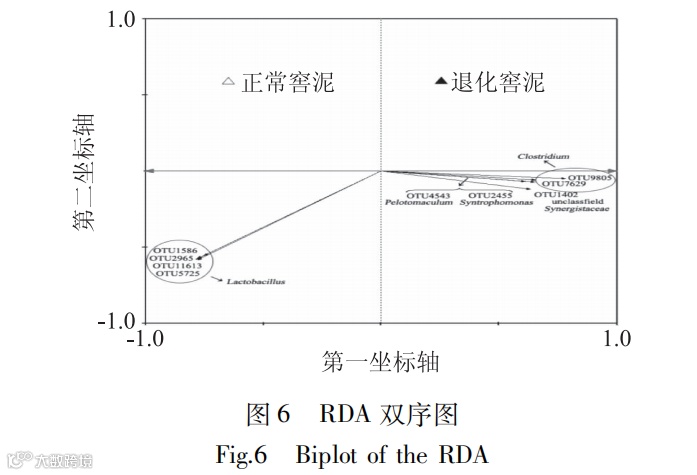
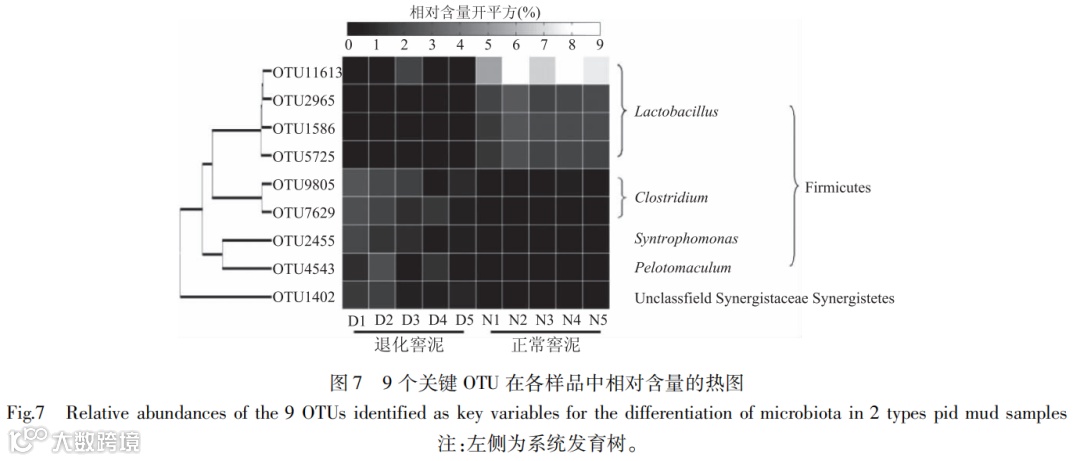
结果:采集了10个窖泥样品,包括5个正常窖泥样品与5个退化窖泥样品。退化窖泥呈银灰色,有白色针状晶体结块,无酯香味,而正常窖泥为灰褐(黑)色,有较强的酯香味。经过MiSeq高通量测序,共获得了279982个序列,根据97%的相似度,去除嵌合体后,共划分得到7606个OTU类型,平均每个窖泥样品1339个,并将它们鉴定为26个门,66个纲,108个目,233个科,524个属。α多样性分析表明,退化窖泥的Chao1指数和香农指数均高于正常窖泥(P<0.05)。多元统计分析表明,总体上来看,正常窖泥与退化窖泥的菌群结构具有显著差异(P<0.05)。正常窖泥和退化窖泥中均以厚壁菌门(Firmicutes)、变形菌门(Proteobacteria)、放线菌门(Actinobacteria)等为优势菌门(相对含量大于1%)。但是,正常窖泥中的螺旋体门(Spirochaetes)、互养菌门(Synergistetes)和绿弯菌门(Chloroflexi)的相对含量显著低于退化窖泥(P<0.05)。正常窖泥和退化窖泥共有的优势属有:乳杆菌属(Lactobacillus)、梭菌属(Clostridium)等。统计分析表明,正常窖泥中的乳杆菌、芽孢杆菌和雷尔氏菌显著高于退化窖泥(P<0.05)。
结论:正常窖泥不仅在外观上与退化窖泥差异较大,在菌群结构上更是如此:退化窖泥的微生物丰富度与多样性更高。随着窖泥的退化,窖泥中的优势菌门增加了螺旋体门,互养菌门,绿弯菌门,且优势属从5个变为9个。另外,我们发现正常窖泥中的乳酸杆菌占绝对优势,其相对含量高达67.91%,分析其可能具有产生白酒特征风味物质乳酸乙酯,并能抑制一些杂菌的作用。本研究对正常窖泥与退化窖泥微生物多样性的分析,证实了细菌多样性可以较为客观的判定窖泥,对后续窖泥质量的优化和窖泥退化的防治具有参考价值。

图片来源于图司机


Objectives: During the process of brewing Baijiu (Chinese liquor), the mud pit serves as the foundation for fermentation and contains a diverse range of microbial communities, which determine the taste quality of the resulting Baijiu. A comparative analysis of the microbial community structures in normal pit mud and degraded pit mud can help to identify characteristic microorganisms associated with degraded and normal pit mud, thereby exploring the relationship between Baijiu quality and microorganisms. In this study, high-throughput sequencing technology and bioinformatics methods were applied to perform high-throughput sequencing and bioinformatics analysis of the microbial communities in normal pit mud and degraded pit mud.
Methods: Using high-throughput sequencing and bioinformatics analysis, the microbial diversity of normal pit mud and degraded pit mud were studied and compared. First, the total DNA from the pit mud samples was extracted using a soil DNA extraction kit. Subsequently, the extracted DNA was used as a template to amplify the bacterial 16S rRNA V3-V4 region using PCR. The obtained PCR products were subjected to high-throughput sequencing using the MiSeq PE300 platform; after sequencing, the obtained paired-end sequences were quality-controlled by removing low-quality sequences and adapters, and then, the QIIME platform was employed to classify the sequences into operational taxonomic units (OTUs) based on a 97% similarity threshold. The RDP (Ribosomal Database Project) database was used for taxonomic annotation at the phylum, class, and order levels to analyze the microbial community structure of the pit mud. Additionally, the α and β diversities of the pit mud microbial communities were analyzed using built-in scripts in QIIME.
Results: A total of 10 pit mud samples were collected, including 5 normal pit mud samples and 5 degraded pit mud samples. The degraded pit mud appeared silver-gray with white needle-like crystalline clumps and lacked ester aroma, while the normal pit mud was gray-brown (black) with a strong ester aroma. After MiSeq high-throughput sequencing, a total of 279982 sequences were obtained. After removing chimeras based on 97% similarity, a total of 7606 operational taxonomic units (OTUs) were identified, averaging 1339 OTUs per pit mud sample. These OTUs were classified into 26 phyla, 66 classes, 108 orders, 233 families, and 524 genera. Alpha diversity analysis indicated that the Chao1 index and Shannon index of the degraded pit mud were significantly higher than those of the normal pit mud (P<0.05). Multivariate statistical analysis revealed a significant difference in microbial community structure between normal pit mud and degraded pit mud (P<0.05). The dominant phyla in both normal and degraded pit mud included Firmicutes, Proteobacteria, and Actinobacteria, with relative abundances greater than 1%. However, the relative abundances of the phyla Spirochaetes, Synergistetes, and Chloroflexi were significantly lower in the normal pit mud than those in degraded pit mud (P<0.05). The dominant genera shared by normal and degraded pit mud included Lactobacillus and Clostridium. Statistical analysis showed that Lactobacillus, Bacillus, and Lelliottia were significantly more abundant in the normal pit mud than in degraded pit mud (P<0.05).
Conclusion: Normal pit mud was not only different from degraded pit mud in appearance, but also in microbial structure: the degraded pit mud demonstrates higher microbial richness and diversity. With the degradation of the pit mud, the dominant phyla in the microbial community shifted to include Spirochaetes, Synergistetes, and Chloroflexi, in addition to the previously dominant phyla. Furthermore, the number of dominant genera increaseed from 5 to 9 in the degraded pit mud. Additionally, we found that Lactobacillus was the absolutely dominant genus in the normal pit mud, accounting for a relative abundance as high as 67.91%. This analysis suggests that Lactobacillus may play a role in producing characteristic flavor compounds such as ethyl lactate in Baijiu and also exhibit inhibitory effects on certain miscellaneous bacteria. The microbial diversity analysis between normal and degraded pit mud confirms that bacterial diversity can serve as an objective indicator for evaluating pit mud quality which is of reference value for subsequent optimization of pit mud quality and prevention and control of pit mud degradation.
《食品工业科技》特邀主编专栏征稿
《食品工业科技》特邀主编专栏征稿:食源性功能物质挖掘与评价 ☚
《食品工业科技》特邀主编专栏征稿:枸杞、红枣、沙棘等食药同源健康食品研究与开发 ☚
群聊:食品工业科技作者群

温
馨
提
示

我刊正式组建微信作者群,为作者提供更多的学术与论文资讯,如需进群,请联系刘老师(微信:上方二维码,电话:87244117-8062)。

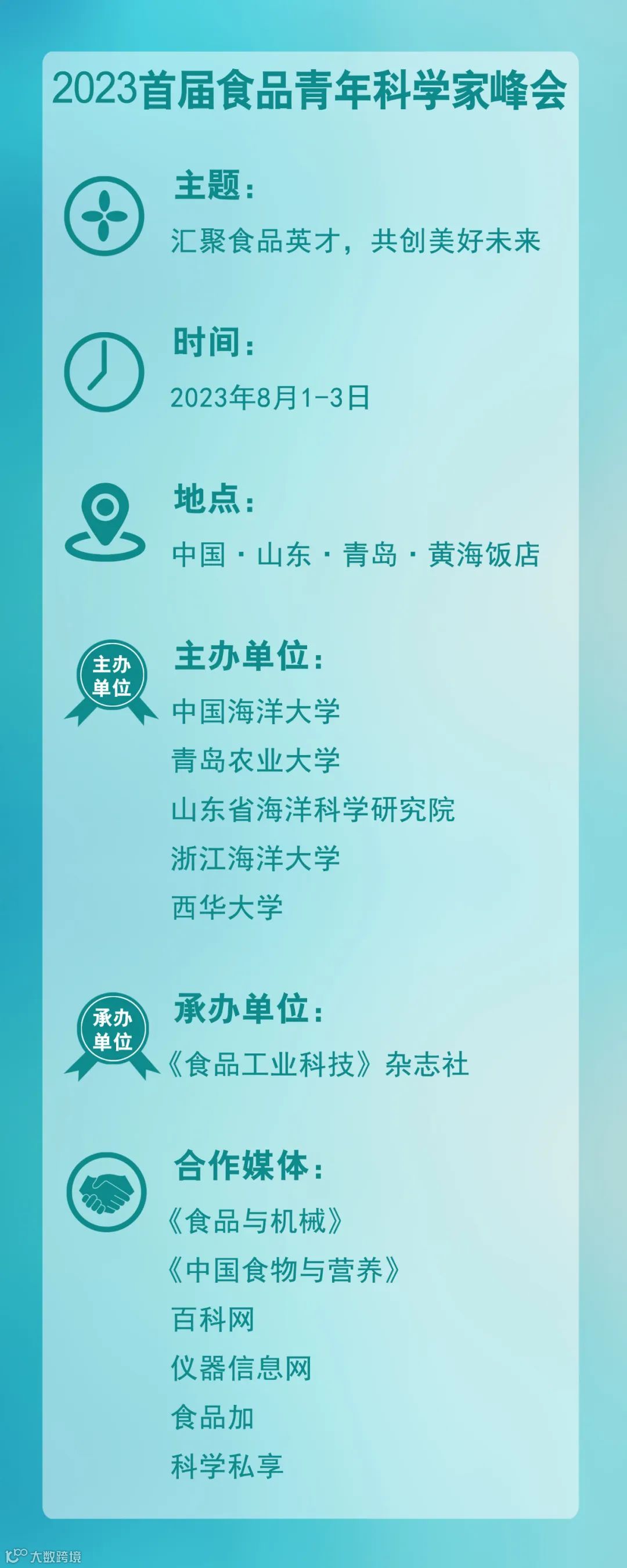

8月1日下午 编委会换届选举
8月1日晚上 编委会招待晚宴
8月2日上午 大会主论坛
主办单位领导致辞
大会主旨报告
8月2日下午 青年科学家分会场报告
8月3日上午 青年科学家分会场报告
博士才俊报告专场
8月3日下午 青年科学家分会场报告
硕士新锐报告专场



报告征集

报告方向:食品及其交叉学科
报告时长:20 min
报名方式:请将个人简介、职务/职称、照片、报告题目及摘要(点击下方“阅读原文”获取模板)发送至邮箱
zhouhao03071995@163.com。

报告方向:食品及其交叉学科
报告时长:20 min
报名方式:请将个人简介、学校、照片、报告题目及摘要(点击下方“阅读原文”获取模板)发送至邮箱
zhouhao03071995@163.com。

报告方向:食品及其交叉学科
报告时长:15 min
报名方式:请将个人简介、学校、照片、报告题目及摘要(点击下方“阅读原文”获取模板)发送至邮箱
zhouhao03071995@163.com。




论文方向:食品及其交叉学科的科研成果及综述
投稿途径:稿件题目上方注明“Food Junction:食品青年科学家峰会投稿”
投稿网址:www.spgykj.com
截止日期:2023年8月4日
录用及见刊方式:依照《食品工业科技》对论文的要求,择优录取,并于《食品工业科技》正刊发表。
绿色通道:论文发表费95折。审核通过的稿件按照书面录用通知的APC费用的95折进行缴纳。



在职人员
|
在校学生
|
2400元/人
|
1500元/人
|
同一单位3人及以上,在职人员2000元/人
|
|
费用包含:会议资料、部分允许共享的演讲内容PDF版、会议午餐
费用不含:住宿(会务组代订会议酒店)、交通费
学生:凭学生证参会

报名联系人
苑编辑 18742059548(微信:y18742059548)


版权声明