响应面优化紫果西番莲叶多酚超声辅助提取工艺及其抗氧化活性
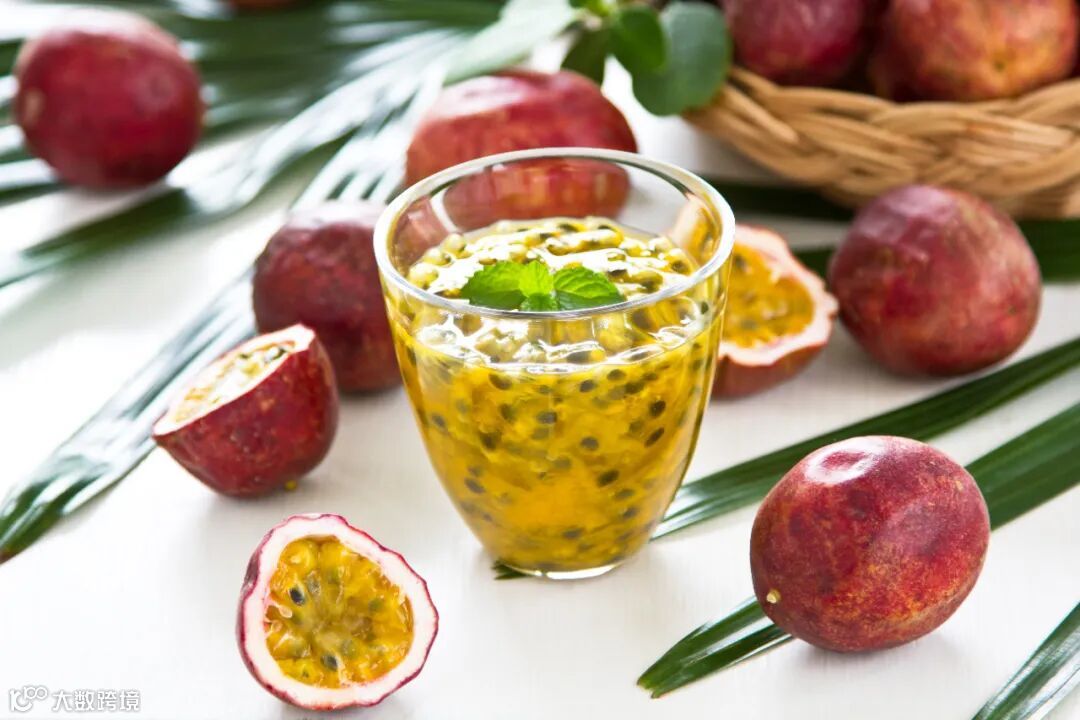
图片来源于图司机
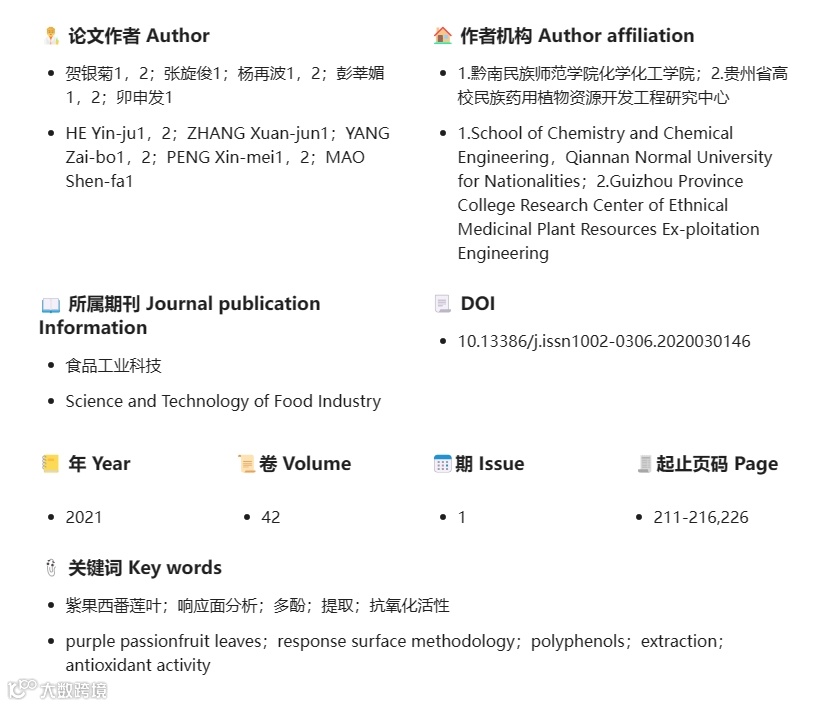
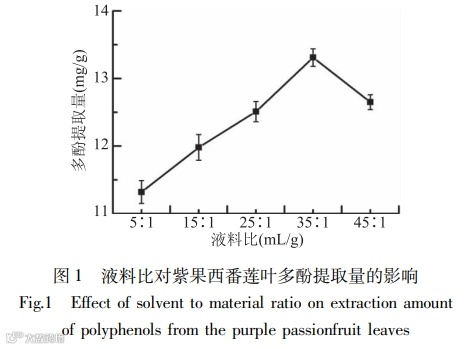
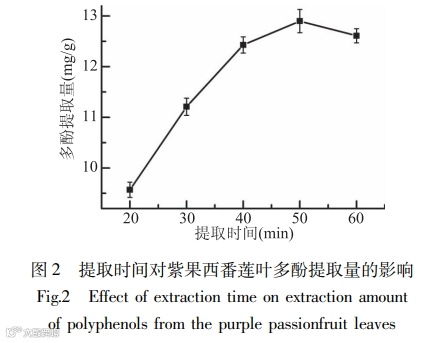
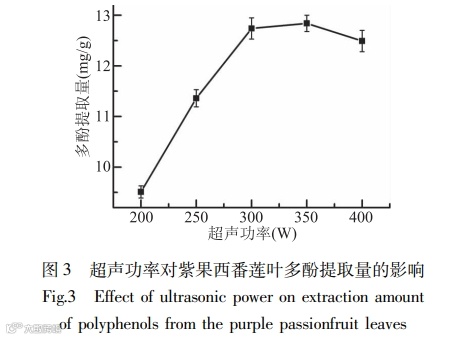
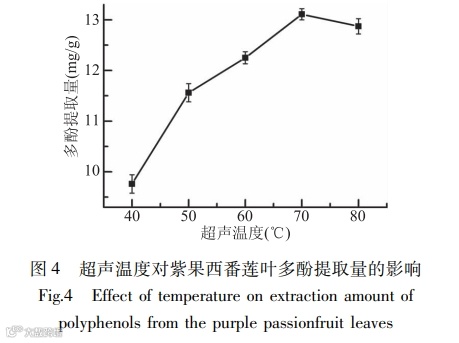
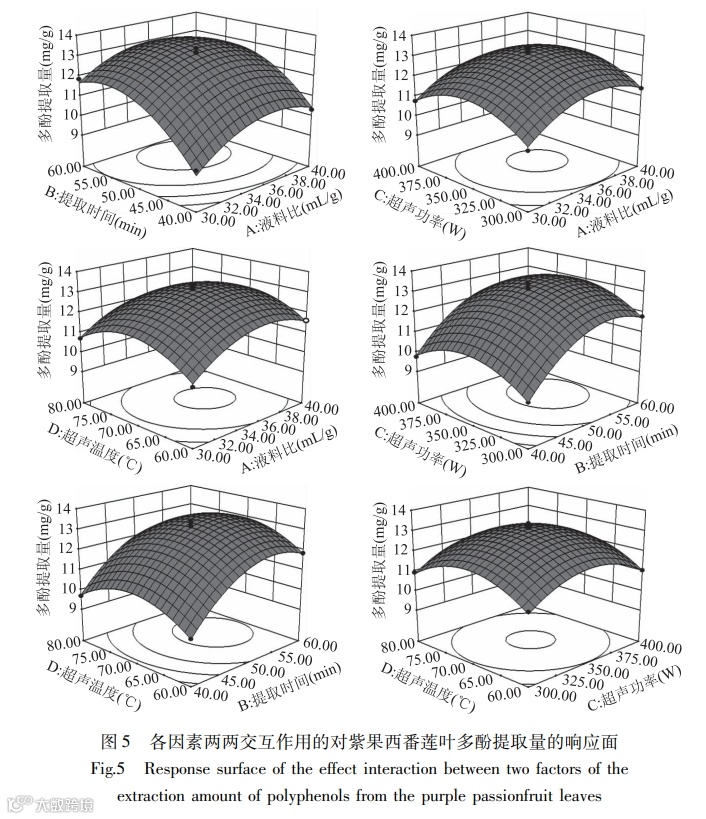
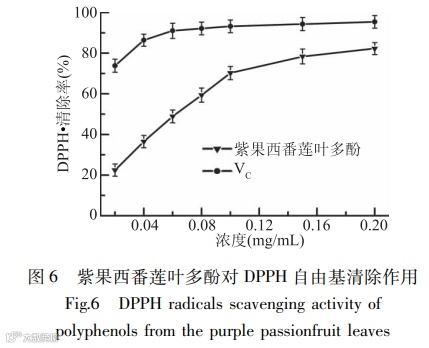
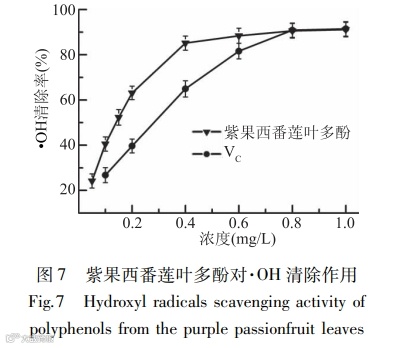
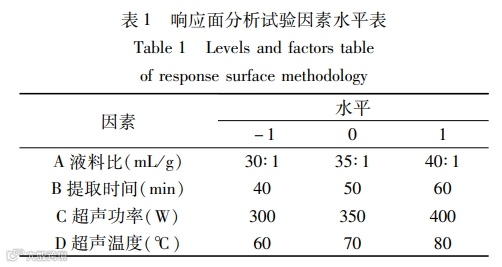
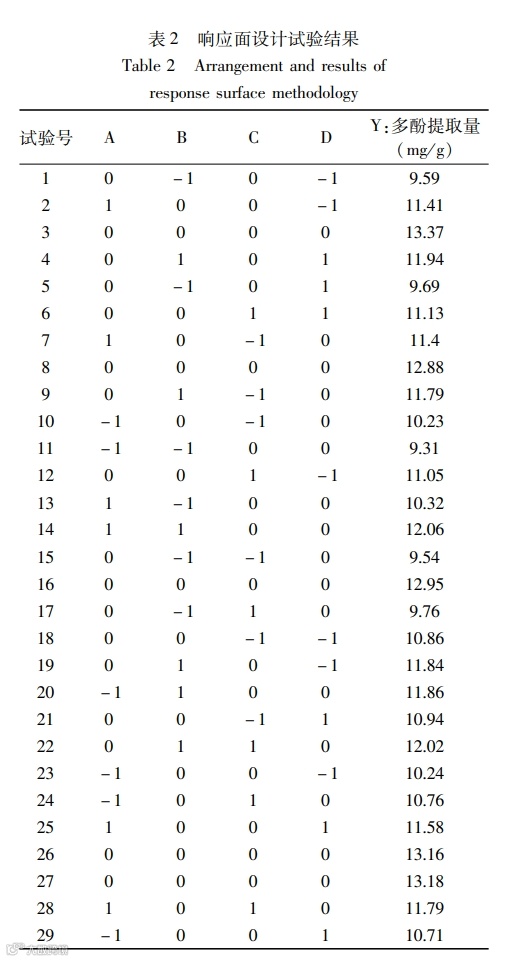
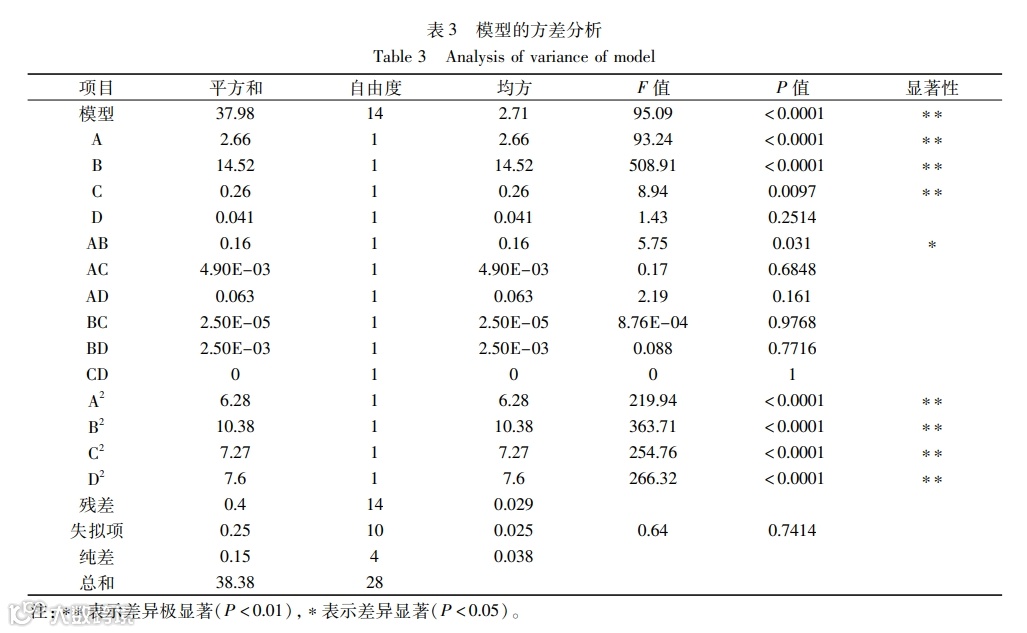
研究发现,西番莲叶有抑菌、抗焦虑、保护神经等功效,其主要活性成分为三萜类、黄酮类、生物碱、酚类等物质。在南美洲及欧洲的民间,西番莲叶被当作药物用于治疗神经紧张、偏头痛、酒精中毒等疾病,目前国内对对西番莲叶的应用研究较少。植物多酚是一类多样性、多功能的活性物质,其分离提取工艺一直备受关注。超声辅助提取法是利用声波产生的空化效应和搅拌作用,破坏植物细胞,使溶剂渗透到植物细胞中去,可缩短提取时间、提高提取率,常被用于植物多酚的提取,本文以紫果西番莲叶为对象,研究其多酚提取工艺及抗氧化活性。在单因素试验基础上采用Box-Behnken响应面分析法优化紫果西番莲叶多酚的提取工艺,考察液料比、提取时间、超声功率和超声温度对其多酚提取量的影响,以清除DPPH自由基和•OH能力评价紫果西番莲叶多酚的抗氧化活性。结果表明:响应面分析的二次模型是极显著的、准确性较高,紫果西番莲叶最佳提取条件为:液料比36:1 mL/g、提取时间54 min、超声功率350 W和超声温度70 ℃,此时其多酚的提取量为(13.19±0.17) mg/g。抗氧化活性测定其清除DPPH自由基和•OH的半抑制浓度IC50分别为0.058和0.144 mg/mL,表面紫果西番莲叶多酚具有较好抗氧化活性,可作为潜在的天然抗氧化剂的来源应用于食品、医药等领域。
Passionfruit, also known as Passion fruit and Passiflora edulis, is a popular name given to several species of the genus Passiflora that belongs to Passifloraceae family, which there are more than 500 species distributed in regions of tropical and subtropical climate of the world. Passionfruit mainly has three varieties: yellow, purple and fuchsia. Its fruit has a strong aroma and is reputed as the "king of juice". The flesh, seeds, peel, stems and leaves of Passionfruit contains a variety of active compounds, which have biological activities sach as antioxidant, antibacterial, anti-inflammatory, anti-depressant, anti-fatigue, anti-hypertensive. Studies have found the leaves of Passionfruit have antioxidant, antibacterial, anti-anxiety, neuroprotective, hypoglycemic, etc. And its main active compounds are triterpenoids, flavonoids, alkaloids, and polyphenols. In South America and Europe, Passionfruit leaves are used as medicine to treat nervous tension, migraine, alcoholism, etc. Polyphenols have antibacterial, anti-virus, anti-oxidation, hypolipidemic, anti-tumor, anti-cancer and immune enhancement. There are many polyphenols extraction methods, such as extraction, ultrafiltration, microwave digestion, enzyme, supercritical fluid, and ultrasonic extraction. Ultrasonic-assisted solvent extraction of plant secondary metabolites has been widely used in the fields of medicine, food and chemistry. It is a green extraction technique with a high extraction rate, low energy consumption and a short extraction cycle. In previous studies found that ultrasound-assisted extraction significantly increased the extraction rate of polyphenols at low ethanol levels, low temperatures and shorter time periods, achieving a more environmentally friendly and less time-consuming method than traditional solvents. The investigation found that the extraction process and antioxidant activity of total flavonoids from Passionfruit leaves were mainly reported at home and abroad, while the extraction of polyphenols from Passionfruit leaves was not reported. In order to study the amount of polyphenols extracted from purple Passionfruit leaves, to optimize the extraction technology and antioxidant activity of polyphenols from purple passionfruit leaves. On the basis of a single factor test, the material to solvent ratio, extraction time, ultrasonic power and ultrasonic temperature were the factors, and the Box-Beheken design(BBD) was applied to optimize the extraction conditions by using the Design-Expert 8.0.6 Trial software. And the amount of polyphenols from purple Passionfruit leaves extracted was determined using the ferrous tartrate method, The antioxidant activity of purple Passionfruit was evaluated by its ability of scavenging 1,1-Diphenyl-2-picrylhydrazyl (DPPH) radicals and hydroxyl radicals, which was expected to provide a theoretical basis for further development of the additional value of purple Passionfruit. The results showed that the quadratic model of response surface analysis was extremely significant and accurate. Four factors, such as the ratio of solvent to material ratio, extraction time , ultrasonic power and ultrasonic temperature, have significant effects on the extraction of polyphenols from purple Passionfruit leaves, the order from largest to smallest is extraction time, solvent to material ratio, ultrasonic power, ultrasonic temperature. The optimal polyphenol extraction conditions were: solvent to material ratio 36:1 mL/g, extraction time 54 min, ultrasonic power 350 W and ultrasonic temperature 70 ℃, At this time, the amount of polyphenols extracted from purple Passionfruit leaves was (13.19 ± 0.17) mg/g. The results of antioxidant activity showed that the polyphenols from purple Passionfruit leaves had good antioxidant activity. When the concentration was 0.2 mg/mL, the scavenging rate of polyphenols to DPPH radicals was 82.25%; When the concentration is 0.8 mg/mL, the scavenging rate of polyphenols to hydroxyl radicals 90.59%, which is equivalent to the scavenging activity of vitamin C that of the reference (90.89%). According to the fitting by Origin8.0 software, the antioxidant activities with 50% inhibitory concentration (IC50 values) of polyphenols in purple Passionfruit leaves for scavenging DPPH radicals and vitamin C that of the reference were 0.058 mg/mL and 0.007 mg/mL respectively. And the antioxidant activities IC50 values of vitamin C those of the reference for scavenging hydroxyl radicals and vitamin C that of the reference were 0.144 mg/mL and 0.282 mg/mL respectively, indicating that the polyphenols in purple Passionfruit leaves have good antioxidant activity, which can be used as a potential source of natural antioxidants in food, medicine, etc.
采用超声辅助提取其多酚,在单因素实验的基础上结合响应面优化其提取工艺。结果表明:响应面分析的二次模型是极显著的,准确性较高,液料比(A)提取时间(B)、超声功率(C)及超声温度(D)等4 个因素对多酚提取量影响顺序为提取时间(B)>液料比(A) >超声功率(C)> 超声温度(D)其多酚提取最佳工艺:液料比 36 : 1 mL/g、提取时间54 min、超声功率 350 W 和超声温度 70 ℃,此时紫果西番莲叶多酚的提取量为(13.19±0.17) mg/g。并以清除 DPPH 自由基和·OH 能力评价了紫果西番莲叶多酚的抗氧化活性,其清除 DPPH 自由基、·OH 的半抑制浓度(IC50) 分别为 0.058、0.144 mg/mL,表明紫果西番莲叶多酚具有较好抗氧化活性,可作为潜在的天然抗氧化剂的来源应用于食品、医药等领域。

详细内容请点击文末“阅读原文”。
食品科学家论文汇总
(点击专家姓名,查看论文)
















《食品工业科技》特邀主编专栏征稿
《食品工业科技》青年编委专栏征稿:AI for Food Industry:人工智能在食品工业中的应用 ☚
《食品工业科技》青年编委专栏征稿:组学分析技术在食品品质研究中的应用 ☚
群聊:食品工业科技作者群

温
馨
提
示

我刊正式组建微信作者群,为作者提供更多的学术与论文资讯,如需进群,请联系刘老师(微信:上方二维码,电话:87244117-8062)。

版权声明