

 的来源:npj计算材料学
材料的弹性性质通过刚性模量表示,在三个维度上是一个四阶张量。在微观尺度下,描述的材料微观结构通常非常复杂,包括了不同的结构特征和缺陷性质。一些微观结构特征不会明显改变宏观刚度,或仅以相当适度和线性的方式改变宏观刚度,但其它的一些微观结构特征会导致材料弹性响应发生剧烈的变化。比如材料的孔隙率,描述材料的体积分数、分散性和连通性。计算纳米多孔材料真实弹性刚度的一种直接方法是进行原子计算,但该方法在研究大材料系统的机械性能时变得不可行,这个问题常也被称为材料力学中的多尺度和多物理挑战。多尺度建模既需要考虑各种物理现象在较低尺度上得准确预测,也需要方法在不同尺度间传递信息。因此,如何实现在不同尺度中保持信息量并达到计算成本之间的平衡,成为了关键问题。
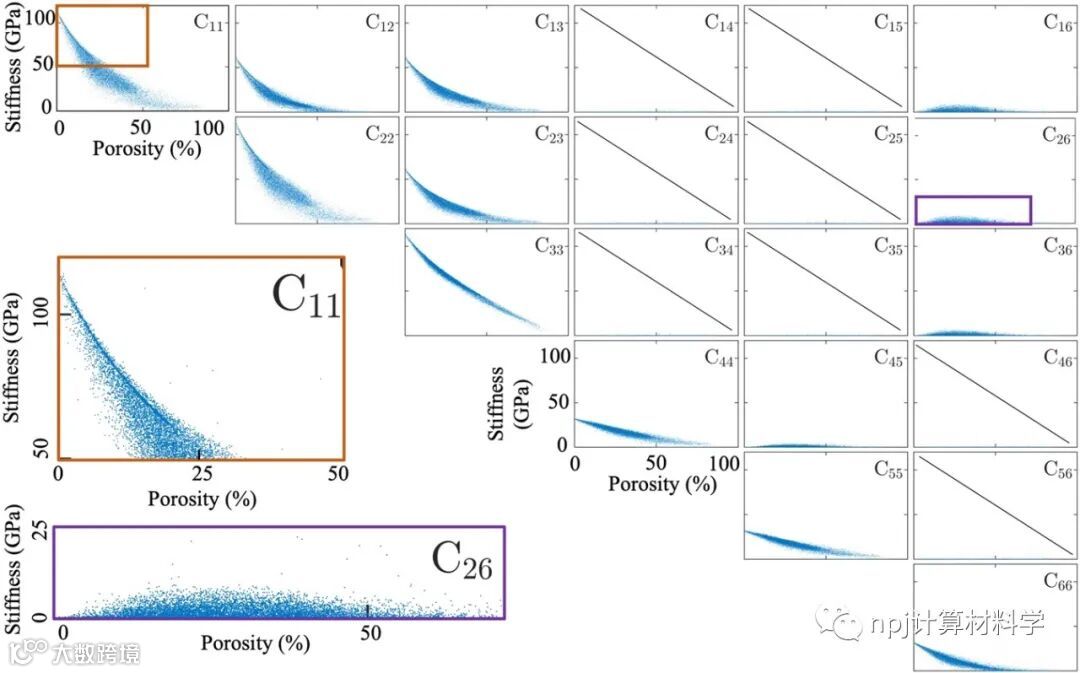
Fig. 1 Components of the elasticity tensor calculated with molecular statics.
来自德国马普学会微观结构物理和合金设计研究所的Jaber Rezaei Mianroodi等,提出了一种无损且有效的方法,使用人工智能技术来研究具有复杂纳米结构得材料弹性响应问题。他们将纳米多孔材料的结构图像作为输入,将原子模拟直接计算的弹性张量作为输出,训练了卷积神经网络模型。经过原子数据训练后的模型,可以直接从原子尺度捕获表面和尺寸效应,并且实现了从微观尺度到宏观尺度的无损转移。研究发现,经过训练的卷积神经网络可以捕获完整原子细节(如孔隙表面效应),同时比原子计算快几个数量级。
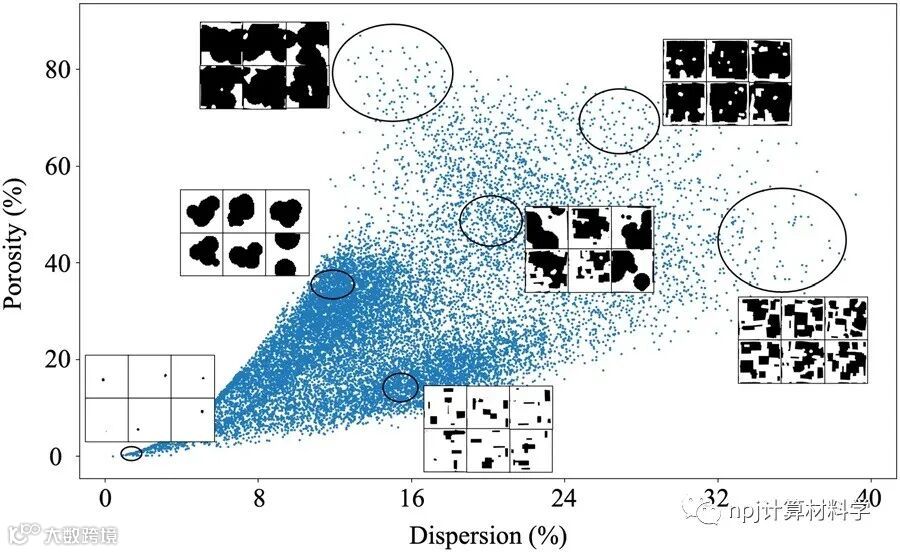
Fig. 2 Distribution of the input data in the feature space.
该研究为高效而准确的逆向设计策略开辟了途径,未来可以扩展到研究具有复杂固有孔隙率特征的相似工程材料中,如超材料、生物物质、增材制造材料、电池或泡沫等。相关论文近期发表于npj Computational Materials 8: 67 (2022)。手机阅读原文,请点击本文底部左下角“阅读原文”,进入后亦可下载全文PDF文件。
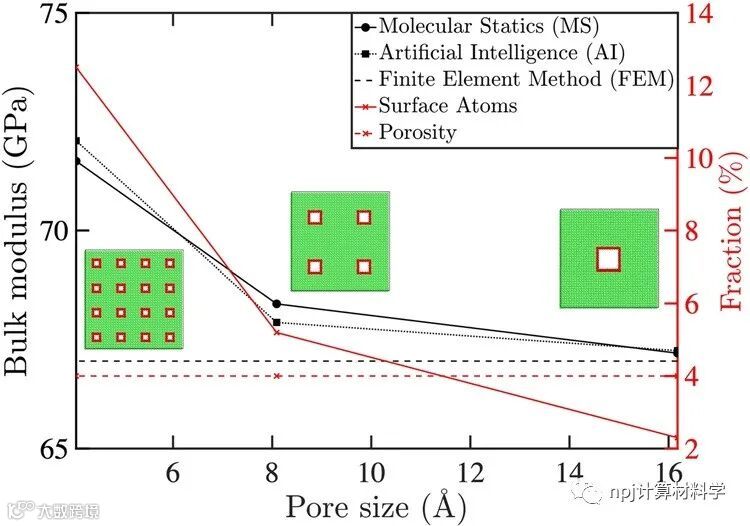
Fig. 3 Size dependency of the bulk modulus.
Editorial Summary
The elastic properties of materials are represented through the elastic stiffness modulus, which in three dimensions is a fourth-order tensor. At microscopic level, the description of microstructures is usually very complex, as characterized by a wide range of structural features and defects. Some of these microstructure features do not alter the macroscopic stiffness substantially or only in a rather modest and linear fashion, but others lead to more drastic changes in the elastic response. This applies particularly to the porosity of the material, a property that refers to the volume fraction, dispersion, and connectivity of the open volume. A straightforward way to calculate the true elastic stiffness of nanoporous materials is conducting atomistic calculations. However, this is not feasible when targeting the mechanical description of larger parts. This problem is often referred to as a multi-scale and multi-physical challenge in materials mechanics. The multi-scale modeling requires both accurate and predictive simulations at lower scales taking various physical phenomena into account and efficient methodologies to transfer the information between the scales. Therefore, how to achieve the balance between the amount of information preserved in scaling and the associated computational cost has become a problem to be considered.
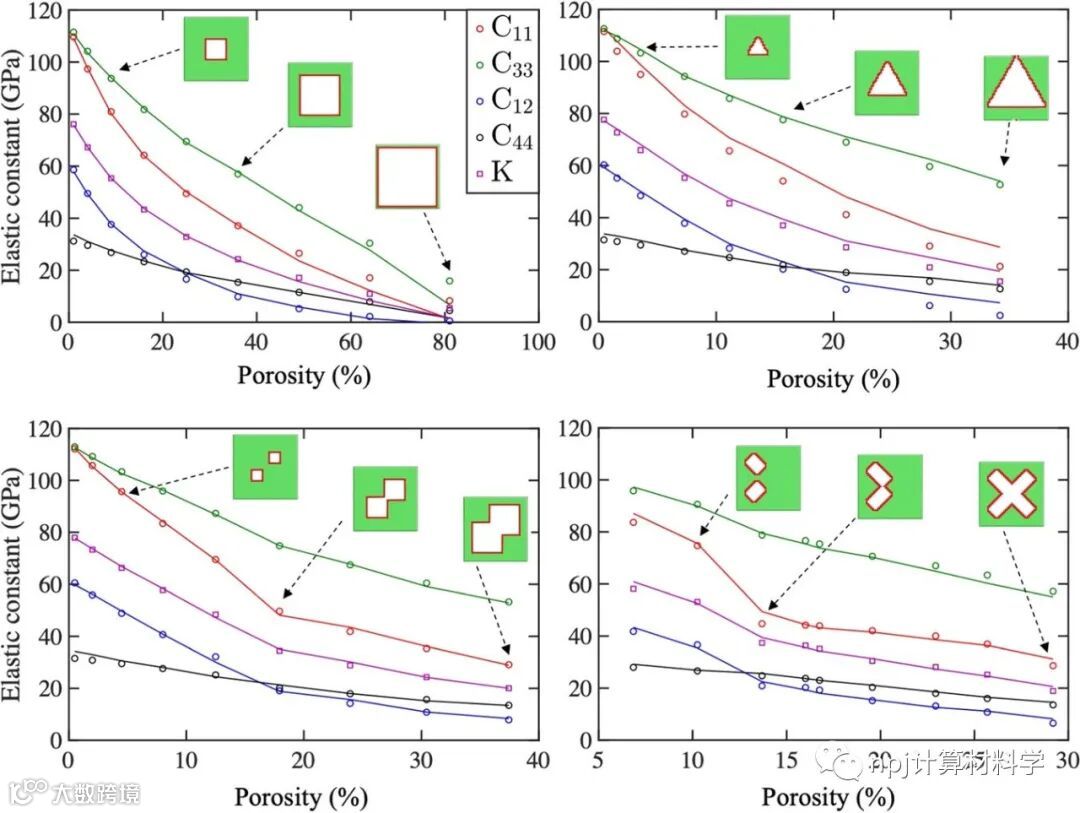
Fig. 4 Benchmarking the AI prediction of the elasticity tensor.
A lossless and efficient approach is proposed to derive constitutive laws for multi-scale modeling of materials with complex nanostructures. Jaber Rezaei Mianroodi et al. from Microstructure Physics and Alloy Design, Max-Planck-Institut für Eisenforschung, took the structure images of a nanoporous material as input, and the corresponding elasticity tensor calculated from molecular statics as output, and trained a convolutional neural network (CNN) model. The trained network is capable of capturing surface and size effects directly from the atomistic scale, and realizes lossless transfer from microscopic scale to macroscopic scale. The authors demonstrated that trained CNN model shows the ability to capture full atomistic details (such as pore surface effects), while being orders of magnitude faster than atomistic calculations.
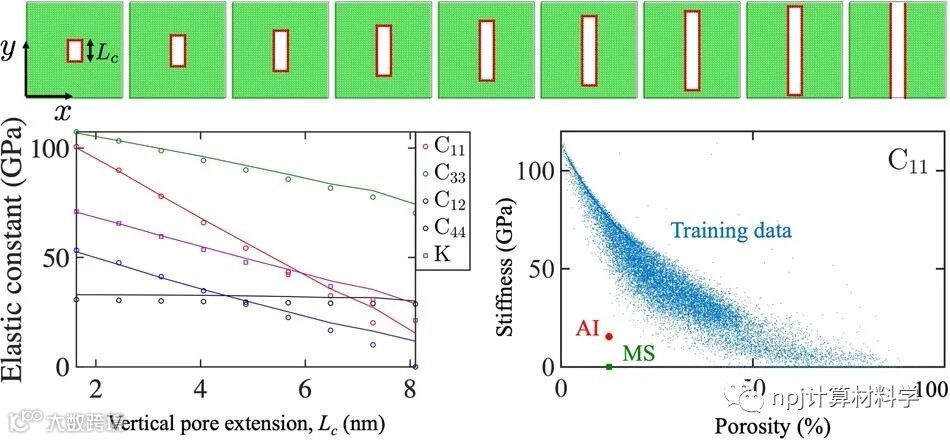
Fig. 5 Elasticity tensor components of a box with growing pore.
This work opens up opportunities for efficient and accurate inverse design strategies, and in the future can be extended to study similar engineering materials with complex inherent porosity features such as metamaterials, biological matter, additively manufactured materials, batteries, or foams. This article was recently published in npj Computational Materials 8: 67 (2022).
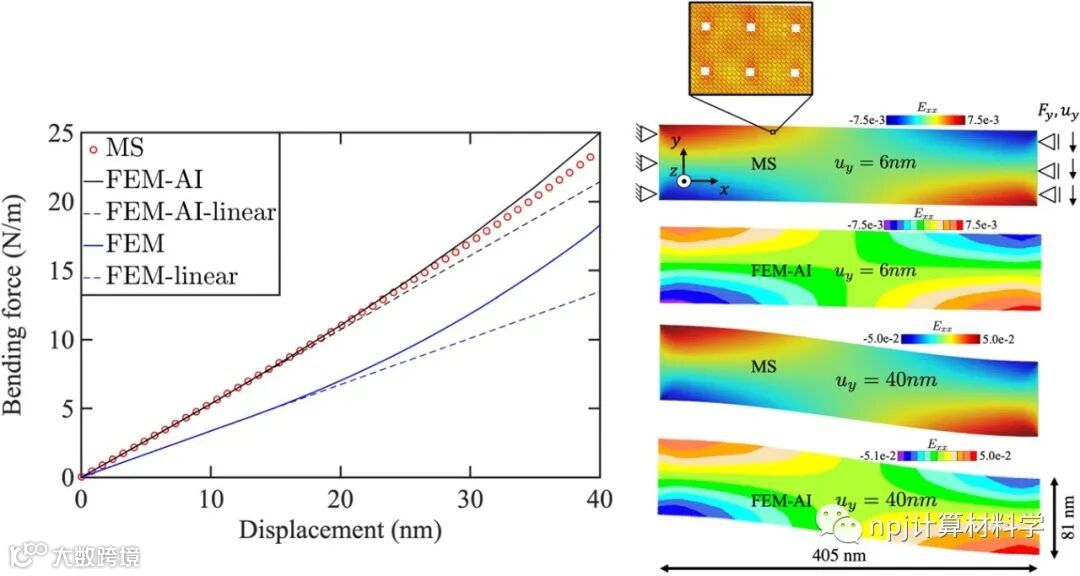
Fig. 6 Nanoporous beam under bending load modeled with different methods.
原文Abstract及其翻译
Lossless multi-scale constitutive elastic relations with artificial intelligence (基于人工智能无损多尺度本构弹性关系)
Jaber Rezaei Mianroodi, Shahed Rezaei, Nima H. Siboni, Bai-Xiang Xu &Dierk Raabe
Abstract A seamless and lossless transition of the constitutive description of the elastic response of materials between atomic and continuum scales has been so far elusive. Here we show how this problem can be overcome by using artificial intelligence (AI). A convolutional neural network (CNN) model is trained, by taking the structure image of a nanoporous material as input and the corresponding elasticity tensor, calculated from molecular statics (MS), as output. Trained with the atomistic data, the CNN model captures the size- and pore-dependency of the material’s elastic properties which, on the physics side, derive from its intrinsic stiffness as well as from surface relaxation and non-local effects. To demonstrate the accuracy and the efficiency of the trained CNN model, a finite element method (FEM)-based result of an elastically deformed nanoporous beam equipped with the CNN as constitutive law is compared with that obtained by a full atomistic simulation. The trained CNN model predicts the elasticity tensor in the test dataset with a root-mean-square error of 2.4 GPa (3.0% of the bulk modulus) when compared to atomistic calculations. On the other hand, the CNN model is about 230 times faster than the MS calculation and does not require changing simulation methods between different scales. The efficiency of the CNN evaluation together with the preservation of important atomistic effects makes the trained model an effective atomistically informed constitutive model for macroscopic simulations of nanoporous materials, optimization of nanostructures, and the solution of inverse problems.
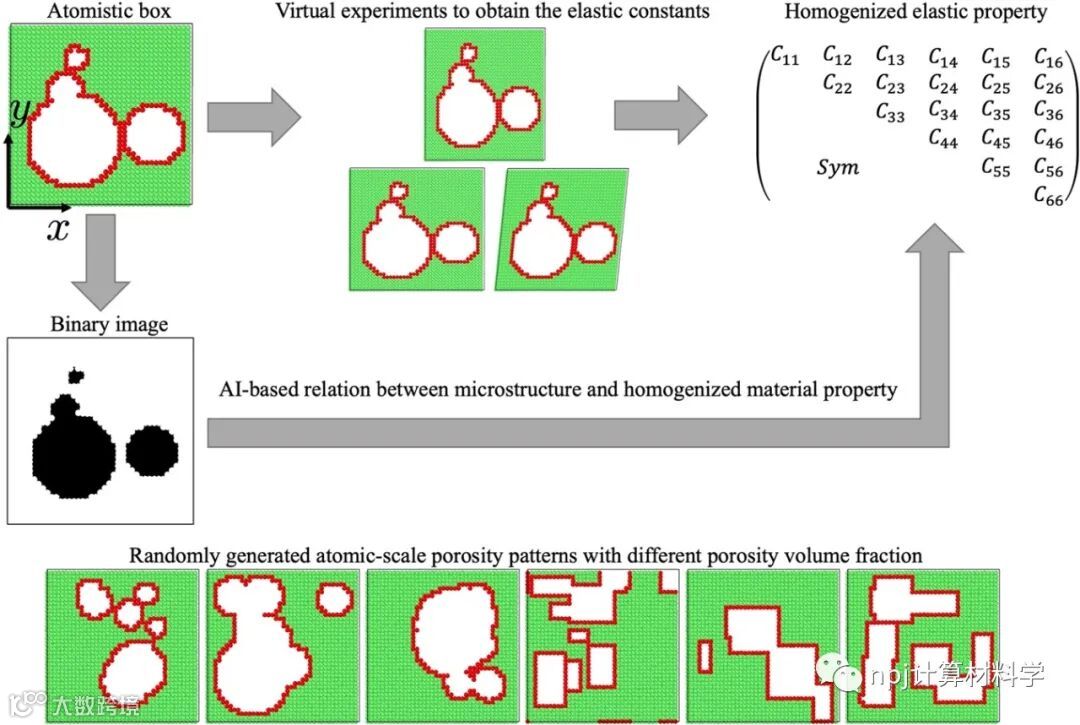
Fig. 7 Schematic of the workflow.
摘要 迄今,材料弹性响应的本构描述在原子尺度和连续尺度之间的无缝和无损转换一直难以捉摸。在这里,我们展示了如何通过使用人工智能(AI)来克服这个问题。我们通过将纳米多孔材料的结构图像作为输入,将从分子静力学(MS)计算的相应弹性张量作为输出,训练了卷积神经网络(CNN)模型。通过原子数据训练,CNN模型捕获了材料弹性性质的尺寸和孔隙依赖性。从物理方面来说,该特性来源于其固有刚度以及表面弛豫和非局域效应。为了验证训练后CNN模型的正确性和效率,我们针对弹性变形纳米多孔梁,将包含CNN作为本构定律的有限元法(FEM)结果与全原子模拟结果进行了比较。与原子计算相比,训练后的CNN模型预测的测试数据集的弹性张量均方根误差为2.4GPa(体积模量的3%)。另一方面,CNN模型比MS计算快约230倍,且不需要在不同尺度间改变模拟方法。CNN评估的效率,加上重要原子效应的保留,使该训练模型成为纳米多孔材料宏观模拟、纳米结构优化、逆问题求解的有效原子信息本构模型。
免责声明:本文旨在传递更多科研资讯及分享,所有其他媒、网来源均注明出处,如涉及版权问题,请作者第一时间后台联系,我们将协调进行处理,所有来稿文责自负,两江仅作分享平台。转载请注明出处,如原创内容转载需授权,请联系下方微信号。