
华南地区近江牡蛎营养成分分析及评价
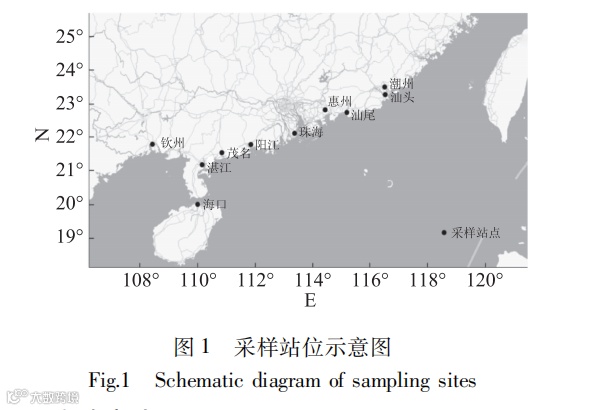
目的:牡蛎内脏一般也属于可食用部分。近些年来,国内外许多学者研究发现牡蛎体中不同组织对重金属累积能力不同,其中内脏是重金属蓄积的主要部位。GB 2762-2012《食品安全国家标准 食品中污染物限量》中首次明确对双壳贝类体去除内脏后的可食用部分中的铅限量和镉限量做出了规定。本文研究分析和评价了华南沿海10个地区近江牡蛎的营养成分,并探讨了去除牡蛎内脏对其营养成分的影响,以期为牡蛎产品的开发和利用以及牡蛎的安全消费提供参考。
方法:参照相关国家标准GB 5009.3《食品安全国家标准 食品中水分的测定》、GB 5009.5《食品安全国家标准 食品中蛋白质的测定》、GB 5009.6《食品安全国家标准 食品中脂肪的测定》、GB 5009.4《食品安全国家标准 食品中灰分的测定》和采用现代化学分析手段,检测牡蛎水分、蛋白质、脂肪、灰分、氨基酸、矿物质元素等含量,对来自不同地区的近江牡蛎样品进行营养成分分析和营养学评价。
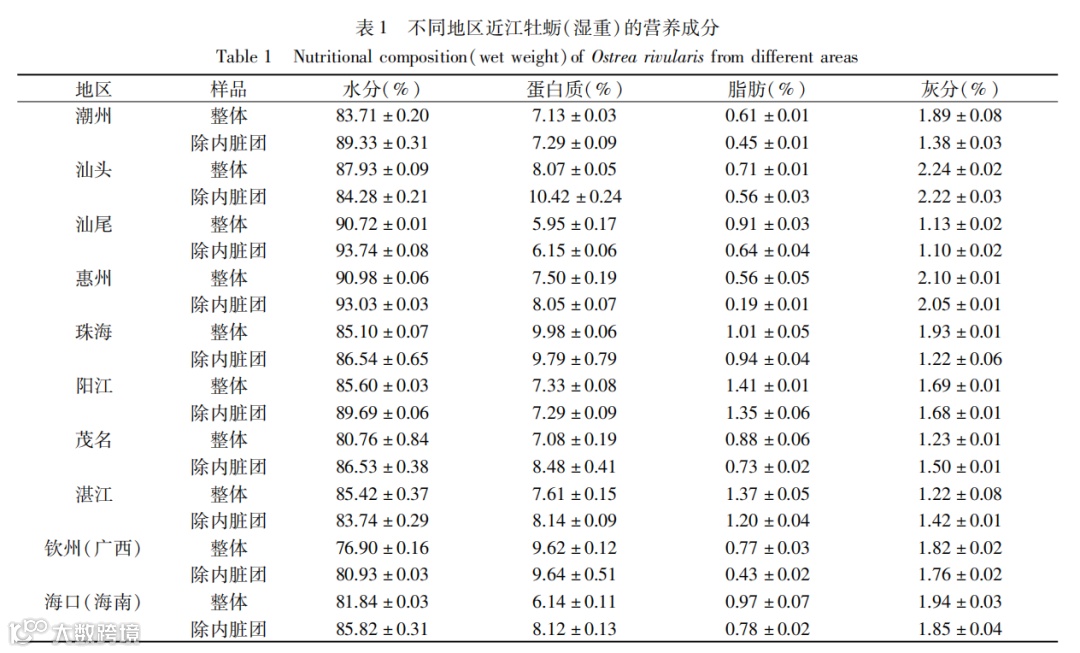
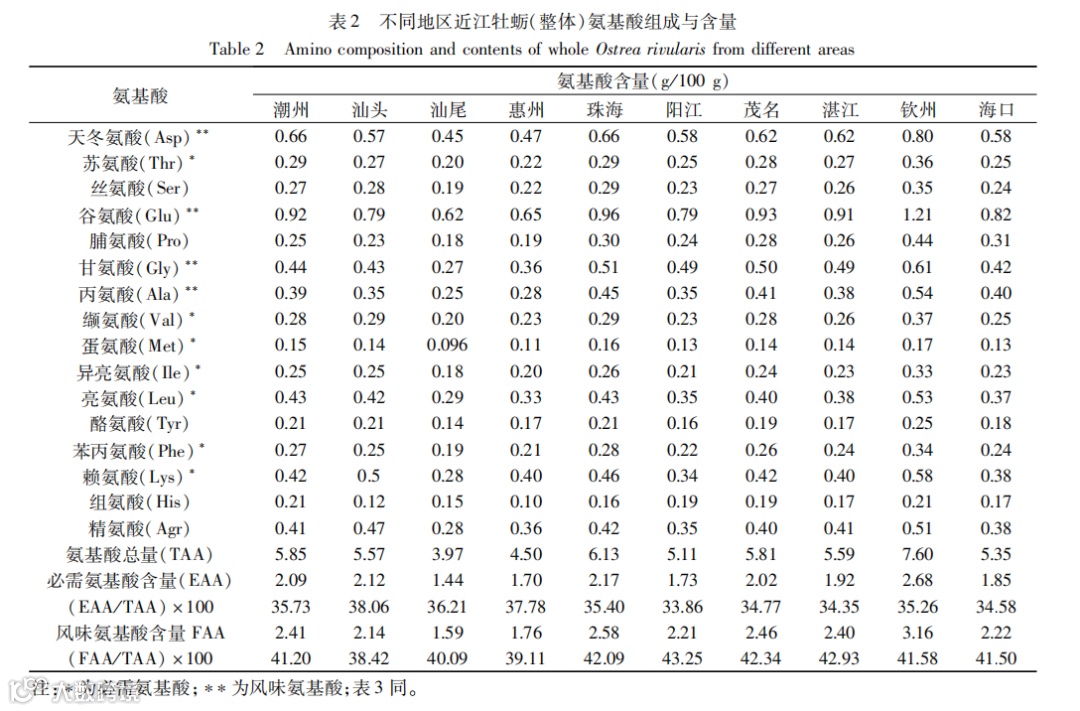
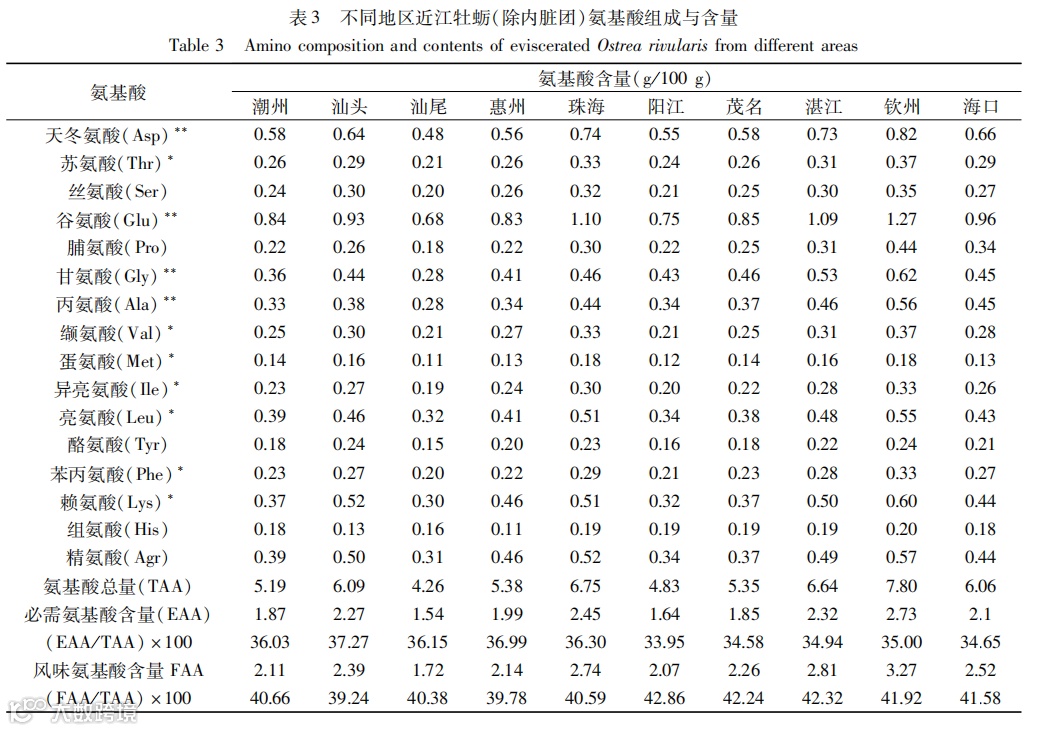
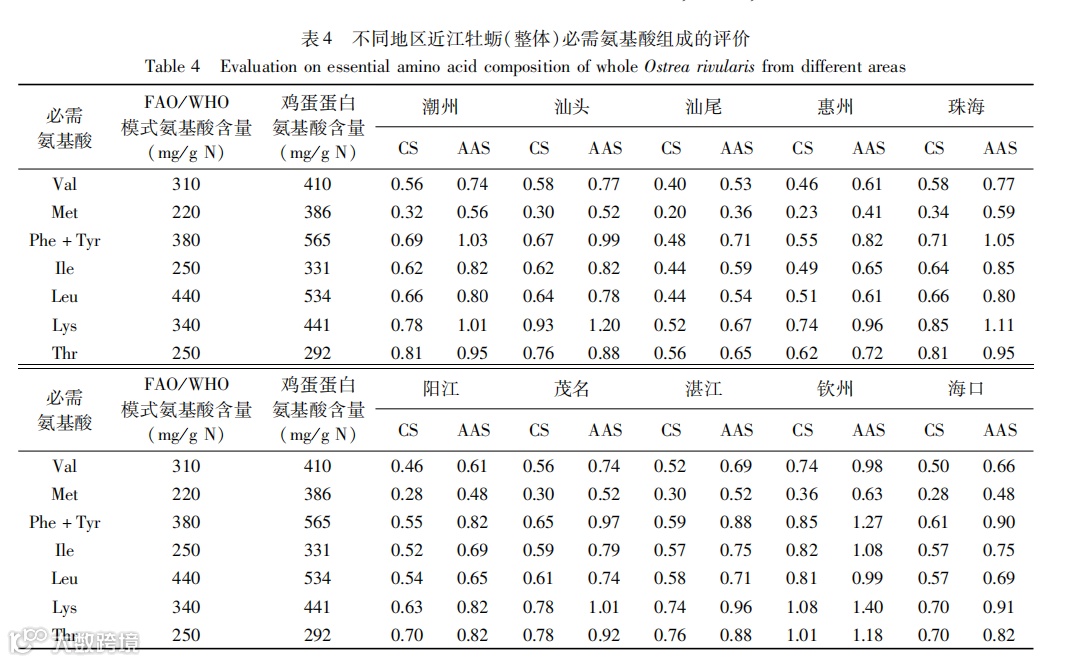
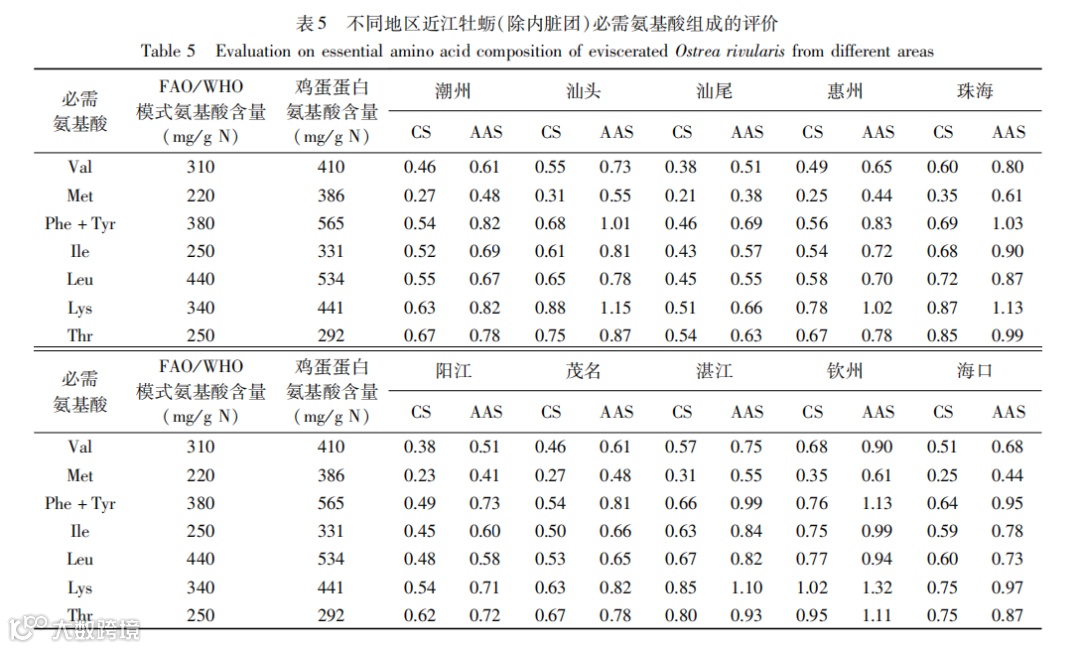
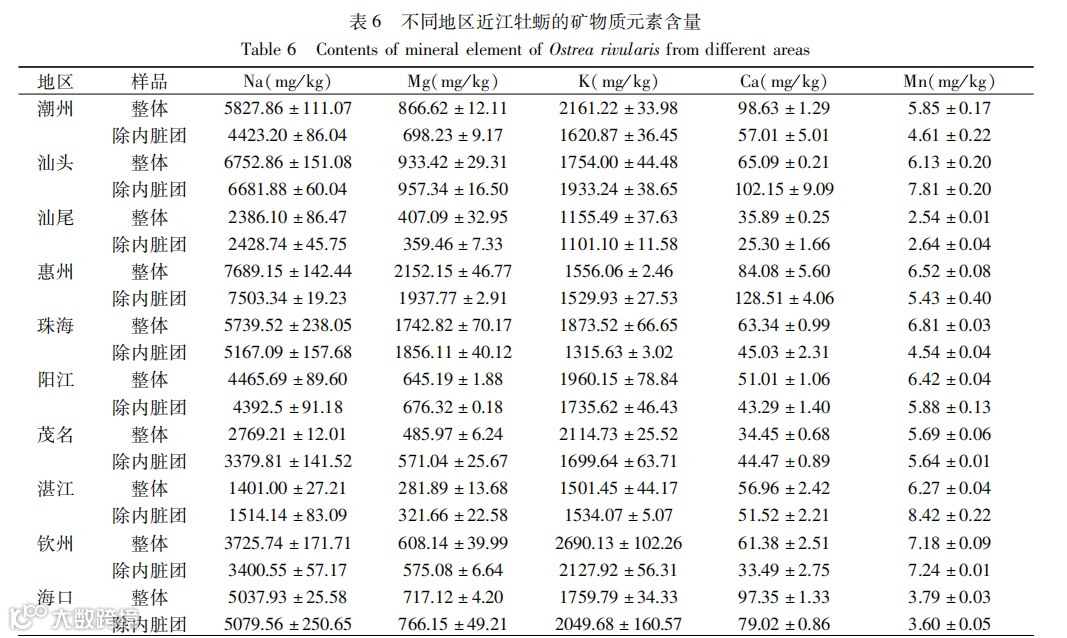
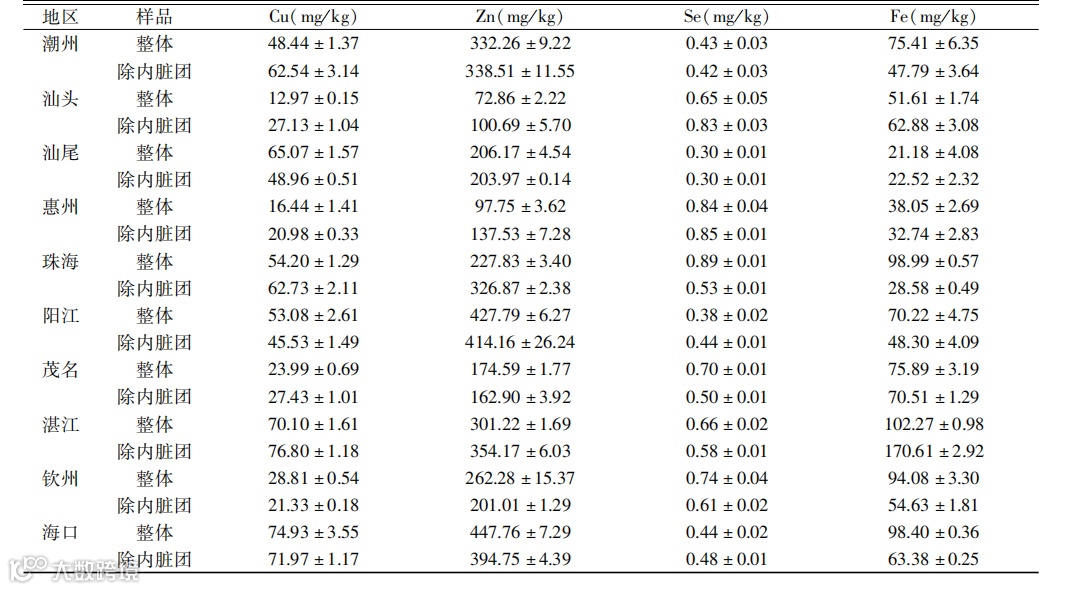
结果:试验结果显示,调查的10个地区近江牡蛎中水分、粗蛋白、脂肪和灰分的含量范围分别为76.90%~90.98%、5.95%~9.98%、0.56%~1.41%、1.13%~2.24%;样品去除内脏后,其水分、粗蛋白、脂肪和灰分的含量范围分别为80.93%~93.74%、6.15%~10.42%、0.19%~1.35%、1.10%~2.22%。10个地区中,水分含量以惠州样品最高,钦州最低;蛋白质含量以珠海样品最高,汕尾样品最低;脂肪含量以阳江样品最高,惠州样品最低。调查地区近江牡蛎水分、粗蛋白、脂肪和灰分的平均质量分数分别为85.90%、7.64%、0.75%、1.71%。10个地区近江牡蛎均检测出16种氨基酸,其中7种为必需氨基酸,总氨基酸含量为3.97%~7.60%,平均含量为5.55%;钦州样品的氨基酸总量和必需氨基酸含量最高,汕尾样品的最低;必需氨基酸占总氨基酸(EAA/TAA)的比率在33.86%~38.06%,平均值为35.60%;风味氨基酸占氨基酸总量的38.42%~43.25%,平均含量为41.25%,阳江样品中风味氨基酸占总氨基酸的比率最高。样品去除内脏后,总氨基酸含量为4.26%~7.80%,平均含量为5.83%,必需氨基酸占总氨基酸(EAA/TAA)的比率在33.95%~37.27%之间,风味氨基酸占氨基酸总量的39.24%~42.86%。近江牡蛎中钙、铁、锌、硒等微量元素含量丰富,去除内脏后锌含量略有升高。不同地区近江牡蛎样品中的矿物质元素含量存在差异。
结论:不同养殖地区的近江牡蛎样品营养成分有较大差异,这可能与其生长环境的有关。10个地区的近江牡蛎样品去除内脏后,水分含量、蛋白质和氨基酸含量较牡蛎整体略有升高,脂肪含量略有降低,钙、铁、锌、硒微量元素含量与近江牡蛎整体含量相近,其中锌含量较牡蛎整体略高。近江牡蛎是高蛋白、低脂肪具有较高营养价值的水产品,其除去内脏后营养价值略有升高,建议除去内脏后食用。
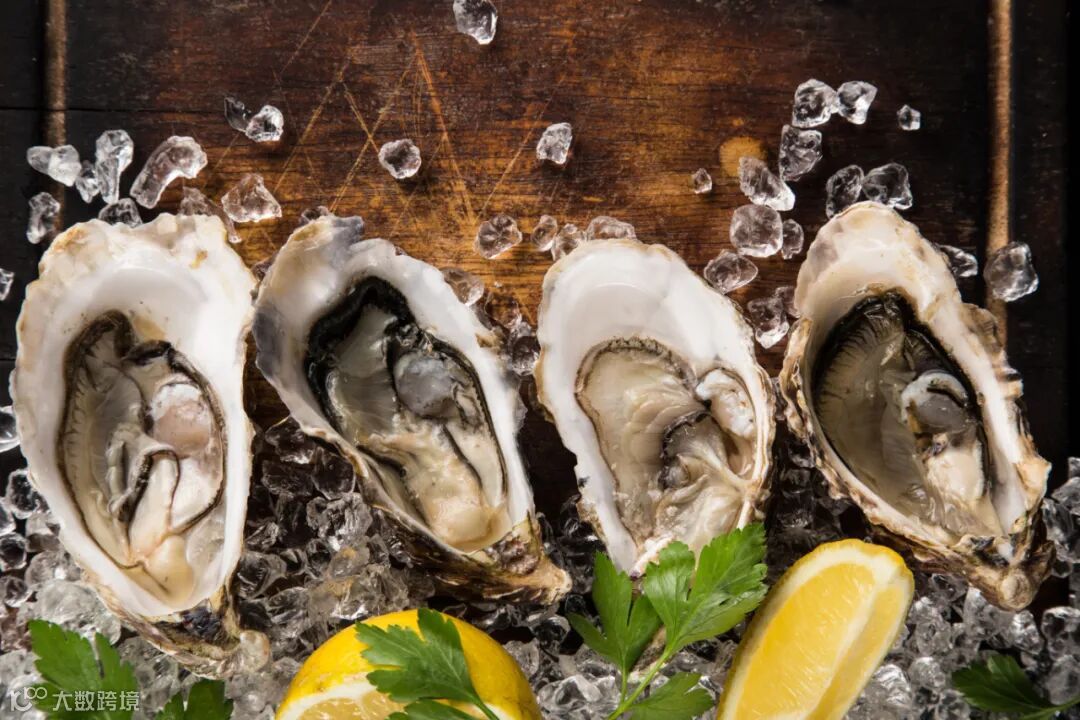
图片购买于壹图网。
Objectives: Oyster viscera is an edible part in general. In recent years, it has been found by many domestic and overseas scholars that the accumulation capacity of heavy metals is different among different tissues of oyster, of which viscera is the major part of heavy metal accumulation locates. GB 2762-2012 National Standard for Food Safety, maximum levels of Contaminants in Foods, explicitly stipulates the maximum levels of lead and cadmium in edible parts of bivalves after evisceration. This paper analyzed and evaluated the nutritional composition of Ostrea Rivularis fetched from 10 different coastal regions of South China, and the effects of evisceration on its nutritional composition was investigated, so as to provide reference for the development and utilization of oyster products and its safety consumption.
Methods: Referring to available national standards (GB 5009.3 National Standard for Food Safety, determination of moisture in foods; GB 5009.5 National Standard for Food Safety, determination of protein in foods; GB 5009.6 National Standard for Food Safety, determination of fat in foods; GB 5009.4 National Standard for Food Safety, determination of ash in foods), the contents of water, protein, lipid, ash, amino acid and mineral elements in oyster were detected using modern chemical analysis methods. The nutrient composition and nutritional value of O. Rivularis samples from different regions were studied.
Results: The results showed that the contents of water, crude protein, lipid and ash in the O. Rivularis from 10 regions were 76.90%~90.98%, 5.95%~9.98%, 0.56%~1.41% and 1.13%~2.24%, respectively. After evisceration, the contents of water, crude protein, fat and ash in the O. Rivularis became 80.93%~93.74%, 6.15%~10.42%, 0.19%~1.35% and 1.10%~2.22%, respectively. Among the 10 different regions, the water content of oysters sampled from Huizhou was the highest, and that from Qinzhou was the lowest. The protein content of oysters sampled from Zhuhai was the highest, and that from Shanwei was the lowest. The lipid content of oysters sampled from Yangjiang was the highest, while that from Huizhou was the lowest. The average mass fractions of water, crude protein, lipid and ash in these oyster samples were 85.90%, 7.64%, 0.75% and 1.71%, respectively. Sixteen amino acids were detected in all the oyster samples from 10 regions, among which seven were essential amino acids (EAA), and the total amino acid (TAA) content ranged from 3.97% to 7.60%, with an average of 5.55%. The TAA and EAA contents of Qinzhou samples were the highest, while Shanwei samples ware the lowest. The ratio of EAA/TAA ranged from 33.86% to 38.06%, with an average of 35.60%. Flavor amino acids accounted for 38.42%~43.25% of TAA, with an average of 41.25%. The percentage of flavor amino acids in TAA was the highest in Yangjiang samples. After evisceration, the TAA content of the oysters was 4.26%~7.80%, and its average content was 5.83%. The ratio of EAA/TAA was 33.95%~37.27%, and the flavor amino acids accounted for 39.24%~42.86% of TAA. The contents of calcium, iron, zinc, selenium and other trace elements were rich in the O. Rivularis, and zinc content increased slightly after evisceration. It was also found that contents of mineral elements in oysters differed among sample regions.
Conclusions: There were significant differences in nutrient composition of the oysters(O. Rivularis) sampled from different culture regions, which might be attributed to the influence of growth environment. After evisceration, the contents of water, crude protein and amino acid in the oyster samples from 10 regions slightly increased, while the lipid content slightly decreased. The contents of calcium, iron, zinc and selenium were similar to that of the whole oyster, while the zinc content slightly increased. O. Rivularis is a high protein, low fat aquatic product with high nutritional value, andits nutritional value increases slightly after evisceration. Therefore, evisceration is highly recommended before consumption.

版权声明
《食品工业科技》具有以上论文在全世界范围内的复制权、发行权、翻译权、汇编权、广播权、表演权、信息网络传播权、转许可权及以上权利的邻接权,且作者已授权期刊同论文著作权保护期。如需转载,可联系《食品工业科技》编辑部010-87244116,或直接在文末撰写转载来源。