
沙棘多糖清除自由基及抗脂质过氧化作用研究



目的:通过建立4种肝匀浆体外模型来模拟人体内环境,以VC为阳性对照与沙棘多糖组进行对比,观察过氧化脂质(LPO)主要降解产物MDA含量的变化,探讨沙棘多糖体外清除自由基及抗脂质过氧化作用。本文以体外模型来模拟体内环境,既能观察到被测物质在生物体内的反应情况,又可以明了该物质在体内详细的反应机理。
方法:利用预处理后的沙棘提取出沙棘多糖,采用体外抗氧化活性法测定沙棘多糖对DPPH自由基、羟自由基(OH·)和超氧阴离子(O2-·)自由基清除能力及沙棘多糖总还原能力;将小鼠禁食12 h后处死,取肝脏,置4 ℃生理盐水中反复漂洗,去除血液,剔除脂肪,用滤纸吸干表面水分。称重后剪碎,冰浴条件下用匀浆器充分研磨,加入生理盐水配成5 %的肝匀浆,冷冻离心机4 ℃、3000 r/min离心10 min,取上清液,4 ℃冷藏完成肝匀浆的制备,通过模拟建立体外小鼠肝匀浆自发性脂质过氧化模型、CCl4体外诱导小鼠肝匀浆脂质过氧化模型、H2O2体外诱导小鼠肝匀浆脂质过氧化模型、Fe2+-VC 体外诱导小鼠肝脏脂质过氧化模型,利用TBA显色法,观察沙棘多糖对脂质过氧化的抑制作用。本文实验数据以平均值±标准差表示,采用SPSS 19.0软件进行分析,按照统计学分析采用t检验法剖析各组之间的差异,p<0.05为显著性标准,采用SigmaPlot 12.5和Excel进行作图分析。
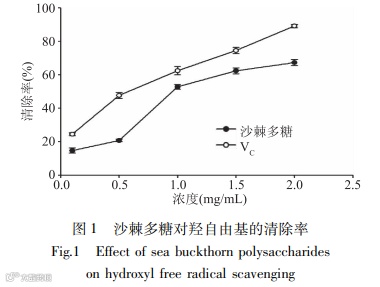
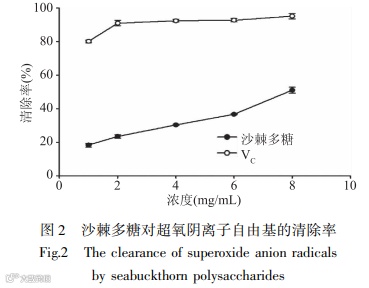
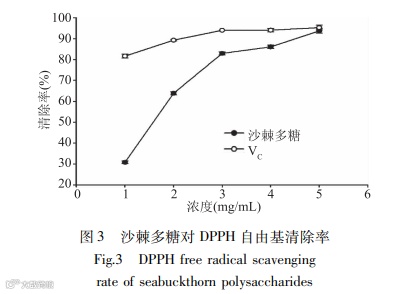
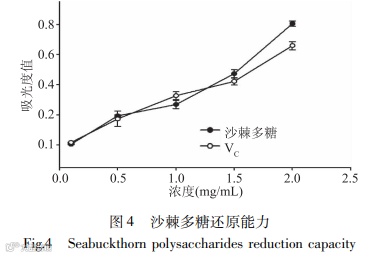
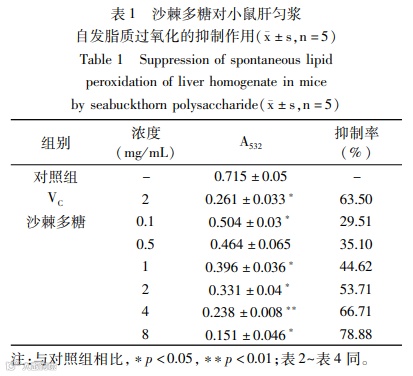
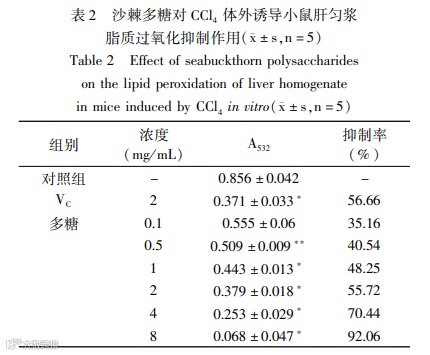
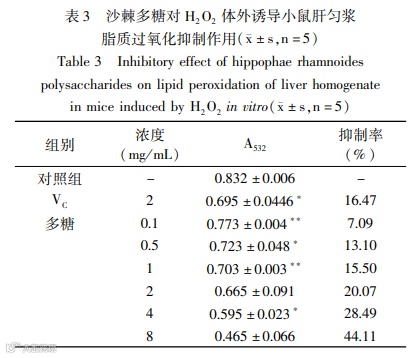
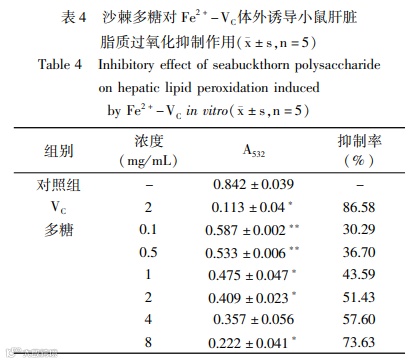
结果:在一定浓度范围内,沙棘多糖对DPPH自由基、OH·自由基和O2-·自由基都具有清除能力,其IC50值分别为1.55、0.97、7.95 mg/mL,随着沙棘多糖浓度逐渐增大时,对羟自由基清除率随之增强,其在浓度0.1~2 mg/mL内对羟自由基的清除能力均低于VC;随着沙棘多糖浓度逐渐增大时,对超氧阴离子自由基清除率随之增强,其浓度在1~6 mg/mL时,对超氧阴离子自由基清除率增长缓慢,浓度在6~8 mg/mL时,对超氧阴离子自由基清除率增长加快,浓度在1~6 mg/mL时,沙棘多糖对超氧阴离子自由基的清除能力低于VC;随着沙棘多糖浓度逐渐增大时,对DPPH自由基清除率随之增强,其浓度在1 ~3 mg/mL与4~5 mg/mL时对DPPH自由基的清除能力增长较快,在3~4 mg/mL对DPPH自由基的清除能力增长缓慢,沙棘多糖浓度在1~4 mg/mL时对DPPH自由基的清除效果较低于VC,浓度在5 mg/mL时,沙棘多糖与VC对DPPH自由基清除率分别为93.69%和95.28%,清除率相近;随着沙棘多糖浓度的增大,还原能力逐渐增强,其浓度在0~0.5 mg/mL时还原能力与同浓度VC无明显差异,沙棘多糖与VC的浓度在1~1.5 mg/mL时,沙棘多糖还原能力增长速率大于VC还原能力增长速率,沙棘多糖浓度在1.3~2 mg/mL时还原能力大于同等浓度的VC。沙棘各多糖组与VC组在532 nm处吸光度值均低于对照组,表明4种肝匀浆体外模型建立成功,沙棘多糖对小鼠肝匀浆自发性脂质过氧化及 CCl4、H2O2、Fe2+ -VC 所诱导的肝脏脂质过氧化均具有抑制作用,其IC50值分别为1.10、1.59、9.13、1.39 mg/mL。
结论:沙棘多糖对DPPH自由基、OH·自由基和O2-·自由基都具有一定的清除能力,沙棘多糖对DPPH自由基、OH·自由基清除能力比较强,对O2-自由基清除能力较弱。当沙棘多糖在浓度为2 mg/mL时,还原能力稍高于同浓度VC。表明沙棘多糖具有良好的抗氧化活性。通过建立4种肝匀浆体外模型来模拟人体内环境,以VC为阳性对照与沙棘多糖组进行对比,沙棘多糖与VC均能抑制小鼠肝匀浆脂质过氧化物的生成。表明沙棘多糖拥有抗脂质过氧化的功用。
图片来源于图司机


Objectives: In this paper, four kinds of liver homogenate in vitro models were established to simulate the human body environment, and VC was used as the positive control to compare with the sea buckthorn polysaccharide group. The changes of MDA content, the main degradation product of lipid peroxide ( LPO ), were observed to explore the free radical scavenging and anti-lipid peroxidation of sea buckthorn polysaccharide in vitro. In this paper, the in vitro model is used to simulate the in vivo environment, which can not only observe the reflection of the measured substance in the organism, but also clarify the detailed reaction mechanism of the substance in the body.
Methods: Seabuckthorn polysaccharide was extracted from pretreated seabuckthorn. The scavenging ability of seabuckthorn polysaccharide on DPPH free radical, hydroxyl radical ( OH · ) and superoxide anion (O2-·) free radical and the total reducing ability of seabuckthorn polysaccharide were determined by in vitro antioxidant activity method. The mice were sacrificed after fasting for 12 h. The liver was taken and rinsed repeatedly in 4 °C normal saline to remove blood, remove fat, and dry the surface with filter paper. After weighing and cutting, the homogenate was fully ground with a homogenizer under ice bath conditions, and normal saline was added to form 5 % liver homogenate. The liver homogenate was centrifuged at 4 °C and 3000 r / min for 10 min, and the supernatant was taken. The preparation of liver homogenate was completed at 4 °C. The spontaneous lipid peroxidation model of mouse liver homogenate in vitro, the lipid peroxidation model of mouse liver homogenate induced by CCl4 in vitro, the lipid peroxidation model of mouse liver homogenate induced by H2O2 in vitro, and the lipid peroxidation model of mouse liver induced by Fe2 + -VC in vitro were established by simulation. The TBA coloration method was used to observe the inhibitory effect of sea buckthorn polysaccharide on lipid peroxidation. The experimental data in this paper were expressed as mean ± standard deviation. SPSS 19.0 software was used for analysis. According to statistical analysis, t test was used to analyze the differences between groups. P < 0.05 was the significant standard. SigmaPlot 12.5 and Excel were used for plotting analysis.
Results:In a certain concentration range, seabuckthorn polysaccharide had scavenging ability to DPPH free radical, OH · free radical and O2-· free radical, and its IC50 values were 1.55, 0.97 and 7.95 mg / mL, respectively. With the increase of seabuckthorn polysaccharide concentration, the scavenging rate of hydroxyl free radical increased, and its scavenging ability to hydroxyl free radical was lower than that of VC in the concentration of 0.1~2 mg / mL. With the increase of the concentration of sea buckthorn polysaccharide, the scavenging rate of superoxide anion free radical increased. When the concentration was 1 ~ 6 mg / mL, the scavenging rate of superoxide anion free radical increased slowly. When the concentration was 6 ~ 8 mg / mL, the scavenging rate of superoxide anion free radical increased rapidly. When the concentration was 1 ~ 6 mg / mL, the scavenging ability of sea buckthorn polysaccharide on superoxide anion free radical was lower than that of VC. With the increase of seabuckthorn polysaccharide concentration, the DPPH free radical scavenging rate increased. When the concentration was 1 ~ 3 mg / mL and 4 ~ 5 mg / mL, the scavenging ability of DPPH free radical increased rapidly. When the concentration was 3 ~ 4 mg / mL, the scavenging ability of DPPH free radical increased slowly. When the concentration of seabuckthorn polysaccharide was 1 ~ 4 mg / mL, the scavenging effect of DPPH free radical was lower than that of VC. When the concentration was 5 mg / mL, the scavenging rate of DPPH free radical by seabuckthorn polysaccharide and VC was 93.69 % and 95.28 %, respectively. With the increase of seabuckthorn polysaccharide concentration, the reducing ability gradually increased. When the concentration was 0 ~ 0.5 mg / mL, the reducing ability was not significantly different from that of VC at the same concentration.When the concentration of seabuckthorn polysaccharide and VC was 1 ~ 1.5 mg / mL, the growth rate of reducing ability of seabuckthorn polysaccharide was greater than that of VC. When the concentration of seabuckthorn polysaccharide was 1.3 ~ 2 mg / mL, the reducing ability was greater than that of VC at the same concentration.The absorbance values of seabuckthorn polysaccharide groups and VC group at 532 nm were lower than those of the control group, indicating that the four liver homogenate models were successfully established in vitro. Seabuckthorn polysaccharide had inhibitory effects on spontaneous lipid peroxidation of mouse liver homogenate and liver lipid peroxidation induced by CCl4, H2O2 and Fe2+-VC. The IC50 values were 1.10,1.59,9.13 and 1.39 mg / mL, respectively.
Conclusion: Seabuckthorn polysaccharide has certain scavenging ability on DPPH free radical, OH · free radical and O2-· free radical. Seabuckthorn polysaccharide has strong scavenging ability on DPPH free radical and OH · free radical, and weak scavenging ability on O2-· free radical. When the concentration of sea buckthorn polysaccharide was 2 mg / mL, the reduction ability was slightly higher than that of VC at the same concentration. It shows that seabuckthorn polysaccharide has good antioxidant activity. Four kinds of liver homogenate in vitro models were established to simulate the human body environment. VC was used as a positive control to compare with the seabuckthorn polysaccharide group. Both seabuckthorn polysaccharide and VC could inhibit the formation of lipid peroxides in mouse liver homogenate. It shows that seabuckthorn polysaccharide has the function of anti-lipid peroxidation.
《食品工业科技》特邀主编专栏征稿
《食品工业科技》特邀主编专栏征稿:食源性功能物质挖掘与评价 ☚
《食品工业科技》特邀主编专栏征稿:枸杞、红枣、沙棘等食药同源健康食品研究与开发 ☚
群聊:食品工业科技作者群

温
馨
提
示

我刊正式组建微信作者群,为作者提供更多的学术与论文资讯,如需进群,请联系刘老师(微信:上方二维码,电话:87244117-8062)。
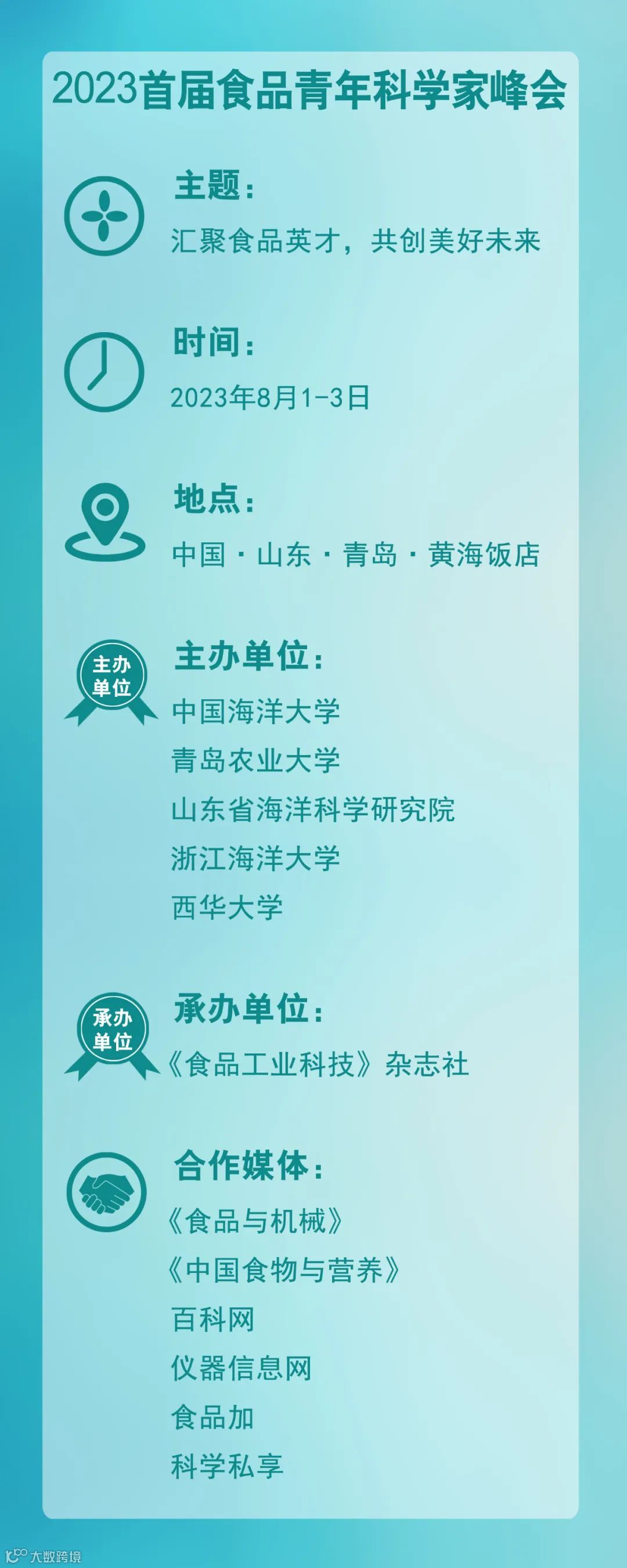

8月1日下午 编委会换届选举
8月1日晚上 编委会招待晚宴
8月2日上午 大会主论坛
主办单位领导致辞
大会主旨报告
8月2日下午 青年科学家分会场报告
8月3日上午 青年科学家分会场报告
博士才俊报告专场
8月3日下午 青年科学家分会场报告
硕士新锐报告专场



报告征集

报告方向:食品及其交叉学科
报告时长:20 min
报名方式:请将个人简介、职务/职称、照片、报告题目及摘要(点击下方“阅读原文”获取模板)发送至邮箱
zhouhao03071995@163.com。

报告方向:食品及其交叉学科
报告时长:20 min
报名方式:请将个人简介、学校、照片、报告题目及摘要(点击下方“阅读原文”获取模板)发送至邮箱
zhouhao03071995@163.com。

报告方向:食品及其交叉学科
报告时长:15 min
报名方式:请将个人简介、学校、照片、报告题目及摘要(点击下方“阅读原文”获取模板)发送至邮箱
zhouhao03071995@163.com。


论文方向:食品及其交叉学科的科研成果及综述
投稿途径:稿件题目上方注明“Food Junction:食品青年科学家峰会投稿”
投稿网址:www.spgykj.com
截止日期:2023年8月4日
录用及见刊方式:依照《食品工业科技》对论文的要求,择优录取,并于《食品工业科技》正刊发表。
绿色通道:论文发表费95折。审核通过的稿件按照书面录用通知的APC费用的95折进行缴纳。



在职人员
|
在校学生
|
2400元/人
|
1500元/人
|
同一单位3人及以上,在职人员2000元/人
|
|
费用包含:会议资料、部分允许共享的演讲内容PDF版、会议午餐
费用不含:住宿(会务组代订会议酒店)、交通费
学生:凭学生证参会

报名联系人
刘编辑 17746598288(微信同手机号)


版权声明