
HS-SPME-GC-MS结合HPLC分析5种食用菌鲜品中的风味成分



目的:HS-SPME-GC-MS挥发性香气成分和非挥发性滋味成分是食用菌品质的重要指标。本文探究了平菇、香菇、双孢蘑菇、金针菇和杏鲍菇等5种常见食用菌鲜品挥发性和非挥发性成分组成差异,以期为深入了解食用菌风味特征,指导食用菌品种的改良、定向培育及食用菌的加工应用奠定基础。结合HPLC分析5种食用菌鲜品中的风味成分
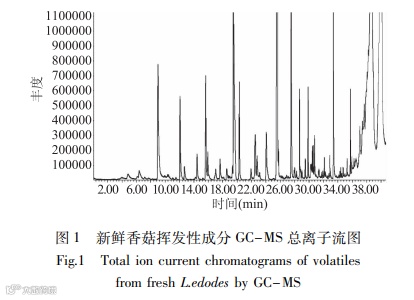
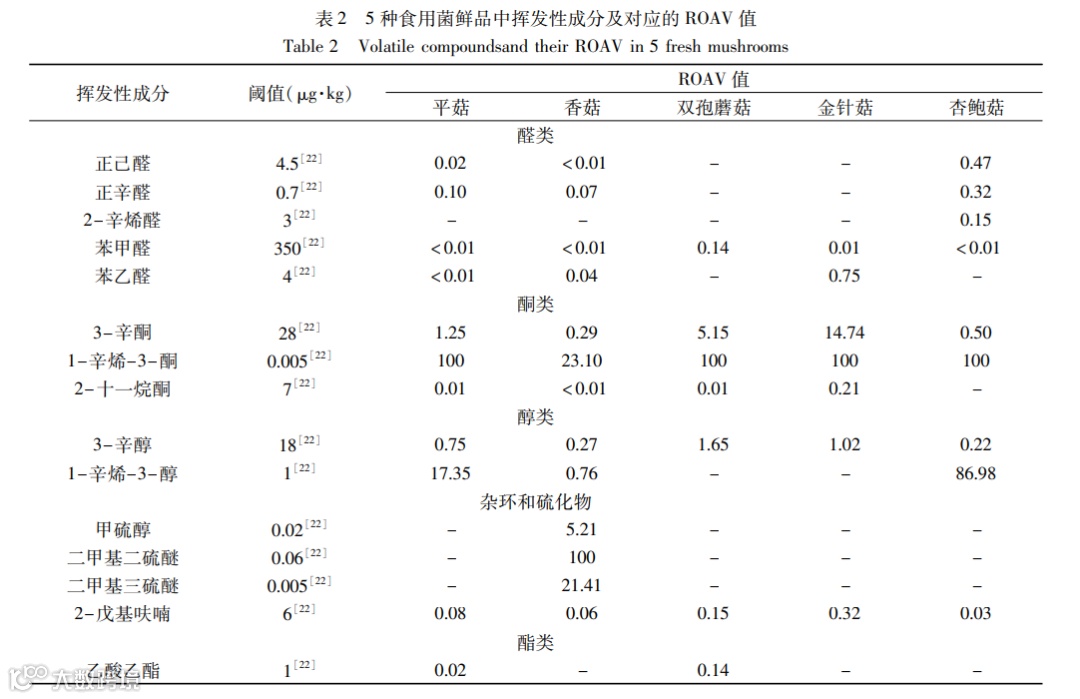
方法:采用顶空固相微萃取技术(HS-SPME-GC-MS)对5种常见食用菌鲜品中的风味物质进行鉴定和分析。利用NIST 11.L谱库的标准质谱图对得到的谱图数据进行串连检索和人工解析,选择匹配度大于80%作为物质鉴定依据;采用峰面积归一化法定量,确定各挥发性组分的相对含量。通过相对气味活度值(Relative odor activity value, ROAV)来评价各挥发性成分对样品总体风味的贡献,其中ROAV≧1的组分为样品的关键风味化合物,0.1≦ROAV<1的组分对样品的总体风味具有重要修饰作用,且ROAV值越大的组分对样品总体风味的贡献越大。采用茚三酮比色法测定总游离氨基酸含量。采用TCA(三氯乙酸)-超声波法提取样品中5’-呈味核苷酸并利用高效液相色谱(HPLC)法测定5’-呈味核苷酸的含量。
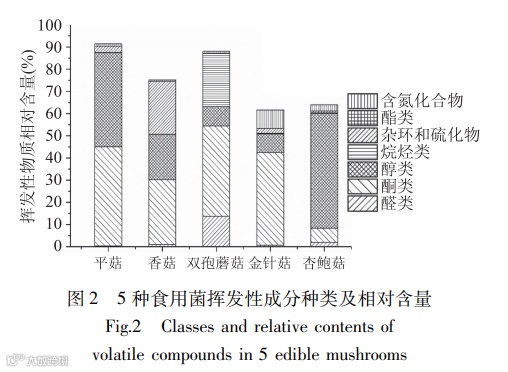
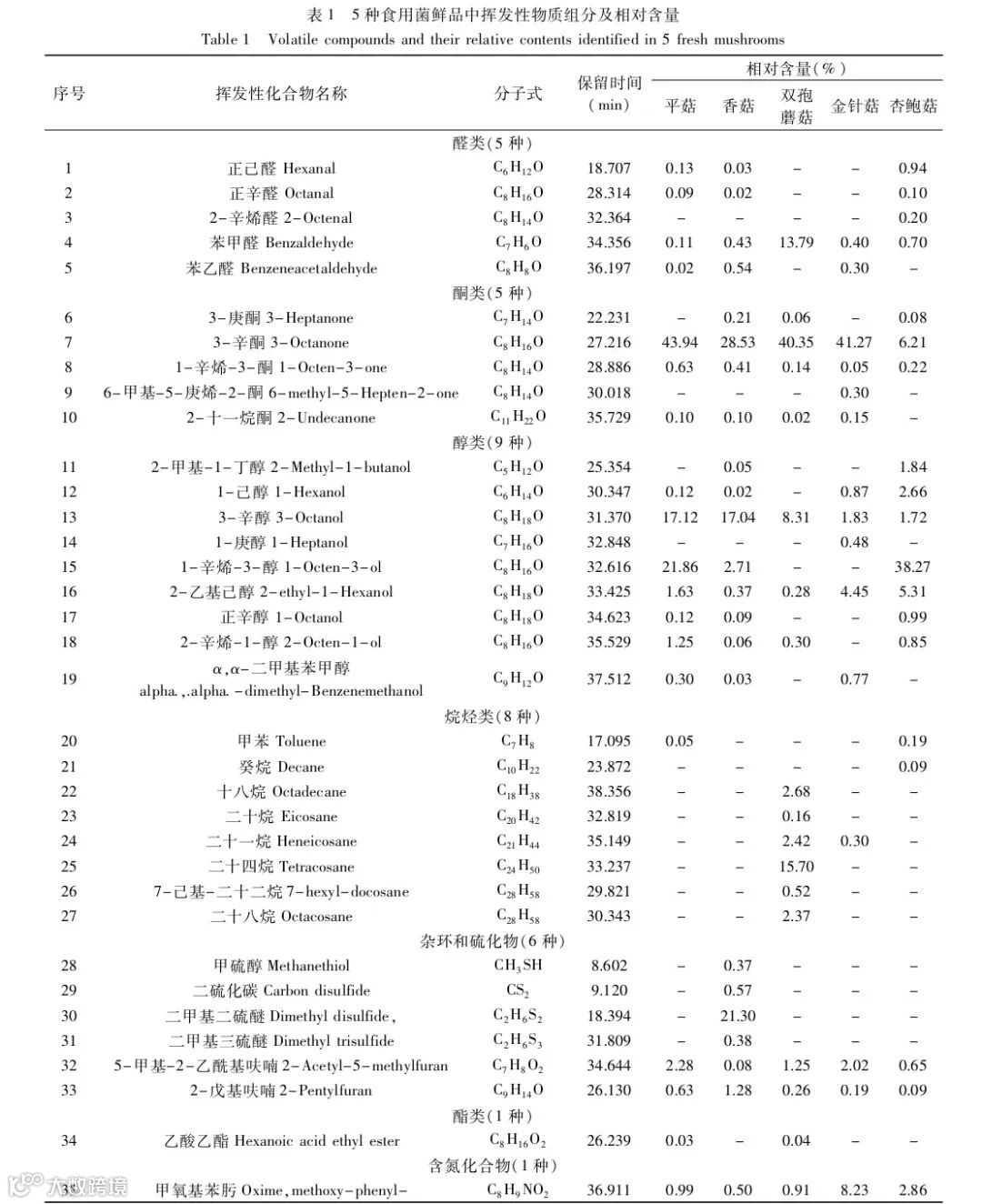
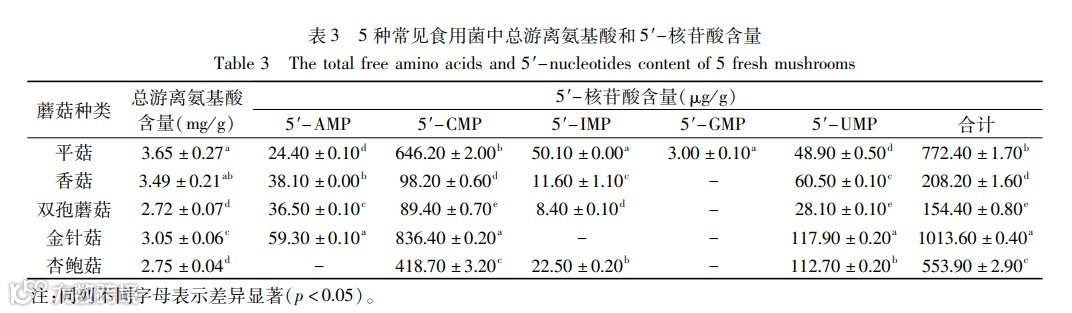
结果:5种食用菌中共鉴定出35种挥发性化合物,包括醛类5种、酮类5种、醇类9种、烷烃类8种、杂环和硫化物6种、酯类1种和含氮化合物1种。5种食用菌中共有的挥发性成分有8种,分别为苯甲醛、3-辛酮、1-辛烯-3-酮、3-辛醇、2-乙基己醇、5-甲基-2-乙酰基呋喃、2-戊基呋喃和甲氧基苯肟,但相对含量有所差异。平菇中未检测出特有挥发性成分;香菇中特有的挥发性成分包括甲硫醇(0.37%)、二硫化碳(0.57%)、二甲基二硫醚(21.30%)和二甲基三硫醚(0.38%)等含硫化合物;双孢蘑菇中特有的挥发性成分为十八烷(2.68%)、二十四烷(15.70%)、二十八烷(2.37%)等烷烃类化合物;金针菇中特有的挥发性成分是6-甲基-5庚烯-2-酮(0.30%);杏鲍菇中特有的挥发性成分是2-辛烯醛(0.20%)和癸烷(0.09%)。平菇中关键挥发性风味成分(ROAV≥1)为1-辛烯-3-酮、1-辛烯-3-醇和3-辛酮;香菇中关键挥发性风味成分为二甲基二硫醚、二甲基三硫醚、1-辛烯-3-酮和甲硫醇;双孢蘑菇和金针菇的关键挥发性风味成分为1-辛烯-3-酮、3-辛酮和3-辛醇;杏鲍菇中的关键挥发性风味成分为1-辛烯-3-酮和1-辛烯-3-醇。总游离氨基酸含量结果依次为:平菇(3.65 mg/g)>香菇(3.49 mg/g)>金针菇(3.05 mg/g)>杏鲍菇(2.75 mg/g)>双孢蘑菇(2.72 mg/g)。5种食用菌中呈味核苷酸总量差别较大,总量在154.40-1013.60 μg/g之间。平菇、香菇、双孢蘑菇和金针菇均有5’-AMP,杏鲍菇中未被检测到;平菇(646.20 μg/g)和杏鲍菇(836.40 μg/g)中5’-CMP含量显著高于其它三种食用菌;平菇中的5’-IMP含量(50.10 μg/g)显著高于香菇、双孢蘑菇和杏鲍菇,而金针菇中未被检测到;金针菇(117.90 μg/g)和杏鲍菇(112.70 μg/g)中5’-UMP含量高于其它三种食用菌;5’-GMP只在平菇中被检测到。
结论:本实验通过HS-SPME-GC-MS和HPLC等技术分析了5种常见食用菌鲜品中的挥发性风味成分和非挥发性滋味成分,发现不同品种食用菌风味成分和滋味成分含量差异较大,其中香菇和双孢蘑菇中特有的挥发性成分分别为含硫化合物和烷烃类化合物;平菇总游离氨基酸含量比较高,5’-核苷酸种类齐全;金针菇5’-核苷酸含量最高。
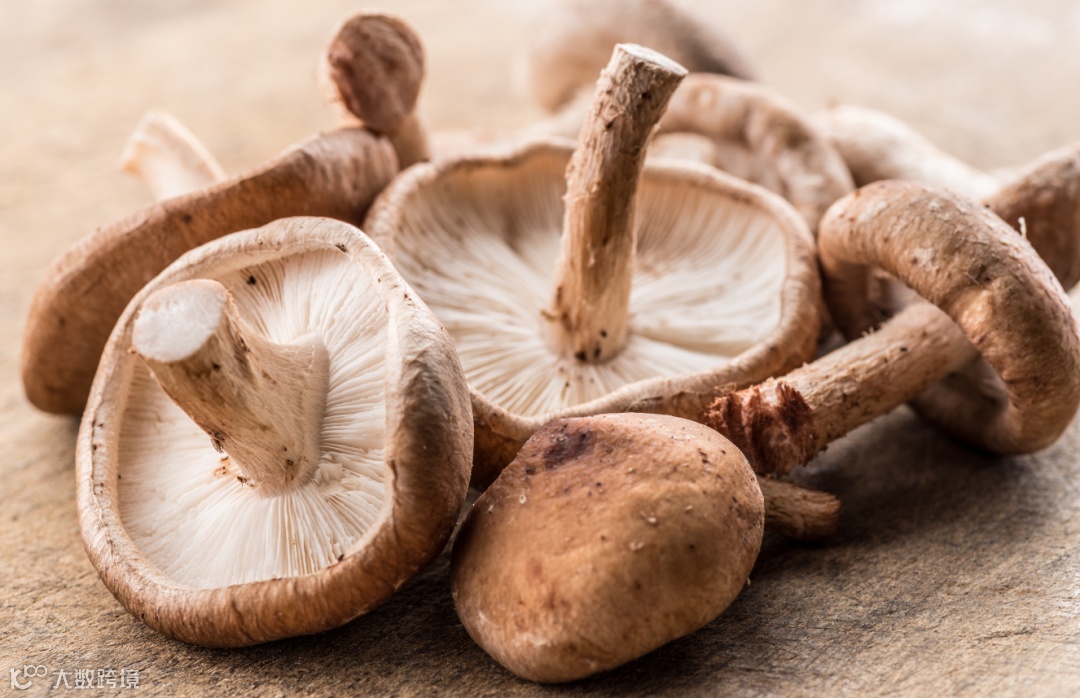
图片来源于图司机


Objectives:The volatile and non-volatile flavor components are important indicators to evaluate the quality of mushroom. This study explored the differences in volatile and non-volatile components of five common edible fungi including Pleurotus ostreatus, Lentinula edodes, Agaricus bisporus, Flammulina velutipes and Pleurotus eryngii. The study will lay a foundation for further understanding the flavor characteristics and guiding the varieties improvement, directional cultivation and processing of edible fungi.
Methods: Headspace solid-phase micro-extraction (HS-SPME) combined with gas chromatography-mass spectrometry (GC-MS) was used to identify and analyze the flavor substances in five fresh edible fungi. Mass spectra data were tandem retrieved using the NIST11.L standard spectral library. The matching degree greater than 80% was identified as the correct material. The relative content of each volatile component was determined by peak area normalization method. The relative odor activity value (ROAV) was used to evaluate the contribution of each volatile component to the total flavor of the sample. The components with ROAV value ≧ 1 are considered as the key flavor compounds in the sample, and the components with the value of 0.1 ≦ ROAV < 1 have important modification effect on the total flavor of sample. The larger of the ROAV value, the greater contribution was considered to the total flavor of sample. The total free amino acid content was determined by ninhydrin colorimetry method. TCA (trichloroacetic acid) -ultrasonic method was used to extract 5' -taste nucleotides from samples and the content of 5 ' -taste nucleotides was determined by high performance liquid chromatography (HPLC).
Results:A total of 35 volatile compounds were identified in 5 fresh edible fungi, including 5 aldehydes, 5 ketones, 9 alcohols, 8 alkanes, 6 heterocyclic and sulfides, 1 ester and 1 nitrogenous compound. Among the obtained compounds, 8 volatile ingredients including benzaldehyde, 3-octanone, 1-octen-3-one, 3-octanol, 2-ethylhexanol, 5-methyl-2-acetylfuran, 2-pentylfuran and methoxybenzoxime were detected in all the species, but the relative contents were different. The unique volatile components in L. edodes include sulfur-containing compounds such as methyl mercaptan (0.37%), carbon disulfide (0.57%), dimethyl disulfide (21.30%) and dimethyl trisulfide (0.38%). The specific volatile components in A. bisporus were octadecane (2.68%), tetracosane (15.70%), octacosane (2.37%) and other alkanes. The specific volatile component in F. velutipes was 6-methyl-5-hepten-2-one (0.30%). The specific volatile components in P. eryngii were 2-octenal (0.20%) and decane (0.09%). No specific volatile components were detected in P. ostreatus, but the key volatile flavor components (ROAV ≥ 1) were 1-octen-3-one, 1-octen-3-ol and 3-octanone. The key volatile flavor components in L. edodes were dimethyl disulfide, dimethyl trisulfide, 1-octen-3-one and methyl mercaptan. In A. bisporus and F. velutipes, the key volatile flavor components were 1-octen-3-one, 3-octanone and 3-octanol. Similarly, 1-octen-3-one and 1-octen-3-ol were the key volatile flavor components in P. eryngii. The total free amino acid content of P. ostreatus (3.65 mg/g), L. edodes (3.49 mg/g) and F. velutipes (3.05 mg/g) were higher than P. eryngii (2.75 mg/g) and A. bisporus (2.72 mg/g). The total flavor nucleotides content in five fresh edible fungi were ranged from 154.40 to 1013.60 μg/g. The content of 5'-CMP in P. ostreatus (646.20 μg/g) and P. eryngii (836.40 μg/g) were significantly higher than that in the other three edible fungi. The content of 5'-IMP in P. ostreatus (50.10 μg/g) was significantly higher than that in L. edodes, A. bisporus and P. eryngii. The content of 5'-UMP in F. velutipes (117.90 μg/g) and P. eryngii (112.70 μg/g) were higher than the other three edible fungi. 5'-GMP was only detected in P. ostreatus, but 5'-AMP and 5'-IMP was not detected in P. eryngii and F. velutipes, respectively.
Conclusion: HS-SPME-GC-MS and HPLC were used to analyze the volatile flavor components and non-volatile taste components in five common edible fungi. It was found that the contents of flavor components and taste components in different varieties of edible fungi were quite different. The unique volatile components in L. edodes and A. bisporus were sulfur-containing compounds and alkanes, respectively. P. ostreatus showed relatively higher total free amino acid content and had five kinds of 5'-nucleotide, while F. velutipes showed the highest content of 5'-nucleotide.
《食品工业科技》特邀主编专栏征稿
《食品工业科技》特邀主编专栏征稿:食源性功能物质挖掘与评价 ☚
《食品工业科技》特邀主编专栏征稿:枸杞、红枣、沙棘等食药同源健康食品研究与开发 ☚
群聊:食品工业科技作者群

温
馨
提
示

我刊正式组建微信作者群,为作者提供更多的学术与论文资讯,如需进群,请联系刘老师(微信:上方二维码,电话:87244117-8062)。

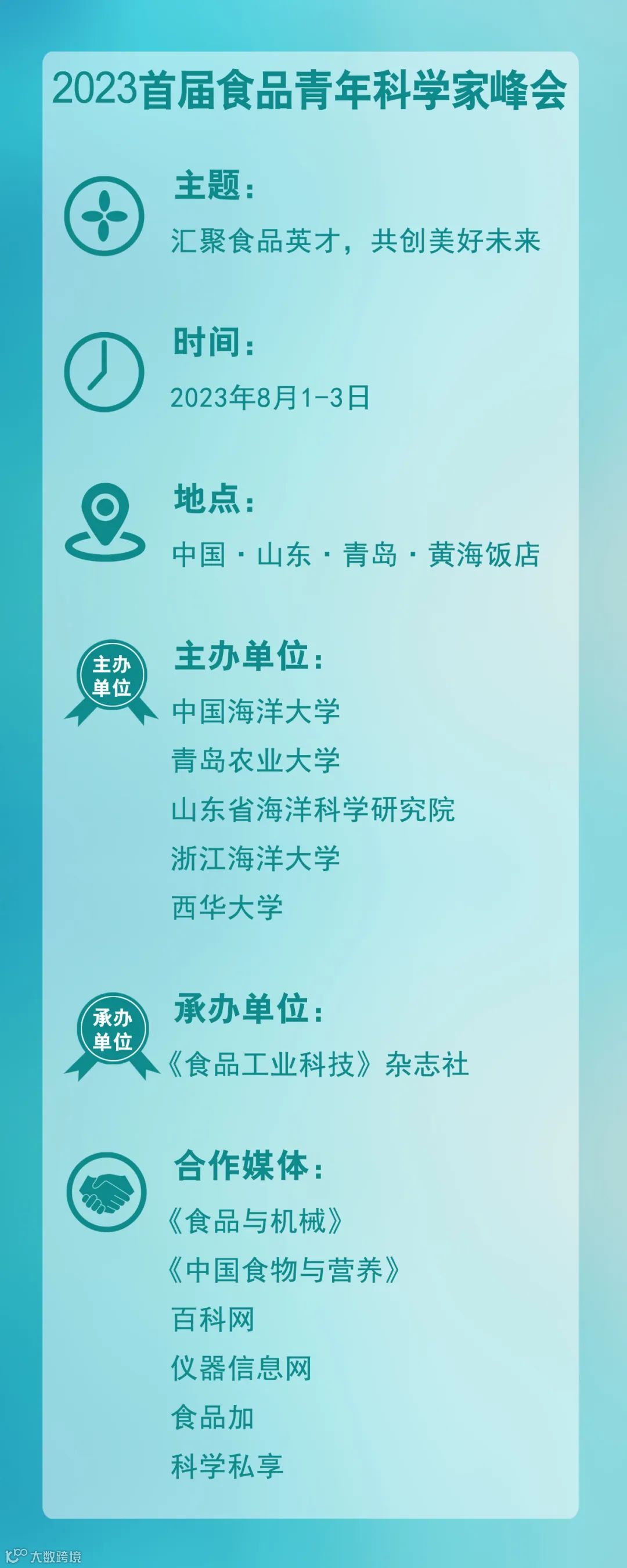

8月1日下午 编委会换届选举
8月1日晚上 编委会招待晚宴
8月2日上午 大会主论坛
主办单位领导致辞
大会主旨报告
8月2日下午 青年科学家分会场报告
8月3日上午 青年科学家分会场报告
博士才俊报告专场
8月3日下午 青年科学家分会场报告
硕士新锐报告专场



报告征集

报告方向:食品及其交叉学科
报告时长:20 min
报名方式:请将个人简介、职务/职称、照片、报告题目及摘要(点击下方“阅读原文”获取模板)发送至邮箱
zhouhao03071995@163.com。

报告方向:食品及其交叉学科
报告时长:20 min
报名方式:请将个人简介、学校、照片、报告题目及摘要(点击下方“阅读原文”获取模板)发送至邮箱
zhouhao03071995@163.com。

报告方向:食品及其交叉学科
报告时长:15 min
报名方式:请将个人简介、学校、照片、报告题目及摘要(点击下方“阅读原文”获取模板)发送至邮箱
zhouhao03071995@163.com。




论文方向:食品及其交叉学科的科研成果及综述
投稿途径:稿件题目上方注明“Food Junction:食品青年科学家峰会投稿”
投稿网址:www.spgykj.com
截止日期:2023年8月4日
录用及见刊方式:依照《食品工业科技》对论文的要求,择优录取,并于《食品工业科技》正刊发表。
绿色通道:论文发表费95折。审核通过的稿件按照书面录用通知的APC费用的95折进行缴纳。



在职人员
|
在校学生
|
2400元/人
|
1500元/人
|
同一单位3人及以上,在职人员2000元/人
|
|
费用包含:会议资料、部分允许共享的演讲内容PDF版、会议午餐
费用不含:住宿(会务组代订会议酒店)、交通费
学生:凭学生证参会

报名联系人
刘编辑 17746598288(微信同手机号)


版权声明