
植物多糖结构解析方法研究进展

摘要:植物多糖是一类广泛存在于植物细胞中的天然大分子,具有抗肿瘤、抗氧化、免疫调节等多种生物活性,而多糖的结构是影响其生物活性的关键因素。多糖结构具有分子量大、单糖组成多样、糖苷键连接方式复杂和空间构象庞杂等特点,使得目前多糖的结构解析仍处于探索阶段,并限制了多糖类产品的研发和应用。基于目前植物多糖的结构解析已有相关研究,本文首先介绍了植物多糖初级结构解析方法如苯酚硫酸法、液相色谱法、凝胶渗透色谱法、红外光谱法、气相色谱-质谱联用法、核磁共振波谱法等,分别对多糖的总糖含量、单糖组成及比例、分子量的大小及分布、糖苷键类型及连接方式等的测定方法进行阐述。其次对多糖高级结构的解析方法进行总结,如原子力显微镜法、X射线衍射法、圆二色谱法等,并进一步分析了多糖分子模型构建的方法及重要性。最后对植物多糖结构解析方法在质量控制中的应用进行综述,其中多维指纹图谱作为成分鉴定及质量控制的手段是保证其质量的重要方法之一。综上,本文从植物多糖的初级、高级结构和质量控制的应用等方面进行总结,为植物多糖结构的研究、解析和质量控制提供了新的思路和参考依据,同时也为植物多糖的开发和利用奠定基础。

图片来源于图司机

Abstract: Plant polysaccharides, a kind of natural macromolecule, are widespread occurrence in plant cells. Many studies have shown that plant polysaccharides have many biological activities such as hypoglycemic, anti-tumor, anti-oxidation, immune regulation, etc. It has become a research hotspot in the fields of food, health care products, medicine and so on. The complex structure of polysaccharides is the key factor affecting its biological activity. Polysaccharides are characterized by large molecular weight, diverse monosaccharide composition, complex glycosidic bond connection mode and complex spatial conformation, which makes the structure analysis of polysaccharides still in the exploratory stage and limits the research and development and application of polysaccharides products. The structure of polysaccharides can be divided into primary, secondary, tertiary and quaternary structures. The primary structure includes molecular weight size and distribution, monosaccharide composition and molar ratio, glycosidic bond connection mode, repeated structural units and branching degree, etc. Secondary, tertiary and quaternary structures are collectively called advanced structures, which are mainly the conformation of polysaccharides. Based on the existing research on structural analysis of plant polysaccharides, in this paper, the primary structure analysis methods of plant polysaccharides, such as phenol-sulfuric acid method, high performance liquid chromatography, gel permeation chromatography, infrared spectroscopy, gas chromatography-mass spectrometry, nuclear magnetic resonance spectroscopy, were introduced firstly. Most of these methods have the advantages of simple operation, accurate results and good reproducibility. The determination methods of total sugar content, monosaccharide composition and proportion, molecular weight size and distribution, glycosidic bond type and connection mode of polysaccharides were described respectively. By summarizing the principles, advantages and disadvantages of these methods, it is found that these analytical methods of primary structure are not only the basis of studying the structural characteristics of polysaccharides, but also one of the important indicators of quality control. The spatial structure of plant polysaccharides is very complex, and its spatial structure will be different with different extraction methods, medicinal materials parts or origins. The study on the spatial structure of polysaccharides can not only explain the structure-activity relationship, but also complete the quality control of polysaccharides. The research methods of polysaccharides advanced structure were introduced, including atomic force microscope, X-ray diffraction, circular dichromatography and so on. Using these structural analysis methods, it can accurately understand the morphology of polysaccharides, obtain the crystal form of matter, and analyze the topological structure of surface molecules. In addition, the orientation and spatial distribution of molecular structure and provide reliable three-dimensional structural information for polysaccharides. At the same time, the method and importance of constructing polysaccharides molecular model were further analyzed. Molecular model is constructed by molecular dynamics simulation, molecular docking, free energy calculation and other methods to simulate the spatial conformation of macromolecules and intermolecular interaction. So as to construct the three-dimensional structure of polysaccharides, and achieve the purpose of structure prediction and mechanism discussion. In addition, the application of structural analysis methods in quality control of plant polysaccharides were reviewed. As a means of component identification and quality control, multi-dimensional fingerprint is one of the important methods to ensure its quality. Multi-dimensional fingerprint technology is a quantitative method based on some structural characteristics of samples. For identifying components and controlling quality, the chromatographic and spectral data which can represent the characteristics of samples by structural analysis methods such as chromatography or spectroscopy. Fingerprint combined with chemometrics is an effective method for the quality control of polysaccharides in traditional Chinese medicine, which is rapid, sensitive and convenient. Combining fingerprint with multivariate analysis, a model of sample identification and discrimination is established, which can be used for product quality evaluation, authenticity identification and variety identification. In this paper, the primary structure, advanced structure and its application in quality control of plant polysaccharides were summarized, and some structural analysis methods of plant polysaccharides were listed. It provides a new idea and certain reference for the study, analysis and quality control of plant polysaccharides, and also lays a foundation for the development and utilization of plant polysaccharides. However, due to the complexity of polysaccharides structure and the limitations of research methods, the research of polysaccharides has lagged behind the study of protein and nucleic acid. At present, most of the researches on the structure of plant polysaccharides focus on the primary structure, and there is no single method to comprehensively analyze the advanced structure of polysaccharides. Because of the complexity of polysaccharides' structure and the polymorphism of its spatial structure, the study on the relationship between polysaccharides higher structure and its activity is not deep enough. Therefore, a single analytical technique is no longer suitable for the analysis of polysaccharides advanced structure, and it is particularly important to find a technical means to characterize the dynamic changes of its advanced structure. To sum up, exploring the advanced structure analysis technology of plant polysaccharides and studying the relationship between structure and biological activity are the key points of future research on polysaccharides. With the development of analytical technology, the structure of polysaccharides can be predicted by computer molecular docking, molecular dynamics simulation and other methods, so as to improve the accuracy of characterization of polysaccharides structure. In addition, the structure-activity relationship can be studied at the level of polysaccharides structure, and new technologies such as 3D can be used to modify the polysaccharides structure and enhance its biological activity. To sum up, the polysaccharides can be widely used in pharmaceutical, biomedical, food and cosmetics industries as a new and high value-added natural product.
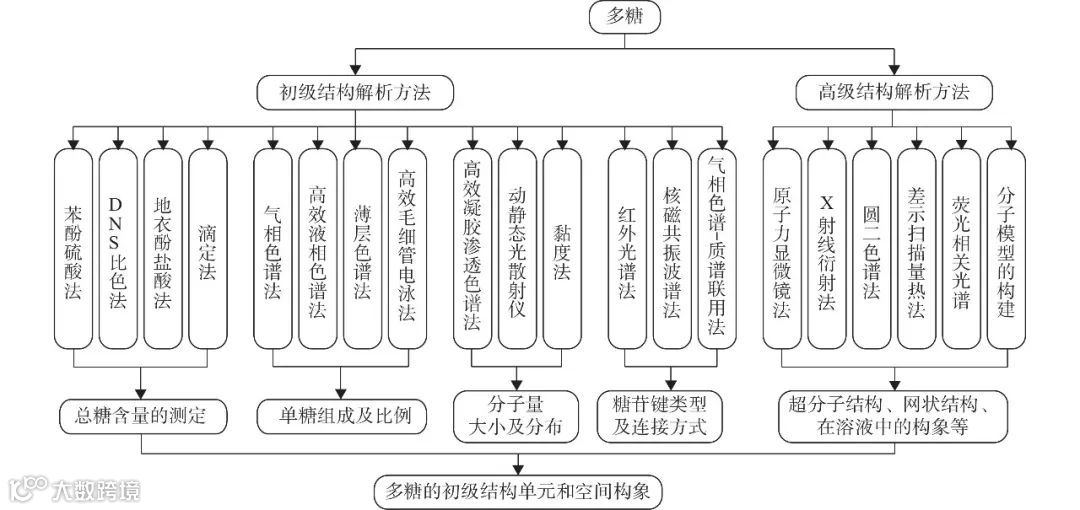
图1 植物多糖结构解析常用方法
Fig.1 Common methods for structure analysis of phytogenic polysaccharides
表1 植物多糖总糖含量测定方法的原理及优缺点比较
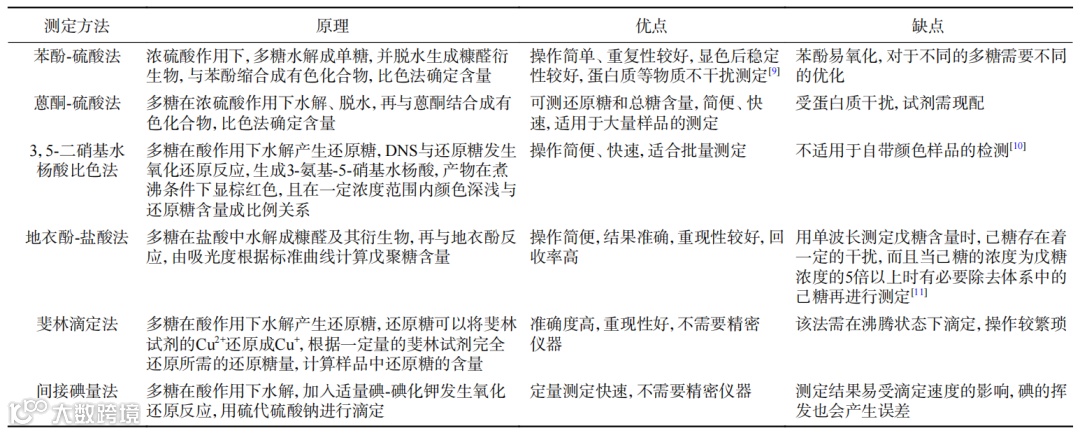
表2 植物多糖单糖组成的测定方法
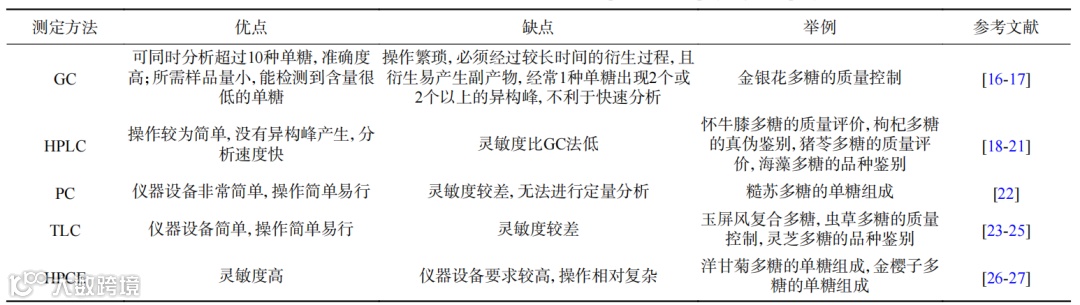
表3 植物多糖糖苷键的常用测定方法

表4 NMR 的特点及在多糖结构研究中的应用
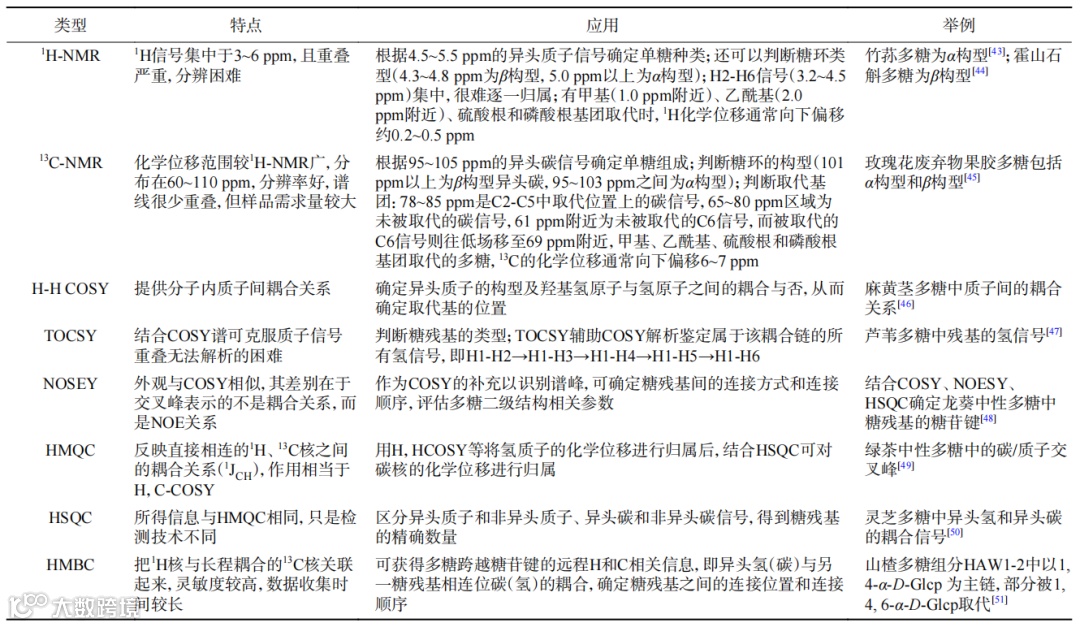
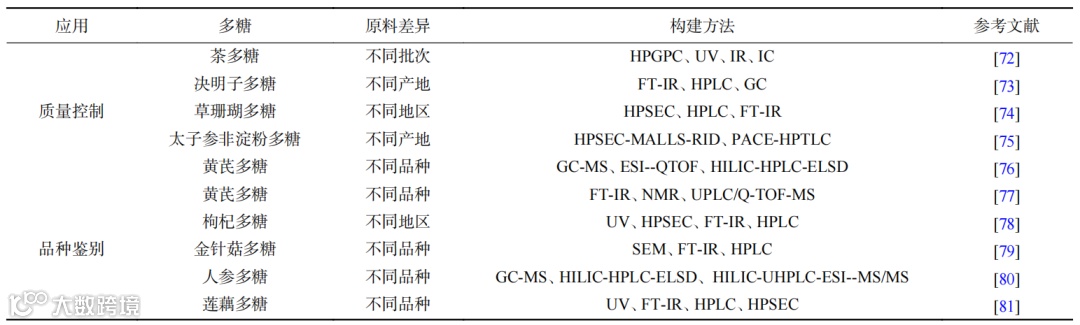
表5 多维指纹图谱的建立及应用
作者简介
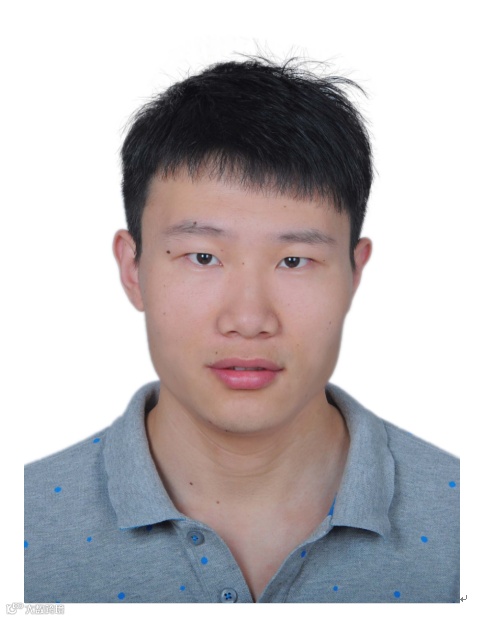
景永帅
副教授
景永帅,男,博士,副教授,硕士生导师,河北科技大学药学系主任,河北省“三三三人才工程”三层次人选。主要从事药食两用资源开发与利用相关研究,主持在研或完成省部级及以上课题5项,发表学术论文80余篇,授权国家发明专利4项,作为主编出版专著2部、副主编教材1部。曾获河北省冀青之星、“石家庄青年五四奖章”等荣誉。兼任中国药理学会补益药专委会常务委员、中国民族医药学会药理与毒理学分会理事等学会兼职。

吴兰芳
副教授
吴兰芳,女,博士,副教授,硕士生导师,河北中医学院药学院教师,河北省“三三三人才工程”三层次人选。主要从事药食两用资源开发与利用相关研究,主持在研或完成河北省自然科学基金等项目6项,发表学术论文40余篇,授权国家发明专利4项,作为副主编出版专著2部,参编教材7部。曾获河北省中医药学会科学技术一等奖,河北中医学院优秀教师等称号,兼任中国中西医学会分子生药学专业委员会委员等学术兼职。
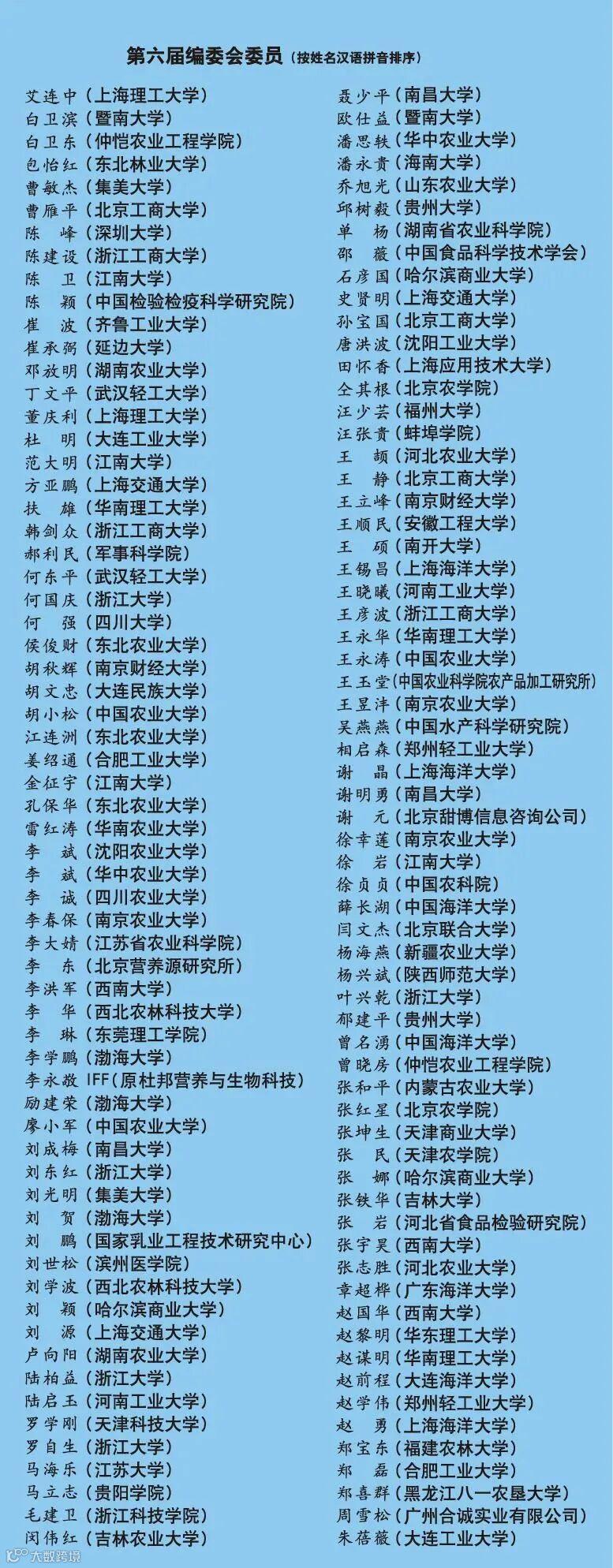
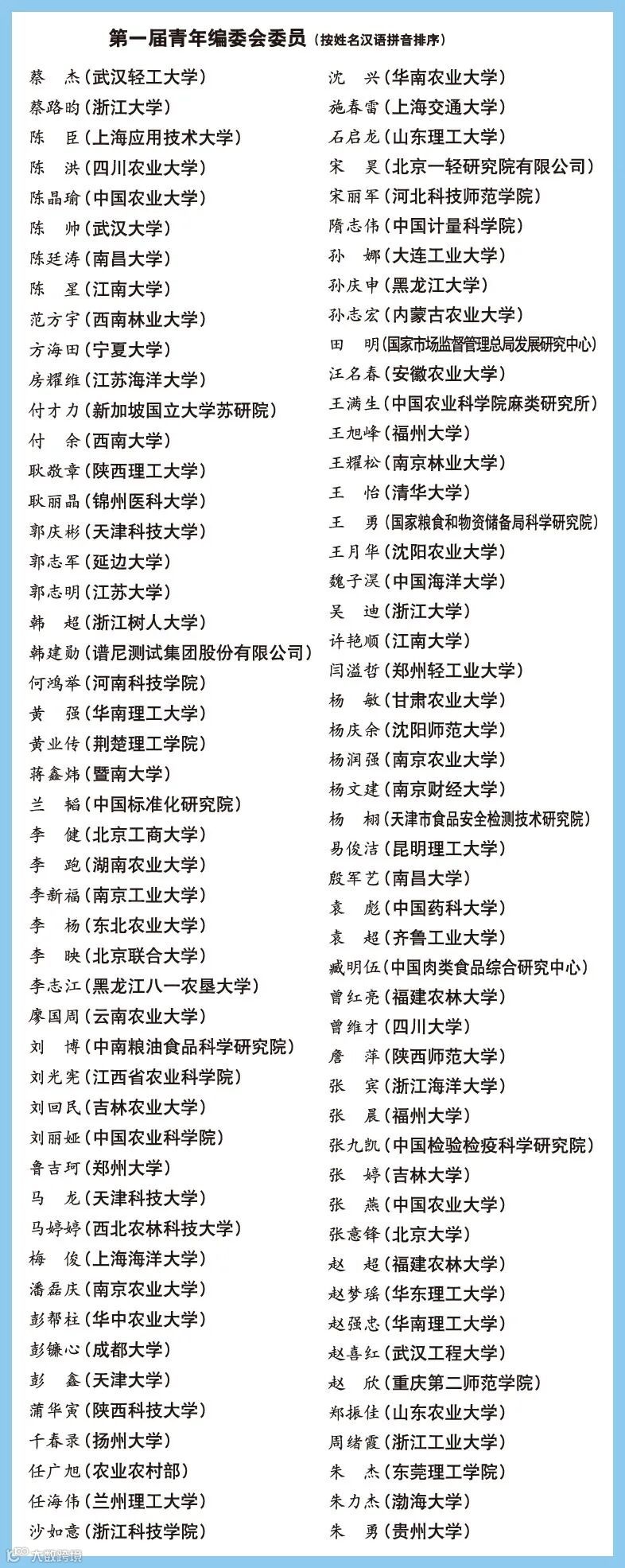
《食品工业科技》特邀主编专栏征稿

版权声明
《食品工业科技》具有以上论文在全世界范围内的复制权、发行权、翻译权、汇编权、广播权、表演权、信息网络传播权、转许可权及以上权利的邻接权,且作者已授权期刊同论文著作权保护期。如需转载,可联系《食品工业科技》编辑部010-87244116,或直接在文末撰写转载来源。