Abstract: To investigate the effects of exogenous melatonin treatment on browning and reactive oxygen species metabolism of postharvest Litchi, “Feizixiao” litchi was used as the material in this study. Litchi was treated with clear water and exogenous melatonin at different concentrations (50, 100, 200 μmol/L), and the relevant physiological indexes related with active oxygen metabolism were determinated at regular time during storage at 4 ℃.
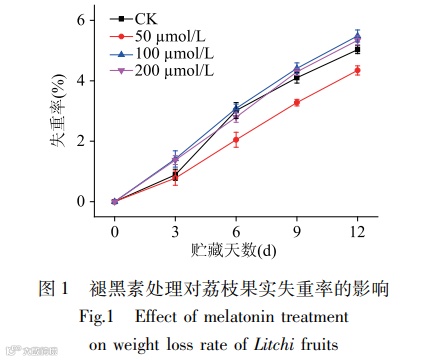
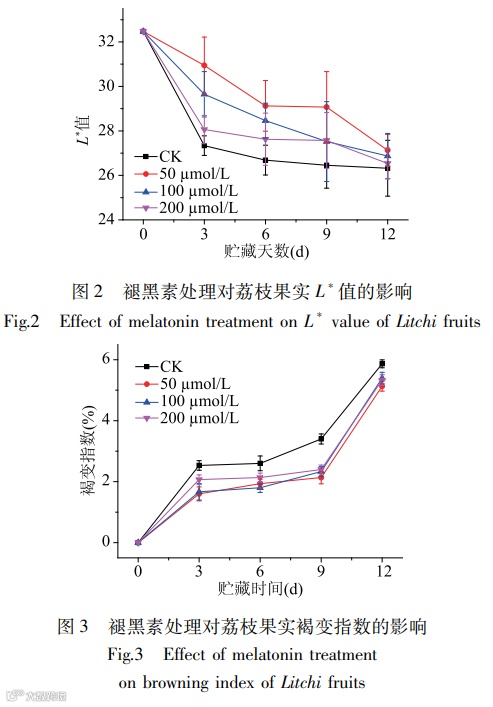
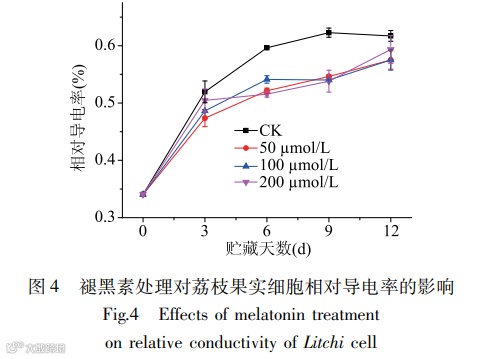
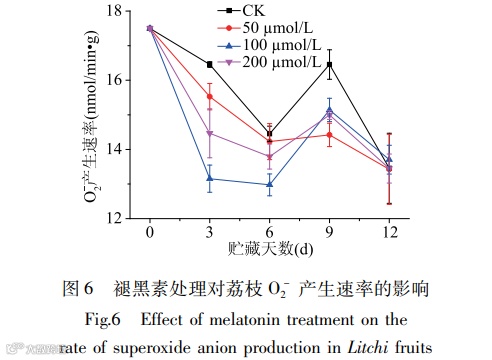
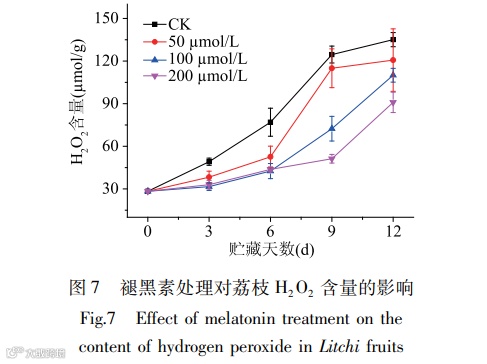
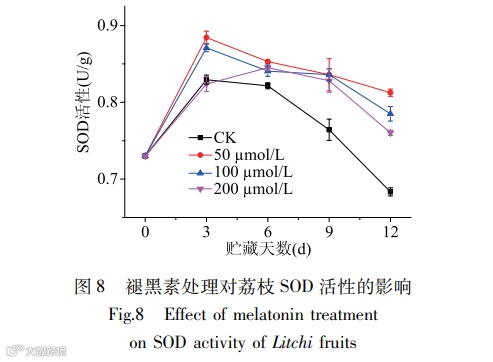
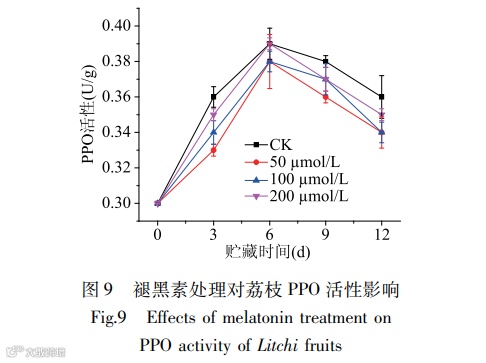
During the storage period of postharvest Litchi, the weight loss rate of fruits in different treatment groups gradually increased, and the weight loss rate of fruits in 50 μmol/L melatonin treatment group was the lowest. At the end of storage time (12 d), the L* values of CK, 50, 100 and 50 μmol/L groups were 26.3, 27.1, 26.9 and 26.5, respectively. Within 3-12 days, the conductivity of CK group was significantly higher than that of the treatment group (P<0.05). The content of hydrogen peroxide(H2O2)in CK group and treatment group showed a continuous upward trend, but the H2O2 content in melatonin group was significantly lower than that of CK group (P<0.05). The production rate of superoxide anion in 50 μmol/L melatonin treated group was 14.42, which was much lower than that in CK group (16.45 nmol/min•g). At the 12th day, the superoxide anion (SOD) activity of melatonin treatment group (0.812 U/g) was the highest, which was significantly higher than that of other treatment groups (P<0.05). The activity of polyphenol oxidase (PPO) in treatment group was significantly lower than that in CK group (P<0.05).
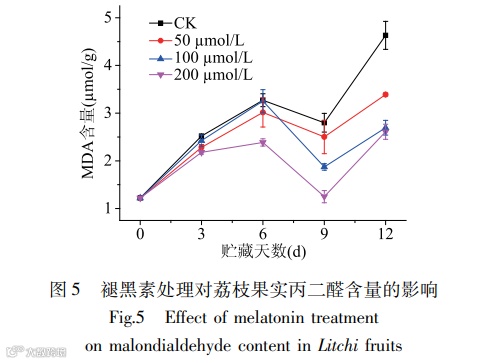
The results showed that different concentrations of melatonin could effectively reduce the weight loss rate, browning index and cell membrane permeability of Litchi, maintain the original color (L*: brightness), reduce the production rate of O2-· and the activity of PPO, slow down the production and accumulation of MDA and H2O2, improve the activity of SOD and maintain the integrity of cell membrane of Litchi fruit. In particular, 50 μmol/L melatonin treatment showed the be speculated that melatonin treatment can delay the aging process of postharvest litchi by regulating its reactive oxygen species metabolism, which provides theoretical support for melatonin application and preservation of postharvest Litchi.
Key words: Litchi; exogenous melatonin; browning; active oxygen metabolism