

IEEE TMM Special Issue on
When Multimedia Meets Food: Multimedia Computing for Food Data Analysis and Applications
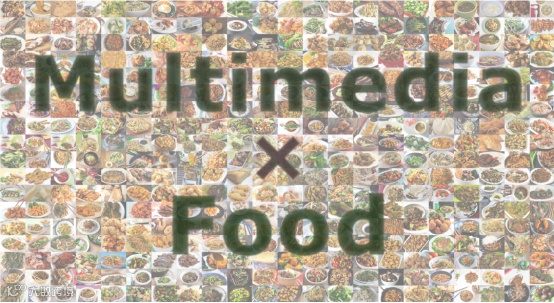
Motivations and Topics
Food is central in our life for its fundamental role in human health. The deployment of various networks (e.g., Internet of Things (IoT) and mobile networks), databases (e.g., nutrition tables and food compositional databases), recipe-sharing websites (e.g., Yummly and Meishijie) and social media (e.g., Facebook, Instagram and Twitter) has accumulated unprecedented amounts of food-relevant data, providing new perspectives for the food science and industry to understand food consumption. Compared with other types of multimedia data, there are unique characteristics for food data. For example, food has more diverse modality. Besides common multi-modality information, such as food images, recipe text, cooking videos and other rich attributes, there are some unique modalities, such as smell and touch. In addition, the sensors that generate the data modality is various. For example, we can use wearable and mobile sensors to log food intake through image analysis, speech recognition and chewing pattern classification. The advances in optical imaging techniques can also generate various food modalities for food quality and safety evaluation in the food industry, e.g., RGB, RGB-D, near-infrared spectroscopy, multispectral/hyperspectral signals and structured-illumination reflectance imaging data. Another important characteristic is multi-scale. There are not only macro-food data, such as dishes and ingredients, but also the micro-food data, which is at the molecular level or less, such as various nutrients (e.g., protein, fat, carbohydrate, minerals and vitamins). Multimedia, riding on the wave of artificial intelligence, offers powerful tools to analyze and understand such multi-source multi-modality multi-scale food data. Multimedia-based food analysis has high potential in addressing the long-standing issues in healthcare sector, such as nutrient intake assessment, precision nutrition and health. On the other hand, it also brings new challenges for unique characteristics of food data. For example, due to the heterogeneous food data and inconsistent standardization formats, a new way of linking, associating and organizing these data in a sensible way for deep exploration is highly demanded. The generation mechanisms of smell and touch are different from food images and cooking videos and require new ways of processing and understanding. Therefore, one key technical challenge is how to conduct effective multisensory data representation, fusion and learning. Considering distinctive difference between macro-food and micro-food data, another challenge is how to effectively integrate both macro-food data and micro-food data to enable personalized nutrition and health. Solving these problems calls for new and evolving multimedia computing technologies for food data analysis and applications. The interdisciplinary nature requires us to consider relevant theories and domain knowledge from different fields like food science, nutri-informatics, gastronomy, agricultural science, health, medicine and social science. The collision of food and multimedia technologies would contribute to new scientific findings to food relevant fields like food science, nutrition and industry, and in turn promote the development of multimedia technologies.
Scope
The goal of this special issue is to provide a premier forum for researchers and engineers to present their recent studies on multimedia computing for food data organization, analysis, understanding and applications. The list of possible topics includes, but not limited to:
-
Multi-granularity visual food analysis, such as predicting food types and food attributes (e.g., ingredients, nutrients, flavor and food quality parameters)
-
Food-oriented retrieval, such as visual food retrieval, cross-modal recipe-food image retrieval
-
Personalized nutrition and food recommendation
-
Eating/cooking action recognition/anticipation
-
Food-relevant multi-modal data fusion and learning
-
Devices and sensors for food intake detection and dietary management
-
Large-scale food-relevant benchmark dataset construction
-
Food knowledge graph construction, representation, reasoning and applications
-
Precision nutrition and health tracking system
-
The combination of multimedia computing and experimental methods for effective food analysis
-
Other food-oriented multimedia computing technologies and applications
Submission Guideline
Authors should prepare their manuscript according to the Guide for Authors available from the online submission page of the IEEE Transactions on Multimedia at https://journals.ieeeauthorcenter.ieee.org/submit-your-article-for-peer-review/the-ieee-article-submission-process for-authors. All the papers will be peer-reviewed following the IEEE Transactions on Multimedia reviewing procedures.
Schedule
Deadline for paper submission
July 1, 2023
-
Completion of first review
August 15, 2023
-
Revised manuscript due
October 1, 2023
-
Completion of second review
November 1, 2023
-
Final Accepted papers due
December 1, 2023
Guest Editors
Weiqing Min
minweiqing@ict.ac.cn
Institute of Computing Technology, Chinese Academy of Sciences, China
Shuqiang Jiang
sqjiang@ict.ac.cn
Institute of Computing Technology, Chinese Academy of Sciences, China
Petia Radeva
petia.ivanova@ub.edu
Universitat de Barcelona and Computer Vision Center, Spain
Vladimir Pavlovic
vladimir@rutgers.edu
Rutgers University in New Jersey, USA
Chong-Wah Ngo
cwngo@smu.edu.sg
Singapore Management University, Singapore
Kiyoharu Aizawa
aizawa@hal.t.u-tokyo.ac.jp
the University of Tokyo, Japan
Wanqing Li
wanqing@uow.edu.au
University of Wollongong, Australia
Ichiro Ide
ide@i.nagoya-u.ac.jp
Nagoya University, Japan

版权声明
本公众号推送文章仅为学术交流使用,‘原创’为原创编译之标记,不表示本平台对文本主张版权。作者团队或单位如需使用编译文本,可联系编辑开放白名单。凡是注明“转载”的稿件,均已注明直接来源,如需使用,请联系版权人。如有侵权,请联系我们,我们会尽快删除。