
五种寒地果树果实的多酚含量、抗氧化活性及抗α-淀粉酶活性分析



目的:由于慢性病发病率和死亡率的不断上升,以及临床口服药物潜在的副作用,将植物中的生物活性物质作为天然产物来预防和辅助治疗慢性疾病,受到了人们的广泛关注。寒地果树果实富含糖酸、矿质元素、氨基酸以及多种酚类物质,在预防慢性疾病和维持人体健康方面有较好的作用。软枣猕猴桃、黑果腺肋花楸、草原樱桃、白穗醋栗、蔓越莓作为优良的寒地特色果树,对其次生代谢物质以及生理活性的需要进一步的研究。因此,本文对以上五种旱地特色果树的总酚、总花色苷含量,抗氧化及抗α-淀粉酶活性进行测定及比较和评价。
方法:首先,将采集到的软枣猕猴桃、黑果腺肋花楸、草原樱桃、白穗醋栗和蔓越莓五种果实冻干后磨粉,并以80%甲醇做提取溶剂获取五种果实的多酚提取液。其次,通过福林酚法及pH示差法分别测定以上五种果实多酚提取液的多酚含量与总花色苷含量;以DPPH法、ABTS+法、铁离子还原法(Ferric ion reducing antioxidant power,FRAP)、氧自由基吸收能力(Oxygen radical absorbance capacity,ORAC)四种方法测评其抗氧化活性,并研究了五种多酚提取液对α-淀粉酶活性的抑制作用。最后,对五种果实中总酚含量(Total phenol content,TPC)、总花色苷含量(Total anthocyanin content,TAC)、抗氧化活性和抗α-淀粉酶活性之间的相关性进行分析。
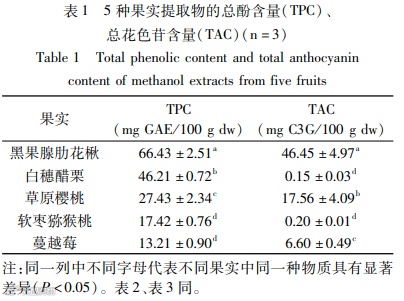
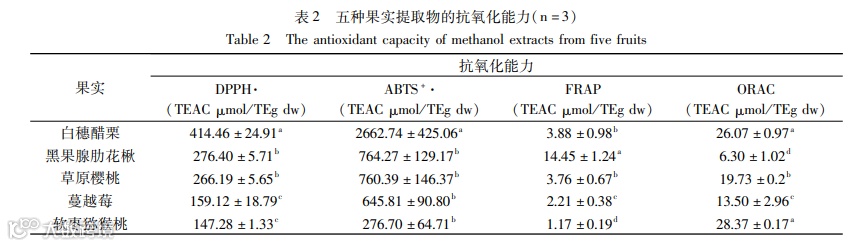
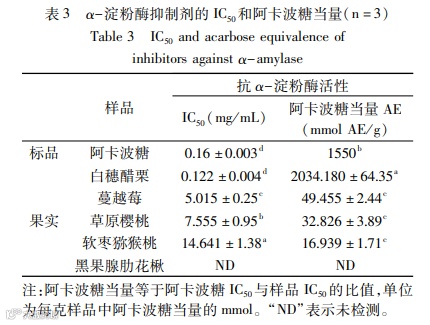
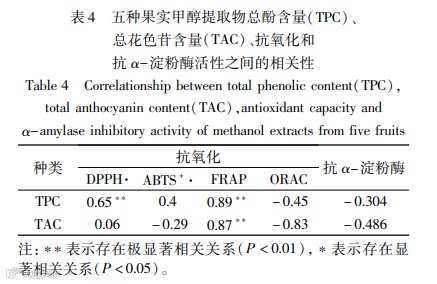
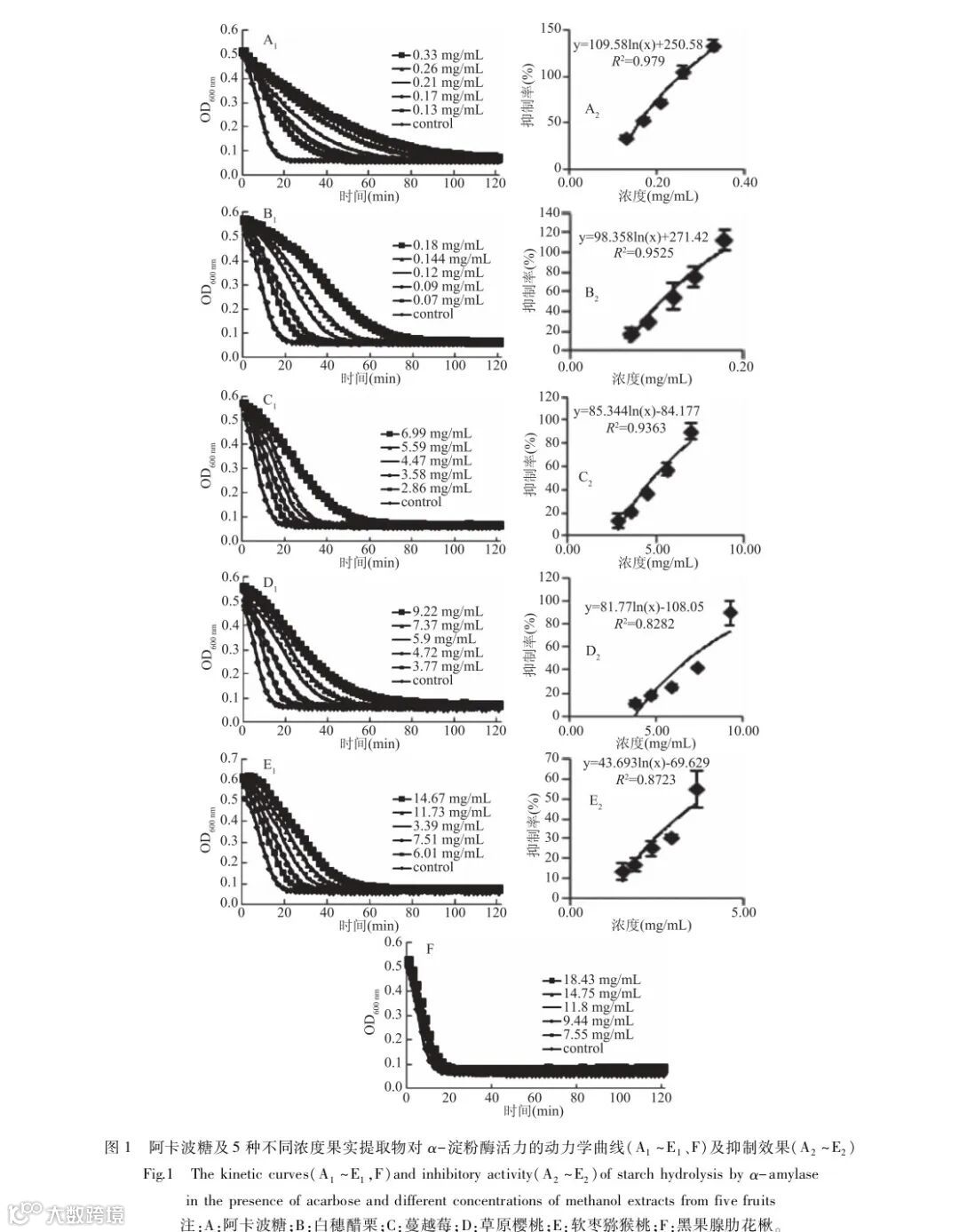
结果:五种寒地果实的总酚、总花色苷含量差异显著(P<0.05)。总酚含量为13.21~66.43mg GAE/100 g,其中黑果腺肋花楸含量最高,白穗醋栗次之;总花色苷含量为0.15~46.45 mg C3G/100 g,黑果腺肋花楸含量最高,草原樱桃次之;5种果实的抗氧化能力也有所差异。果实多酚对DPPH•和ABTS+•的清除能力由强至弱依次为:白穗醋栗>黑果腺肋花楸>草原樱桃>蔓越莓>软枣猕猴桃;白穗醋栗果实多酚对DPPH•、ABTS+•能力最强,分别为414.46 μmol TEg-1和2662.74 μmol TEg-1,显著高于其他果实(P<0.05);果实多酚对铁离子还原能力(FRAP)由强至弱依次为:黑果腺肋花楸>软枣猕猴桃>白穗醋栗>草原樱桃>蔓越莓;采用ORAC法测得的抗氧化能力由强至弱依次为:软枣猕猴桃>白穗醋栗>草原樱桃>蔓越莓>黑果腺肋花楸;用高通量淀粉浊度法测得白穗醋栗的抗α-淀粉酶活性最强,IC50为0.122 mg/mL,高于阿卡波糖(0.16 mg/mL),其AE值为2034.18 mmol AE/g,高于阿卡波糖(1550 mmoL AE/g),且是其他果实的42~127倍。相关性分析发现五种寒地果实的总酚、总花色苷含量和抗氧化活性之间存在极显著正相关(P<0.01),而与抗α-淀粉酶活性之间无显著性相关关系。
结论:本研究通过对五种寒地果实的多酚含量、抗氧化活性及抗α-淀粉酶活性分析,发现黑果腺肋花楸的总酚含量跟总花色苷含量显著高于白穗醋栗、草原樱桃、软枣猕猴桃和蔓越莓(P<0.05),白穗醋栗的总酚含量仅次于黑果腺肋花楸;黑果腺肋花楸、白穗醋栗、与软枣猕猴桃表现出高的抗氧化活性;白穗醋栗的抗α-淀粉酶活性显著强于其它四种寒地果实(P<0.05)。另外,相关性分析表明,五种寒地果实的TPC、TAC与抗氧化活性之间存在极显著相关关系(P<0.01),与抗α-淀粉酶之间无显著性相关关系。综上,黑果腺肋花楸与白穗醋栗的果实中多酚类物质丰富,是获取天然多酚的良好原料,并且具有良好的抗氧化功效。其中,白穗醋栗对α-淀粉酶活性抑制能力突出,具有优于阿卡波糖的降糖能力,但对其降糖机制仍需探究。
图片来源于图司机


Objectives:Due to the rising incidence rate and mortality of chronic diseases, and the potential side effects of clinical oral drugs, the use of bioactive substances in plants as natural products to prevent and assist in the treatment of chronic diseases has attracted widespread attention. The fruits grown in cold region are rich in sugars and acids, mineral elements, amino acids, and various phenolic substances, which have a good effect in preventing chronic diseases and maintaining human health. The kiwiberry, black chokeberry, sour cherry, white currant and cranberry are excellent cold region characteristic fruit trees, and further research is needed on their secondary metabolites and physiological activities. Therefore, this article focuses on the total phenolic and anthocyanin contents, antioxidant and antioxidant properties of the five dryland characteristic fruit trees mentioned above α-measurement, comparison, and evaluation of amylase activity.
Methods:Firstly, freeze dry and grind the collected five types of fruits, including kiwiberry, black chokeberry, sour cherry, white currant and cranberry, and used 80% methanol as the extraction solvent to obtain polyphenol extracts from the five types of fruits. Secondly, the polyphenol content and total anthocyanin content of the five fruit polyphenol extracts were measured using the Folin phenol method and pH differential method, respectively. The antioxidant activity was evaluated using four methods: DPPH• method, ABTS+• method, ferric ion reducing antioxidant power (FRAP), and oxygen radical absorption capacity (ORAC). The effects of five polyphenol extracts on α-amylase inhibitory activity were also studied. Finally, the correlationship of total phenolic content (TPC), total anthocyanin content (TAC), antioxidant activity and α-amylase inhibitory activity were analyzed.
Results:There were significant differences in the total phenolic and total anthocyanin contents among the five cold region fruits (P<0.05). The total phenol content ranges from 13.21 to 66.43mg GAE/100 g, with the highest content in black chokeberry and followed by white currant. The total anthocyanin content was 0.15~46.45 mg C3G/100 g, with the highest content in black chokeberry, followed by sour cherry. The antioxidant capacity of the five fruits also varies. The scavenging ability of fruit polyphenols on DPPH• and ABTS+•, from strong to weak, was as follows: white currant>black chokeberry>sour cherry>cranberry>kiwiberry. White currant fruit polyphenols had the strongest ability to inhibit DPPH• and ABTS+•, with 414.46, respectively μmol TEg-1 and 2662.74 μmol TEg-1, significantly higher than other fruits (P<0.05). The order of fruit polyphenols' ability to reduce iron ions (FRAP) from strong to weak was as follows: black chokeberry>kiwiberry>white currant>sour cherry>cranberry. The antioxidant capacity measured by ORAC method, from strong to weak, was as follows: kiwiberry>white currant>sour cherry>cranberry>black chokeberry. Determination of white currant using high-throughput starch turbidity method on α-amylase inhibitory activity was the strongest, with an IC50 of 0.122 mg/mL, higher than acarbose (0.16 mg/mL), and an AE value of 2034.18 mmol AE/g, higher than acarbose (1550 mmoL AE/g), which was 42~127 times higher than other fruits. Correlation analysis found that there was a highly significant positive correlation (P<0.01) between the total phenolic and anthocyanin contents, as well as antioxidant activity, of the five cold region fruits, and no significant correlation with α-amylase inhibitory activity.
Conclusion: This study investigated the polyphenol content, antioxidant activity, antioxidant activity and α-amylase inhibitory activity of five cold region fruits showed that the total phenolic content and total anthocyanin content of black chokeberry were significantly higher than those of white currant, sour cherry, kiwiberry and cranberry (P<0.05), while the total phenolic content of white currant was only second to black chokeberry. black chokeberry, white currant, and kiwiberry exhibited high antioxidant activity. Resistance of white currant on α-amylase inhibitory activity was significantly stronger than the other four cold region fruits (P<0.05). In addition, correlation analysis showed that there was a highly significant correlation (P<0.01) between the TPC, TAC, and antioxidant activity of the five types of fruits in cold regions, while no significant correlation with α-amylase inhibitory activity. In summary, the black chokeberry and white currant are rich in polyphenols, which would be good raw materials for obtaining natural polyphenols, and have good antioxidant effects. Among them, white currant have outstanding ability in α-amylase inhibitory, and it has better hypoglycemic ability than acarbose, but its hypoglycemic mechanism still needs to be explored.
《食品工业科技》特邀主编专栏征稿
《食品工业科技》特邀主编专栏征稿:枸杞、红枣、沙棘等食药同源健康食品研究与开发 ☚
《食品工业科技》特邀主编专栏征稿:食品中天然产物提取分离、结构表征和生物活性☚
群聊:食品工业科技作者群

温
馨
提
示

我刊正式组建微信作者群,为作者提供更多的学术与论文资讯,如需进群,请联系刘老师(微信:上方二维码,电话:87244117-8062)。
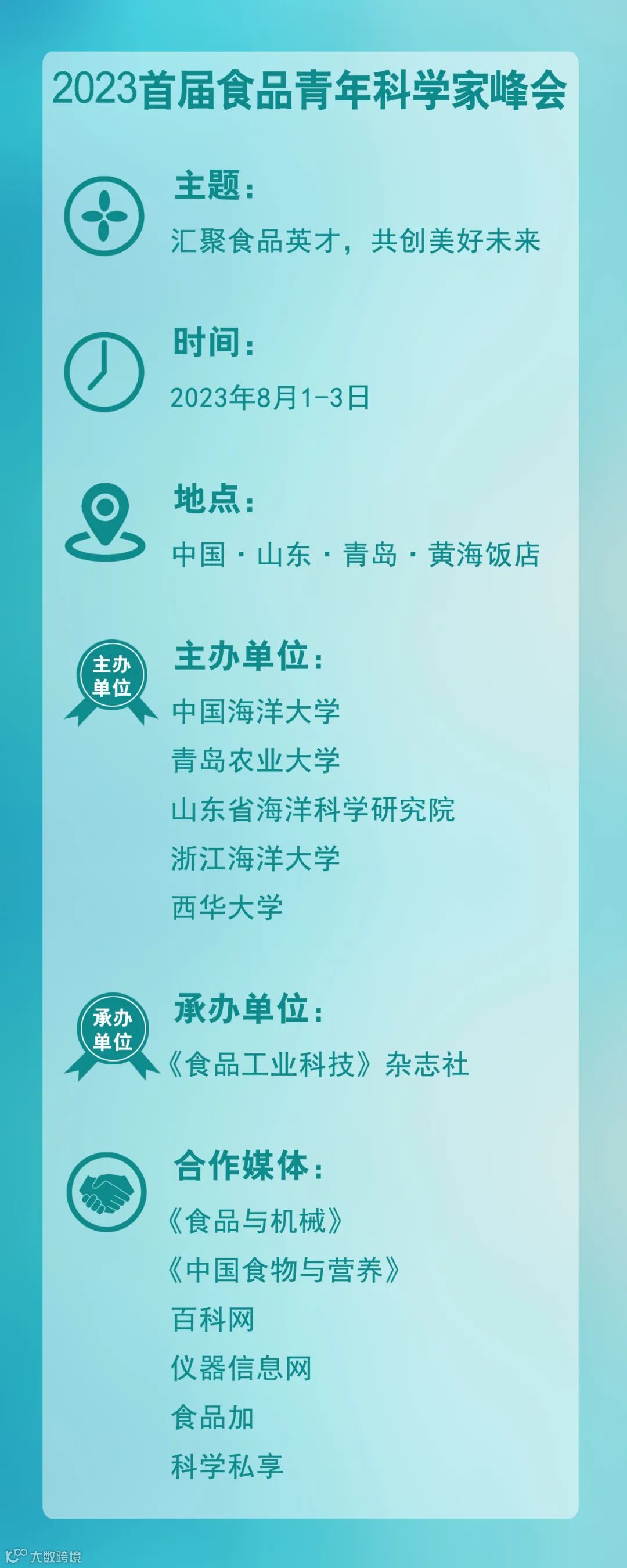
8月1日下午 编委会换届选举
8月1日晚上 编委会招待晚宴
8月2日上午 大会主论坛
主办单位领导致辞
大会主旨报告
8月2日下午 青年科学家分会场报告
8月3日上午 青年科学家分会场报告
博士才俊报告专场
8月3日下午 青年科学家分会场报告
硕士新锐报告专场


报告征集

报告方向:食品及其交叉学科
报告时长:20 min
报名方式:请将个人简介、职务/职称、照片、报告题目及摘要(点击下方“阅读原文”获取模板)发送至邮箱
zhouhao03071995@163.com。

报告方向:食品及其交叉学科
报告时长:20 min
报名方式:请将个人简介、学校、照片、报告题目及摘要(点击下方“阅读原文”获取模板)发送至邮箱
zhouhao03071995@163.com。

报告方向:食品及其交叉学科
报告时长:15 min
报名方式:请将个人简介、学校、照片、报告题目及摘要(点击下方“阅读原文”获取模板)发送至邮箱
zhouhao03071995@163.com。

论文方向:食品及其交叉学科的科研成果及综述
投稿途径:稿件题目上方注明“Food Junction:食品青年科学家峰会投稿”
投稿网址:www.spgykj.com
截止日期:2023年8月4日
录用及见刊方式:依照《食品工业科技》对论文的要求,择优录取,并于《食品工业科技》正刊发表。
绿色通道:论文发表费95折。审核通过的稿件按照书面录用通知的APC费用的95折进行缴纳。


在职人员
|
在校学生
|
2400元/人
|
1500元/人
|
同一单位3人及以上,在职人员2000元/人
|
|
费用包含:会议资料、部分允许共享的演讲内容PDF版、会议午餐
费用不含:住宿(会务组代订会议酒店)、交通费
学生:凭学生证参会

报名联系人
刘编辑 17746598288(微信同手机号)


版权声明