
气味活度值法评价蓝莓果皮、果肉、果汁挥发性香气成分


目的:近年来,香气研究在食品、化妆品领域应用广泛,蓝莓香气研究的过程中,分析结果都是挥发性成分在食品挥发性气体体系中的百分含量,而大量研究表明挥发性成分的百分含量与风味特征无直接关系。不同挥发性香气的香味阈值差异很大,对人体感官的嗅觉刺激差别也很大,挥发性风味化合物对食品风味的贡献是由物质的浓度与感觉阈值共同决定的。本研究收集蓝莓果皮、果肉、果汁挥发性气体,通过色谱图与质谱库鉴定香气成分,采用气味活度值法评价香气特征,确定关键风味化合物,为密斯蒂、布里吉塔蓝莓的果实品质与加工利用提供理论依据。
方法:本研究采用顶空固相微萃取技术 (HS-SPME)与气相色谱-质谱技术(GC-MS), 结合香气成分百分含量与香气阈值分析的基础上评价蓝莓果皮、果肉、果汁的气味活度值(OAV) , 旨在比较尚未被广泛研究蓝莓种质资源的香气成分、含量及气味活度值。
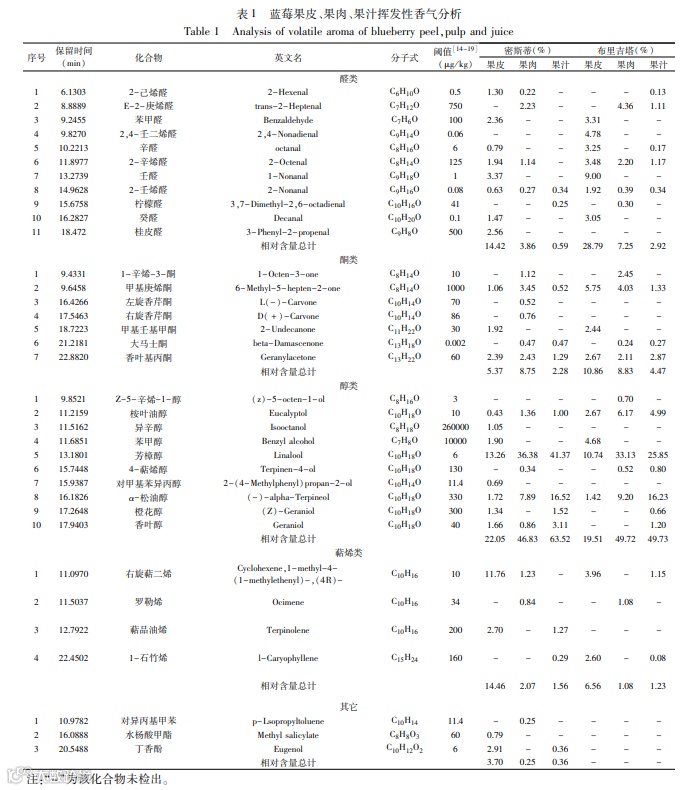
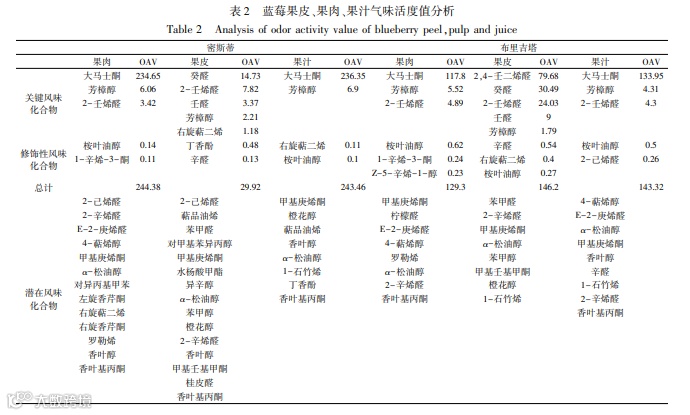
结果:在密斯蒂与布里吉塔蓝莓果皮、果肉、果汁6个样品中共鉴定出35种香气成分,主要挥发性香气成分为醛类、醇类、酮类、萜烯类4大类化合物。芳樟醇、2-壬烯醛、甲基庚烯酮、香叶基丙酮、桉叶油醇、α-松油醇为共同含有,且芳樟醇相对含量最高。密斯蒂蓝莓果皮、果肉、果汁具有嗅感风味化合物相对含量分别为59.98%、61.77%、68.31%,布里吉塔蓝莓果皮、果肉、果汁分别为65.72%、66.87%、58.35%。气味活度值次序为:密斯蒂果肉>密斯蒂果汁>布里吉塔果皮>布里吉塔果汁>布里吉塔果肉>密斯蒂果皮,密斯蒂蓝莓气味活度明显高于布里吉塔蓝莓。密斯蒂果肉、布里吉塔果肉与布里吉塔果汁关键风味化合物均为大马士酮、芳樟醇、2-壬烯醛;密斯蒂果汁关键风味化合物为大马士酮、芳樟醇;密斯蒂果皮关键风味化合物为癸醛、2-壬烯醛、壬醛、芳樟醇、右旋萜二烯;布里吉塔果皮关键风味化合物为2,4-壬二烯醛、癸醛、2-壬烯醛、壬醛、芳樟醇。此外,桉叶油醇、右旋萜二烯等修饰性风味化合物与α-松油醇、甲基庚烯酮、香叶醇等潜在风味化合物对蓝莓的整体风味有很好的调和与修饰作用,是必不可少的挥发性香气成分。
结论:果肉与果汁整体气味活度值较高,其关键风味化合物无明显差别,修饰性及潜在风味化合物差别较大,说明蓝莓香气品种间差异是由修饰性及潜在风味化合物决定的。布里吉塔果皮气味活度值较高,果肉与果汁较低,适合鲜果食用,而密斯蒂与之相反,更适合做加工产品。采用顶空固相微萃取气相质谱联用法,在阈值分析的基础上评价气味活度值,能够准确筛选关键香气风味及修饰性风味,为蓝莓及其他水果香气成分的定性与定量分析提供数据支持,并为水果资源的品质评价和开发利用提供理论依据。
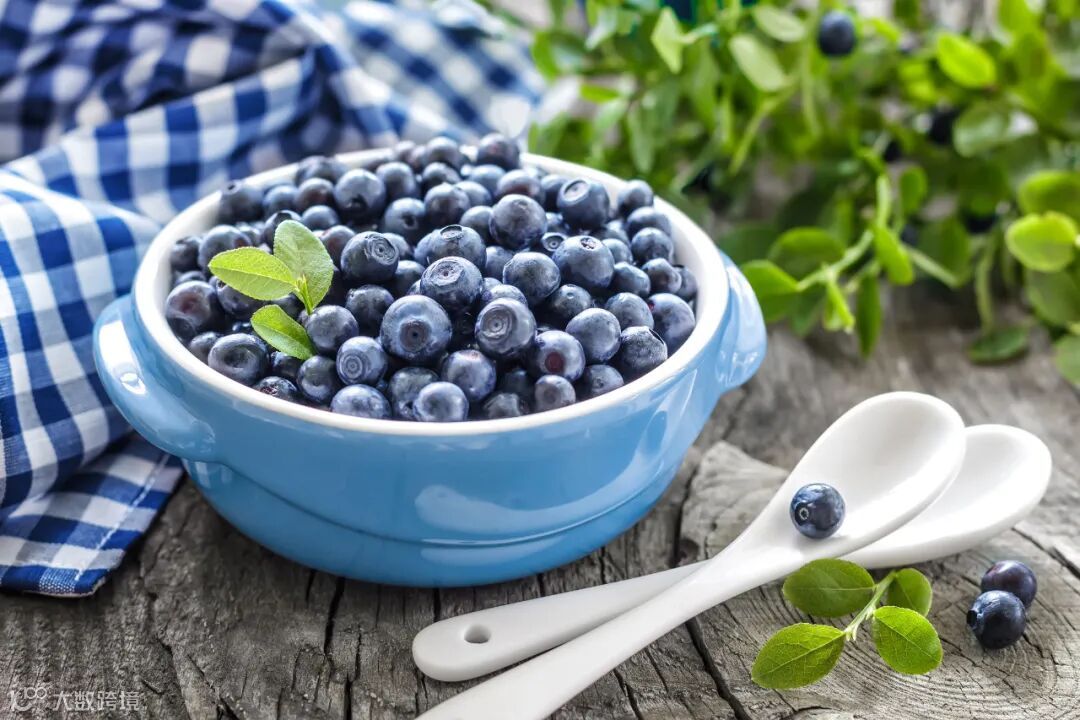
图片来源于图司机


Objectives:In recent years, aroma research had been widely applied in food and cosmetics. The analysis results were the percentage content of volatile components in the process of blueberry aroma research, while a large number of studies had shown that the percentage content of volatile components had no direct relationship with aroma characteristics. The fragrance thresholds of different volatile aromas vary greatly, as do the olfactory stimuli to human senses, and the contribution of volatile aroma compounds to food aroma was determined by both the concentration of the substance and the sensory threshold. We collected volatile gases from blueberry peel, pulp and juice, identified aroma components by chromatogram and mass spectrometry library, evaluated aroma characteristics by odor activity value method, and identified key flavor compounds to provide theoretical basis for fruit quality and processing utilization of Misty and Brigitta blueberries.
Methods:Headspace solid-phase microextraction (HS-SPME) and gas chromatography-mass spectrometry (GC-MS) were used to evaluate the odor activity values (OAV) of blueberry peel, pulp and juice based on the percentage content of aroma components and aroma threshold analysis, aiming to compare the aroma components, content and OAV of blueberry germplasm resources that had not been widely studied.
Results:A total of 35 aroma components were identified in six samples of Misty and Brigitta blueberry peel, pulp, and juice, and the main volatile aroma components were four major compounds: aldehydes, alcohols, ketones, and terpenes. Linalool, 2-nonenal, methylheptenone, geranylacetone, eucalyptol and α-pinoresinol were commonly contained, and the relative content of linalool was the highest. The relative contents of Misty blueberry peel, pulp and juice with olfactory flavor compounds were 59.98%, 61.77% and 68.31%, respectively, and the relative contents of Brigitta blueberry peel, pulp and juice were 65.72%, 66.87% and 58.35%. The order of odor activity values was: Misty pulp > Misty juice > Brigitta peel > Brigitta juice > Brigitta pulp > Misty peel, and the odor activity of Misty blueberry was significantly higher than that of Brigitta blueberry. The key flavor compounds of Misty pulp, Brigitta pulp and Brigitta juice were damascenone, linalool, 2-nonenal; the key flavor compounds of Misty juice were damascenone, linalool; the key flavor compounds of Misty peel were decanal, 2-nonenal, nonanal, linalool, dextro terpene diene; the key flavor compounds of Brigitta peel were 2,4-nonadienal, decanal, 2-nonenal aldehyde, nonanal, and linalool. In addition, modifying flavor compounds such as eucalyptol and dextroterpineadiene, together with potential flavor compounds such as α-pinoresinol, methylheptenone, and geraniol, were essential volatile aroma components that had a good harmonizing and modifying effect on the overall flavor of blueberry.
Conclusion:The overall odor activity values of pulp and juice were higher, with no significant differences in the key flavor compounds and greater differences in modifications and potential flavor compounds, indicating that the differences between blueberry aroma varieties were determined by modifications and potential flavor compounds. Brigitta had higher peel odor activity values and lower pulp and juice, which were suitable for fresh fruit consumption, while Misty, in contrast, was more suitable for processed products. The evaluation of odor activity values based on threshold analysis by headspace solid-phase microextraction gas-phase mass spectrometry could accurately screen key aroma flavors and modified flavors, provide data support for qualitative and quantitative analysis of aroma components of blueberries and other fruits, and provide theoretical basis for quality evaluation and exploitation of fruit resources.
《食品工业科技》特邀主编专栏征稿
《食品工业科技》特邀主编专栏征稿:食源性功能物质挖掘与评价 ☚
《食品工业科技》特邀主编专栏征稿:枸杞、红枣、沙棘等食药同源健康食品研究与开发 ☚
《食品工业科技》特邀主编专栏征稿:食品中天然产物提取分离、结构表征和生物活性☚
群聊:食品工业科技作者群

温
馨
提
示

我刊正式组建微信作者群,为作者提供更多的学术与论文资讯,如需进群,请联系刘老师(微信:上方二维码,电话:87244117-8062)。


8月1日下午 编委会换届选举
8月1日晚上 编委会招待晚宴
8月2日上午 大会主论坛
主办单位领导致辞
大会主旨报告
8月2日下午 青年科学家分会场报告
8月3日上午 青年科学家分会场报告
博士才俊报告专场
8月3日下午 青年科学家分会场报告
硕士新锐报告专场



报告征集

报告方向:食品及其交叉学科
报告时长:20 min
报名方式:请将个人简介、职务/职称、照片、报告题目及摘要(点击下方“阅读原文”获取模板)发送至邮箱
zhouhao03071995@163.com。

报告方向:食品及其交叉学科
报告时长:20 min
报名方式:请将个人简介、学校、照片、报告题目及摘要(点击下方“阅读原文”获取模板)发送至邮箱
zhouhao03071995@163.com。

报告方向:食品及其交叉学科
报告时长:15 min
报名方式:请将个人简介、学校、照片、报告题目及摘要(点击下方“阅读原文”获取模板)发送至邮箱
zhouhao03071995@163.com。



论文方向:食品及其交叉学科的科研成果及综述
投稿途径:稿件题目上方注明“Food Junction:食品青年科学家峰会投稿”
投稿网址:www.spgykj.com
截止日期:2023年8月4日
录用及见刊方式:依照《食品工业科技》对论文的要求,择优录取,并于《食品工业科技》正刊发表。
绿色通道:论文发表费95折。审核通过的稿件按照书面录用通知的APC费用的95折进行缴纳。



在职人员
|
在校学生
|
2400元/人
|
1500元/人
|
同一单位3人及以上,在职人员2000元/人
|
|
费用包含:会议资料、部分允许共享的演讲内容PDF版、会议午餐
费用不含:住宿(会务组代订会议酒店)、交通费
学生:凭学生证参会

报名联系人
刘编辑 17746598288(微信同手机号)


版权声明