


来源:Science Bulletin
论文
20
22
速递
Chirality-switchable acoustic vortex emission via non-Hermitian selective excitation at an exceptional point
Tuo Liu, Shuowei An, Zhongming Gu, Shanjun Liang, He Gao, Guancong Ma, Jie Zhu
Science Bulletin, 2022, 67(11): 1131–1136
doi: 10.1016/j.scib.2022.04.009


01
简介
携带轨道角动量的声涡旋在物体操控和声通信等方面有着重要的价值, 而人工结构则为声学轨道角动量的产生提供了一种有效的手段. 但是, 相关器件的实际应用始终受限于声学人工结构可重构能力和调控自由度的匮乏. 本文展示了一种突破这一制约的高效方案: 对于工作在手性奇异点处的无源宇称时间对称环形腔体, 仅通过控制其内2个单极点源的开关状态, 就可以实现轨道角动量方向的灵活切换. 点源1满足手性反转条件, 能够产生与非厄米简并模式解耦、手性相反的纯净行波声场; 点源2产生的相应行波分量可以与该行波声场形成干涉相消, 从而令叠加后的声场具有与非厄米简并模式相同的手性. 这种非厄米选择性激发机制使得涡旋辐射声场的手性切换无需依赖任何系统重构过程或复杂电路控制, 有望为手性声场调控以及集成、可调声学轨道角动量器件的开发带来新的机遇。

02
图文导读
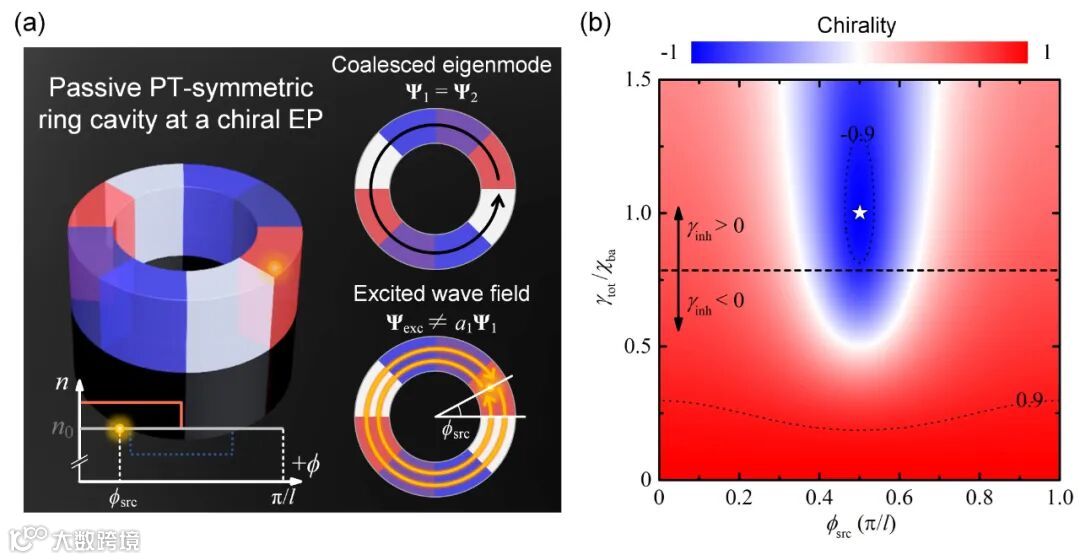
Fig. 1 Source position-dependent chiral sound field inside a passive parity-time-symmetric ring cavity. (a) Schematics of the passive parity-time-symmetric ring cavity (l=1). The lower-left inset depicts the passive PT-symmetric index distribution within one period (the red or blue line represents the real or imaginary part). (b) Chirality of the excited sound field as a function of the azimuthal source position and the total decay rate
 at an exceptional point. The dashed line denotes the boundary between an inherent gain
  and loss
  , the dotted lines denote the contour lines of chirality values
  , and the white star denote the chirality-reversal conditions.
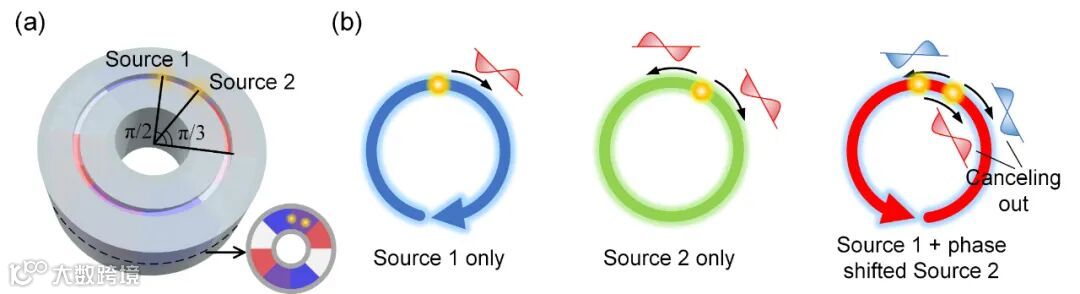
Fig. 2 Non-Hermitian selective excitation and the chirality switching mechanism. (a) Passive parity-time-symmetric acoustic ring cavity embedded with two coherent monopolar sources. The gray region denotes rigid structure, and the chiral sound field inside the cavity can radiate outside through the slit. (b) Interference of the sound fields generated by the two sources. With a preset phase difference 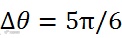 , the two sources working alone or together result in different chirality.
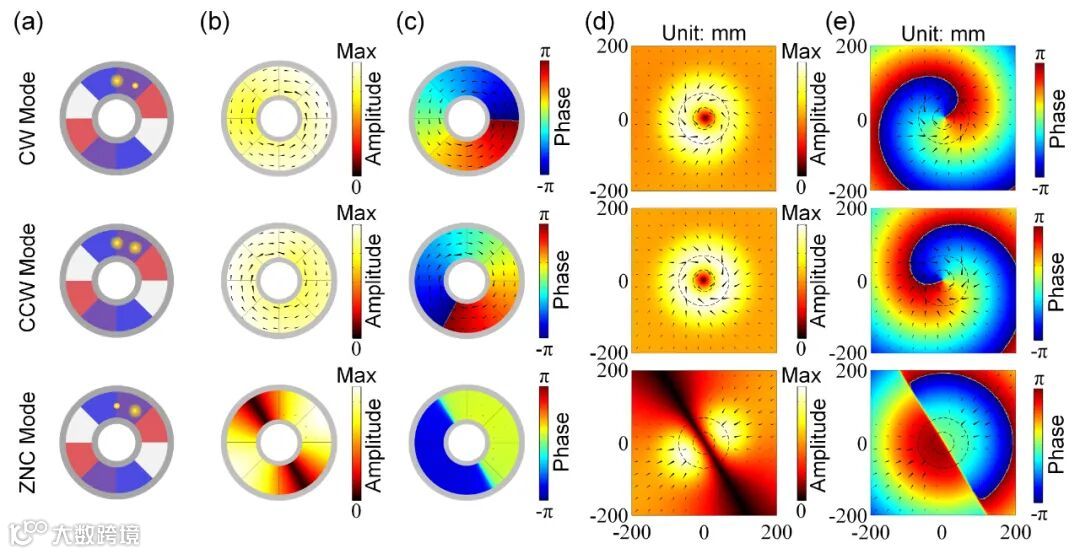
Fig. 3 Numerical simulation of the chirality-switchable acoustic vortex emission (effective media). (a) Schematics of the three modes of operation at the cavity’s resonant frequency 1242 Hz for l=1. (b) Pressure amplitude and (c) phase distributions inside the cavity (40 mm from the cavity bottom). (d) Pressure amplitude and (e) phase distributions outside the cavity (80 mm above the upper surface). The black cones in (b)−(e) denote the acoustic intensity vectors. The dashed black lines in (d) and (e) denote the cavity’s position.
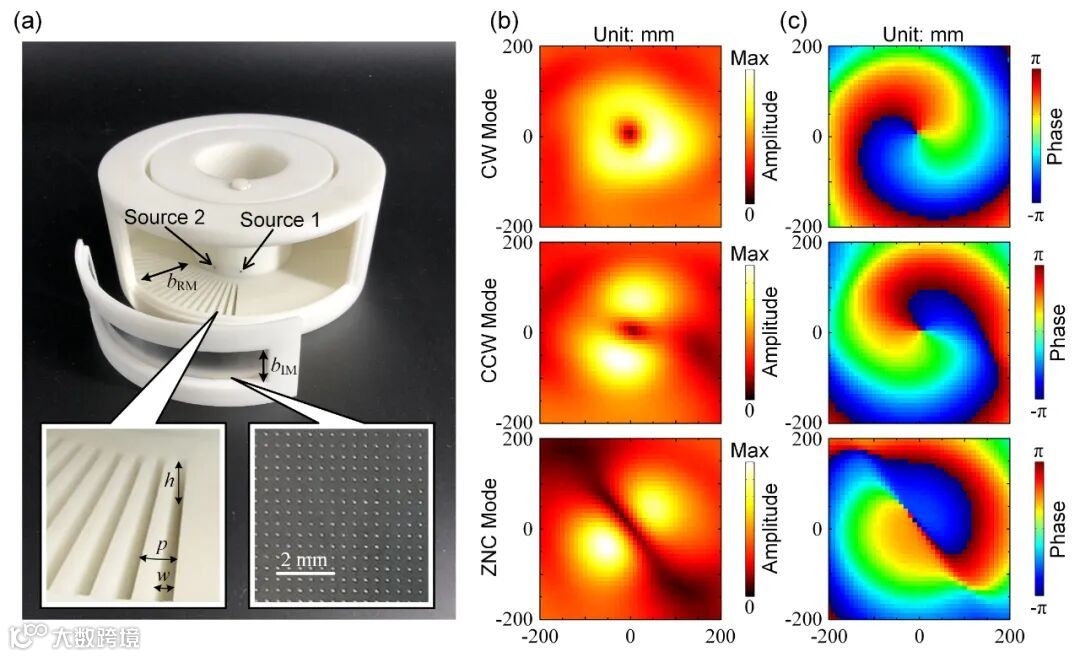
Fig. 4 Experimental demonstration of the chirality-switchable acoustic vortex emission. (a) Photos of the ring cavity sample. The insets show the artificial structures for the real (grooves) and imaginary (micro-perforated plates) part modulations. The grooves are of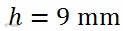 ,
, 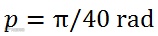 ,
, 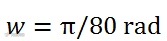 , and
, and 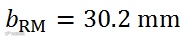 ; the micro-perforated plates are of relative (to the characteristic impedance of air) acoustic impedance
  at 1245 Hz (hole diameter, thickness, and hole spacing about 0.05, 0.2, and 0.4 mm, respectively) and
 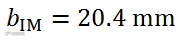 . (b) Pressure amplitude and (c) phase distributions of the radiation sound fields.

03
本文通讯作者

祝捷 教授 同济大学. 主要研究声学超构材料、超构表面、声学成像技术以及其他人工结构声学材料物理和应用。
免责声明:本文旨在传递更多科研资讯及分享,所有其他媒、网来源均注明出处,如涉及版权问题,请作者第一时间后台联系,我们将协调进行处理,所有来稿文责自负,两江仅作分享平台。转载请注明出处,如原创内容转载需授权,请联系下方微信号。