


来源:npj计算材料学
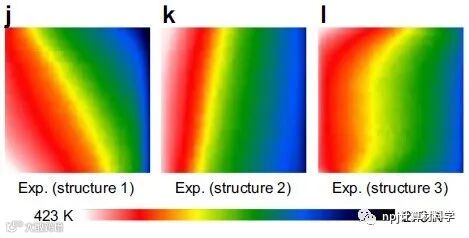
超构材料(Metamaterial)或超材料,是一类具有特殊性质的、自然界没有的人造材料,如可以改变光、电磁波的通常性质,这是传统材料无法做到的。然而,超材料在成分上并没有什么“超出”传统材料之处,只是其精密的几何结构和尺寸大小造就了其“传奇”特性,比如特定构型的微结构,大小尺度小于其作用的波长,超材料就可对波施加影响等。超材料的奇异性质使它具有广泛的应用前景,涉及电子工程、凝聚态物理、微波、光电子学、经典光学、材料科学、半导体科学以及纳米科技等。超材料的设计思想昭示人们可以在不违背基本的物理学规律的前提下,人工获得与自然界物质具有迥然不同的超常物理性质的“新物质”,把功能材料的设计和开发带入崭新天地。超材料的研究基本在2000年之后,仅短短20几年就探索出了多种典型的超构材料,如左手材料、光子晶体、超磁性材料、金属水等。
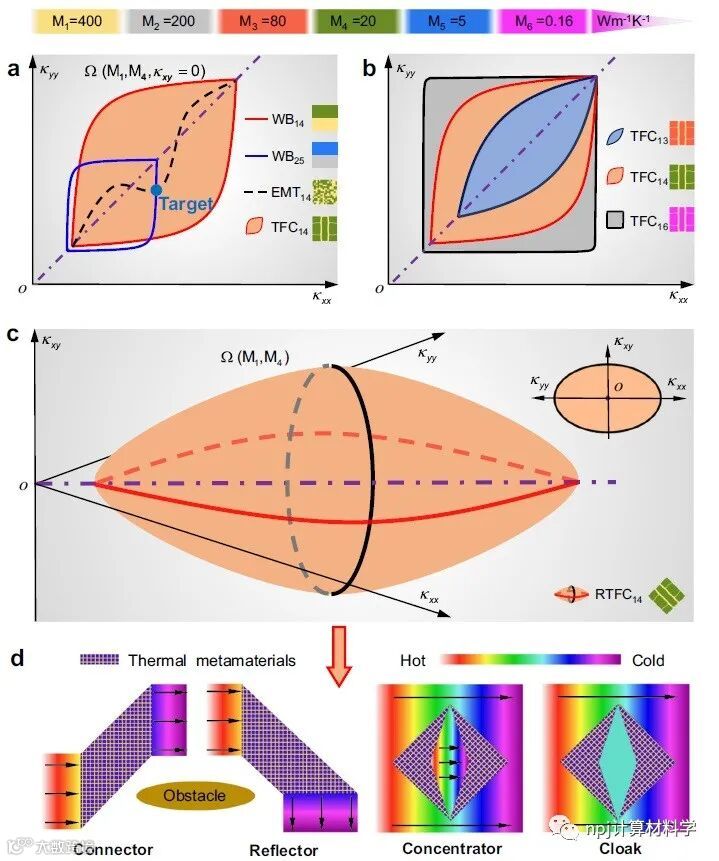
图1 全参数各向异性热传导张量空间和四类热超构器件示意图
热超材料(或热超构材料)作为超材料家族的一员,具有强大的热流操纵能力,可用于设计许多有前途的热超构器件,包括热集中器、热旋转器、热斗篷等。热超材料对热流的非凡操纵能力得益于其内部特定热传导张量(κ)的空间分布。各向同性材料的导热行为在各个方向上都相同,难以直接操纵热流,而各向异性材料却可做到灵活控制。不幸的是,绝大多数天然材料都是各向同性的,这迫使人们想办法将几种天然材料混合起来,以获得具有等效各向异性热传导张量的材料,从而实现各向异性的导热行为。但如何快速和有效地将两种材料混合、设计出微结构符合要求的热超材料挑战很大。
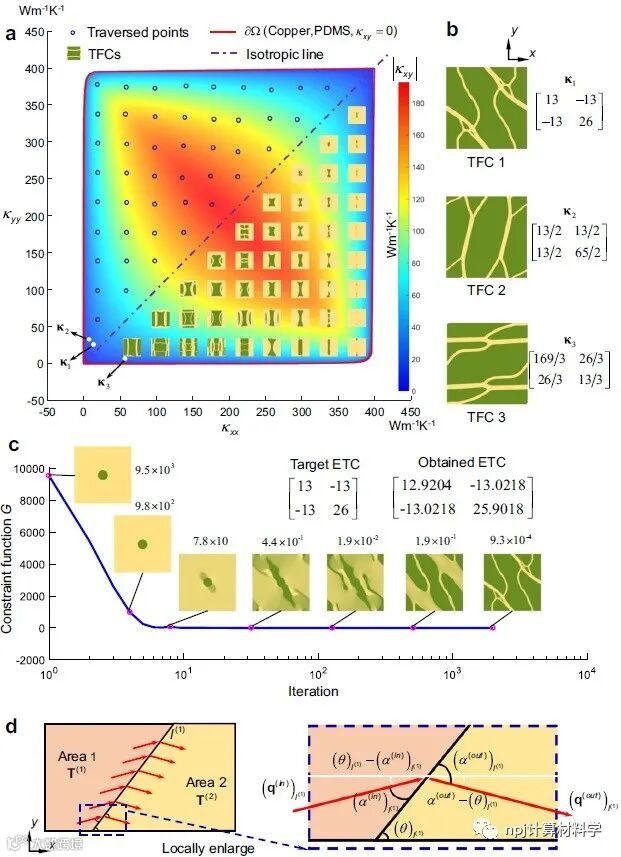
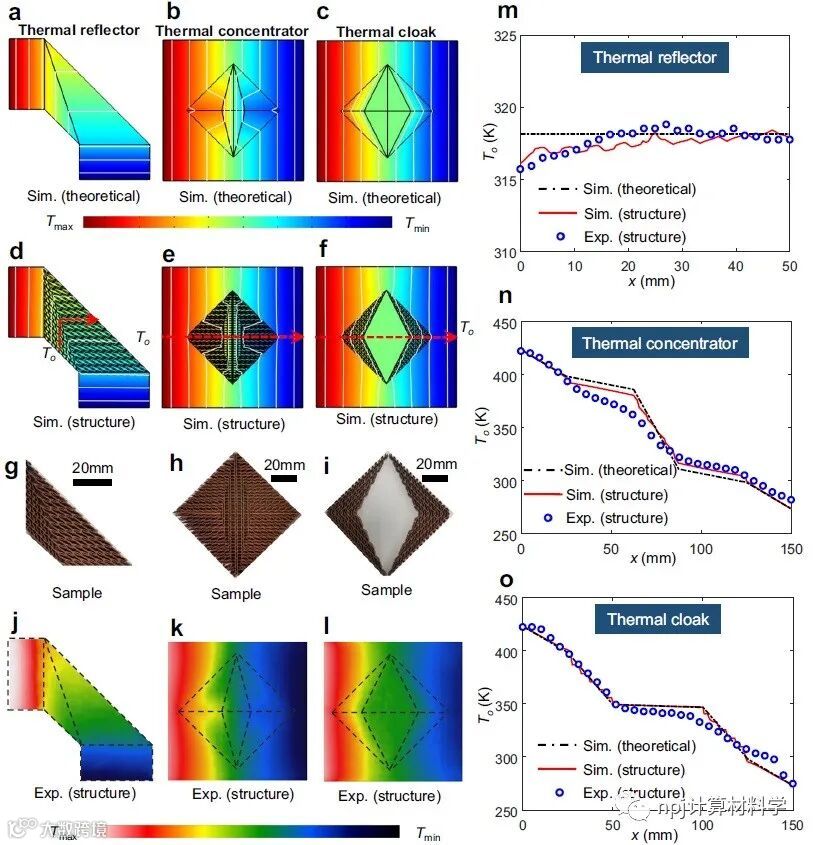
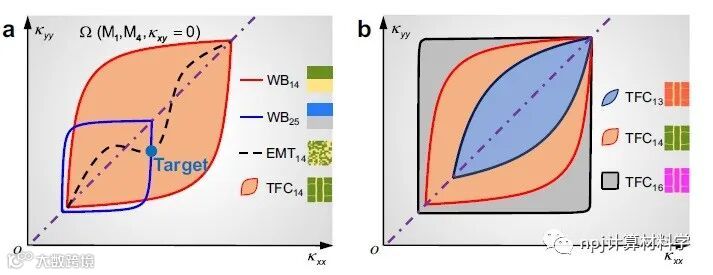
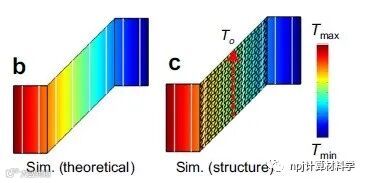
近期,华中科技大学机械学院高亮教授团队与新加坡国立大学仇成伟教授、华中科技大学能源学院胡润副教授团队合作,提出了全参数各向异性热传导张量空间的概念,用于描述任意混合材料结构的等效热传导张量集合;在此基础上,提出了基于拓扑优化的全参数各向异性热传导张量空间遍历方法,通过拓扑优化获得具有目标的等效热传导张量的微结构,即拓扑功能单胞(图1)。针对铜和聚二甲基硅氧烷(Polydimethylsiloxane, PDMS)两种材料,设计了一系列拓扑功能单胞,其等效热传导张量可遍历铜-PDMS全参数各向异性热传导张量空间(图2)。为展现遍历全参数各向异性热传导张量空间的意义,研究人员提出了区域散射抵消方法,并基于拓扑功能单胞设计了四类热超构器件,即热连接、热反射、热集中、热隐身。图3展示了一种新型热连接超构器件的理论仿真、结构仿真、3D打印样件、热学实验的结果及对比;图4展示了其他三类热超构器件的研究结果。在给定两种自然材料下,拓扑优化设计的热超构材料为实现全参数各向异性热传导张量空间的遍历提供了有效途径,也进一步为实现热流的自由操纵、先进热超构器件的设计奠定了基础。
该文近期发布于npj Computational Materials 8: 179(2022)。手机阅读原文,请点击本文底部左下角“阅读原文”,进入后亦可下载全文PDF文件。
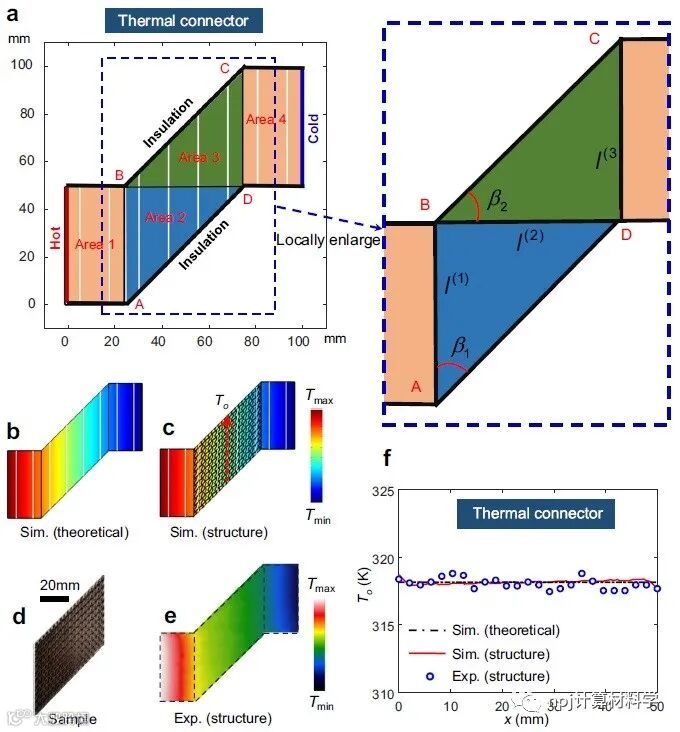
图3 热连接超构器件设计、仿真、制备与实验结果
Editorial Summary
Metamaterial, a kind of artificial material with extraordinary properties that are not found in nature, can change the general properties of light and electromagnetic waves, which is impossible for traditional materials. However, metamaterials do not "exceed" the scope of traditional natural materials in their composition, and their "legendary" characteristics are created by the precise geometric structure and size of metamaterials. For example, the microstructure of a specific configuration, whose size scale is smaller than the wavelength of its action, and the metamaterial can influence the wave. Metamaterials have broad application prospects due to their super-normal properties, involving electronic engineering, condensed matter physics, microwave, optoelectronics, classical optics, materials science, semiconductor science and nanotechnology, etc. The design idea of metamaterials shows that people can artificially obtain "new substances" with entirely different physical properties from natural materials without violating the fundamental laws of physics, which brings the design and development of functional materials into a new world. The research on metamaterials basically started in 2000, and a variety of typical metamaterials have been explored in just a few years, such as chiral materials, photonic crystals, supermagnetic materials, metallic water, etc.
As a member of the metamaterial family, thermal metamaterials can be used to achieve many promising thermal metadevices due to the powerful capabilities on manipulating heat flow, including thermal concentrator, thermal rotator, thermal cloak, etc. The extraordinary ability of thermal metamaterials on manipulating heat flow benefits from the spatial distribution of a specific thermal conductivity tensor (κ) within them. Generally, isotropic materials make identical thermal conductive behaviors in all directions and present some limitations on manipulating heat flow. In contrast, anisotropic materials can flexibly manipulate heat flow. Unfortunately, the vast majority of natural materials are isotropic, which naturally motivates the use of mixtures of natural materials to obtain anisotropic effective thermal conductivities that achieve anisotropic thermal behavior. However, how to mix the two materials quickly and effectively to design a microstructure that is suitable for thermal metamaterial is a great challenge.
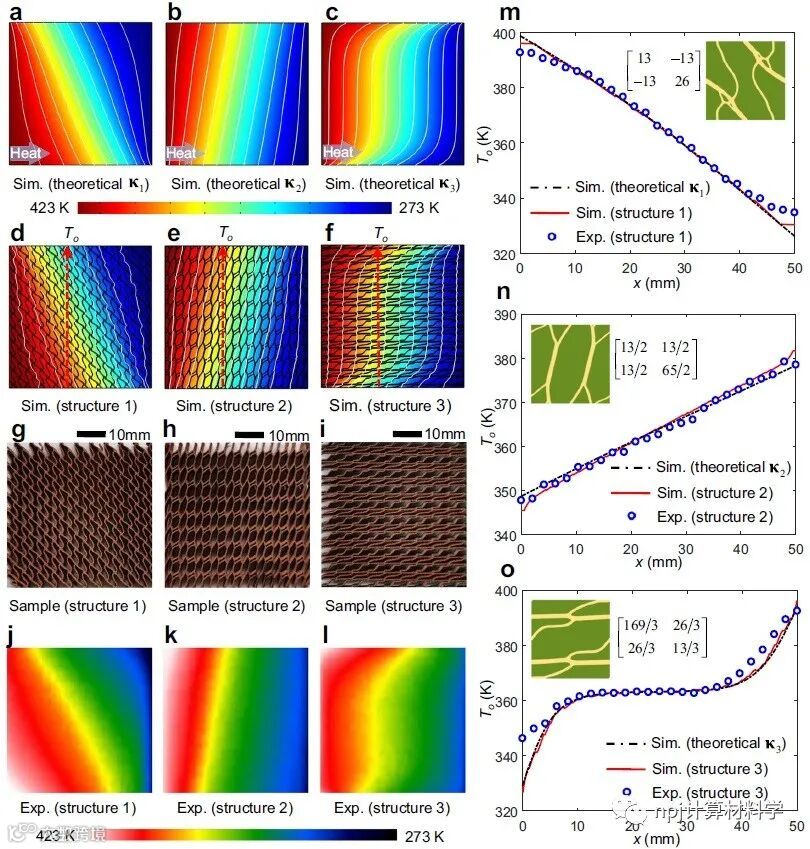
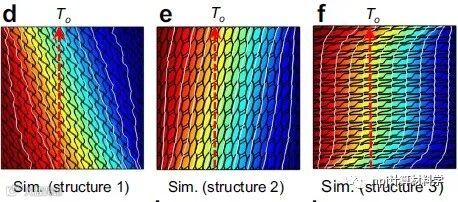
Fig. 3 Simulated and experimental results of three TFCs.
Recently, in cooperation with Prof. Cheng-Wei Qiu in National University of Singapore and A. Prof. Run Hu in Huazhong University of Science and Technology, the team of Prof. Liang Gao in Huazhong University of Science and Technology propose the concept of full-parameter anisotropic thermal conductivity tensor space to describe the equivalent thermal conductivity tensor set of any mixed material structure. Then, they propose a universal and efficient strategy by employing structural topology optimization to obtain the optimized material layout of a mixture with desired effective thermal conductivity tensor, which is dubbed topological functional cell hereinafter (Fig. 1), and they successfully traverse the copper-PDMS full-parameter anisotropic space of thermal conductivity by topological functional cell with different effective thermal conductivity tensors (Fig. 2).To show the significance of traversing full-parameter anisotropic space, researchers propose a regional scattering cancellation method, and designe four thermal metadevices (thermal connector, reflector, concentrator and cloak) based on topological functional cells. Fig. 3 shows the theoretical simulations, structural simulations, 3D printed samples, experimental results and result comparison of a novelty thermal connector metadevice. Fig. 4 shows the relevant research results of the other three thermal metadevices. This study offers an avenue for traversing the full-parameter anisotropic space with topology-optimized thermal metamaterials under two given natural materials, hence enabling highly robust manipulation of heat flow and achieving the powerful design capability for thermal metadevices. This article was recently published in npj Computational Materials 8:179(2022).
Topology-optimized thermal metamaterials traversing full-parameter anisotropic space(一种拓扑优化的、可遍历全参数各向异性热传导张量空间的热超构材料)
Wei Sha, Run Hu, Mi Xiao, Sheng Chu, Zhan Zhu, Cheng-Wei Qiu and Liang Gao
Abstract It is widely adopted in thermal metamaterials that mixing different materials could conveniently result in effective thermal conductivities (ETCs) beyond naturally-occurring materials. When multiple materials are isotropically mixed, the ETC is a direct average governed by their filling fractions and given bulk conductivities. That could lead to an inhomogeneous and anisotropic value within the maximal and minimal thermal conductivities of constituent materials. Usually thermal metadevices rely on anisotropic thermal conductivity tensor, whose tensorial elements are frequently inter-dependent and confined within a limited parametric space. It is thus nontrivial to establish a design recipe for advanced thermal metamaterials whose ETCs could cover full-parameter anisotropic space. We demonstrate topological functional cells (TFCs) with copper and polydimethylsiloxane, and show that the anisotropic ETCs traverse their full-parameter space. Such robust scheme based on topology-optimized TFCs unlocks unexplored opportunities for functional thermal metadevices whose parameters may not be reached in previous mixing approaches. This study also sheds light on the developments in emerging acoustic, mechanical and electromagnetic composite materials.
摘要混合自然材料可方便获取自然材料不具有的等效热传导张量,被广泛用于热超构材料设计。当多种各向同性材料混合时,混合材料的等效热传导张量由各组成材料的热导率和体分比决定,其分量值介于组成材料热导率的最大和最小值区间内,且通常呈现各向异性特征。在热超构器件设计中,其超常热性能通常依赖于材料的各向异性热传导张量属性,各向异性热传导张量的分量相互依赖,且位于一个有限的参数空间内。因此,有必要建立一种可遍历全参数各向异性热传导张量空间的方法。在本文中,我们设计了由铜和PDMS材料组成的拓扑功能单胞,并证明其可遍历铜-PDMS全参数各向异性热传导张量空间。针对现有常见混合方法难以获得的各向异性热传导张量参数,基于拓扑功能单胞的方案可稳健获得,这为各种超常功能的热超构器件设计提供了更多未探索的机遇,并将促进新兴声学、机械和电磁复合材料设计的发展。
免责声明:本文旨在传递更多科研资讯及分享,所有其他媒、网来源均注明出处,如涉及版权问题,请作者第一时间后台联系,我们将协调进行处理,所有来稿文责自负,两江仅作分享平台。转载请注明出处,如原创内容转载需授权,请联系下方微信号。