



A novel microscale selective lasersintering (μ-SLS) process for the fabrication of microelectronic parts
Nilabh K. Roy, Dipankar Behera, Obehi G. Dibua, Chee S. Foong & Michael A. Cullinan (Department of Mechanical Engineering, The University of Texas at Austin )
Microsystems & Nanoengineering: volume 5, Article number: 64 (2019)
引用本文:https://doi.org/10.1038/s41378-019-0116-8

1. 金属纳米颗粒3D打印技术
2.该技术可以产生分辨率小于5微米的精密结构
3. 具有足够高的产能,可适于商业生产应用
4. 该工艺在微电子封装中具有重要的应用,同时也可用于制造微执行器,微传感器和微光电组件

微电子封装行业中,微型3D互连结构的制造变得越来越重要,当前芯片制造中的尺寸减小趋势与用于封装这些芯片的后端制造工艺的能力之间存在较大的脱节。传统工艺过程中,用作两个管芯之间或管芯与基板之间的互连的焊料凸块通常通过电镀工艺来制造,但传统工艺很难在间距小于125 μm的情况下制造这些凸块,经常会出现短路问题。为了克服该问题,更高级的电子封装使用铜柱凸块,以使互连结构之间的间距更小,并在连接的两个表面之间更精确地控制间隙,同时保持足够的机械强度。目前工艺中越来越多地采用柱形凸块来代替焊料凸块。制造柱形凸块结构的一种可能方法是增材制造技术。
增材制造(additive manufacturing,AM)技术(又称为3D打印技术)在许多行业中已得到了广泛的应用。但是,将传统的AM缩小到微尺度时存在巨大的挑战,这些挑战包括有限的制造速度,零件复杂性以及可以使用的材料类型。目前没有可用的微型AM工艺能够产生具有下一代电子封装所需的速率,分辨率和功能复杂性的柱状结构。
得克萨斯大学奥斯汀分校机械工程学院Michael A. Cullinan研究团队提出了一种新型的微尺度增材制造技术:微尺度选择性激光烧结( microscale selective laser sintering ,μ-SLS),该技术可产生真正的三维金属结构,其特征尺寸分辨率优于5 μm,可实现大面积图案化并具有较大的产能效率。作者展示了他们的μ-SLS技术,该技术用于生产轻质晶格结构和金属柱。
该技术在微电子封装中具有重要的应用,同时也可用于制造微型执行器,传感器和微光电组件,在制造复杂的MEMS结构方面具有良好的应用前景。
图文展示1:μ-SLS工艺的潜在应用
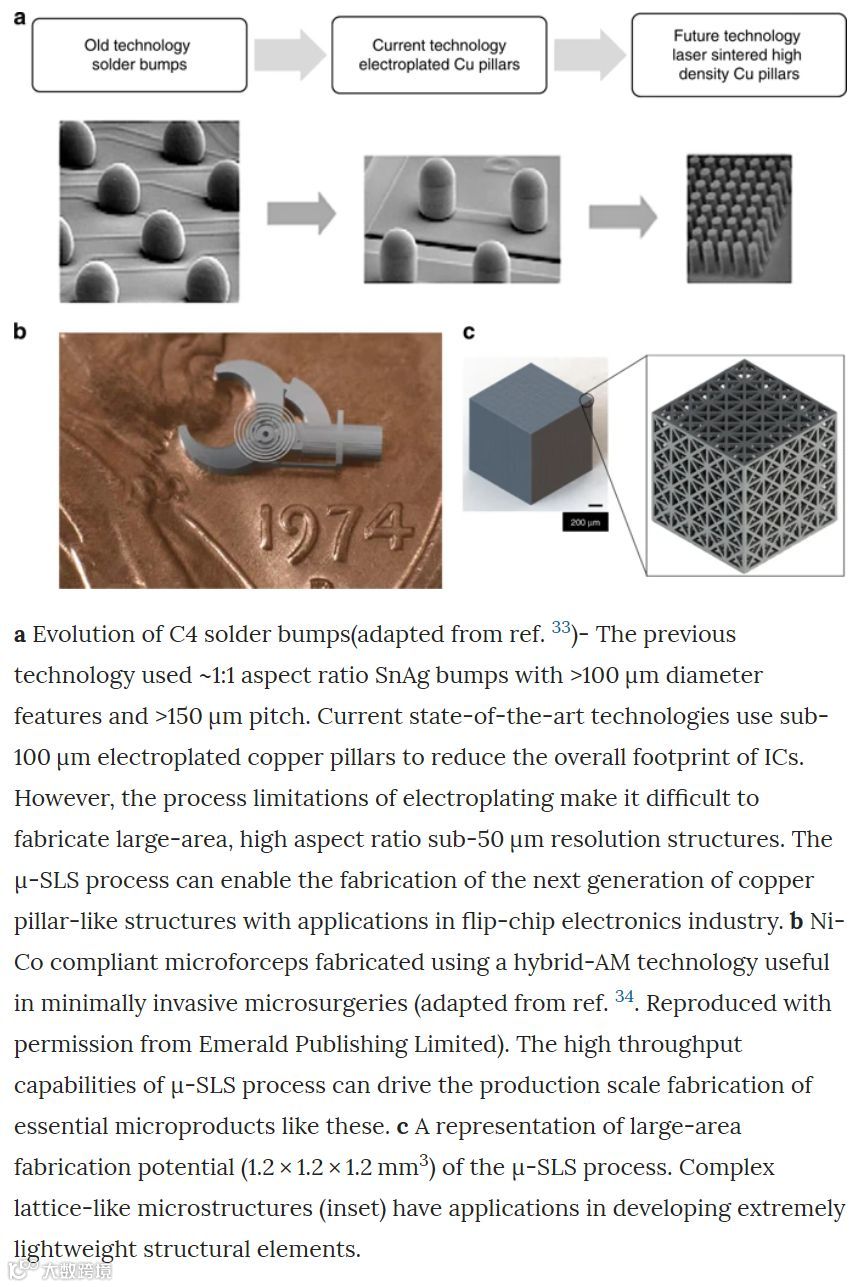
Potential applications of the μ-SLS process
图文展示2:μ-SLS工艺的简化示意图
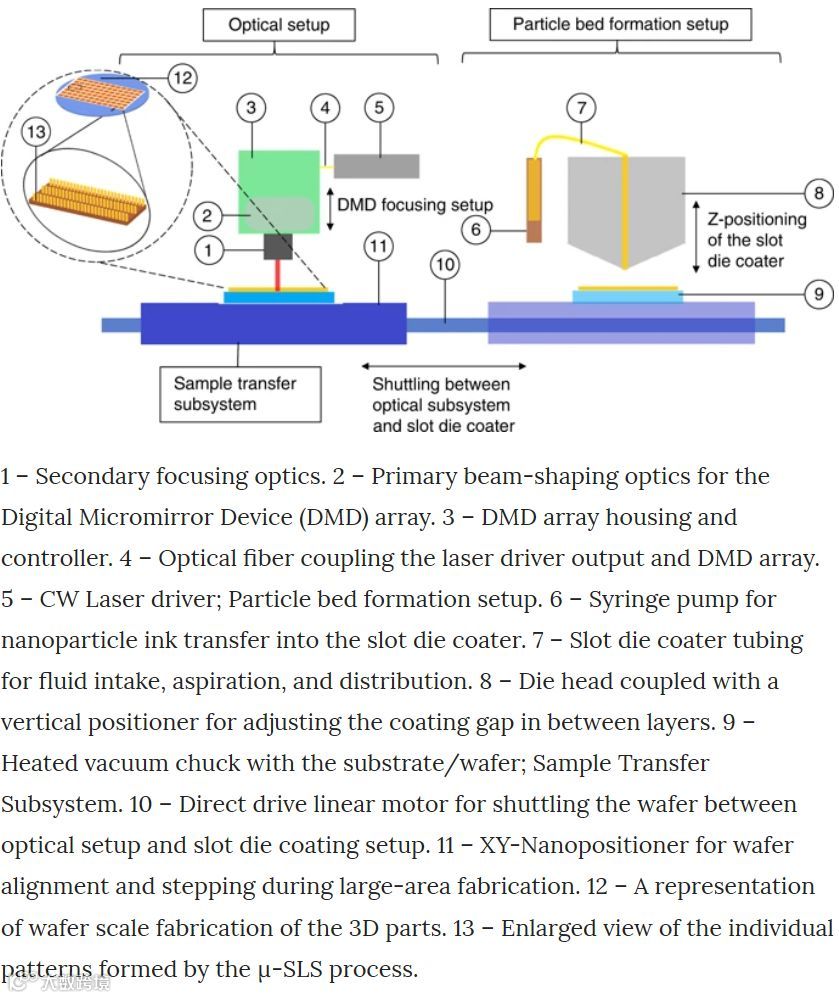
A simplified schematic of the μ-SLS process showing the different subsystems involved in layer-by-layer fabrication of a true-3D structure. Optical Setup.
μ-SLS系统用纳米颗粒(NP)墨水代替了常规SLS工艺中使用的微型粉末,以实现所需特征分辨率。
图文展示3:μ-SLS系统的实际结构照片
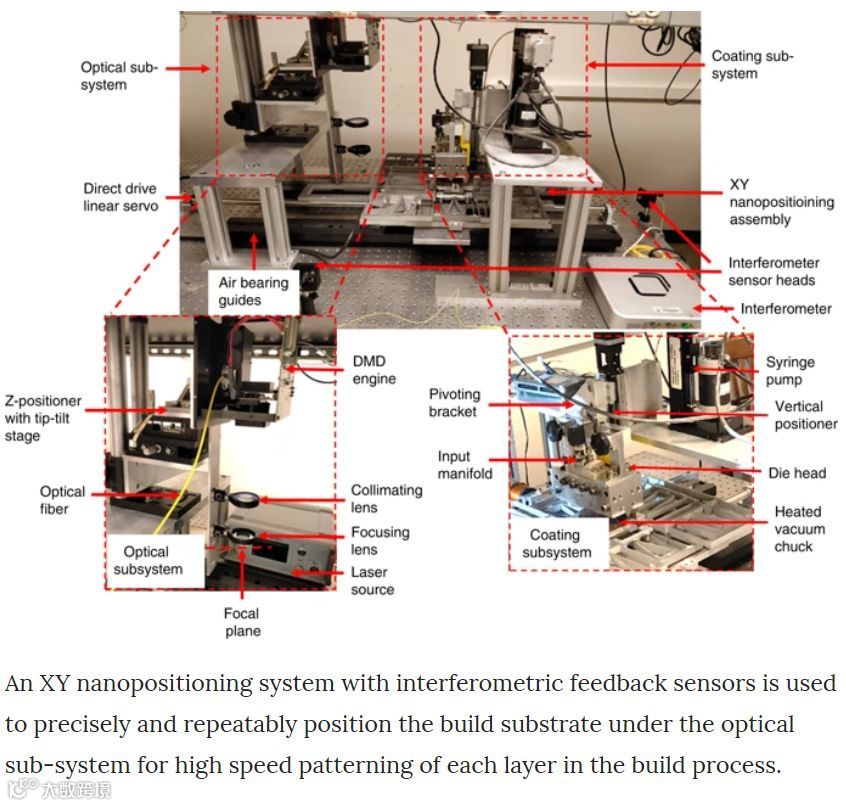
Physical embodiment of the μ-SLS system showing the optical and coating sub-systems along with the linear servomotor and air bearings used to transport the build substrate between the two sub-systems.
上图显示了μ-SLS系统的实际物理实施例子,示例了光学,涂布和定位子系统。该系统具有<5 μm的特征尺寸,具有高产量。
图文展示4:Cu纳米粒子激光材料相互作用
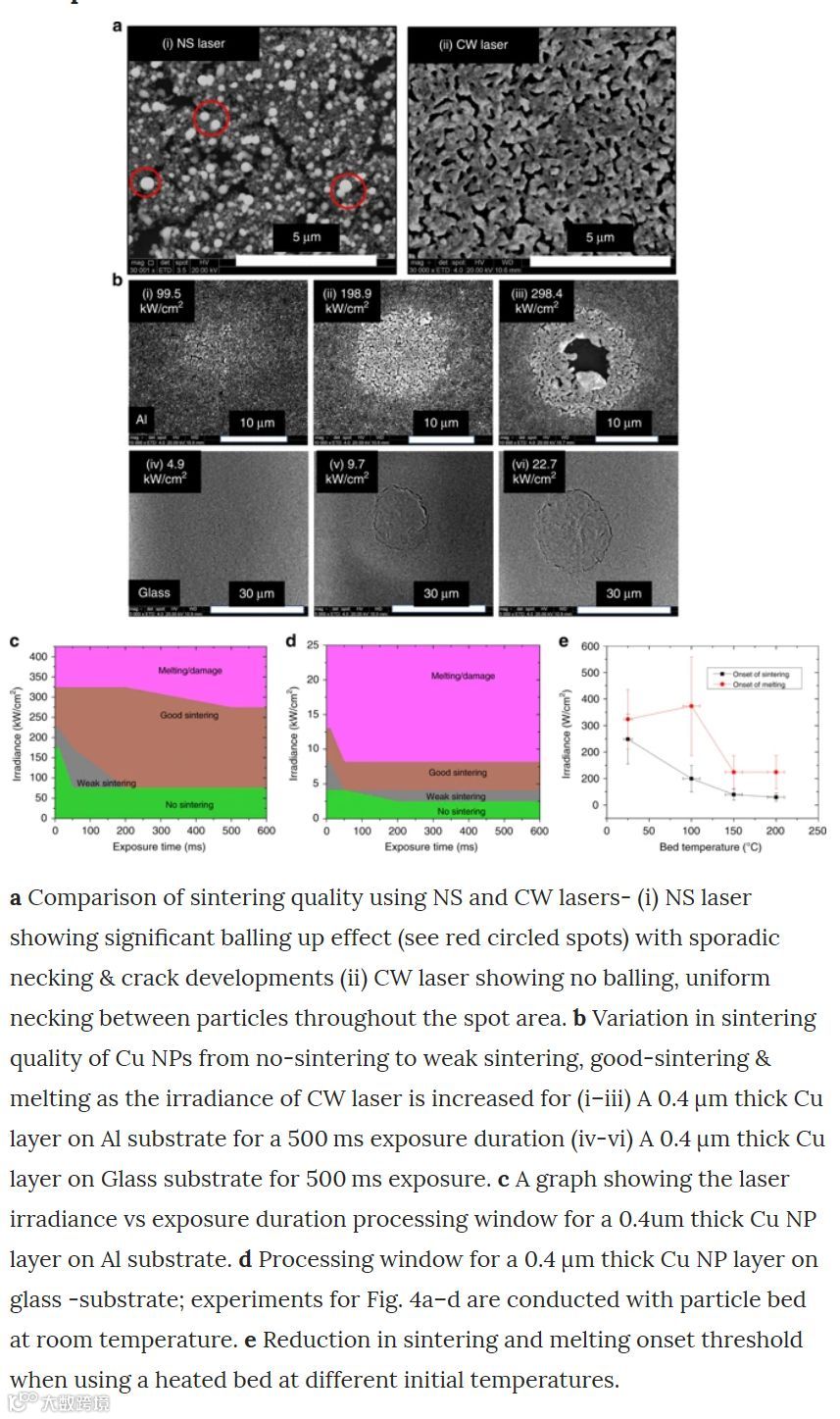
Comprehensive study of laser-material interaction for Cu nanoparticles.
使用不同类型的激光器(包括飞秒(FS),纳秒(NS)和连续波(CW)激光器)进行了初步的烧结实验,连续波激光烧结显示出更好的烧结质量。c-e总结了激光烧结研究,以获得在不同的激光功率,曝光时间和床温下进行高质量烧结的加工窗口。
图文展示5:μ-SLS工艺流程图
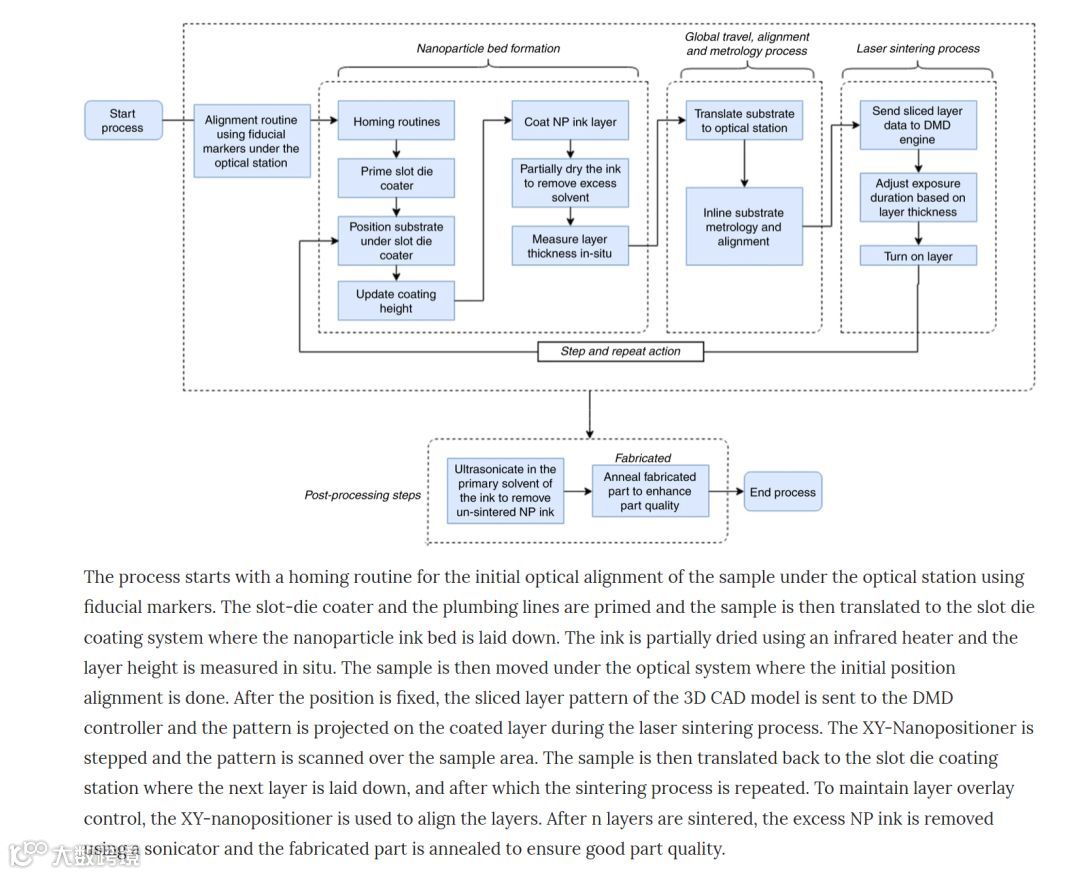
μ-SLS process flow-chart.
总结了μ-SLS工艺的工艺步骤,详细具体可参看原文。
图文展示6:Ag纳米颗粒单层烧结结果展示
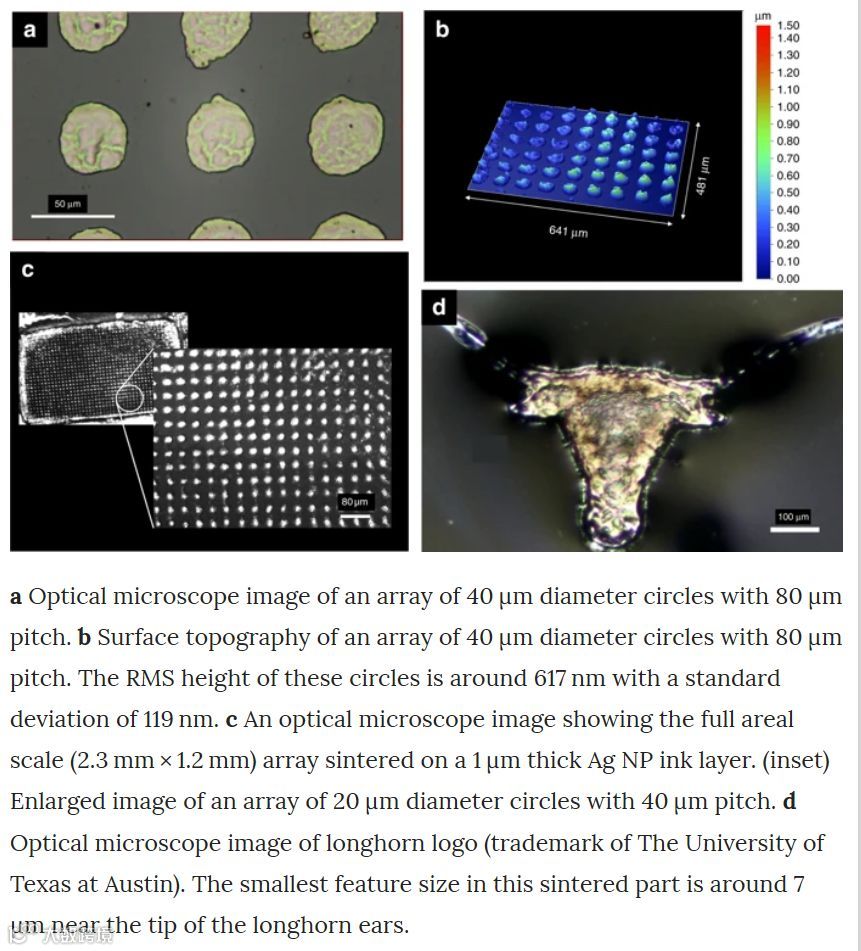
Single layer sintering results with Ag nanoparticle ink.
图文展示7:Ag纳米颗粒的多层烧结展示
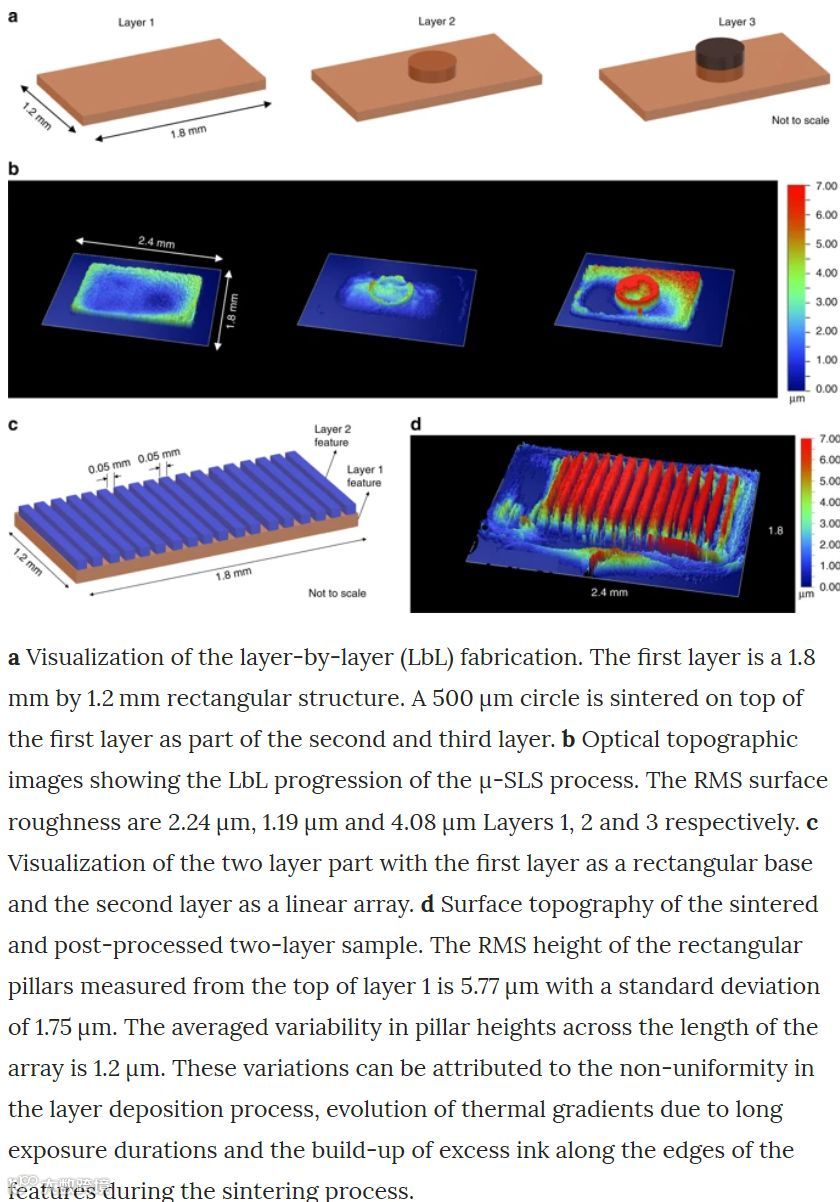
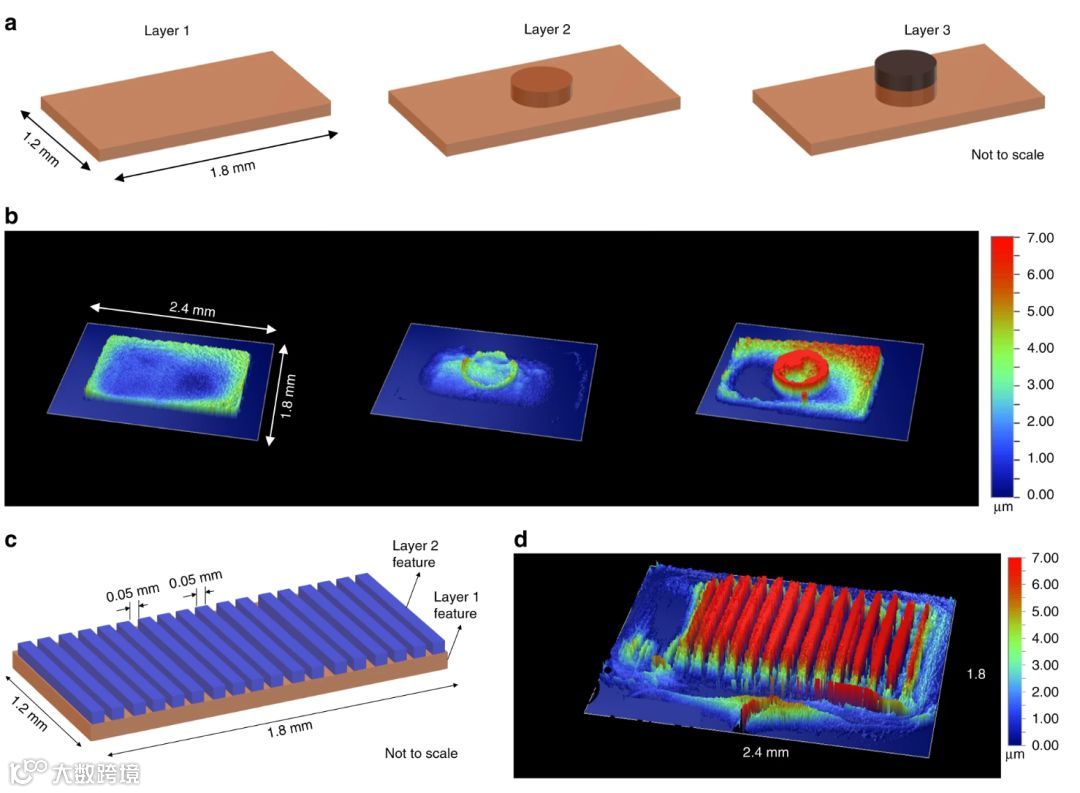
Multilayer sintering of Ag nanoparticle inks.

One of the biggest challenges in microscaleadditive manufacturing is the production of three-dimensional, microscale metalparts with a high enough throughput to be relevant for commercial applications.This paper presents a new microscale additive manufacturing process calledmicroscale selective laser sintering (μ-SLS) that can produce true 3D metalparts with sub-5μmresolution and a throughput of greater than 60mm3/hour.In μ-SLS,a layer of metal nanoparticle ink is first coated onto a substrate using a slotdie coating system. The ink is then dried to produce a uniform nanoparticlelayer. Next, the substrate is precisely positioned under an optical subsystemusing a set of coarse and fine nanopositioning stages. In the opticalsubsystem, laser light that has been patterned using a digital micromirrorarray is used to heat and sinter the nanoparticles into the desired patterns.This set of steps is then repeated to build up each layer of the 3D part in the μ-SLS system. Overall, this new technology offers the potential to overcomemany of the current limitations in microscale additive manufacturing of metalsand become an important process in microelectronics packaging applications.
文献链接:
https://www.nature.com/articles/s41378-019-0116-8
文章来源: 微系统与纳米工程

长按二维码
关注我们吧


免责声明:本文旨在传递更多科研信息及分享,如涉及侵权,请联系下方邮箱,我们将及时进行修改或删除。转载请注明出处,如原创内容转载需授权,请联系下方微信号。
邮箱:janechou@imeta-center.com
微信号:18305163023