

文章链接:npj计算材料学
电力电子(PE)是能源转换的“智能开关”,而宽带隙(WBG)半导体如SiC、GaN、Ga2O3则是其性能担当,但掺杂挑战和高成本限制了其更大发展。
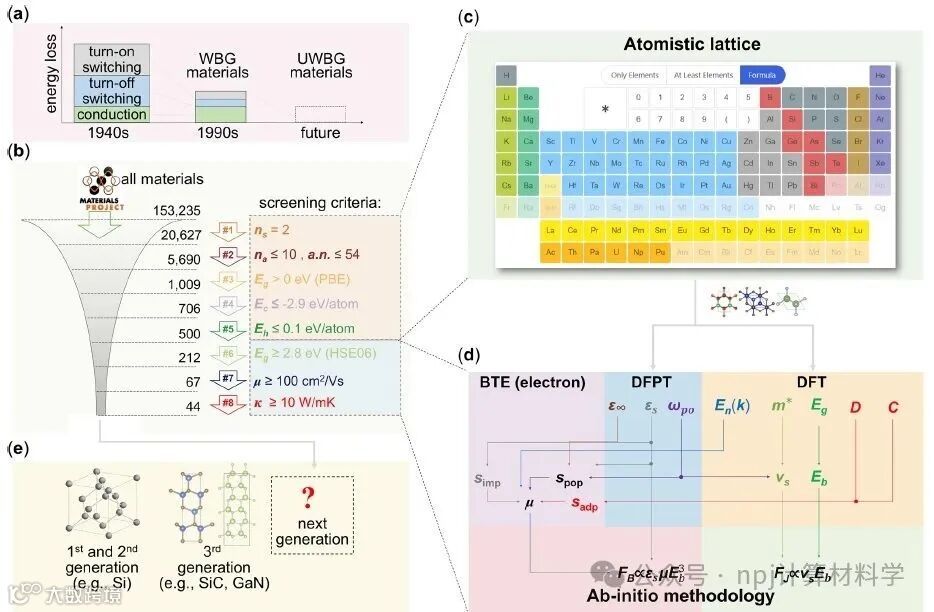
Fig. 1 | Schematic diagrams illustrating the discovery of wide-bandgap (WBG) semiconductors, and a flowchart of the proposed ab initio screening methodology.
来自香港理工大学先进制造研究院和机械工程系的郑广平教授团队,利用基于第一性原理的高通量计算,成功筛选出下一代PE候选材料。 这一突破性研究旨在克服现有WBG材料的根本性局限,为开发性能更优、成本更低、应用更广的下一代电力电子器件铺平道路,赋能更高效、更绿色的电能未来。他们通过基于第一性原理的高通量计算,对15万余种材料展开智能筛选,结合带隙、电子迁移率、热导率及Baliga/Johson品质因数(BFOM/JFOM)多维评估,成功锁定三种候选材料: B2O3、BeO与BN。整个高通量计算流程详见图1。
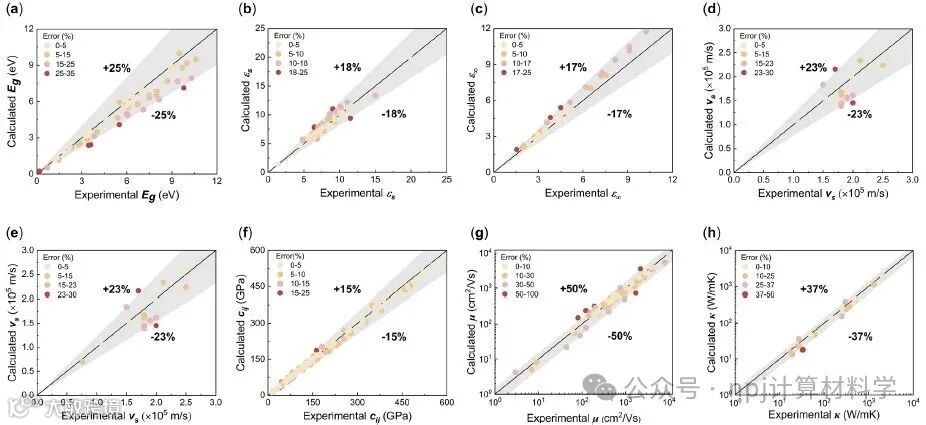
Fig. 2 | Comparison between the calculated and experimental results.
该研究同时也对筛选过程中的材料进行了进一步的分析,如图2所示。在经过第八轮筛选之后,为了识别最有前途的功率半导体材料,我们使用c-BN的BFOM值作为筛选标准(BFOM>36,882),这是目前发现的功率半导体中BFOM最高的材料。该过程最后筛选出四种有前途的功率半导体材料:即B2O3(ID:mp-717)、z-BeO (ID:mp-1778)、w-BeO(ID:mp-2542)和w-BN(ID:mp-2653)。
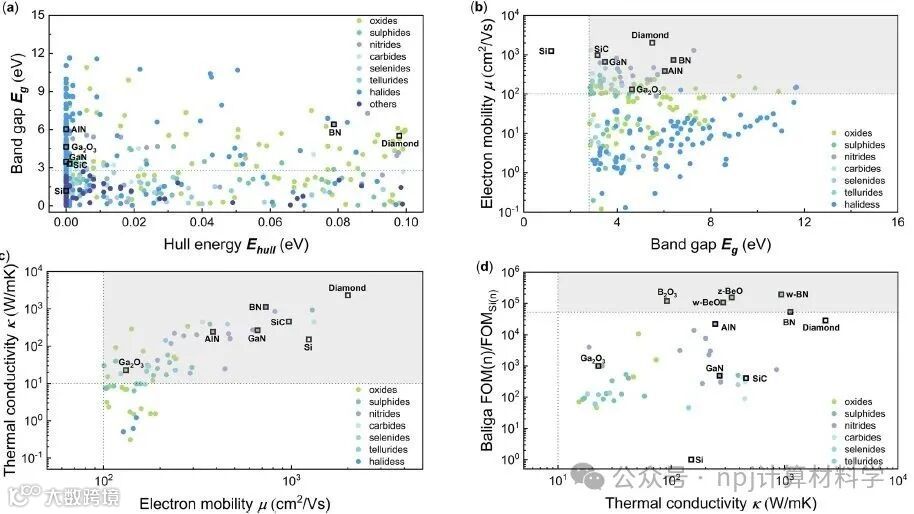
Fig. 3 | The distributions of band gap, hull energy, thermal conductivity, electron mobility and figures of merit.
接下来,该研究进一步探索了金刚石(Diamond)、c-BN、筛选的四种候选WBG材料和目前广泛使用的电力电子材料4H-SiC的能带结构的差异,如图3a所示。同时,对四种筛选材料和两种性能最佳的已知功率半导体材料(Diamond和c-BN)之间的能带结构(图3b)和性能差异也进行了比较(图3b)。很明显,B2O3具有最佳的击穿场强和JFOM值,使其适合在高击穿场强和开关器件中进行进一步的探索。z-BeO和w-BeO的BFOM、热导率和电子迁移率表明它们具有优异的性能,值得在功率器件领域进一步探索。此外,w-BN表现出最高的BFOM、出色的热导率和电子迁移率,使其成为功率器件和散热应用的有前途的候选材料。
随后,该研究为了进一步了解宽带隙(WBG)材料的元素含量,系统地评估了500种候选化合物的元素组成。根据它们的hull能量(Ehull)、带隙(Eg)、电子迁移率(μ)、热导率(κ)分为四个不同的组,见图4。通过系统性地分析得出结论,宽带隙(WBG)材料优先考虑两种不同的组成策略,即强电负性阴离子(O、F、S、N、Cl)和低电负性阳离子(如Li、Mg)。值得注意的是,具有优良的电子迁移率和热导率(μ>100 cm2/Vs,κ>10 W/mK)的化合物趋向于由相对原子质量较小并且价态较低的阳离子组成(B、Be、Mg、Ga、Zn),因为它们降低了轨道复杂性并抑制了电子-声子散射。
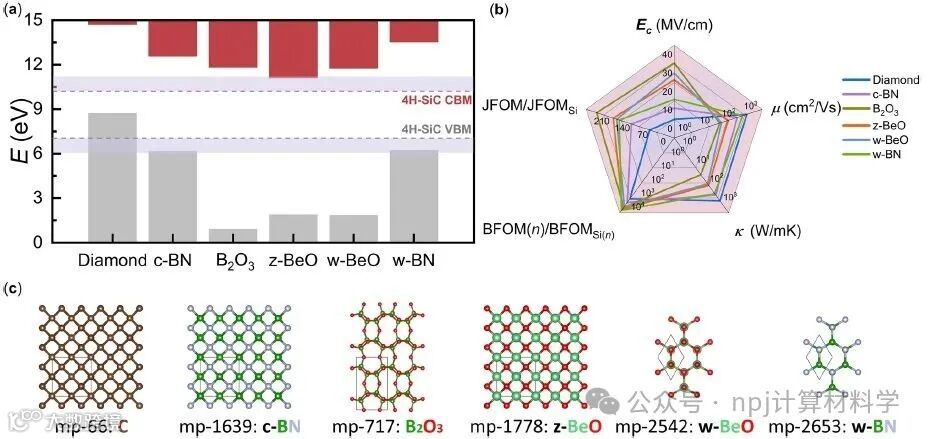
Fig. 4 | Comparison of band edge and atomic structure between next-generation WBG semiconductor candidate materials and the two best-performing WBG semiconductor materials currently known (diamond and c-BN).
该研究筛选出来的材料展现超高BFOM/JFOM值与卓越热管理性能,为高压、高频、高能效电子器件开辟全新赛道。所提出的高通量筛选范式更可拓展至半导体、热电等前沿领域,革命性地加速电子材料研发进程。相关论文近期发布于npj Computational Materials 11: 249 (2025)。
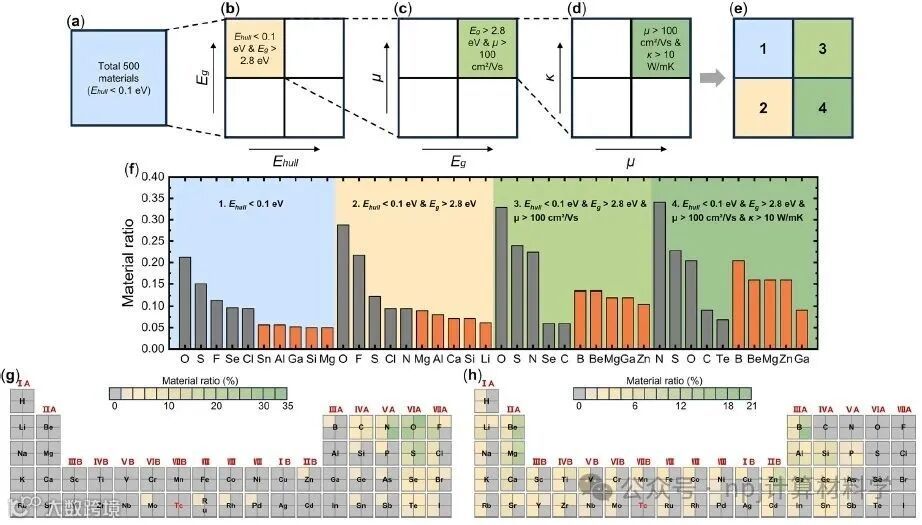
Fig. 5 | Statistical analysis of 500 calculated materials.
Editorial Summary
Wide-bandgap (WBG) semiconductors such as SiC, GaN, and Ga₂O₃ are well-developed materials for power electronics (PE). However, the challenges in doping WBG materials and their high cost have limited their broader advancement.
A research team led by Prof. Guangping Zheng from the Research Institute for Advanced Manufacturing and Department of Mechanical Engineering at The Hong Kong Polytechnic University has successfully screened candidate materials for next-generation PE using first-principles based high-throughput computing. This breakthrough research aims to overcome the fundamental limitations of existing WBG materials, paving the way for developing next-generation power electronic devices with superior performance, lower cost, and wider applicability. The results empower a more efficient and greener future of electrical energy.
Through first-principles high-throughput computing, the team intelligently screened over 150,000 materials, employing a multi-dimensional evaluation approach based on bandgap, electron mobility, thermal conductivity, and Baliga/Johnson figures of merit (BFOM/JFOM). They successfully identified three candidate materials, i.e., B₂O₃, BeO, and BN, as next-generation WBG materials. Key findings of the study:
1) B2O3 demonstrates the best breakdown field strength and JFOM values, making it suitable for further exploration in high-breakdown-field and switching applications.
2) z-BeO and w-BeO show excellent BFOM, thermal conductivity, and electron mobility, indicating superior performance worthy of further investigation for their application in power devices.
3) w-BN exhibits the highest BFOM, outstanding thermal conductivity, and electron mobility, establishing it as a promising candidate material for power devices and thermal management applications.
The materials identified through this screening exhibit ultra-high BFOM/JFOM values and exceptional thermal management performance, opening up a new avenue for the development of high-voltage, high-frequency, and high-efficiency electronic devices. Furthermore, the proposed high-throughput screening paradigm can be extended to the discovery of advanced materials in other cutting-edge fields, such as semiconductors and thermoelectrics, revolutionarily accelerating the R&D process for electronic materials. Thisarticle was recently published in npj Computational Materials 11, 29 (2025).
原文Abstract及其翻译
Accelerating discovery of next-generation power electronics materials via high-throughput ab initio screening (使用基于第一性原理的高通量筛选方法来加速发现下一代功率半导体材料)
Jiashu Chen, Mingzhu Liu, Minghui Liu, Xinzhong Wang, Yiwen Su & Guangping Zheng
Abstract Power electronics (PEs) play a pivotal role in electrical energy conversion and regulation for applications spanning from consumer devices to industrial infrastructure. Wide-bandgap (WBG) semiconductors such as SiC, GaN, and Ga2O3 have emerged as high-performance materials in PEs. Nevertheless, the WBG materials have some limitations that there exists the proliferation of intrinsic defects, with prohibitively high fabrication costs. We identify next-generation PEs materials beyond SiC, GaN, and Ga2O3 based on a high-throughput computational methodology. A massive database affording 153,235 materials is screened by leveraging ab initio methods with the thorough evaluation of bandgap, electron mobility, thermal conductivity, and Baliga and Johnson figures of merit (BFOM and JFOM). The comprehensive and effective theoretical analysis identifies some promising candidates (B2O3, BeO, and BN) that possess high BFOM, JFOM, and lattice thermal conductivity. Our methodology could be extended to other application domains of electronics, simplifying the process of exploring new materials.
摘要 电力电子(PE)材料在从消费设备到工业基础设施的电能转换和调节应用中起着关键作用。SiC、GaN和Ga2O3等宽带隙(WBG)半导体材料已成为PE中的高性能材料。然而,目前已知的WBG材料存在固有缺陷的扩散导致的掺杂困难,制造成本过高等一些局限性。在该工作中,我们基于第一性原理的高通量计算方法确定了SiC、GaN和Ga2O3之外的下一代PE材料。通过利用从头计算方法对153235种材料进行大规模数据库筛选,并对带隙、电子迁移率、热导率以及Baliga和Johnson品质因数(BFOM和JFOM)进行全面评估。并且通过全面有效的理论分析确定了一些具有高BFOM、JFOM和晶格热导率的有前景的候选PE材料(B2O3、BeO和BN)。我们的方法可以扩展到电子材料的其他应用领域,简化探索新材料的过程。