

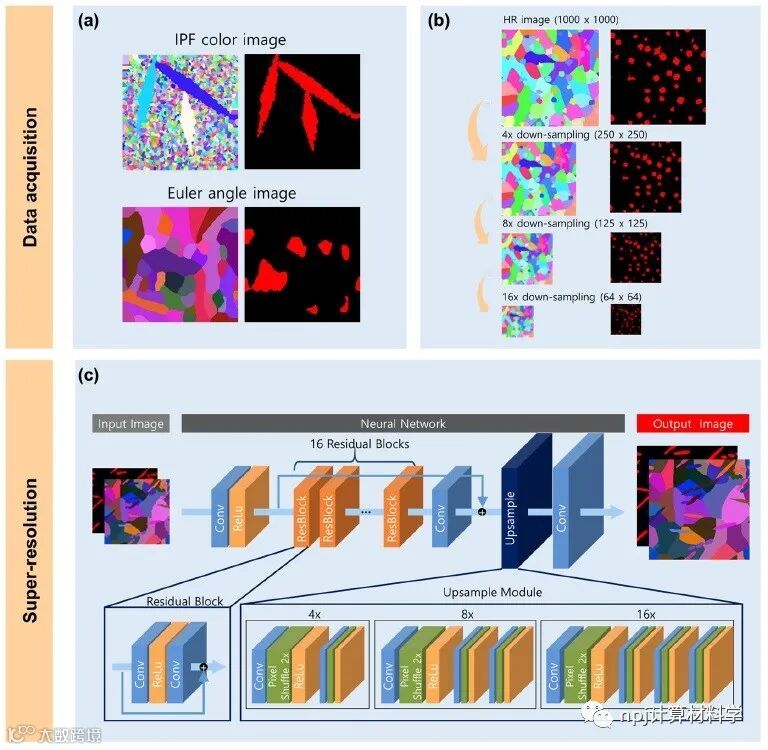
由于数字微观结构(DM)包含大量有价值的数据,从微观结构可视化和表征到基于微观结构的数值建模,数字微观结构的精确表示在现代材料研究中起着至关重要的作用。然而通过实验手段获取数字微观结构可能无法提供足够的分辨率,而这是捕获微观结构中所有相关几何特征所必需的,因此必然造成非彻底的微观结构表征和材料行为的分析。基于深度学习,该研究开发了一种高效超分辨成像深度学习技术, 对低分辨率的微观数据结构进行了超分辨用于提取数字微观结构的所有相关几何特征。
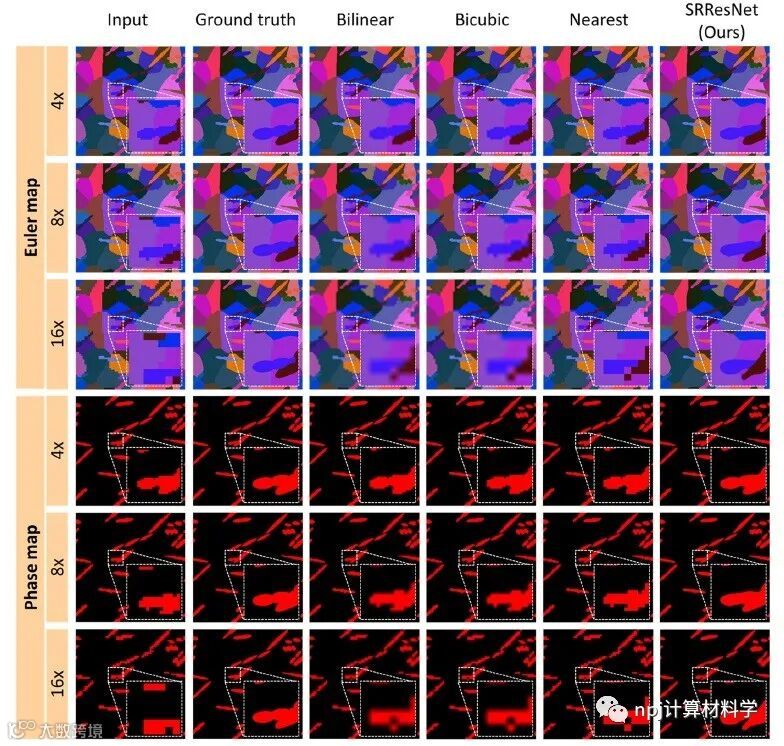
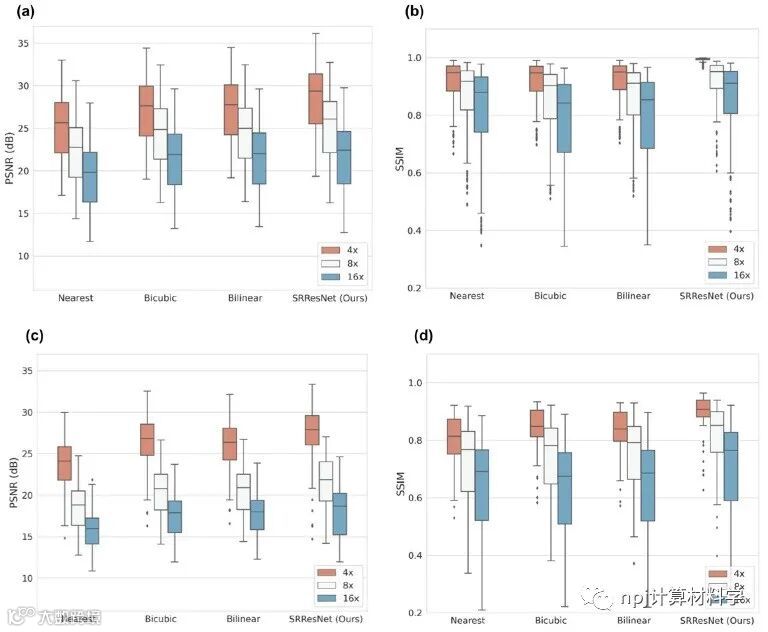
来自韩国浦项科技大学人工智能研究院和机械工程系的Hyoung Seop Kim和Seungchul Lee领导的团队,提出了一种快速、准确的基于深度学习的超分辨技术,称为超分辨残差网络。该技术利用合成的微观结构图像来克服数据不足的问题,进行网络训练,最后用真实和合成的微观结构图像对该技术进行了验证评估。结果表明,基于图像相似性度量、微观结构表征和使用基于微观结构的有限元模拟的力学分析,开发的超分辨技术能够快速获取与HR EBSD图像相当的超分辨EBSD图像。该研究在数字微观结构处理方面提供了一种快速准确的可行方案,对材料研究尤其在金属材料的表征和力学分析方面具有重要的意义。该文近期发布于npj Computational Materials 7: 96 (2021)。
Editorial Summary
Accurate representation of digital microstructure (DM) plays a key role in modern-day materials research as the DM encompasses an extensive amount of data valuable for applications ranging from microstructure visualization and characterization to microstructure-based numerical modeling. However, the acquisition of digital microstructures through experimental methods may not provide sufficient resolution, which is necessary to capture all relevant geometric features in the microstructures, which will inevitably lead to incomplete microstructure characterization and material behavior analysis. Based on deep learning, a research work has developed an efficient super-resolution imaging that super-resolves low-resolution micro-data structures to extract all relevant geometric features of digital micro-structures.
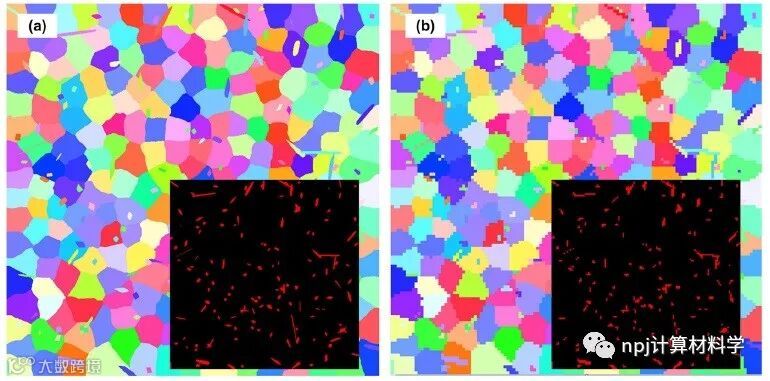
A team led by Hyoung Seop Kim and Seungchul Lee from the Graduate School of Artificial Intelligence and Department of Mechanical Engineering, Pohang University of Science and Technology, Republicof Korea, present a fast and accurate deep learning-based super-resolution technique called SR residual network (SRResNet) to super-resolved LR EBSD image data. This technology uses synthetic microstructure images to overcome the problem of insufficient data, conducts network training, and finally validates and evaluates the technology with actual and synthetic microstructure images.
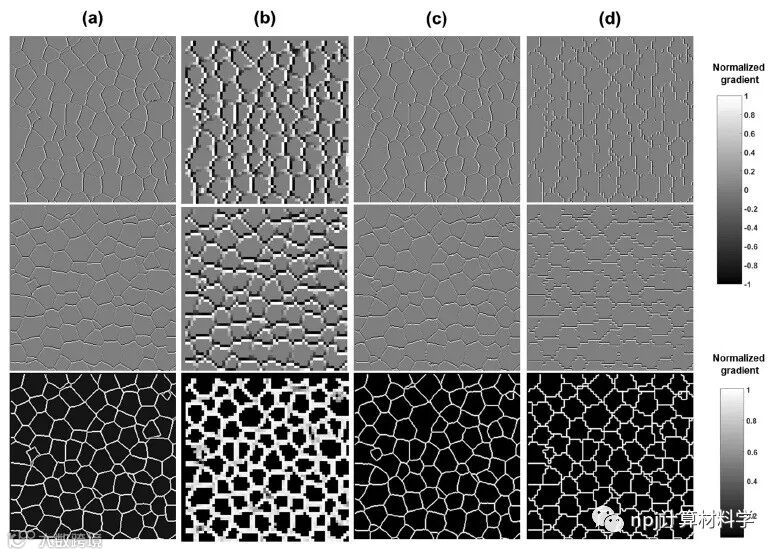
Fig. 5 Normalized gradient map of microstructure images.
The results show that the developed SRRes Net enables rapid acquisition of super-resolved EBSD images that are comparable to HR EBSD images based on image similarity metrics, microstructure characterization, and mechanical analysis using microstructure-based FE simulations. This research provides a fast and accurate feasible solution for digital microstructure processing, which is of great significance to material research, especially in the characterization and mechanical analysis of metal materials. This article was recently published in npj Computational Materials 7,: 96 (2021).
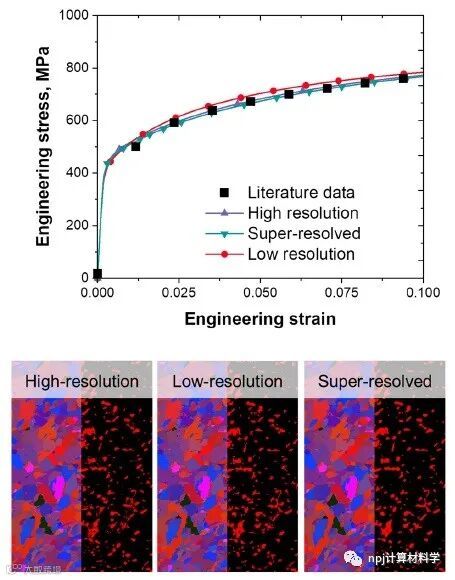
Fig. 6 Experimentally obtained and simulated stress–strain
curves of a high entropy alloy.
原文Abstract及其翻译
Super-resolving material microstructure image via deep learning for microstructure characterization and mechanical behavior analysis (基于深度学习获得超分辨材料微观结构图像用于微观结构表征和力学行为分析)
Abstract The digitized format of microstructures, or digital microstructures, plays a crucial role in modern-day materials research. Unfortunately, the acquisition of digital microstructures through experimental means can be unsuccessful in delivering sufficient resolution that is necessary to capture all relevant geometric features of the microstructures. The resolution-sensitive microstructural features overlooked due to insufficient resolution may limit one’s ability to conduct a thorough microstructure characterization and material behavior analysis such as mechanical analysis based on numerical modeling. Here, a highly efficient super-resolution imaging based on deep learning is developed using a deep super-resolution residual network to super-resolved low-resolution (LR) microstructure data for microstructure characterization and finite element (FE) mechanical analysis. Microstructure characterization and FE model based mechanical analysis using the super-resolved microstructure data not only proved to be as accurate as those based on high-resolution (HR) data but also provided insights on local microstructural features such as grain boundary normal and local stress distribution, which can be only partially considered or entirely disregarded in LR data-based analysis.
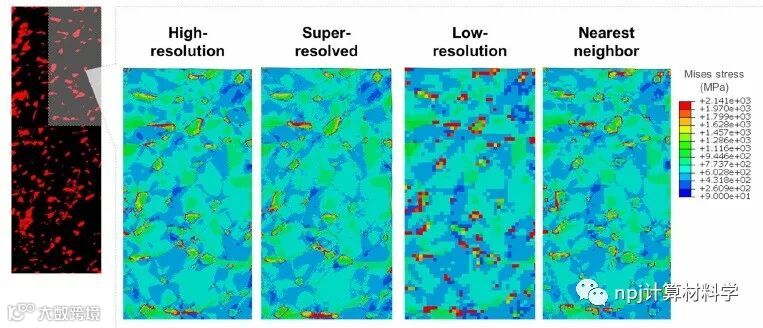
Fig. 7 Simulated Mises stress distribution of the outlined region after 5% tension.
摘要微观结构的数字化格式或数字微观结构在现代材料研究中起着至关重要的作用。不过通过实验手段获取数字微观结构可能无法提供足够的分辨率来捕获微观结构的所有相关几何特征。由于分辨率不足而被忽视的分辨率敏感的微观结构特征可能会限制一个人进行彻底的微观结构表征和材料行为分析的能力,例如基于数值建模的力学分析。本文开发了一种基于深度学习的高效超分辨率成像技术。通过使用深度超分辨率残差网络对低分辨率 (LR) 的用于微观结构表征和有限元 (FE) 力学分析的微观结构数据进行超分辨。使用超分辨的微观结构数据进行的微观结构表征和基于有限元模型的力学分析不仅被证明与基于高分辨率 (HR) 数据的分析一样准确,而且还提供了对局部微观结构特征的洞察,例如晶界正应力和局部应力分布,在基于 LR 数据的分析中只能部分考虑或完全忽略。
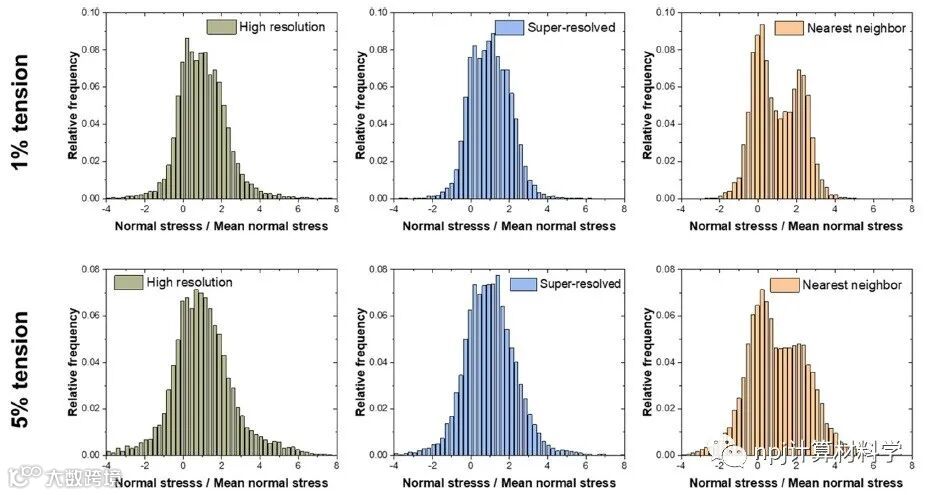
Fig. 8 Distribution of normalized normal stress from the hard phase side of the interface after 1 and 5% tensile elongation.
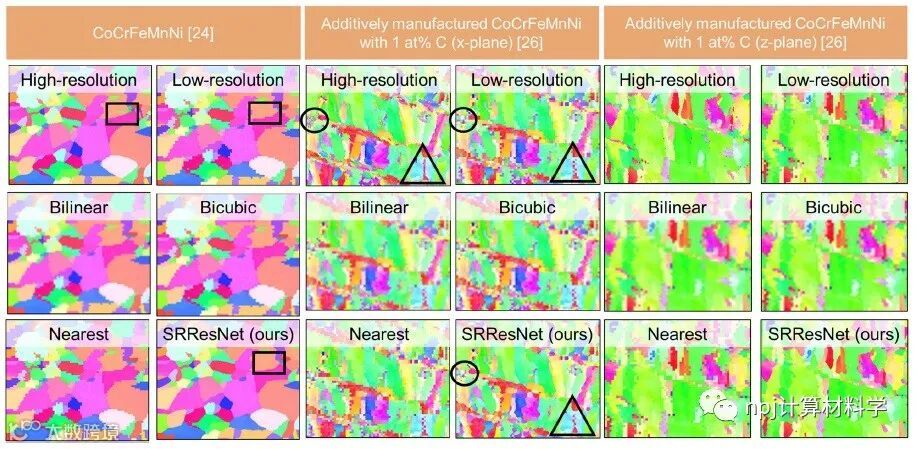
Fig. 9 Experimentally obtained high-resolution, experimentally obtained low-resolution, and super-resolved inverse pole figure (IPF) maps.
微信分享


免责声明:本文旨在传递更多科研资讯及分享,所有其他媒、网来源均注明出处,如涉及版权问题,请作者第一时间后台联系,我们将协调进行处理,所有来稿文责自负,两江仅作分享平台。转载请注明出处,如原创内容转载需授权,请联系下方微信号。