

纤锌矿(wz)体系中铁电性的发现引起了电子学、压电电子学和光子学等领域的广泛关注。此类四面体化合物具有高载流子迁移率、优异的热稳定性、较大的剩余极化及可缩减至单胞厚度的结构可扩展性,并与传统半导体工艺兼容,因而在高频/射频器件、非易失性存储与存算一体架构中展现出巨大的应用潜力。然而,wz材料的应用面临高极化翻转势垒和高矫顽电场的关键挑战。最新研究显示,(0001)晶面薄层wz结构可以形成起伏的二维六角相,从而诱导面内极化翻转。然而,对称性分析表明(0001)晶面的六角相仅允许面外极化。要实现面内铁电,必须进一步破坏旋转对称性和镜面对称性,使正负电荷中心在横向发生分离。因此,面内铁电很可能源自“隐藏”的二维wz极性结构。
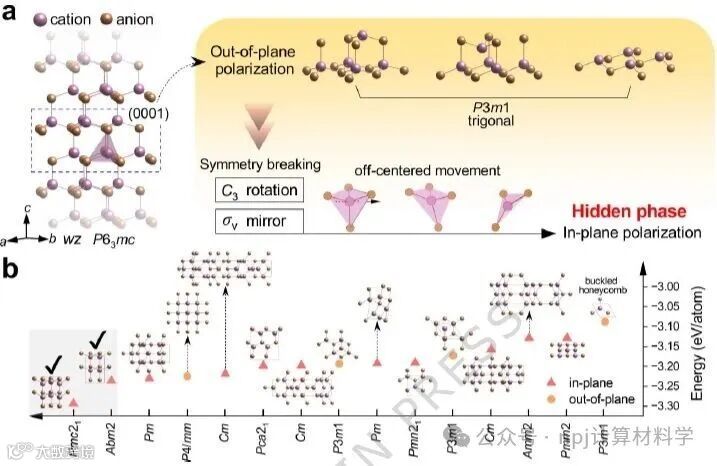
Fig. 1 | Hidden in-plane FE phases in wz monolayers.
针对上述问题,来自深圳大学射频异质异构集成全国重点实验室的黄浦副教授等提出了一条适用于wz(0001)晶面实现面内铁电极化的对称性破缺判据,并据此发现了两种全新的铁电相——Abm2与Pmc21。
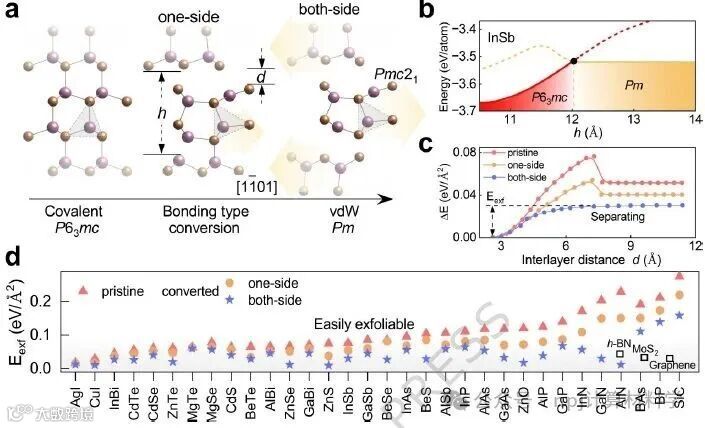
Fig. 2 | Exfoliatingwz monolayers from bonding converted crystallographic plane.
他们基于优化的第一性原理分子动力学方法,对晶面原子构型进行细致搜索,最终识别出15种二维原子相,包括11种铁电相和4种中心对称相。值得注意的是,新发现的Abm2与Pmc21不仅处于能量最低状态,还可通过(0001)晶面的原子滑移实现二维结构剥离,其剥离能最低可达0.012 eV/Å2,与经典范德华材料相当。
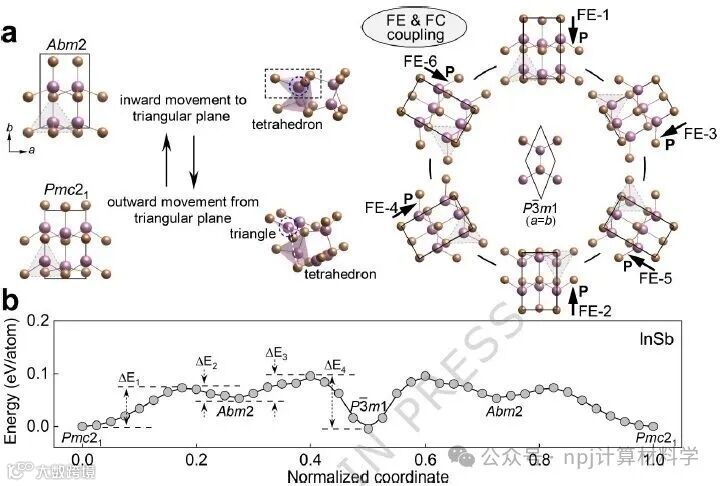
Fig. 3 | Multiferroic phase transition in wz monolayers.
这些二维wz材料不仅呈现出多种铁性序,还显示出优异的电子与自旋特性,包括高达540 meV的巨大自旋劈裂、半金属与半导体之间的可逆转变,以及覆盖0–4.57 eV的宽带隙范围。更重要的是,铁电相变可经由过渡态实现精准调控,将势垒降低至3 meV/atom、矫顽电场降至0.6–1.0 MV/cm,并实现对带边100%自旋极化的全电学操控。
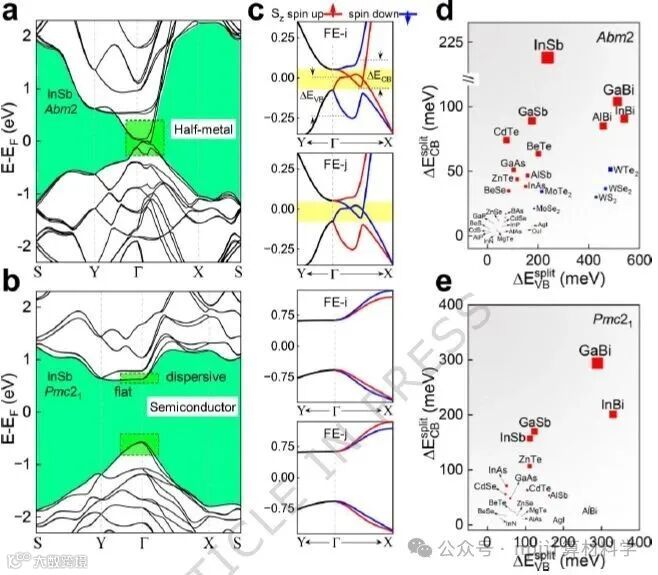
Fig. 4 | FE phase-interlock giant spin splitting.
该研究不仅揭示了wz体系中面内铁电的微观物理机制,也展示了二维wz材料在铁电与多铁相变器件领域巨大的应用潜力。相关研究成果近期发表于npj Computational Materials(2025,DOI: 10.1038/s41524-025-01884-z)。
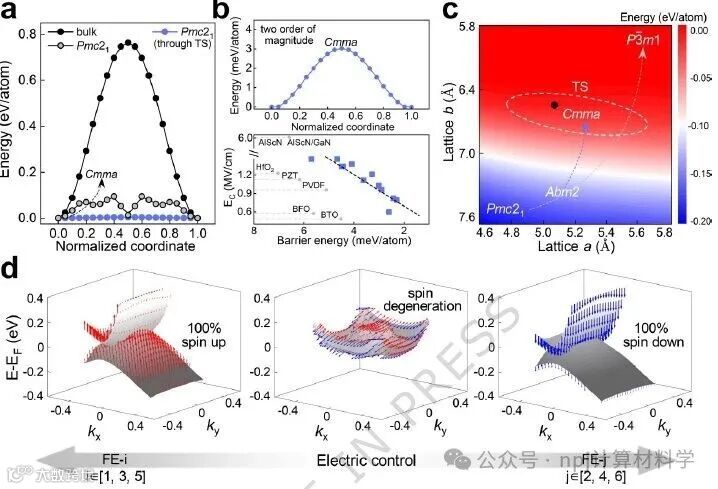
Fig. 5 | Electric control of 100% spin polarization.
Editorial Summary
Hidden two-dimensional ferroelectric phases in wurtzite: Fully electric control of 100% spin polarization
The discovery of ferroelectricity in wurtzite (wz) systems has attracted considerable interest across electronics, piezoelectronics and photonics. These tetrahedrally coordinated compounds offer high carrier mobility, excellent thermal stability, large remanent polarizations and scalability down to a single-unit-cell thickness, while remaining compatible with conventional semiconductor processing. These attributes position wz compounds as promising candidates for high/radio-frequency devices, non-volatile memories and logic-in-memory architectures. However, their practical implementation is hindered by the intrinsically large polarization-switching barriers and high coercive electric fields.
Recent studies have suggested that atomic thick wz structures on the (0001) plane may form buckled two-dimensional (2D) hexagonal phases that enable in-plane polarization switching. Nevertheless, symmetry analysis indicates that such hexagonal configurations on the (0001) plane only permit out-of-plane polarization. Achieving genuine in-plane ferroelectricity therefore requires further breaking of rotational and mirror symmetries to allow lateral separation of positive and negative charge centers. This implies that stable in-plane ferroelectricity is likely rooted in previously unidentified 2D hidden polar wz phases. Addressing this challenge, Associate Prof. Pu Huang and colleagues at the State Key Laboratory of Radio Frequency Heterogeneous Integration, Shenzhen University, established a symmetry-breaking criterion for inducing in-plane ferroelectric polarization on the wz(0001) plane, and accordingly identified two previously unknown ferroelectric phases—Abm2 and Pmc21. Using a refined first-principles molecular-dynamics search of atomic configurations, they identified fifteen 2D wz phases, comprising eleven ferroelectric and four centrosymmetric structures. Notably, the newly revealed Abm2 and Pmc21 phases not only correspond to the lowest-energy states, but also allow exfoliation via atomic sliding along the (0001) plane, yielding exfoliation energies as low as 0.012, comparable to those of typical van der Waals materials. These 2D wz phases exhibit multiferroic order and remarkable physical properties, including giant spin splittings up to 540 meV, reversible transitions between half-metallic and semiconducting states, and wide band gaps spanning 0–4.57 eV. Moreover, their ferroelectric transitions can be finely tuned through a transient intermediate state, reducing the switching barrier to ~3 meV/atom and the coercive field to ~0.6–1.0 MV/cm, enabling fully electric control of 100% spin polarization at the band edges.
These findings elucidate the microscopic mechanism underlying in-plane ferroelectricity in wz systems and highlight the substantial potential of 2D wz materials for future ferroelectric and multiferroic phase-transition devices. The work was recently published in npj Computational Materials (2025, DOI: 10.1038/s41524-025-01884-z).
原文Abstract及其翻译
Giant spin splitting and in-plane multiferroicity in wurtzite monolayer hidden phases (纤锌矿单层隐藏相中巨大的自旋劈裂与面内多铁性)
Pu Huang, Songyu Chen, Jie Yang, Yuxiang Xiao, Yongle Zhong, Ping Wang & Xinqiang Wang
Abstract Achieving polarization switching in wurtzite (wz) crystals has long been hindered by substantial energy barriers and high coercive electric fields. Here, we demonstrate that an in-plane ferroelectric (FE) switch can be triggered within the (0001) crystallographic plane, through the discovery of hidden and monolayer phases. The structural self-reconstruction, induced by lattice expansion, converts interfacial covalent bonds into van der Waals interactions, enabling facile exfoliation of wzmonolayers. These monolayers exhibit multiferroic order and diverse electronic functionalities, including giant spin splittings (~540 meV), transition between half-metal and semiconductor, and wide band gaps (0–4.57 eV). Importantly, the FE transition can be finely tuned via a transient state, leading to significant reductions in the barrier energy (<~3 meV/atom) and coercive field (~0.6–1.0 MV/cm), and yielding fully electric control of 100% spin polarization. Our study provides in-depth insights into the in-plane FE mechanism in wz systems, opening new avenues for the design and discovery of wz-based FE devices, as well as the rich physics in tetrahedral semiconductors.
摘要长期以来,纤锌矿(wz)晶体的极化翻转一直受到巨大能垒和高矫顽电场的限制。本文揭示了在(0001)晶面内触发面内铁电(FE)翻转的机制,这源于新发现的新型与单层结构相。由于晶格膨胀引发的结构自重构,界面的共价键可以被转化为范德华相互作用,使得这些wz单层能够被剥离。这些单层wz材料呈现出多种铁性序与丰富的电子特性,包括巨大的自旋劈裂(~ 540 meV)、半金属与半导体之间的可逆转变,以及0–4.57 eV 的宽带隙范围。更重要的是,FE相变可经由过渡态实现精细调控,将势垒降低至<~3 meV/atom、矫顽电场降至~0.6–1.0 MV/cm,并实现对100%自旋极化的全电学操控。本研究揭示了wz体系中面内铁电性的物理机制,为基于wz结构的铁电器件设计开辟了新的方向,并拓展了对四面体半导体丰富物理性质的理解。