

响应面优化纤维素酶法提取桂花多糖工艺及其抗氧活性研究

目的:天然产物多糖具有多种生物活性、毒副作用小。传统提取方法多糖得率较低,且有机溶剂用量大,酶法提取能一定程度上克服以上不足,且条件温和,不会破坏多糖结构,保持其活性。本研究优化桂花多糖的纤维素酶法提取工艺,并评价其抗氧化活性。
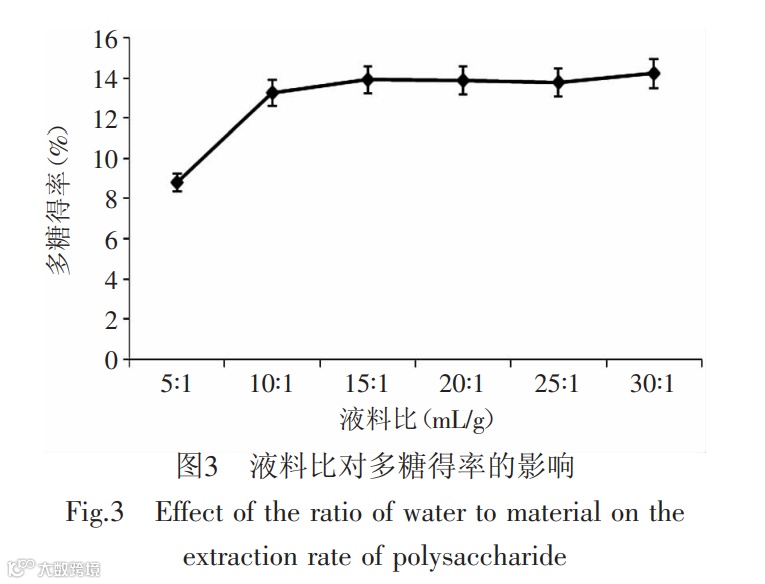
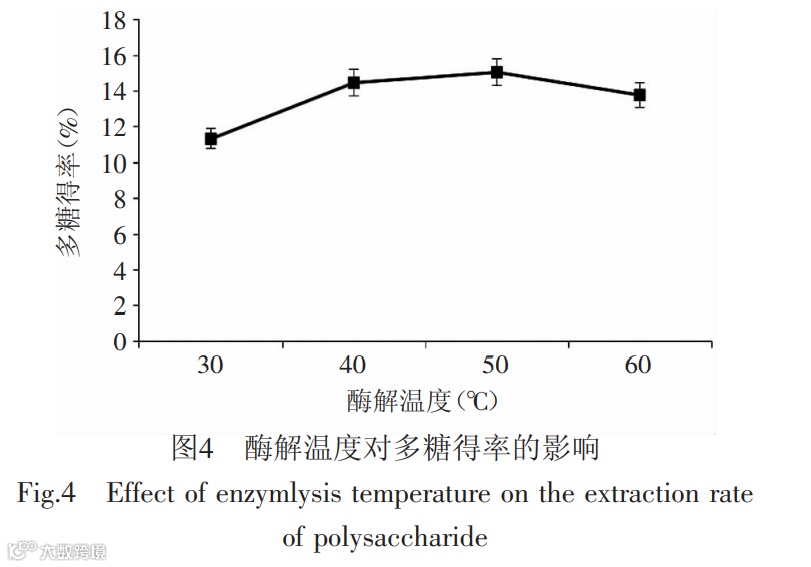
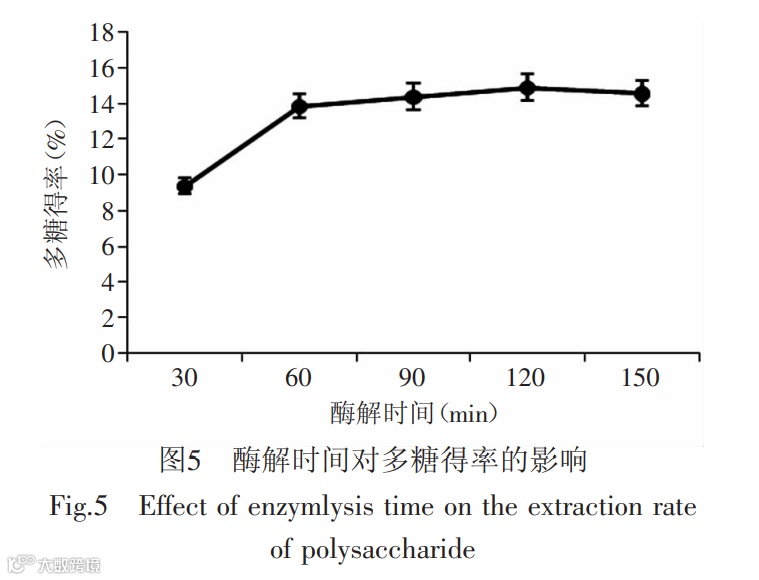
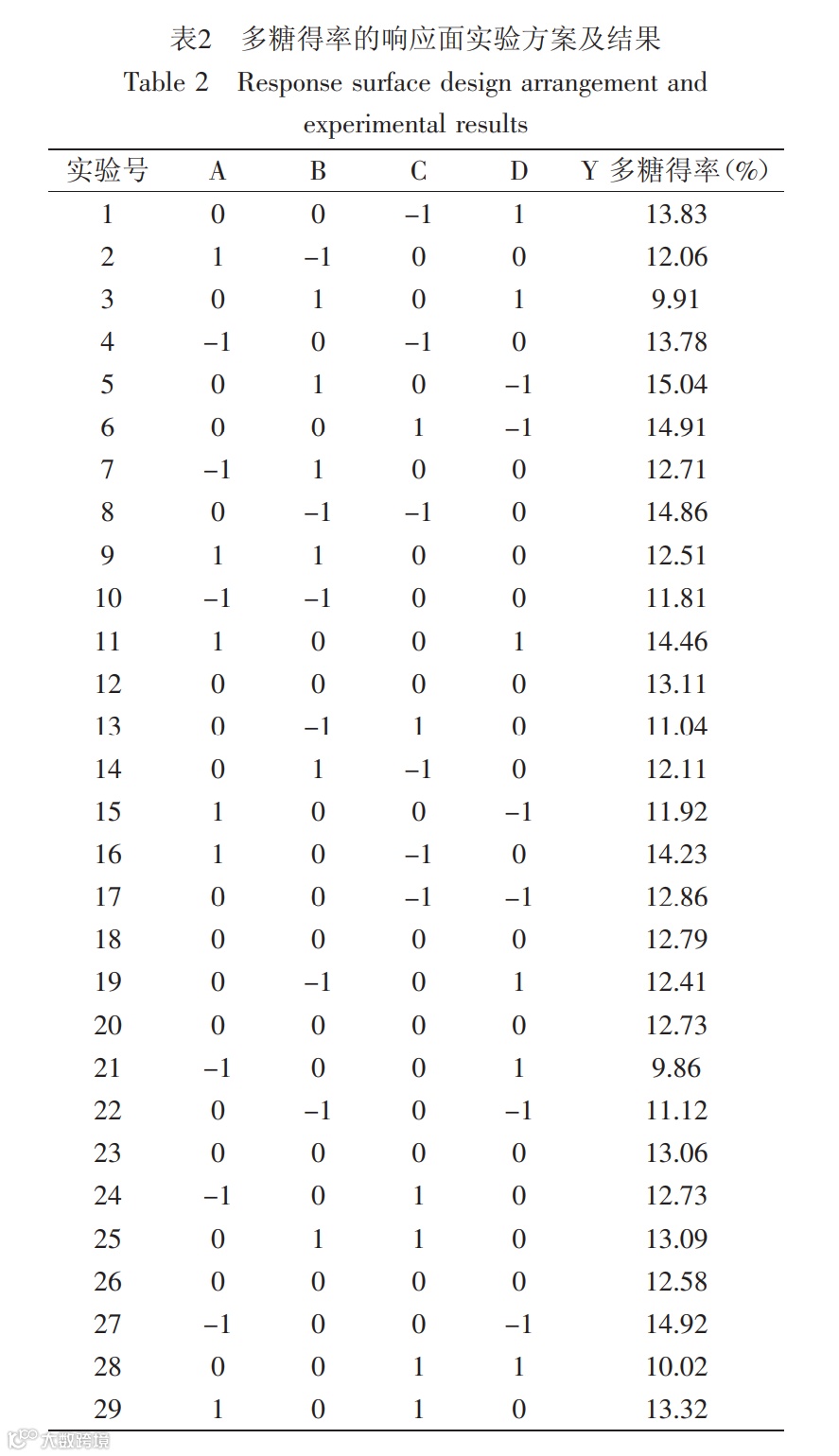
方法:以桂花多糖得率作为考察指标,首先研究纤维素酶、中性蛋白酶和果胶酶对多糖得率的影响,并与热水浸提法比较。通过单因素试验考察液料比(5、10、15、20、25、30 mL/g)、酶添加量(2、5、8、11、14 mg/mL)、酶解时间(30、60、90、120、150 min)和酶解温度(30、40、50、60 ℃)对桂花多糖得率的影响。在单因素试验基础上,根据Box-Behnken设计,进行四因素三水平的响应面分析试验,以多糖得率作为响应值,以液料比(8、10、12 mL/g)、酶解温度(45、50、55 ℃)、酶解时间(40、60、80 min)、酶添加量(6、8、10 mg/mL)为试验因素,利用Design Expert 8.06软件对数据进行分析,建立数学模型,筛选最佳提取工艺条件。多糖测定采用苯酚-硫酸法,还原糖测定采用3,5-二硝基水杨酸法。采用DPPH和O2-·自由基清除能力体系评价桂花多糖的体外抗氧化活性。
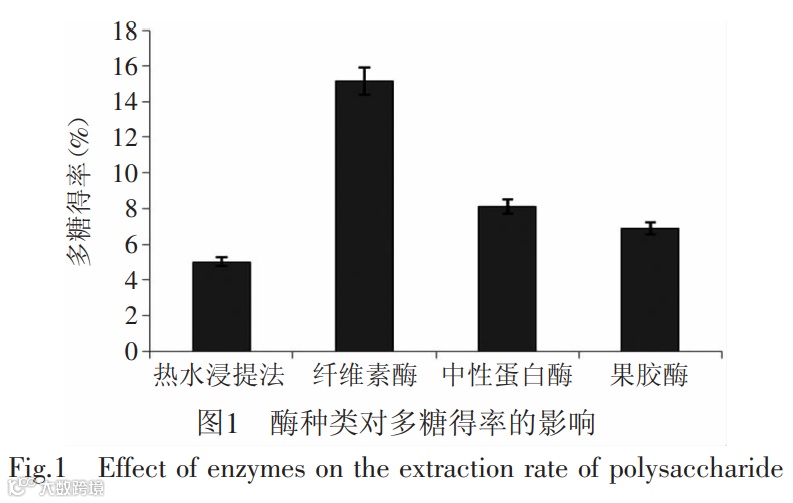
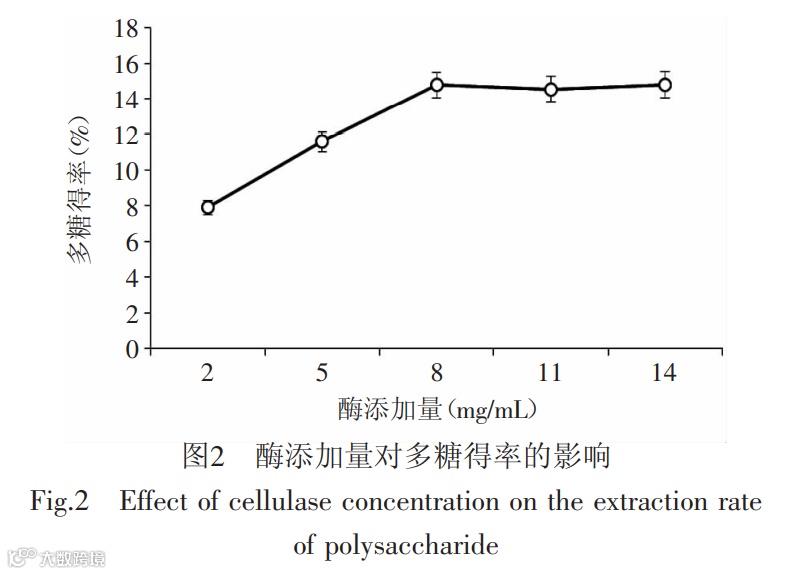
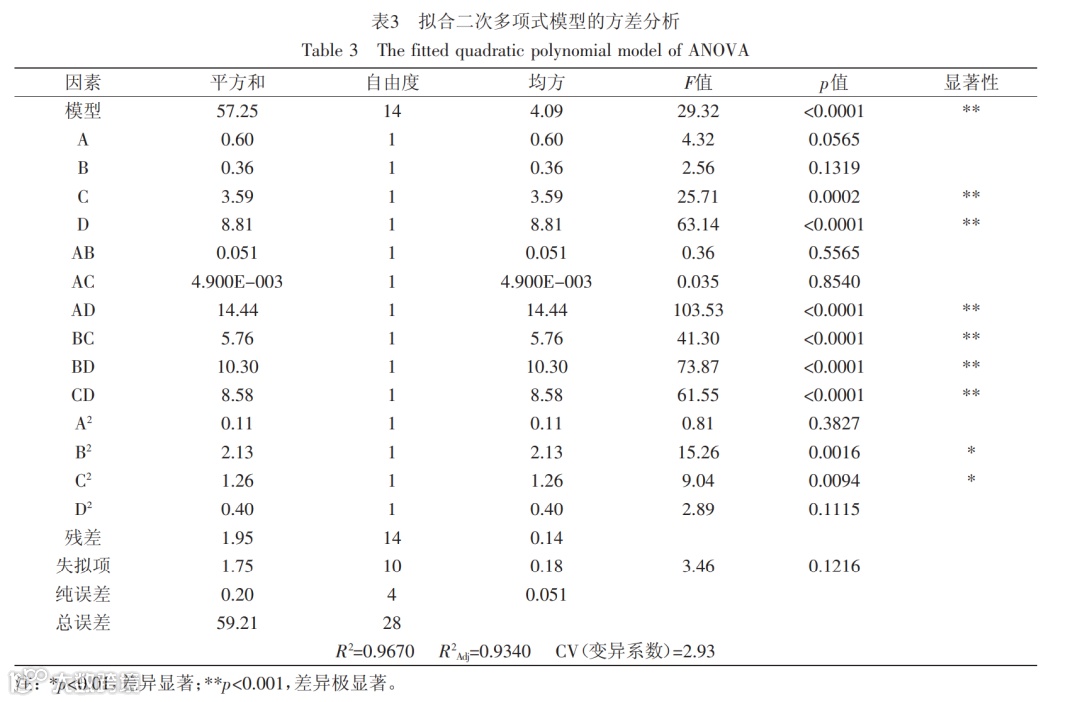
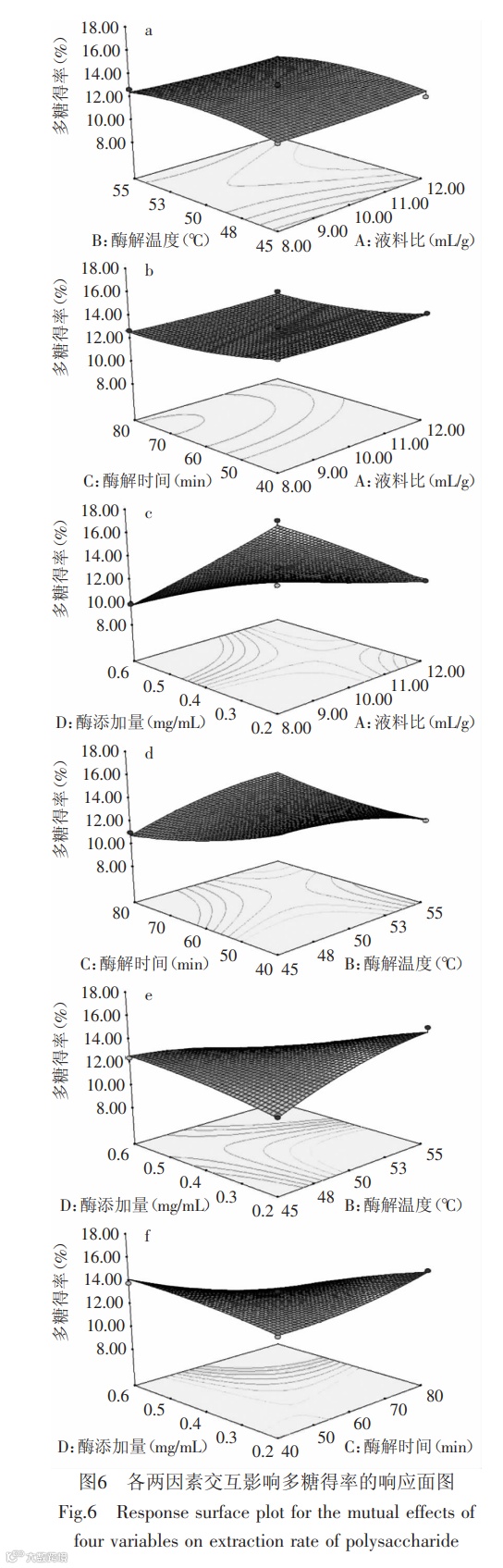
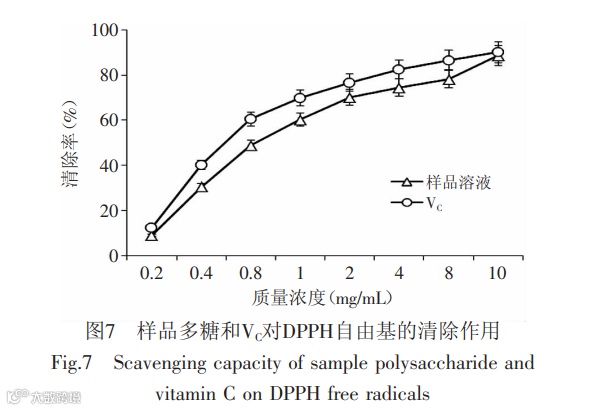
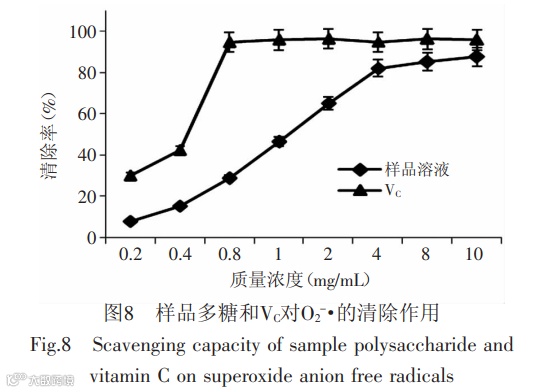
结果:单因素实验结果表明,纤维素酶解提取桂花多糖得率15.12%是热水浸提法的3.02倍,且大于中性蛋白酶和果胶酶的多糖得率;酶添加量优化为8 mg/mL,液料比选择10:1(mL/g),最佳酶解温度为50 ℃,最佳酶解时间选择60 min,在此条件下均能获得较高的多糖得率。回归方程模型拟合程度好,实验误差小,故该模型成立,可用此模型对酶解提取桂花多糖的工艺进行分析及预测。通过二次回归模型响应面分析,影响桂花多糖得率的因素按主次顺序排列为:纤维素酶添加量(D)>酶解时间(C)>液料比(A)>酶解温度(B),其中C、D达到极显著水平,考察因素间交互作用,AD、BC、BD、CD存在交互作用且达到极显著水平,对桂花多糖得率的影响显著,AB、AC间交互作用对多糖得率的影响不显著。确定纤维素酶解桂花多糖最佳工艺条件为纤维素酶添加量6.0 mg/mL、液料比8:1(mL/g)、酶解温度55 ℃、酶解时间80 min,在此条件下桂花多糖得率为18.43%,模型方程理论预测值为19.05%,两者相对误差为3.25%,说明运用响应面法优化得到的模型参数准确可靠,能真实地反映各因素对桂花多糖得率的影响。桂花多糖对DPPH自由基和O2-·具有一定的清除作用,并与质量浓度呈正相关关系,当质量浓度达到10mg/mL 时,对DPPH自由基的清除率为88.76%,对O2-·的清除率为87.63%,对DPPH和O2-·自由基的半数抑制浓度分别为0.846、1.256 mg/mL,表明桂花多糖具有较强的体外抗氧化活性,但与维生素C比较,桂花多糖清除两种自由基的能力较弱。
结论:采用响应面法优化得到了桂花多糖的最佳纤维素酶法提取工艺,该工艺方便可行,得到的桂花多糖具有较强的体外抗氧化活性,为桂花多糖的进一步开发提供参考依据。
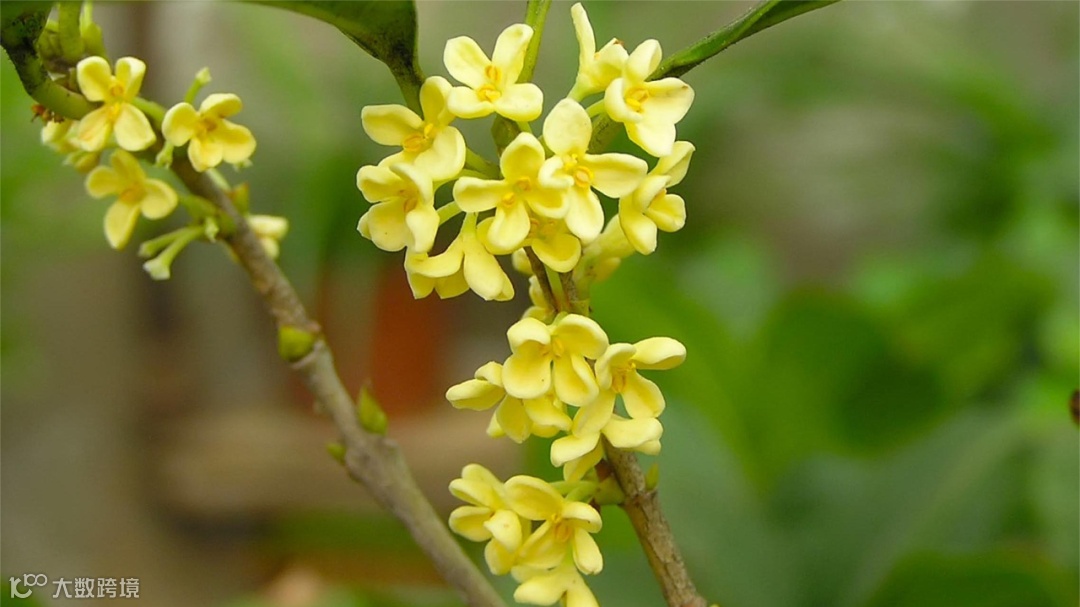
图片来源于图司机
Objective: Natural product polysaccharides have various biological activities and small toxic side effects. The traditional extraction method has a low polysaccharide yield and a large amount of organic solvent. The enzymatic extraction can overcome the above shortcomings to a certain extent, and the conditions are mild, which will not destroy the polysaccharide structure and maintain its activity. In this study, the cellulase extraction technology of polysaccharide from Osmanthus fragrans was optimized and its antioxidant activity was evaluated.
Methods: The polysaccharide yield was used as the research index. The effects of cellulase, neutral protease and pectinase on the yield of polysaccharide were first studied and compared with the hot water extraction. The effects of liquid material ratio (5, 10, 15, 20, 25, 30 mL/g), enzyme addition amount (2, 5, 8, 11, 14 mg/mL), enzymatic hydrolysis time (30, 60, 90, 120, 150min) and enzymatic hydrolysis temperature (30, 40, 50, 60 °C) on the Osmanthus polysaccharide yield rate were investigated respectively by single factor test. Based on the single factor test results, a four-factor and three-level response surface analysis test was performed according to the Box-Behnken design. The polysaccharides extraction rate was considered as response value. The solution temperature (45, 50, 55 °C), enzymolysis time (40, 60, 80 min), and enzyme addition amount (6, 8, 10 mg/mL) were the experimental factors. The data was analyzed by Design Expert 8.06 software, and the mathematic model was established to screen the optimal extraction process. The phenol-sulfuric acid method was used for the determination of polysaccharide, and the 3,5-dinitrosalicylic acid method was used for the determination of reducing sugar. The antioxidant activity of osmanthus polysaccharide in vitro was evaluated by DPPH and O2-· free radical scavenging ability system.
Results: The results of single factor test showed that the yield of osmanthus polysaccharide extracted by cellulose was 15.12%, which was 3.02 times that of hot water extraction, and was greater than that of neutral protease or pectinase. The enzyme addition amount was optimized to be 8 mg/mL, the ratio of liquid to material was 10:1 (mL/g), the optimal enzymatic hydrolysis temperature was 50 °C, and the optimal enzymatic hydrolysis duration was 60 min. The higher polysaccharide yield were obtained respectively under the above conditions. The regression equation model had good fitting degree and small experimental error, so this model could be used to analyze and predict the cellulase extraction technology of polysaccharide from Osmanthus fragrans. Through the response surface analysis of the quadratic regression model, polysaccharide yield was most significantly affected by cellulase concentration (D), followed by extraction time (C), ratio of liquid to material (A) and the enzymatic hydrolysis temperature (B), in which C and D reached a very significant level. The interaction between factors was also investigated. AD, BC, BD, and CD had an interaction and reached a very significant level, which had a significant impact on the yield of osmanthus polysaccharide. The effects of interaction between AB and AC on the polysaccharide yield was not significant. The optimum process conditions for the enzymatic hydrolysis of osmanthus polysaccharides were as follows: The cellulase addition amount was 6.0 mg/mL, the ratio of liquid to material was 8:1 (mL/g), the enzymatic hydrolysis temperature was 55 °C, and the enzymatic hydrolysis time was 80 min. Under the optimal conditions, the predicted extraction rate by mathematical model was 19.05%, while the experimental extraction rate was 18.43%, with a difference of 3.25%, indicating that the model parameters optimized by the response surface method were accurate and reliable, and could truly reflect the influence of various factors on the yield of Osmanthus polysaccharide. Osmanthus polysaccharide had a certain scavenging effect on DPPH free radicals and O2-·, and was positively correlated with the mass concentration. When the mass concentration reached 10 mg/mL, the scavenging rate of DPPH free radicals was 88.76%, and the scavenging rate of O2-· was 87.63%. The median inhibitory concentrations of Osmanthus polysaccharide on DPPH and O2-· free radicals were 0.846 and 1.256 mg/mL, respectively, indicating that osmanthus polysaccharide had strong antioxidant activity in vitro, but its ability of scavenging free radicals was weaker than those of vitamin C.
Conclusion: The optimum cellulose enzymatic extraction technology of the polysaccharides from Osmanthus fragrans by RSM was convenient and feasible, and the extracted polysaccharides had good antioxidant activity, which provided a reference for the further development of Osmanthus fragrans polysaccharides.
《食品工业科技》特邀主编专栏征稿
《食品工业科技》青年编委专栏征稿:杂粮与主粮复配的营养学基础 ☚

版权声明
《食品工业科技》具有以上论文在全世界范围内的复制权、发行权、翻译权、汇编权、广播权、表演权、信息网络传播权、转许可权及以上权利的邻接权,且作者已授权期刊同论文著作权保护期。如需转载,可联系《食品工业科技》编辑部010-87244116,或直接在文末撰写转载来源。