

EI收录,
入选中国科技期刊卓越行动计划

摘要
为提高铁皮石斛的综合利用率,建立一种绿色高效的铁皮石斛多糖提取方法。本研究以铁皮石斛多糖提取率为指标,通过单因素考察了低共熔溶剂浓度、提取温度及液料比对铁皮石斛多糖提取率的影响,采用响应面设计优化铁皮石斛多糖的提取工艺,并对纯化后的多糖进行结构分析。结果表明:响应面优化后得到最佳工艺为低共熔溶剂(deep eutectic solvent,DES)浓度40%、提取温度80 ℃、液料比110:1(mL/g),在此条件下实际提取率为33.2%±0.28%,与预测值33.5%接近,多糖的纯度为56.95%±1.2%。多糖经阴离子交换柱及葡聚糖凝胶柱纯化后,纯度可达90.8%,其单糖主要由葡萄糖和甘露糖构成,质量比约为43:37,此外还含有少量的木糖、鼠李糖、核糖等,结构中同时含有α糖苷键和β糖苷键。本研究提供了一种低共熔溶剂提取铁皮石斛多糖的高效绿色提取方案,具有多糖提取率高及绿色的特点,为后续铁皮石斛多糖的开发提供了借鉴。
Abstract
In order to increase the comprehensive utilization of Dendrobium officinale, a green and efficient method for extracting of Dendrobium officinale polysaccharides (DOPs) was established. This research used the extraction rate of DOPs as the indicator for the effects of three factors. These included the concentration of deep eutectic solvent (DES), extraction temperature, and liquid-to-material ratio on the efficacy of polysaccharides from Dendrobium officinale, using single-factor tests. Response surface methodology (RSM) was employed to optimize the best extraction process of DOPs and the structure of the purified polysaccharides was analyzed. The experimental results showed that the optimal process obtained after RSM was a 40% concentration of DES, an extraction temperature of 80 ℃, and a liquid-to-material ratio of 110:1 (mL/g). Under these conditions, the actual extraction rate was 33.2%±0.28%, which was close to the predicted value of 33.5%, and the purity of polysaccharide was 56.95%±1.2%. After purification by anion-exchange column and glucose gel column, the purity could reach 90.8%, and its monosaccharides were mainly composed of glucose and mannose, with a mass ratio of 43:37. It also contained a small amount of xylose, rhamnose, and ribose, and the structure contained α-glycosidic and β-glycosidic bonds. The present research provides an efficient and green extraction scheme for extracting DOPS with DES, which has the characteristics of high polysaccharide extraction rate and greenness, providing a reference for the subsequent development of DOPs.

结果与分析

2.1 单因素实验
2.1.1 DES浓度对铁皮石斛多糖提取率的影响
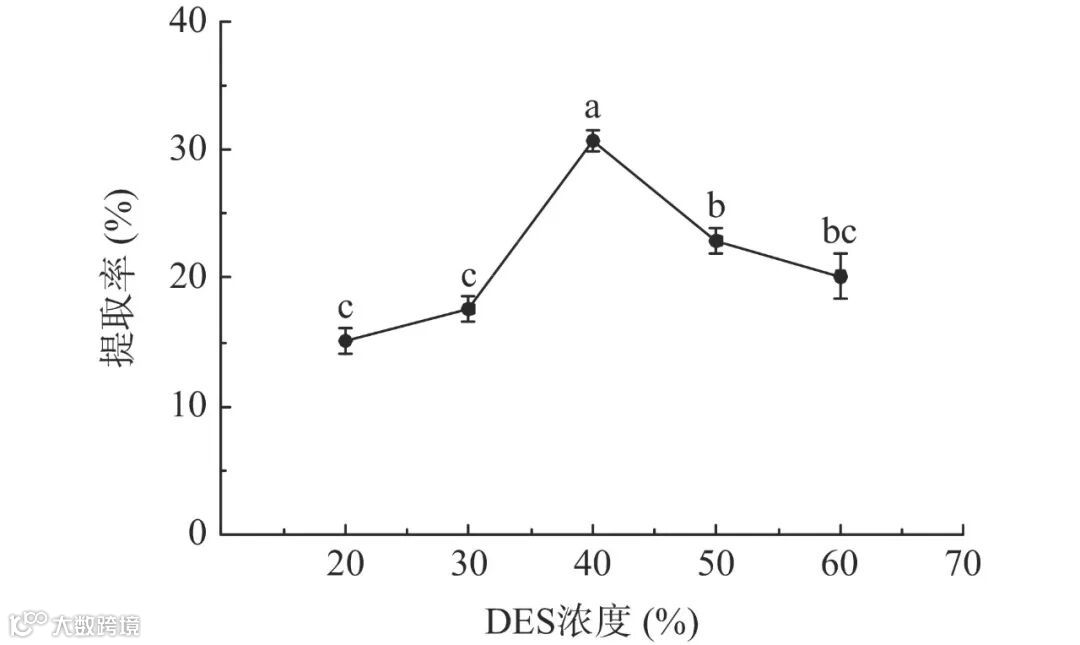
图 1 DES浓度对铁皮石斛多糖提取率的影响
Figure 1. Effect of DES concentration on the extraction rate of Dendrobium officinale polysaccharides
注:不同字母表示差异显著(P<0.05),图2、图3同。
2.1.2 温度对铁皮石斛多糖提取率的影响
温度变化对铁皮石斛多糖提取率的影响如图2所示。由图2可知,铁皮石斛多糖的提取率变化呈缓慢上升后下降的趋势,当温度从50 ℃升高到80 ℃时,多糖提取率最高,从14.2%升高到23.4%,是因为随着温度的升高,增加了物质的热运动,提高了多糖分子扩散效率,使多糖在整个体系中的溶解更迅速。当温度继续提升到90 ℃,多糖的提取率反而略有下降。一方面,可能是因温度继续升高时,铁皮石斛多糖中可能存在热敏性物质,在温度升高条件下会使得这些成分易变性降解,另一方面,较高温度导致蒸发,影响了溶剂平衡,从而降低了提取率。因此,选取提取温度为70、80、90 ℃做响应面试验以确定最佳提取温度。
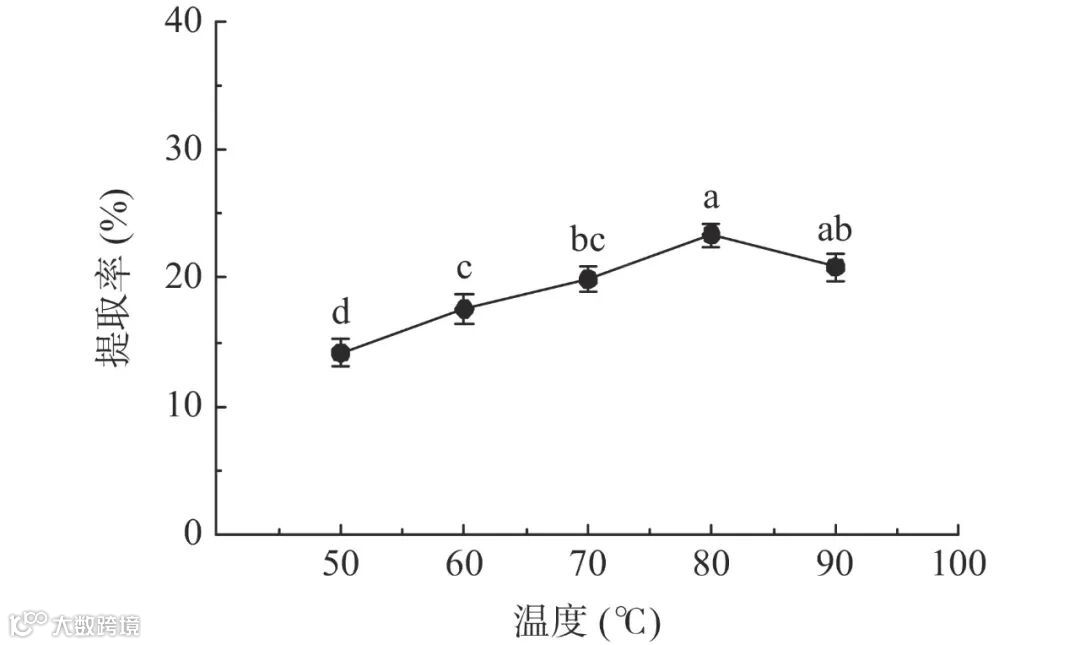
图 2 温度对铁皮石斛多糖提取率的影响
Figure 2. Effect of temperature on the extraction rate of Dendrobium officinale polysaccharides
2.1.3 液料比对铁皮石斛多糖提取率的影响
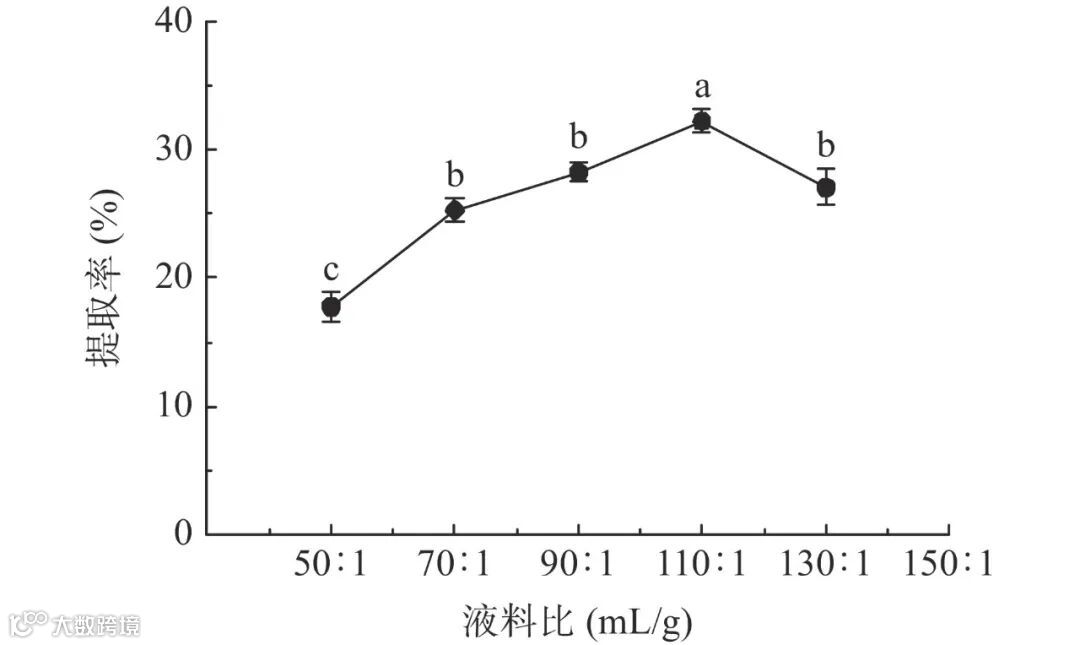
图 3 液料比对铁皮石斛多糖提取率的影响
Figure 3. Effect of liquid-to-material ratio on the extraction rate of Dendrobium officinale polysaccharides
2.2 响应面试验
2.2.1 响应面试验设计与结果
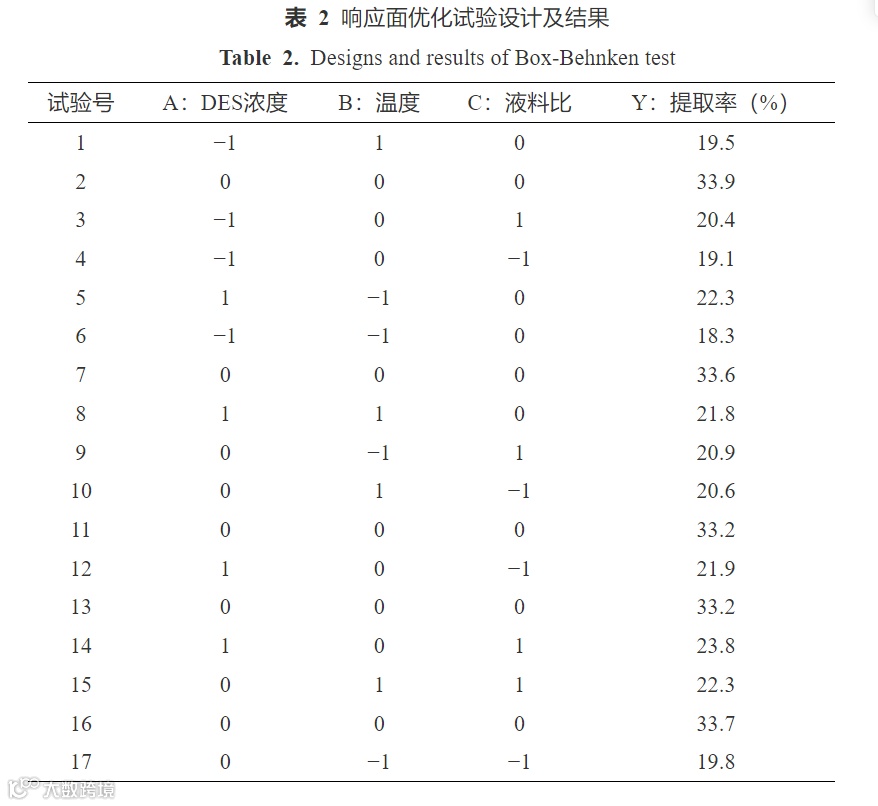
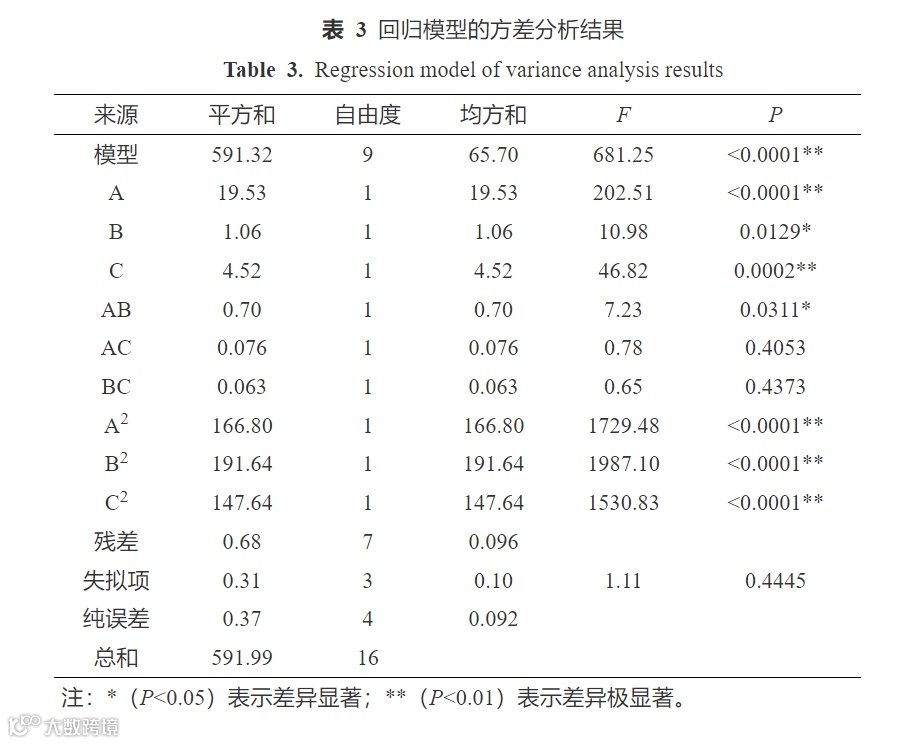
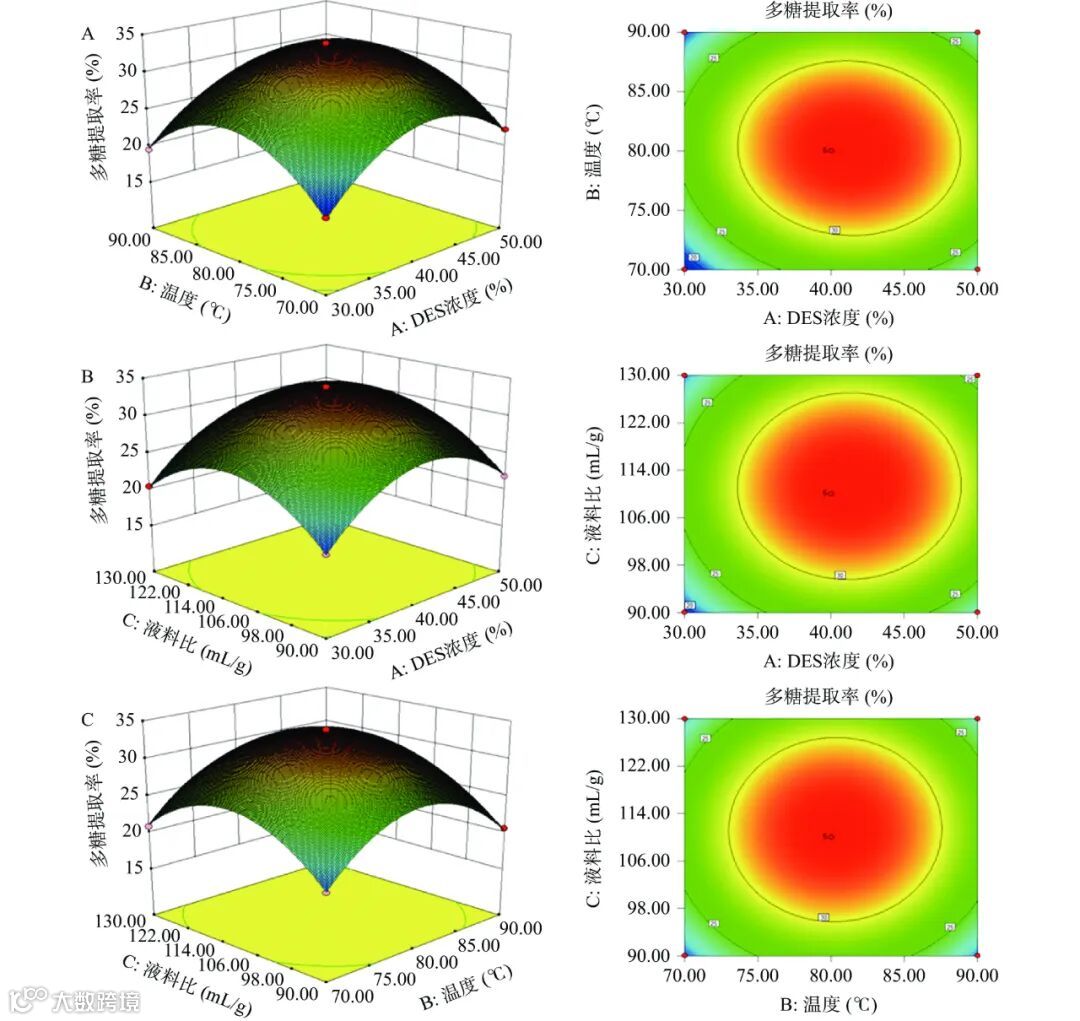
图 4 各因素交互作用对铁皮石斛多糖提取率的影响
Figure 4. Effect of interaction of various factors on the extraction rate of Dendrobium officinale polysaccharides
2.2.4 响应面优化与验证实验
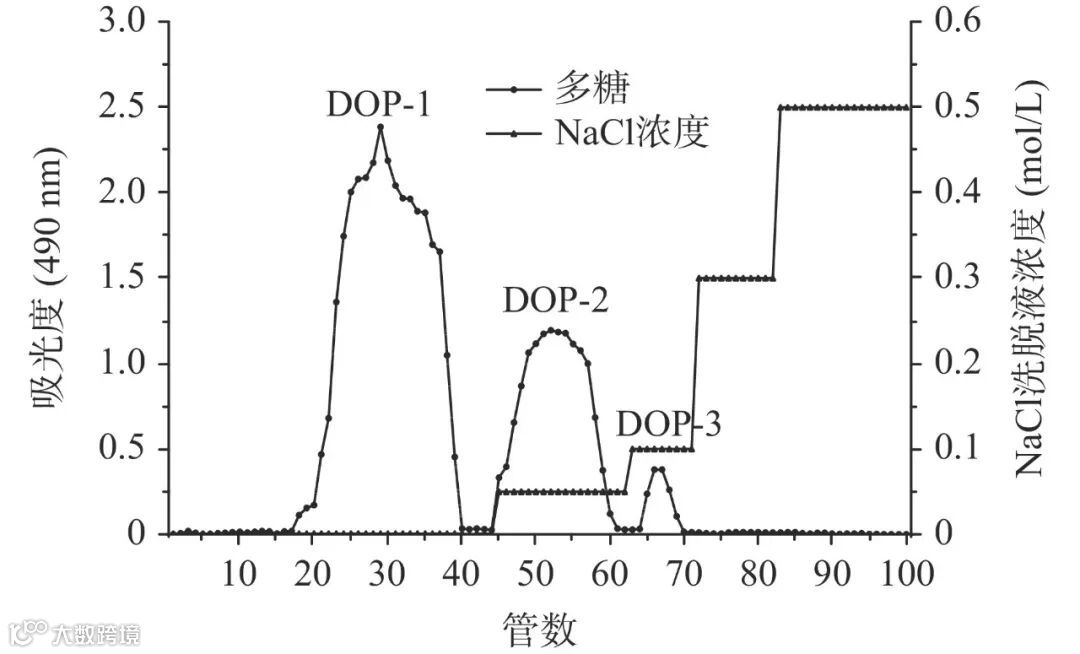
图 5 铁皮石斛粗多糖阴离子交换柱洗脱曲线
Figure 5. Anion exchange column elution curve of crude Dendrobium officinale polysaccharides
2.4 葡聚糖凝胶柱纯化
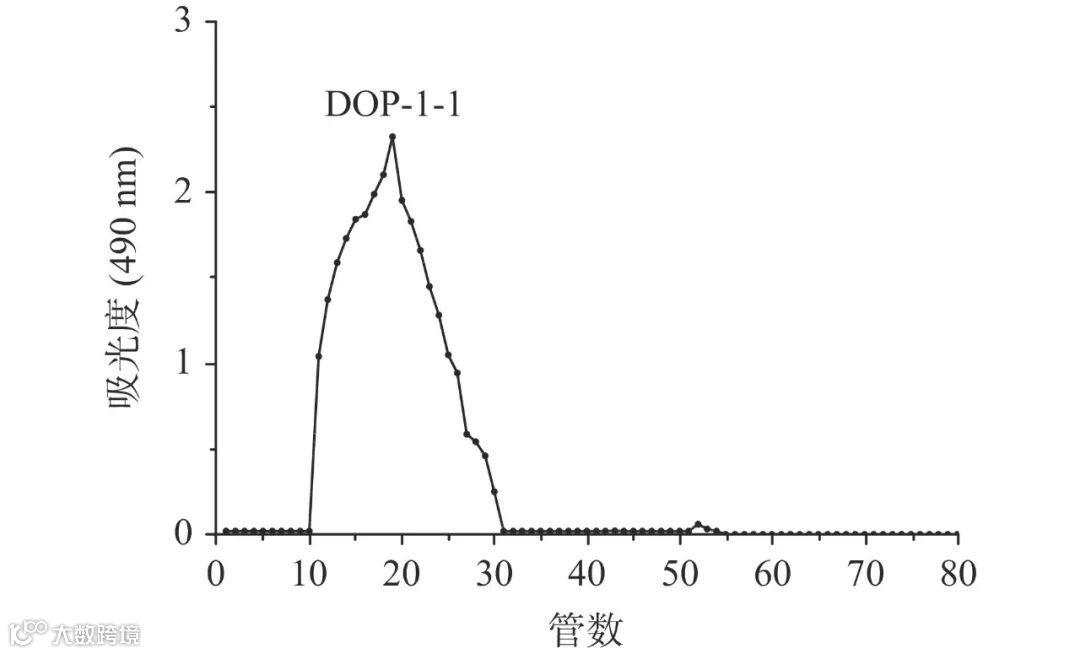
图 6 铁皮石斛多糖的葡聚糖凝胶柱洗脱曲线
Figure 6. Dextran gel column elution profile of Dendrobium officinale polysaccharides
2.5 铁皮石斛的单糖组成分析
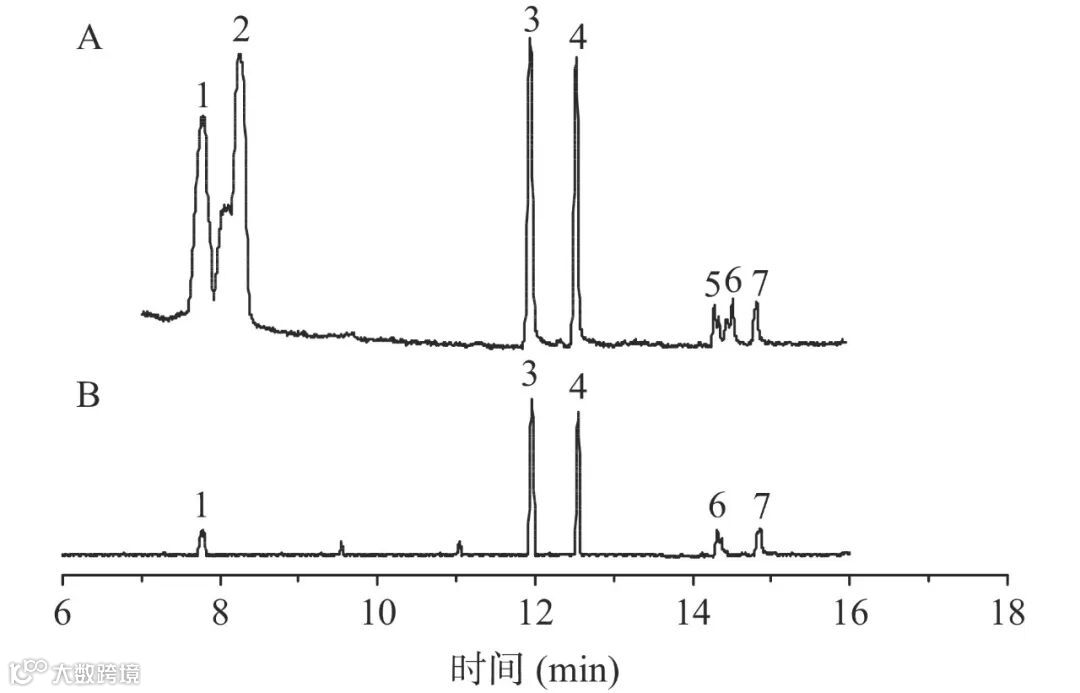
图 7 单糖标准品(A)和铁皮石斛多糖(B)GC-MS总离子流色谱图
Figure 7. GC-MS total ion flow chromatogram of monosaccharide standard (A) and Dendrobium officinale polysaccharides (B)
注:1.鼠李糖;2.阿拉伯糖;3.甘露糖;4.葡萄糖;5.半乳糖;6.核糖;7.木糖。
2.6 铁皮石斛多糖的核磁共振分析
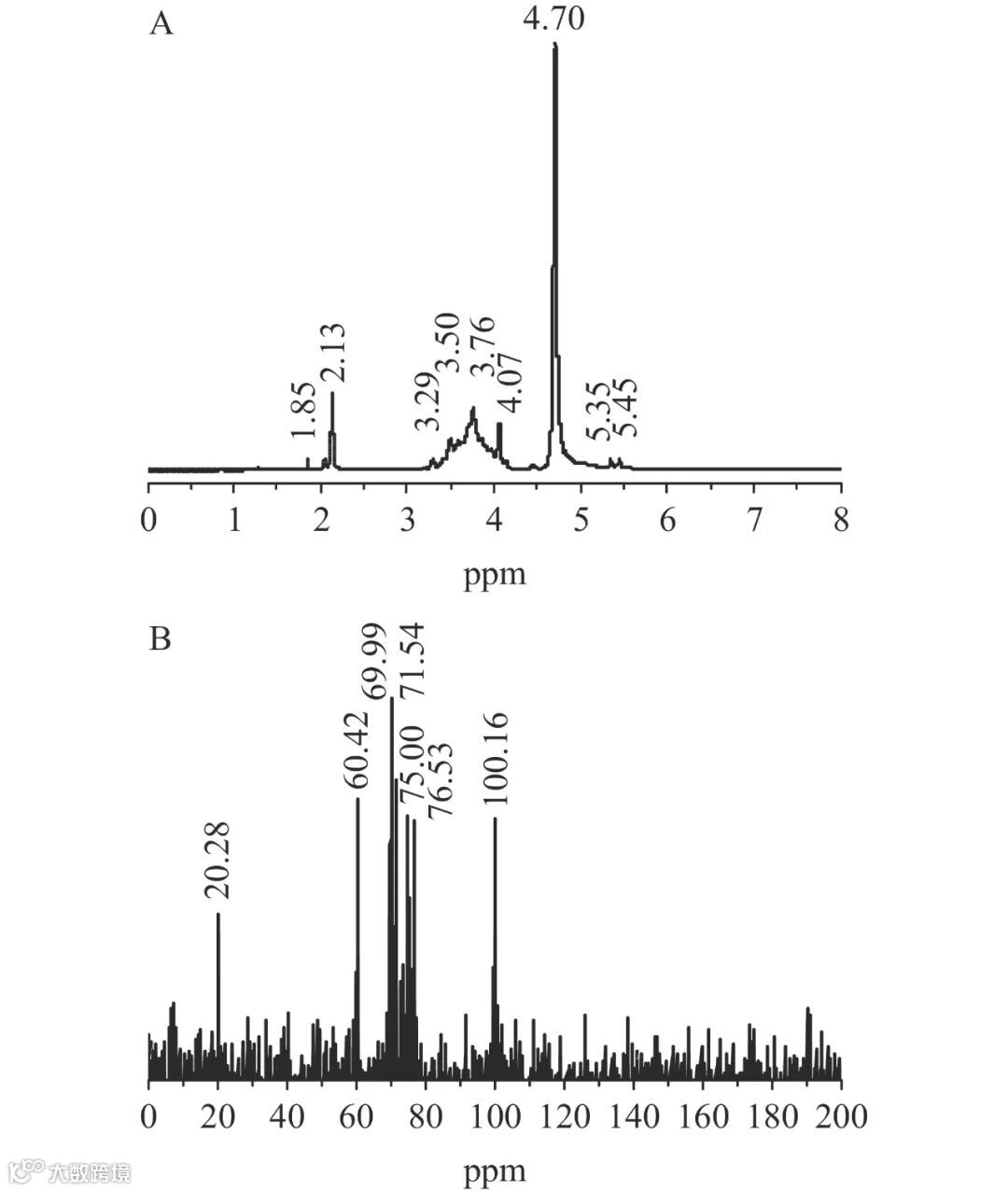
图 8 铁皮石斛多糖的核磁共振图谱
Figure 8. Nuclear magnetic resonance mapping of Dendrobium officinale polysaccharides

结论

引用本文:冯思敏,廖伟先,潘杰峰,等. 铁皮石斛多糖的低共熔溶剂提取工艺优化[J]. 食品工业科技,2024,45(3):218−225. doi: 10.13386/j.issn1002-0306.2023050089.
Citation:FENG Simin, LIAO Weixian, PAN Jiefeng, et al. Optimization of Deep Eutectic Solvent Extraction Process of Polysaccharides from Dendrobium officinale[J]. Science and Technology of Food Industry, 2024, 45(3): 218−225. (in Chinese with English abstract). doi: 10.13386/j.issn1002-0306.2023050089.
基金项目:国家食品营养与安全重点研发计划专项(2023YFF1104100);浙江省重点研究发展计划项目(2021C02019);浙江省自然科学基金项目(LGD22C200001)。


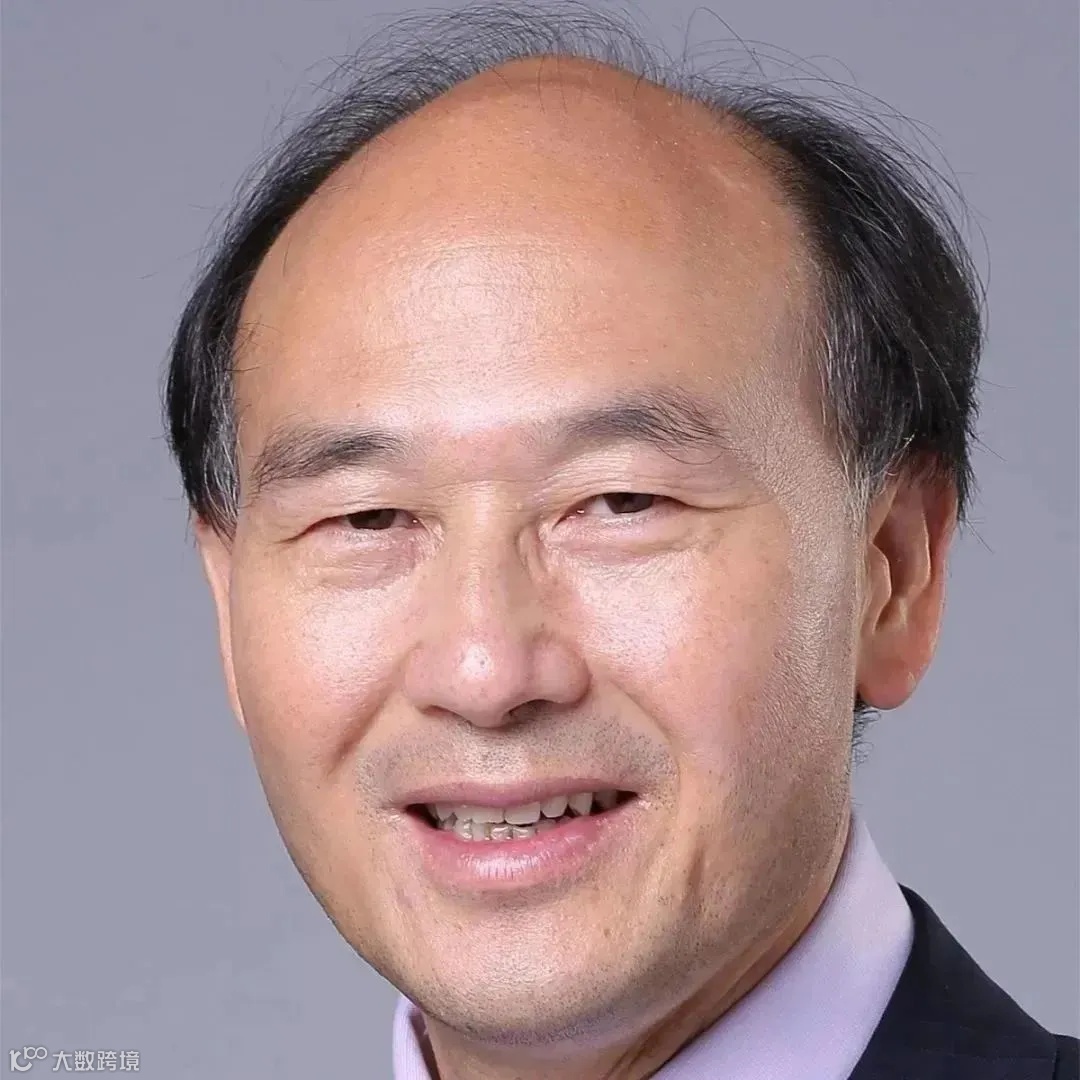
通信作者简介


邵平,工学博士,教授,博士生导师,1998-2007年合肥工业大学,2007年博士毕业后入职浙江工业大学,2009年评为副教授,2015年评为教授。目前为中国食品学会第三届青年委员会委员,国际食物营养与安全协会理事,国家国民营养健康专家委员会委员,浙江省国民营养健康专家组副秘书长,全国休闲食品标准化技术委员会委员,浙江省食品学会常务理事,浙江省食品学会青年委员会副主任,浙江省食品添加剂与配料协会专家委员会委员,科技部、国家基金、多省市科技项目评审专家。担任Elsevier旗下Journal of Functional Foods(IF 4.45)刊物编委,食品科学(EI)青年编委,食品研究与开发刊物编委,Food Research International等专刊编辑;近三年相继在 Food Chemistry,Food Hydrocolloid, Trends in Food Science and Technology等主流刊物发表20余篇论文;作为负责人获浙江省科技进步二等奖1项(2020年,排名第一)、中国商业联合会科技进步一等奖2项(2017和2018年,均排名第一)。入选浙江省151人才工程第二层次(2014年);浙江省院士结对青年英才计划(2019年);浙江省高校领军人才培养计划(2021);浙江工业大学健行特聘教授(2022)。
(以上信息来自浙江工业大学食品科学与工程学院官网)
点击文末“阅读原文”,获取论文全文;
或登录www.spgykj.com阅览全文。
食品科学家论文汇总
(点击专家姓名,查看论文)













《食品工业科技》特邀主编专栏征稿
《食品工业科技》青年编委专栏征稿:咖啡、可可、茶等特色饮料作物加工 ☚
《食品工业科技》客座主编专栏征稿:植物基食品原料基础研究、前沿技术创新及其健康绿色产品开发☚
《食品工业科技》客座主编专栏征稿:地方特色食品:加工技术、感官品质、风味特性和营养健康
群聊:食品工业科技作者群

温
馨
提
示

我刊正式组建微信作者群,为作者提供更多的学术与论文资讯,如需进群,请联系刘老师(微信:上方二维码,电话:87244117-8062)。

版权声明