

文章来源:npj计算材料学
增材制造(AM)工艺,例如金属合金的激光粉床熔合、选择性激光熔化和定向能量沉积,能够以较低的制造成本生产复杂的、轻量级部件。虽然AM是一项前景广阔的制造技术,但它在印制元件的鉴定和认证方面还面临着诸多挑战。
学术界、工业界和政府组织迫切希望通过更好地理解AM材料系统的加工-结构-性能关系,从而充分实现AM技术的潜力。在这方面,以美国国家标准与技术研究所(NIST)和空军研究实验室(AFRL)为主导,分别在2018年、2020年和2022年设置了几个基准挑战。
其中,2022年NIST增材制造基准实验的挑战3,要求建模者提交对使用移动激光器的单轨和多轨激光粉床熔合工艺的固体冷却速率、液体冷却速率、熔化时间和熔池几何形状的预测。
来自美国西北大学机械工程系的Abdullah Al Amin等,开发了一个增材制造计算流体力学程序,与圆柱形热源相结合,能够准确预测实验。基于文献中现有的实验,研究者提出了与体积能量密度相关的启发式热源校准方法。
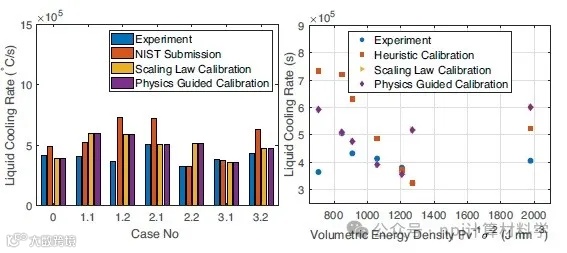
计算模型中的热源参数基于高阶适当广义分解的替代模型进行初始校准。使用校准后的热源进行预测能够在不同工艺条件下(激光光斑直径、激光功率、扫描速度)与NIST的测量结果定量一致。
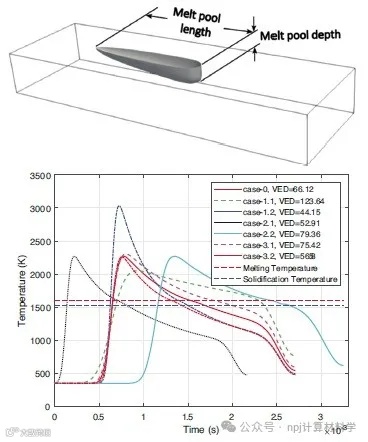
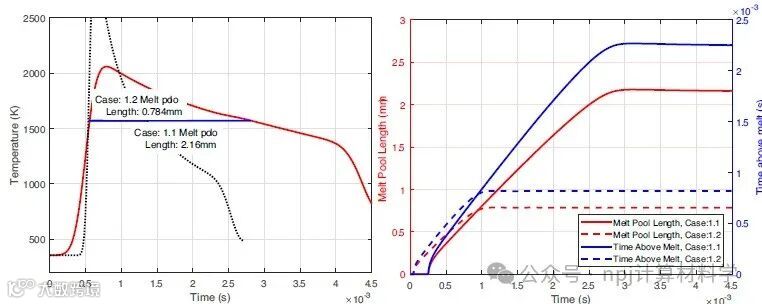
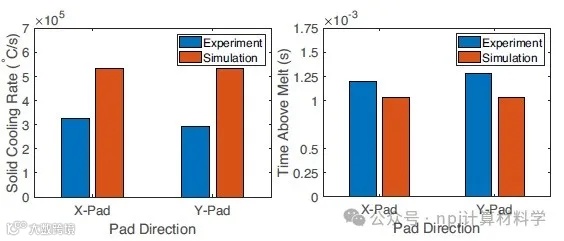
Fig. 5 Estimation of the time above melting for different volumetric energy density for IN718.
他们利用基于锁孔形成的标度律,对圆柱形热源参数进行了校准,并用于预测挑战性实验。此外,他们还对热源模型进行了改进,将体积能量密度(VEDσ)与熔池长宽比相联系。该模型在预测熔池实验测量结果方面,包括在较高VEDσ的条件下,有了进一步的改进。
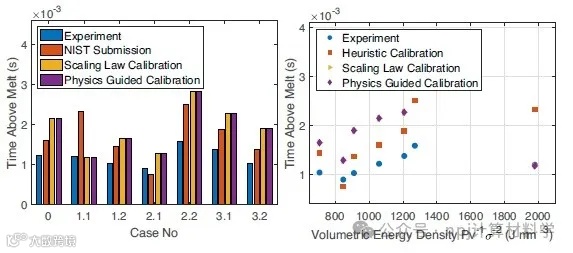
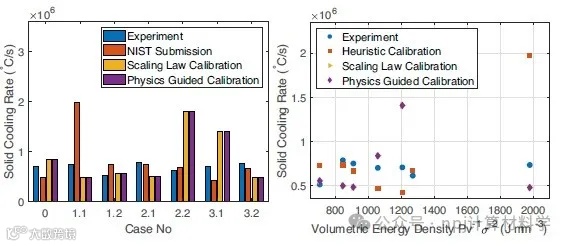
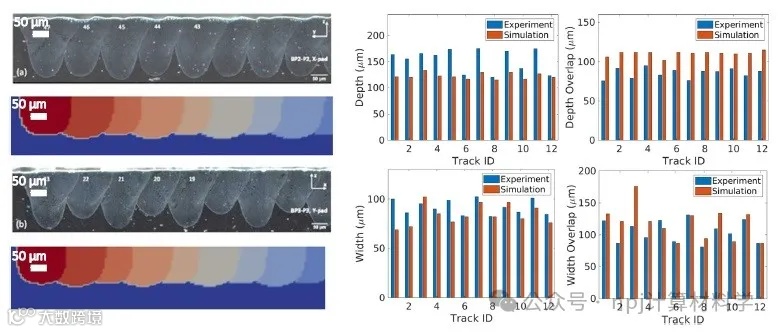
Fig. 6 Comparison of track time above melting for different laser process conditions.
总的来说,适当选择激光热源参数化方案和热源模型对于准确预测熔池几何形状和热测量至关重要,无需考虑额外的物理方程,从而避免了昂贵的计算模拟。该文近期发布于npj Computational Materials 10: 37 (2024).
Editorial Summary
Additive manufacturing (AM) processes such as laser powder bed fusion, selective laser melting, and directed energy deposition for metal alloys enable the production of complex, lightweight parts at reduced manufacturing costs. Though AM is a promising manufacturing technology, it is facing numerous challenges in printed part qualification and certification.
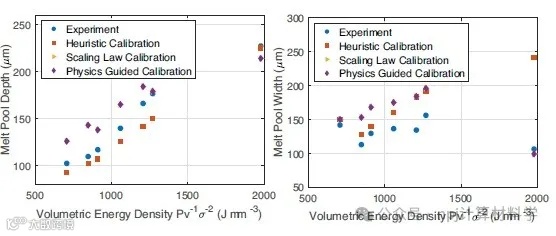
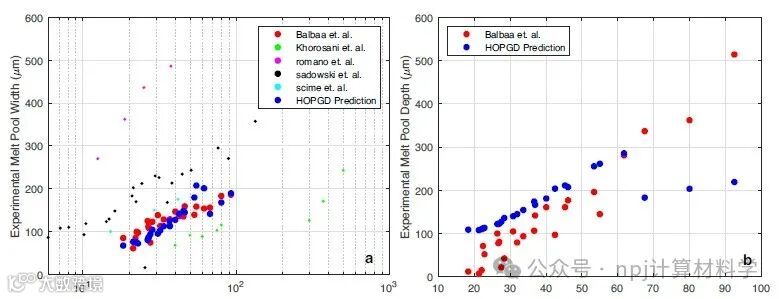
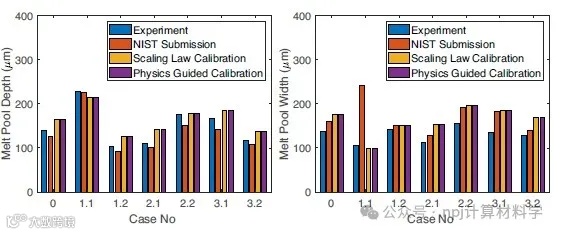
Fig. 8 Melt pool geometry comparison with VED.
Combined efforts from academia, industry, and government organizations sought to fully realize the potential of AM technology through a better understanding of the process-structure-performance of the AM materials systems.
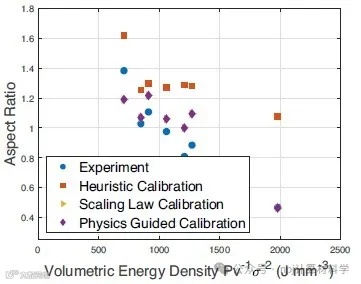
Fig. 9 The experimental measurements of the melt pool geometry has a linear trend with changing volumetric energy density.
On this aspect, the National Institute of Standards and Technology (NIST) and Air Force Research Laboratory (AFRL) led the efforts from government organizations by arranging several benchmark challenges in 2018, 2020, and 2022, respectively. Challenge 3 of the 2022 NIST additive manufacturing benchmark experiments asked modelers to submit predictions for solid cooling rate, liquid cooling rate, time above melt, and melt pool geometry for single and multiple track laser powder bed fusion process using moving lasers.
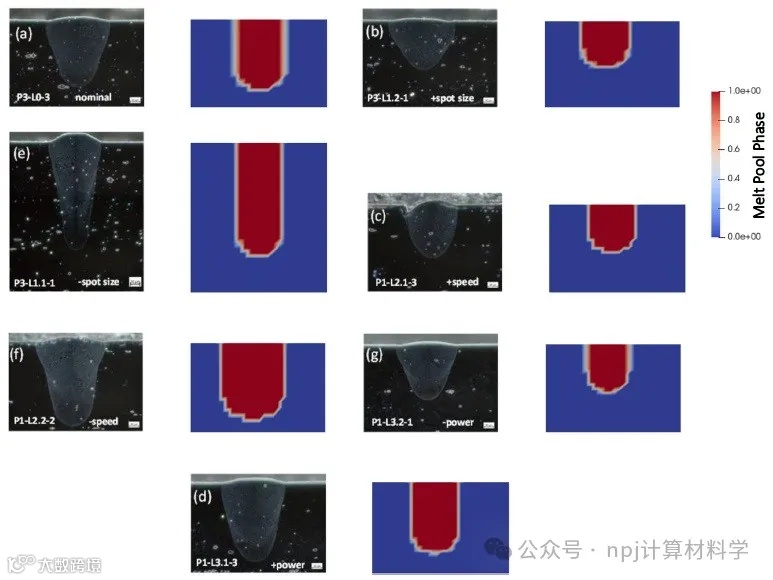
Abdullah Al Amin et. al from the Department of Mechanical Engineering, Northwestern University, USA, developed an Additive Manufacturing Computational Fluid Dynamics code (AM-CFD) combined with a cylindrical heat source to accurately predict these experiments. Heuristic heat source calibration was proposed relating volumetric energy density based on experiments available in the literature.
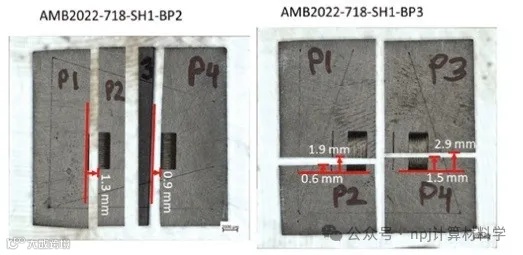
The prediction using the calibrated heat source agrees quantitatively with NIST measurements for different process conditions (laser spot diameter, laser power, and scan speed). A scaling law based on keyhole formation was also utilized in calibrating the parameters of the cylindrical heat source and predicting the challenge experiments. In addition, an improvement on the heat source model was proposed to relate the Volumetric Energy Density (VEDσ) to the melt pool aspect ratio. The model shows further improvement in the prediction of the experimental measurements for the melt pool, including cases at higher VEDσ.
Overall, it is concluded that the appropriate selection of laser heat source parameterization scheme along with the heat source model is crucial in the accurate prediction of melt pool geometry and thermal measurements while bypassing the expensive computational simulations that consider increased physics equations. This article was recently published in npj Computational Materials 10: 37 (2024).
原文Abstract及其翻译
Physics guided heat source for quantitative prediction of IN718 laser additive manufacturing processes (用于定量预测IN718激光增材制造工艺的物理引导热源)
Abdullah Al Amin,Yangfan Li, Ye Lu, Xiaoyu Xie, Zhengtao Gan, Satyajit Mojumder, Gregory J. Wagner & Wing Kam Liu
Abstract Challenge 3 of the 2022 NIST additive manufacturing benchmark (AM Bench) experiments asked modelers to submit predictions for solid cooling rate, liquid cooling rate, time above melt, and melt pool geometry for single and multiple track laser powder bed fusion process using moving lasers. An in-house developed Additive Manufacturing Computational Fluid Dynamics code (AM-CFD) combined with a cylindrical heat source is implemented to accurately predict these experiments. Heuristic heat source calibration is proposed relating volumetric energy density (ψ) based on experiments available in the literature. The parameters of the heat source of the computational model are initially calibrated based on a Higher Order Proper Generalized Decomposition- (HOPGD) based surrogate model. The prediction using the calibrated heat source agrees quantitatively with NIST measurements for different process conditions (laser spot diameter, laser power, and scan speed). A scaling law based on keyhole formation is also utilized in calibrating the parameters of the cylindrical heat source and predicting the challenge experiments. In addition, an improvement on the heat source model is proposed to relate the Volumetric Energy Density (VEDσ) to the melt pool aspect ratio. The model shows further improvement in the prediction of the experimental measurements for the melt pool, including cases at higher VEDσ. Overall, it is concluded that the appropriate selection of laser heat source parameterization scheme along with the heat source model is crucial in the accurate prediction of melt pool geometry and thermal measurements while bypassing the expensive computational simulations that consider increased physics equations.
摘要2022年NIST增材制造基准(AM Bench)实验的挑战3要求建模者提交对使用移动激光器的单轨和多轨激光粉床熔合工艺的固体冷却速率、液体冷却速率、熔化时间和熔池几何形状的预测。我们开发了一个增材制造计算流体力学程序(AM-CFD),与圆柱形热源相结合,能够准确预测这些实验。基于文献中现有的实验,我们提出了与体积能量密度(ψ)相关的启发式热源校准方法。计算模型中的热源参数基于高阶适当广义分解(HOPGD)的替代模型进行初始校准。使用校准后的热源进行预测,能够在不同工艺条件下(激光光斑直径、激光功率、扫描速度)与NIST的测量结果保存定量一致。我们利用基于锁孔形成的标度律,对圆柱形热源参数进行校准,并用于预测挑战性实验。此外,我们还对热源模型进行了改进,将体积能量密度(VEDσ)与熔池长宽比相联系。该模型在预测熔池实验测量结果方面,包括在较高VEDσ的条件下,有了进一步的改进。总的来说,适当选择激光热源参数化方案和热源模型,对于准确预测熔池几何形状和热测量至关重要,无需考虑额外的物理方程,从而避免了昂贵的计算模拟。