
点击蓝字,等你关注
三只兔子三只耳:
丝路文化融汇的见证
Three Rabbits with Three Ears: The Testimony of Intercultural Integration of Silk Road
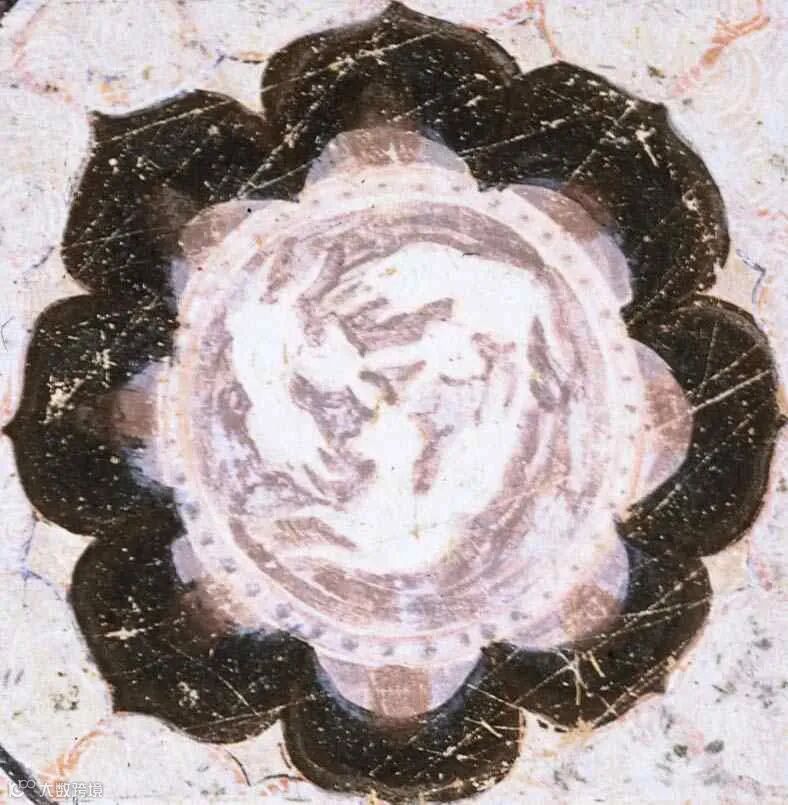
一只兔子两只耳,三只兔子几只耳?世界文化遗产敦煌莫高窟给出另类答案:
One rabbit has two ears, so how many ears do three rabbits have? The Mogao Caves of Dunhuang, the world cultural heritage, offers a different answer:
三只兔子竞相追逐,两两共用一耳,形成了“三兔共耳”的独特造型,乍一看就是,三只兔子三只耳。
Three rabbits chasing each other, two sharing an ear, creating a unique design of “The Three Hares”. At first glance, it’s just three rabbits with three ears.
敦煌研究院考古研究所副研究馆员赵燕林介绍,莫高窟出现“三兔共耳”图案的洞窟达20个。
According to Zhao Yanlin, a deputy research curator of Institute of Archaeology of the Dunhuang Academy, there are 20 caves with the design of “The Three Hares” in the Mogao Caves.
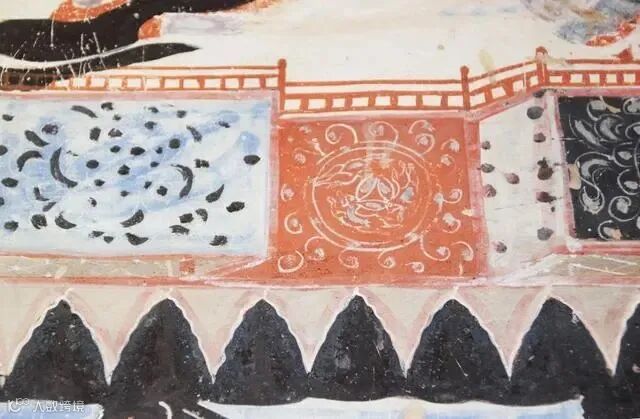
莫高窟302窟
Mogao Cave 302
隋开皇四年开凿的第302窟中,第一次出现了“三兔共耳”,最晚出现这一图案的洞窟是五代的第99窟。
The first appearance of “The Three Hares” was in Cave 302, which was excavated in the 4th year of Kaihuang period of Sui Dynasty, and the latest one was in Cave 99 in the Five Dynasties and Ten Kingdoms period.
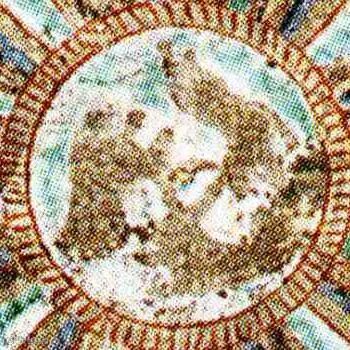
莫高窟99窟
Mogao Cave 99
洞窟顶部的藻井是“三兔共耳”最常出现的位置。赵燕林说,藻井是指宫殿、寺庙、石窟等室内中心的天花板,常常绘有莲、藻等水生植物。
The ceiling at the top of the cave is the most common location of “The Three Hares”. Zhao Yanlin said that the ceiling refers to the interior center of palaces, temples, grottoes, which is often painted with lotus, algae and other aquatic plants.
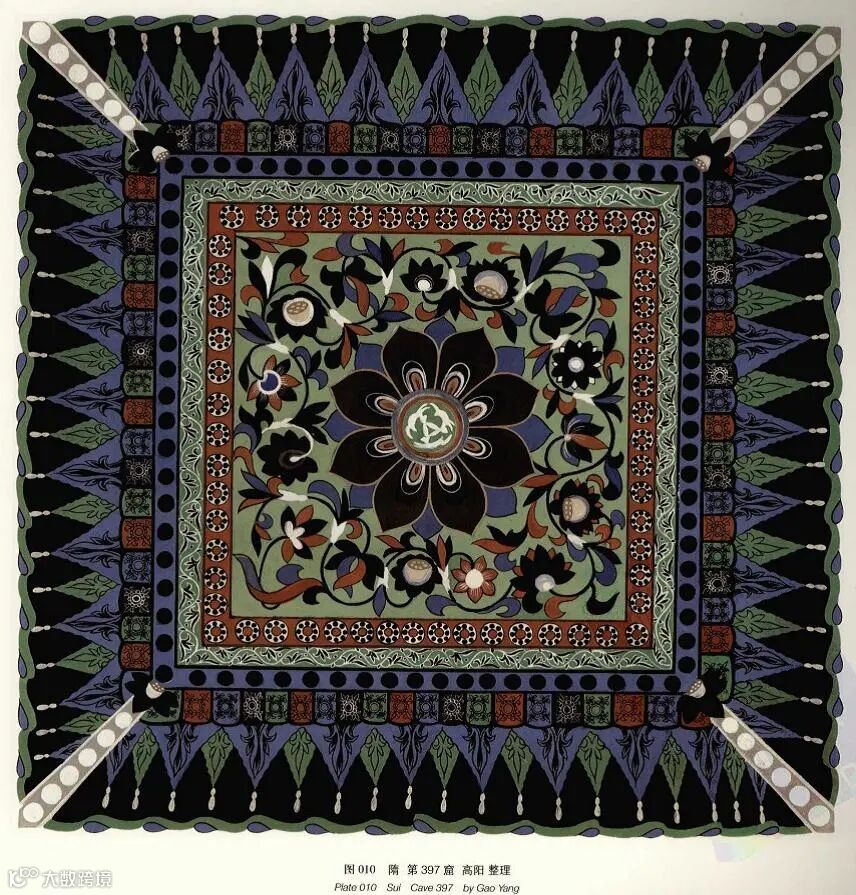
莫高窟397窟
Mogao Cave 397
由于木建筑易起火,古人便在建筑顶部开“井”,希冀免受火灾侵扰。
The ancients painted the “ceiling” at the top of the building, hoping to protect them from fire due to fire susceptibility of wooden buildings.
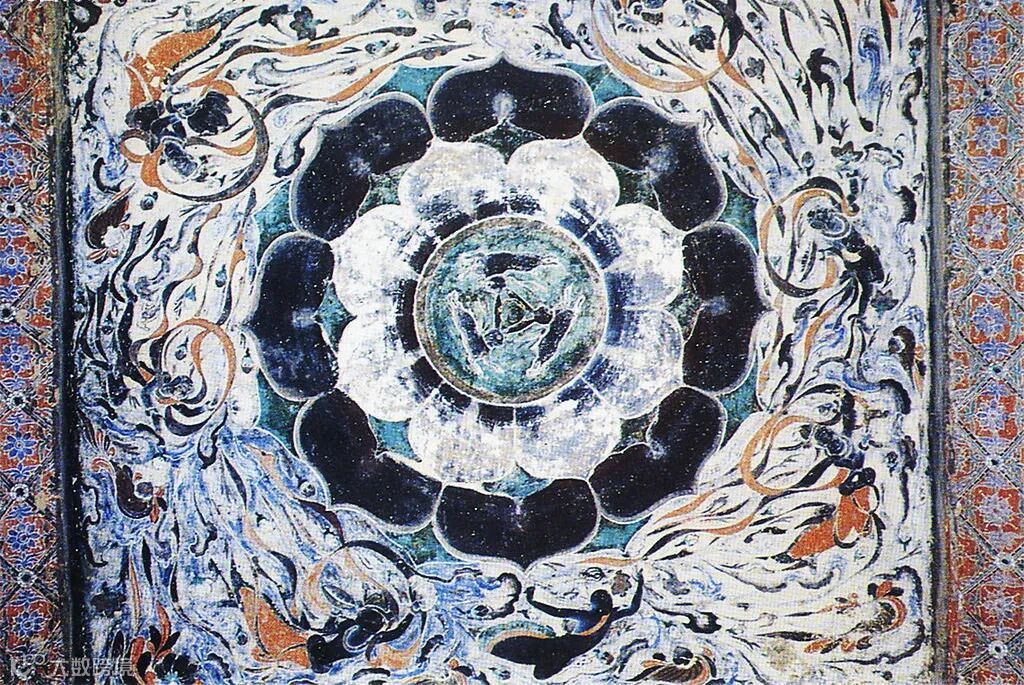
莫高窟407窟
Mogao Cave 407
莫高窟第407窟的“三兔共耳”藻井,可谓典范之作。该洞窟开凿于隋代中晚期。
The ceiling of “The Three Hares” in Mogao Cave 407 can be considered a model work. The cave was excavated in the mid to late Sui Dynasty.
双层八瓣莲花中,三只兔子奋力追逐、耳朵竖立。缤纷色彩与生动造型,让静态画面跃动了起来。
In the lotus with double-layered with eight petals, three rabbits chase each other with their erect ears. The colorful and vivid design makes the static image vividly.
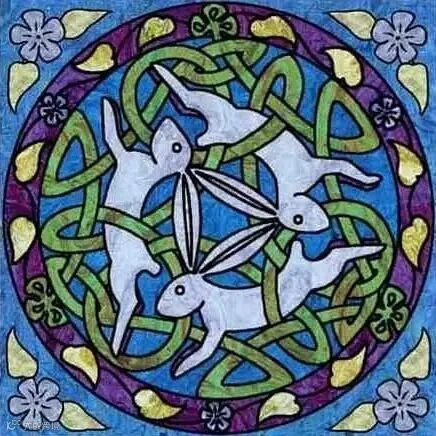
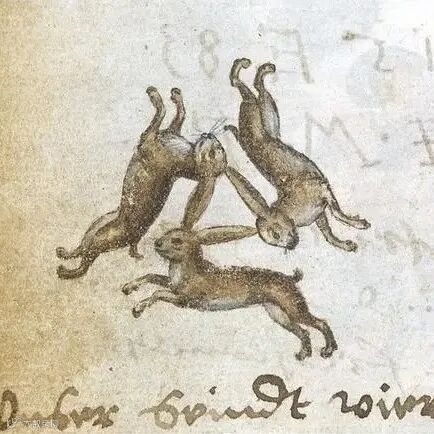
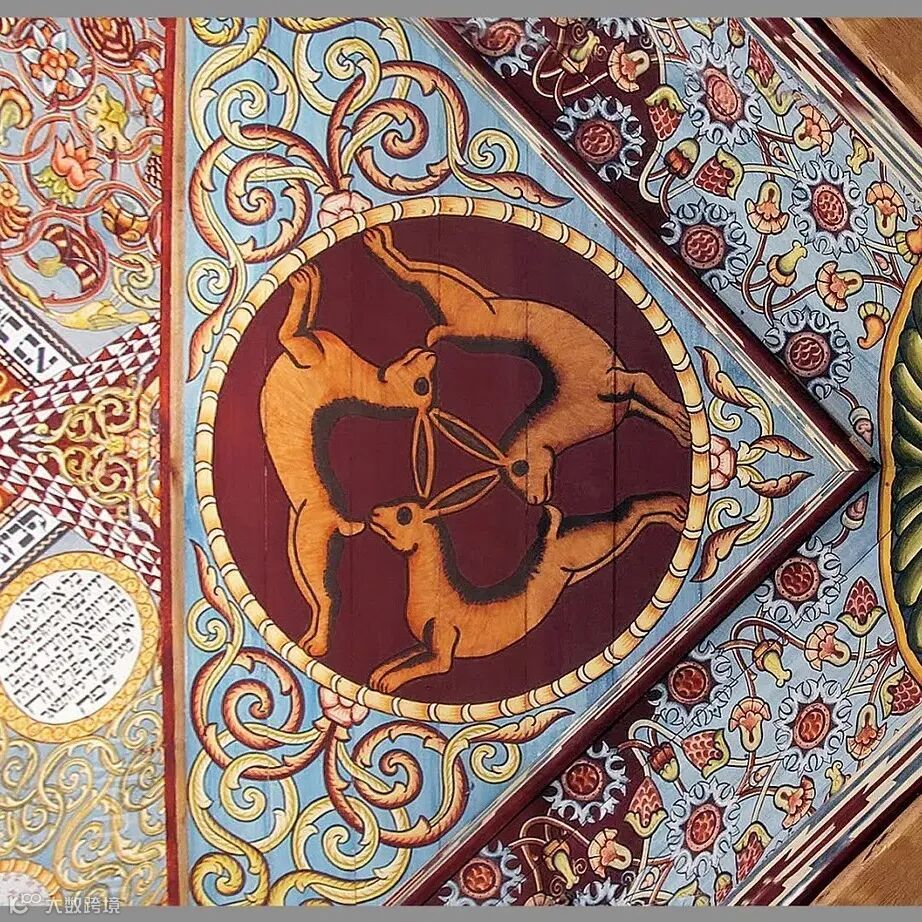
更有趣的是,三只兔子蹦蹦跳跳地开启了一场横跨亚欧非三大洲的“神奇之旅”:阿富汗的金属盘、蒙古的铜币、埃及的陶瓷、德国的教堂钟表、英国的瓷砖画······上面都有它们的身影。
Even more interesting is that these three rabbits started a “remarkable journey” across three continents, Asia, Europe and Africa: Afghanistan metal ware, Mongolia copper coins, Egyptian ceramics, German church bells, and British painted ceramic tiles... have them all on it. Three rabbits can be seen everywhere from them.
“三兔共耳”起源何处?对此,学者有不同的认识,有人认为图案来自古希腊,也有人认为其源头是犍陀罗地区。但主流观点仍认为,最早出现“三兔共耳”的地方是敦煌莫高窟。
Where did the “The Three Hares” originate? Scholars have different opinions about it. Some believe that it originated from ancient Greek, while others believe that it originated from the Gandhara region. But the mainstream view is that it first appeared in the Mogao Caves at Dunhuang.
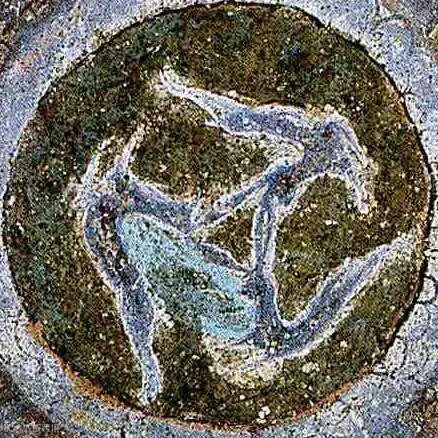
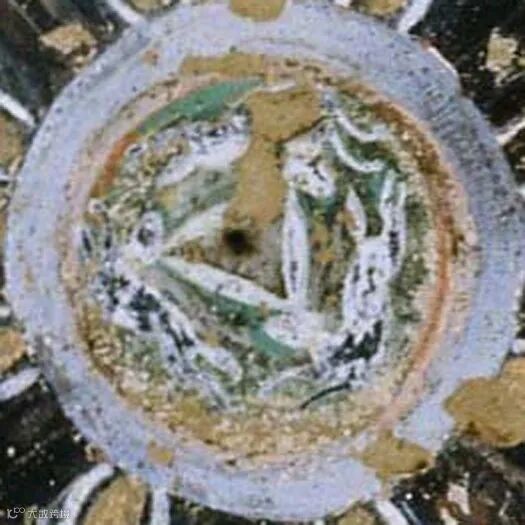
莫高窟383窟、397窟
Mogao Cave 383, Mogao Cave 397
“梳理已有材料可以发现,‘三兔共耳’图案有‘东早西晚’的时空特点。
“According to the existing materials, we can find that this pattern has the spatio-temporal characteristics of ‘appearing from eastern world to western world chronologically’.
最早的图案出现在6世纪的敦煌,9至11世纪前后沿丝绸之路出现在中亚、西亚地区,13至16世纪传播至埃及和欧洲各国。这条传播脉络应当是清晰合理的。”赵燕林说。
The earliest pattern appeared at Dunhuang in the 6th century. It spread to Central and Western Asia region along the Silk Road from the 9th to 11th centuries.” Zhao Yanlin said.
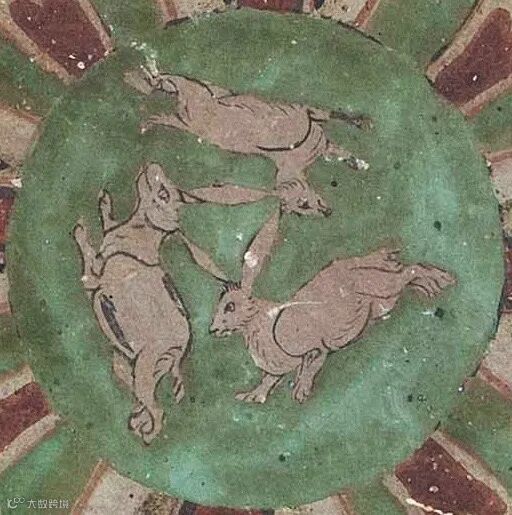
莫高窟139窟
Mogao Cave 139
在丝绸之路文化交流中,图案的传播互动不止于此。波斯萨珊王朝流行的“连珠纹”、自西域而来的“葡萄纹”等,常常出现在敦煌壁画的边饰中。“卷草纹”的传播与演变,也与丝绸之路密切相关。
In the cultural exchange along the Silk Road, the communication interaction of patterns is more than that. The popular “lianzhu (connected circle) pattern” in Sasanian Dynasty in Persian and the “grape pattern” from the Western regions often appear in the trim of Dunhuang murals. The communication and evolution of the "scroll grass pattern" is also closely related to the Silk Road.
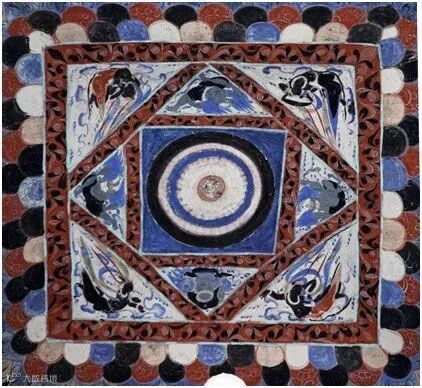
莫高窟305窟
Mogao Cave 305
“图案符号是观察丝绸之路文化交汇融通的一个视角,同一类型的图案符号往往出现在丝路沿线相近时代的不同文化遗迹中。整理研究具有共同文化特征的图案符号,对探寻古代丝绸之路沿线文化交流传播史具有重要意义。”赵燕林说。
“Pictorial symbols are a perspective of observing the intercultural integration along the Silk Road. The pictorial symbols of the same type often appear in different cultural relics of similar eras along the Silk Road. The collection and study of pictorial symbols with common cultural characteristics has a great significance to explore the history of cultural exchange and communication along the ancient Silk Road.” Zhao Yanlin said.
来源 | 新华社、敦煌研究院

Editor & Translator: Zhang Xianzi, Kang Nan(Intern), Ma Dianyue(Intern)
编译:张宪梓 亢楠(实习) 马殿越(实习)