
又逢一年毕业季。与曾经承载意义的挚友和场所分离,不免让人遗憾。然而,那些光荣与梦想、那些情感与记忆,依然是生命中重要的承载。
按照惯例,世界各大名校都会邀请各领域有影响力的名人,用他们丰富的阅历和人生经验,给毕业生提供有价值的建议和指导原则。什么是有价值的教育?不是教导知识,而是挖掘潜能;不是盲目跟随,而是内心认同。
本期特别精选历年来最激励人心的5个名校的毕业演讲。在人生的每个阶段,我们都面临结束和启程,面临选择的迷茫和失败的风险。无论何时,这些充满智慧的人生箴言,都能够帮助我们跳出当下的迷局,拨云见日,从更广阔的角度参透事物的本质,最终作出属于自己的正确选择。
我们没有权利选择出生和死亡,却有权利选择自己的思想境界和行为准则。愿你能从中有所领悟,走出属于自己的精彩人生。
1
我生命中的三个故事
乔布斯,斯坦福大学,2005
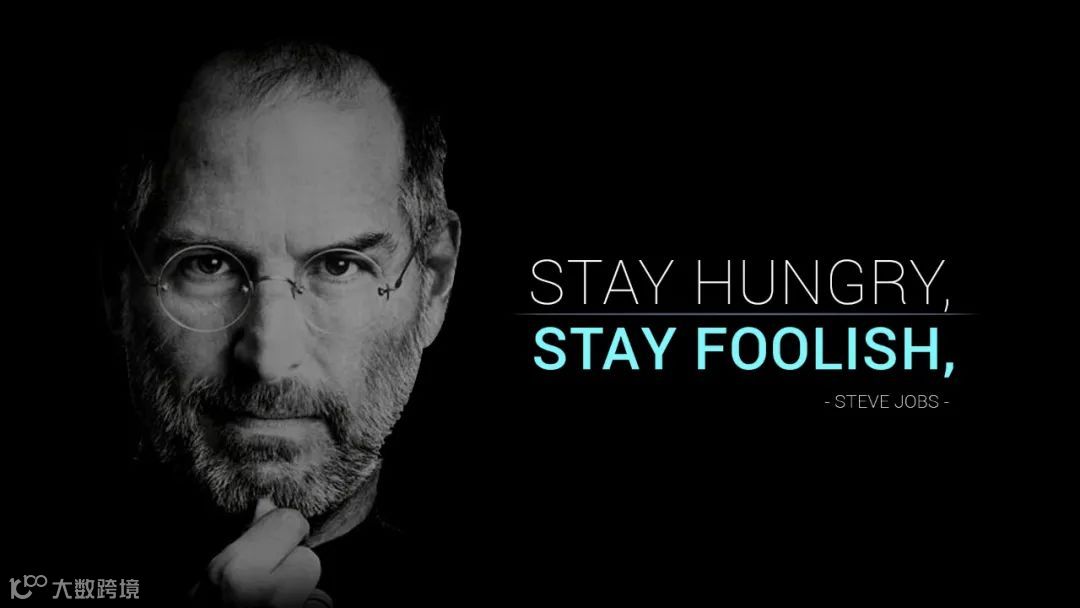
乔布斯,苹果公司创始人。他分享了三个人生故事,有关他辍学、被解雇和面临死亡的经历,期望告诉我们:「不要被教条所束缚,不要让别人的意见淹没自己内心的声音,有勇气跟随内心和直觉,才会带领你成为真正想成为的人。」
有些时候, 生活会给你迎头一击。不要失去信心。我很确定,唯一促使我一直走下去的,就是所做的事情令我无比钟爱。你需要去找到真正的热情所在,对工作如此,对爱人也是如此。
工作会占据你生活中很大一部分。唯有坚信自己所做的是伟大的工作,才能怡然自得。如果你现在还没有找到, 那么继续找、不要停下来、全心全意的去找,当找到的时候你一定会知道。就像任何真诚的关系,随着岁月的流逝只会越来越紧密。
「记住你即将死去」,是我一生中遇到的最重要的箴言。它帮我指明了生命中重要的选择。几乎所有事,包括荣誉、骄傲、所有对难堪和失败的恐惧,都会在死亡面前消失。留下的,才是真正重要的东西。
记住你即将死去,是避免不断忧虑将会失去某些东西的最好办法。你一无所有,再无理由不去追随自己的内心。

时间有限, 所以不要浪费在重复其他人的生活上。不要被教条束缚,那意味着你在别人的思考之下生活。不要让外界的喧嚣,掩盖你内心真实的声音。最重要的是,有勇气去听从你的直觉和内心的声音,它们在某种程度上知道你内心真正想要成为的样子,其他事都是次要的。
我曾在一本杂志封底,看到一张清晨乡村公路的照片,下面写着:求知若饥,虚心若愚(STAY HUNGRY, STAY FOOLISH)。这是他们停刊的告别语。我总是希望自己能够那样,在你们即将毕业开始全新旅程的时刻,我也希望你们能这样:求知若饥,虚心若愚。

英文演讲全文
I am honored to be with you today at your commencement from one of the finest universities in the world. I never graduated from college. Truth be told, this is the closest I’ve ever gotten to a college graduation. Today I want to tell you three stories from my life. That’s it. No big deal. Just three stories.
The first story is about connecting the dots.
I dropped out of Reed College after the first 6 months, but then stayed around as a drop-in for another 18 months or so before I really quit. So why did I drop out?
It started before I was born. My biological mother was a young, unwed college graduate student, and she decided to put me up for adoption. She felt very strongly that I should be adopted by college graduates, so everything was all set for me to be adopted at birth by a lawyer and his wife. Except that when I popped out they decided at the last minute that they really wanted a girl. So my parents, who were on a waiting list, got a call in the middle of the night asking: “We have an unexpected baby boy; do you want him?” They said: “Of course.” My biological mother later found out that my mother had never graduated from college and that my father had never graduated from high school. She refused to sign the final adoption papers. She only relented a few months later when my parents promised that I would someday go to college.
And 17 years later I did go to college. But I naively chose a college that was almost as expensive as Stanford, and all of my working-class parents’ savings were being spent on my college tuition. After six months, I couldn’t see the value in it. I had no idea what I wanted to do with my life and no idea how college was going to help me figure it out. And here I was spending all of the money my parents had saved their entire life. So I decided to drop out and trust that it would all work out OK. It was pretty scary at the time, but looking back it was one of the best decisions I ever made. The minute I dropped out I could stop taking the required classes that didn’t interest me, and begin dropping in on the ones that looked interesting.
It wasn’t all romantic. I didn’t have a dorm room, so I slept on the floor in friends’ rooms, I returned coke bottles for the 5?? deposits to buy food with, and I would walk the 7 miles across town every Sunday night to get one good meal a week at the Hare Krishna temple. I loved it. And much of what I stumbled into by following my curiosity and intuition turned out to be priceless later on. Let me give you one example:
Reed College at that time offered perhaps the best calligraphy instruction in the country. Throughout the campus every poster, every label on every drawer, was beautifully hand calligraphed. Because I had dropped out and didn’t have to take the normal classes, I decided to take a calligraphy class to learn how to do this. I learned about serif and san serif typefaces, about varying the amount of space between different letter combinations, about what makes great typography great. It was beautiful, historical, artistically subtle in a way that science can’t capture, and I found it fascinating.
None of this had even a hope of any practical application in my life. But ten years later, when we were designing the first Macintosh computer, it all came back to me. And we designed it all into the Mac. It was the first computer with beautiful typography. If I had never dropped in on that single course in college, the Mac would have never had multiple typefaces or proportionally spaced fonts. And since Windows just copied the Mac, its likely that no personal computer would have them. If I had never dropped out, I would have never dropped in on this calligraphy class, and personal computers might not have the wonderful typography that they do. Of course it was impossible to connect the dots looking forward when I was in college. But it was very, very clear looking backwards ten years later.
Again, you can’t connect the dots looking forward; you can only connect them looking backwards. So you have to trust that the dots will somehow connect in your future. You have to trust in something - your gut, destiny, life, karma, whatever. This approach has never let me down, and it has made all the difference in my life.
My second story is about love and loss.
I was lucky - I found what I loved to do early in life. Woz and I started Apple in my parents garage when I was 20. We worked hard, and in 10 years Apple had grown from just the two of us in a garage into a $2 billion company with over 4000 employees. We had just released our finest creation - the Macintosh - a year earlier, and I had just turned 30. And then I got fired. How can you get fired from a company you started? Well, as Apple grew we hired someone who I thought was very talented to run the company with me, and for the first year or so things went well. But then our visions of the future began to diverge and eventually we had a falling out. When we did, our Board of Directors sided with him. So at 30 I was out. And very publicly out. What had been the focus of my entire adult life was gone, and it was devastating.
I really didn’t know what to do for a few months. I felt that I had let the previous generation of entrepreneurs down - that I had dropped the baton as it was being passed to me. I met with David Packard and Bob Noyce and tried to apologize for screwing up so badly. I was a very public failure, and I even thought about running away from the valley. But something slowly began to dawn on me - I still loved what I did. The turn of events at Apple had not changed that one bit. I had been rejected, but I was still in love. And so I decided to start over.
I didn’t see it then, but it turned out that getting fired from Apple was the best thing that could have ever happened to me. The heaviness of being successful was replaced by the lightness of being a beginner again, less sure about everything. It freed me to enter one of the most creative periods of my life.
During the next five years, I started a company named NeXT, another company named Pixar, and fell in love with an amazing woman who would become my wife. Pixar went on to create the worlds first computer animated feature film, Toy Story, and is now the most successful animation studio in the world. In a remarkable turn of events, Apple bought NeXT, I retuned to Apple, and the technology we developed at NeXT is at the heart of Apple’s current renaissance. And Laurene and I have a wonderful family together.
I’m pretty sure none of this would have happened if I hadn’t been fired from Apple. It was awful tasting medicine, but I guess the patient needed it. Sometimes life hits you in the head with a brick. Don’t lose faith. I’m convinced that the only thing that kept me going was that I loved what I did. You’ve got to find what you love. And that is as true for your work as it is for your lovers. Your work is going to fill a large part of your life, and the only way to be truly satisfied is to do what you believe is great work. And the only way to do great work is to love what you do. If you haven’t found it yet, keep looking. Don’t settle. As with all matters of the heart, you’ll know when you find it. And, like any great relationship, it just gets better and better as the years roll on. So keep looking until you find it. Don’t settle.
My third story is about death.
When I was 17, I read a quote that went something like: “If you live each day as if it was your last, someday you’ll most certainly be right.” It made an impression on me, and since then, for the past 33 years, I have looked in the mirror every morning and asked myself: “If today were the last day of my life, would I want to do what I am about to do today?” And whenever the answer has been “No” for too many days in a row, I know I need to change something.
Remembering that I’ll be dead soon is the most important tool I’ve ever encountered to help me make the big choices in life. Because almost everything - all external expectations, all pride, all fear of embarrassment or failure - these things just fall away in the face of death, leaving only what is truly important. Remembering that you are going to die is the best way I know to avoid the trap of thinking you have something to lose. You are already naked. There is no reason not to follow your heart.
About a year ago I was diagnosed with cancer. I had a scan at 7:30 in the morning, and it clearly showed a tumor on my pancreas. I didn’t even know what a pancreas was. The doctors told me this was almost certainly a type of cancer that is incurable, and that I should expect to live no longer than three to six months. My doctor advised me to go home and get my affairs in order, which is doctor’s code for prepare to die. It means to try to tell your kids everything you thought you’d have the next 10 years to tell them in just a few months. It means to make sure everything is buttoned up so that it will be as easy as possible for your family. It means to say your goodbyes.
I lived with that diagnosis all day. Later that evening I had a biopsy, where they stuck an endoscope down my throat, through my stomach and into my intestines, put a needle into my pancreas and got a few cells from the tumor. I was sedated, but my wife, who was there, told me that when they viewed the cells under a microscope the doctors started crying because it turned out to be a very rare form of pancreatic cancer that is curable with surgery. I had the surgery and I’m fine now.
This was the closest I’ve been to facing death, and I hope its the closest I get for a few more decades. Having lived through it, I can now say this to you with a bit more certainty than when death was a useful but purely intellectual concept:
No one wants to die. Even people who want to go to heaven don’t want to die to get there. And yet death is the destination we all share. No one has ever escaped it. And that is as it should be, because Death is very likely the single best invention of Life. It is Life’s change agent. It clears out the old to make way for the new. Right now the new is you, but someday not too long from now, you will gradually become the old and be cleared away. Sorry to be so dramatic, but it is quite true.
Your time is limited, so don’t waste it living someone else’s life. Don’t be trapped by dogma - which is living with the results of other people’s thinking. Don’t let the noise of other’s opinions drown out your own inner voice. And most important, have the courage to follow your heart and intuition. They somehow already know what you truly want to become. Everything else is secondary.
When I was young, there was an amazing publication called The Whole Earth Catalog, which was one of the bibles of my generation. It was created by a fellow named Stewart Brand not far from here in Menlo Park, and he brought it to life with his poetic touch. This was in the late 1960’s, before personal computers and desktop publishing, so it was all made with typewriters, scissors, and polaroid cameras. It was sort of like Google in paperback form, 35 years before Google came along: it was idealistic, and overflowing with neat tools and great notions.
Stewart and his team put out several issues of The Whole Earth Catalog, and then when it had run its course, they put out a final issue. It was the mid-1970s, and I was your age. On the back cover of their final issue was a photograph of an early morning country road, the kind you might find yourself hitchhiking on if you were so adventurous. Beneath it were the words: “Stay Hungry. Stay Foolish.” It was their farewell message as they signed off. Stay Hungry. Stay Foolish. And I have always wished that for myself. And now, as you graduate to begin anew, I wish that for you.
Stay Hungry. Stay Foolish.Thank you all very much.
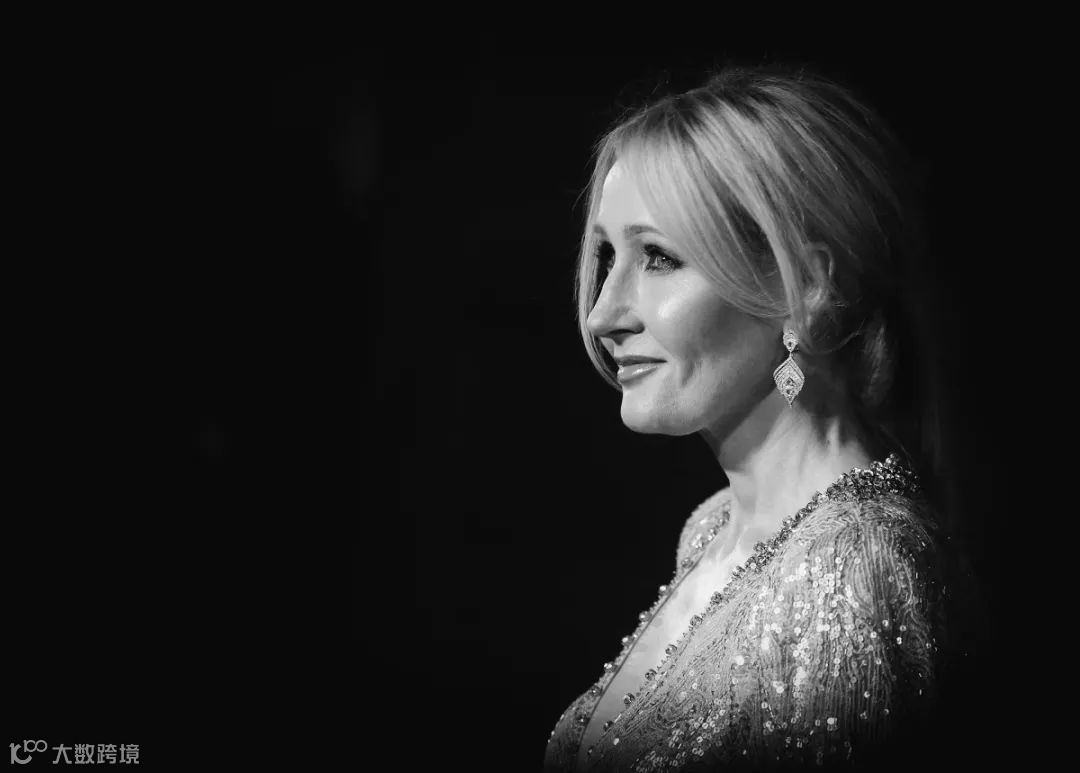
《哈利波特》系列作者J.K.罗琳,分享了她如何从贫穷和卑微的处境,成为世界上最著名的小说家。在她看来:失败与成功一样将带来机会,而无论处境如何,人们都应该坚持对美好生活的想象力。

你们可能永远没有经历过我曾经的那种失败程度。但生活中,无论怎样,有些失败注定无法避免。除非你生活的万般小心,而那也意味着你根本没有真正在生活。
然而,失败也是我内心产生一种从未得到过的安全感。失败让我看清自己,这也是其他任何方式无法体会的。我发现,我比自己认为的有更强的意志和决心。

从挫折中获得智慧、变得坚强,意味着你比以往任何时候,都更有生存能力。只有逆境来临之时,你才会真正认识自己。这种用痛苦换来的领悟才是真正的财富,比任何资格证书都更有价值。
人的幸福,在于知道生活不是一份漂亮的成绩单,你的资历、简历,都不是你的生活。虽然你会碰到很多年纪很长的人,今天依然还在混淆两者。生活的艰辛复杂,超出任何人的控制力,而谦恭地了解这一点,将使你历经沧桑后,能够更好的生存。
如果你选择利用自己的地位和影响,去为那些没有权利和地位的人发声;如果你选择不仅与强者为伍,更同情和帮扶弱者;如果你会设身处地为不如你的人着想,那么你的存在,将不仅是家人的骄傲,更是无数因你的帮助,而改变命运的成千上万人的骄傲。

英文演讲全文
President Faust, members of the Harvard Corporation and the Board of Overseers, members of the faculty, proud parents, and, above all, graduates.
The first thing I would like to say is ‘thank you.’ Not only has Harvard given me an extraordinary honour, but the weeks of fear and nausea I have endured at the thought of giving this commencement address have made me lose weight. A win-win situation! Now all I have to do is take deep breaths, squint at the red banners and convince myself that I am at the world’s largest Gryffindor reunion.
Delivering a commencement address is a great responsibility; or so I thought until I cast my mind back to my own graduation. The commencement speaker that day was the distinguished British philosopher Baroness Mary Warnock. Reflecting on her speech has helped me enormously in writing this one, because it turns out that I can’t remember a single word she said. This liberating discovery enables me to proceed without any fear that I might inadvertently influence you to abandon promising careers in business, the law or politics for the giddy delights of becoming a gay wizard.
You see? If all you remember in years to come is the ‘gay wizard’ joke, I’ve come out ahead of Baroness Mary Warnock. Achievable goals: the first step to self improvement.
Actually, I have wracked my mind and heart for what I ought to say to you today. I have asked myself what I wish I had known at my own graduation, and what important lessons I have learned in the 21 years that have expired between that day and this.
I have come up with two answers. On this wonderful day when we are gathered together to celebrate your academic success, I have decided to talk to you about the benefits of failure. And as you stand on the threshold of what is sometimes called ‘real life’, I want to extol the crucial importance of imagination.
These may seem quixotic or paradoxical choices, but please bear with me.
Looking back at the 21-year-old that I was at graduation, is a slightly uncomfortable experience for the 42-year-old that she has become. Half my lifetime ago, I was striking an uneasy balance between the ambition I had for myself, and what those closest to me expected of me.
I was convinced that the only thing I wanted to do, ever, was to write novels. However, my parents, both of whom came from impoverished backgrounds and neither of whom had been to college, took the view that my overactive imagination was an amusing personal quirk that would never pay a mortgage, or secure a pension. I know that the irony strikes with the force of a cartoon anvil, now.
So they hoped that I would take a vocational degree; I wanted to study English Literature. A compromise was reached that in retrospect satisfied nobody, and I went up to study Modern Languages. Hardly had my parents’ car rounded the corner at the end of the road than I ditched German and scuttled off down the Classics corridor.
I cannot remember telling my parents that I was studying Classics; they might well have found out for the first time on graduation day. Of all the subjects on this planet, I think they would have been hard put to name one less useful than Greek mythology when it came to securing the keys to an executive bathroom.
I would like to make it clear, in parenthesis, that I do not blame my parents for their point of view. There is an expiry date on blaming your parents for steering you in the wrong direction; the moment you are old enough to take the wheel, responsibility lies with you. What is more, I cannot criticise my parents for hoping that I would never experience poverty. They had been poor themselves, and I have since been poor, and I quite agree with them that it is not an ennobling experience. Poverty entails fear, and stress, and sometimes depression; it means a thousand petty humiliations and hardships. Climbing out of poverty by your own efforts, that is indeed something on which to pride yourself, but poverty itself is romanticised only by fools.
What I feared most for myself at your age was not poverty, but failure.
At your age, in spite of a distinct lack of motivation at university, where I had spent far too long in the coffee bar writing stories, and far too little time at lectures, I had a knack for passing examinations, and that, for years, had been the measure of success in my life and that of my peers.
I am not dull enough to suppose that because you are young, gifted and well-educated, you have never known hardship or heartbreak. Talent and intelligence never yet inoculated anyone against the caprice of the Fates, and I do not for a moment suppose that everyone here has enjoyed an existence of unruffled privilege and contentment.
However, the fact that you are graduating from Harvard suggests that you are not very well-acquainted with failure. You might be driven by a fear of failure quite as much as a desire for success. Indeed, your conception of failure might not be too far from the average person’s idea of success, so high have you already flown.
Ultimately, we all have to decide for ourselves what constitutes failure, but the world is quite eager to give you a set of criteria if you let it. So I think it fair to say that by any conventional measure, a mere seven years after my graduation day, I had failed on an epic scale. An exceptionally short-lived marriage had imploded, and I was jobless, a lone parent, and as poor as it is possible to be in modern Britain, without being homeless. The fears that my parents had had for me, and that I had had for myself, had both come to pass, and by every usual standard, I was the biggest failure I knew.
Now, I am not going to stand here and tell you that failure is fun. That period of my life was a dark one, and I had no idea that there was going to be what the press has since represented as a kind of fairy tale resolution. I had no idea then how far the tunnel extended, and for a long time, any light at the end of it was a hope rather than a reality.
So why do I talk about the benefits of failure? Simply because failure meant a stripping away of the inessential. I stopped pretending to myself that I was anything other than what I was, and began to direct all my energy into finishing the only work that mattered to me. Had I really succeeded at anything else, I might never have found the determination to succeed in the one arena I believed I truly belonged. I was set free, because my greatest fear had been realised, and I was still alive, and I still had a daughter whom I adored, and I had an old typewriter and a big idea. And so rock bottom became the solid foundation on which I rebuilt my life.
You might never fail on the scale I did, but some failure in life is inevitable. It is impossible to live without failing at something, unless you live so cautiously that you might as well not have lived at all – in which case, you fail by default.
Failure gave me an inner security that I had never attained by passing examinations. Failure taught me things about myself that I could have learned no other way. I discovered that I had a strong will, and more discipline than I had suspected; I also found out that I had friends whose value was truly above the price of rubies.
The knowledge that you have emerged wiser and stronger from setbacks means that you are, ever after, secure in your ability to survive. You will never truly know yourself, or the strength of your relationships, until both have been tested by adversity. Such knowledge is a true gift, for all that it is painfully won, and it has been worth more than any qualification I ever earned.
So given a Time Turner, I would tell my 21-year-old self that personal happiness lies in knowing that life is not a check-list of acquisition or achievement. Your qualifications, your CV, are not your life, though you will meet many people of my age and older who confuse the two. Life is difficult, and complicated, and beyond anyone’s total control, and the humility to know that will enable you to survive its vicissitudes.
Now you might think that I chose my second theme, the importance of imagination, because of the part it played in rebuilding my life, but that is not wholly so. Though I personally will defend the value of bedtime stories to my last gasp, I have learned to value imagination in a much broader sense. Imagination is not only the uniquely human capacity to envision that which is not, and therefore the fount of all invention and innovation. In its arguably most transformative and revelatory capacity, it is the power that enables us to empathise with humans whose experiences we have never shared.
One of the greatest formative experiences of my life preceded Harry Potter, though it informed much of what I subsequently wrote in those books. This revelation came in the form of one of my earliest day jobs. Though I was sloping off to write stories during my lunch hours, I paid the rent in my early 20s by working at the African research department at Amnesty International’s headquarters in London.
There in my little office I read hastily scribbled letters smuggled out of totalitarian regimes by men and women who were risking imprisonment to inform the outside world of what was happening to them. I saw photographs of those who had disappeared without trace, sent to Amnesty by their desperate families and friends. I read the testimony of torture victims and saw pictures of their injuries. I opened handwritten, eye-witness accounts of summary trials and executions, of kidnappings and rapes.
Many of my co-workers were ex-political prisoners, people who had been displaced from their homes, or fled into exile, because they had the temerity to speak against their governments. Visitors to our offices included those who had come to give information, or to try and find out what had happened to those they had left behind.
I shall never forget the African torture victim, a young man no older than I was at the time, who had become mentally ill after all he had endured in his homeland. He trembled uncontrollably as he spoke into a video camera about the brutality inflicted upon him. He was a foot taller than I was, and seemed as fragile as a child. I was given the job of escorting him back to the Underground Station afterwards, and this man whose life had been shattered by cruelty took my hand with exquisite courtesy, and wished me future happiness.
And as long as I live I shall remember walking along an empty corridor and suddenly hearing, from behind a closed door, a scream of pain and horror such as I have never heard since. The door opened, and the researcher poked out her head and told me to run and make a hot drink for the young man sitting with her. She had just had to give him the news that in retaliation for his own outspokenness against his country’s regime, his mother had been seized and executed.
Every day of my working week in my early 20s I was reminded how incredibly fortunate I was, to live in a country with a democratically elected government, where legal representation and a public trial were the rights of everyone.
Every day, I saw more evidence about the evils humankind will inflict on their fellow humans, to gain or maintain power. I began to have nightmares, literal nightmares, about some of the things I saw, heard, and read.
And yet I also learned more about human goodness at Amnesty International than I had ever known before.
Amnesty mobilises thousands of people who have never been tortured or imprisoned for their beliefs to act on behalf of those who have. The power of human empathy, leading to collective action, saves lives, and frees prisoners. Ordinary people, whose personal well-being and security are assured, join together in huge numbers to save people they do not know, and will never meet. My small participation in that process was one of the most humbling and inspiring experiences of my life.
Unlike any other creature on this planet, humans can learn and understand, without having experienced. They can think themselves into other people’s places.
Of course, this is a power, like my brand of fictional magic, that is morally neutral. One might use such an ability to manipulate, or control, just as much as to understand or sympathise.
And many prefer not to exercise their imaginations at all. They choose to remain comfortably within the bounds of their own experience, never troubling to wonder how it would feel to have been born other than they are. They can refuse to hear screams or to peer inside cages; they can close their minds and hearts to any suffering that does not touch them personally; they can refuse to know.
I might be tempted to envy people who can live that way, except that I do not think they have any fewer nightmares than I do. Choosing to live in narrow spaces leads to a form of mental agoraphobia, and that brings its own terrors. I think the wilfully unimaginative see more monsters. They are often more afraid.
What is more, those who choose not to empathise enable real monsters. For without ever committing an act of outright evil ourselves, we collude with it, through our own apathy.
One of the many things I learned at the end of that Classics corridor down which I ventured at the age of 18, in search of something I could not then define, was this, written by the Greek author Plutarch: What we achieve inwardly will change outer reality.
That is an astonishing statement and yet proven a thousand times every day of our lives. It expresses, in part, our inescapable connection with the outside world, the fact that we touch other people’s lives simply by existing.
But how much more are you, Harvard graduates of 2008, likely to touch other people’s lives? Your intelligence, your capacity for hard work, the education you have earned and received, give you unique status, and unique responsibilities. Even your nationality sets you apart. The great majority of you belong to the world’s only remaining superpower. The way you vote, the way you live, the way you protest, the pressure you bring to bear on your government, has an impact way beyond your borders. That is your privilege, and your burden.
If you choose to use your status and influence to raise your voice on behalf of those who have no voice; if you choose to identify not only with the powerful, but with the powerless; if you retain the ability to imagine yourself into the lives of those who do not have your advantages, then it will not only be your proud families who celebrate your existence, but thousands and millions of people whose reality you have helped change. We do not need magic to change the world, we carry all the power we need inside ourselves already: we have the power to imagine better.
I am nearly finished. I have one last hope for you, which is something that I already had at 21. The friends with whom I sat on graduation day have been my friends for life. They are my children’s godparents, the people to whom I’ve been able to turn in times of trouble, people who have been kind enough not to sue me when I took their names for Death Eaters. At our graduation we were bound by enormous affection, by our shared experience of a time that could never come again, and, of course, by the knowledge that we held certain photographic evidence that would be exceptionally valuable if any of us ran for Prime Minister.
So today, I wish you nothing better than similar friendships. And tomorrow, I hope that even if you remember not a single word of mine, you remember those of Seneca, another of those old Romans I met when I fled down the Classics corridor, in retreat from career ladders, in search of ancient wisdom:
As is a tale, so is life: not how long it is, but how good it is, is what matters.
I wish you all very good lives. Thank you very much.

朱棣文,华人物理学家,1997年诺贝尔物理学奖。他说:生命太过短暂,所以不能空手走过。如果你没有热爱的东西,就努力去找,找不到绝不要罢休。如果想有所成,你必须对某样东西倾注全部的深情。
在未来的人生中,做一个慷慨大方的人。在任何谈判中,都把最后一点利益留给对方。不要把桌上的钱都拿走。在合作中,牢记荣誉不是一个守恒的量。成功合作的任何一方,都应获得全部荣誉的90%。
兴趣爱好固然重要,但也不应只考虑兴趣爱好。当你垂垂老矣,回首人生时,你需要为自己做过的事感到自豪。你的物质生活或许得到认同,最终都不会令你自豪。唯有那些你伸出援手,被你改变的人和事,才会让你产生真正的自豪感。
英文演讲全文
Madam President Faust, members of the Harvard Corporation and the Board of Overseers, faculty, family, friends, and, most importantly, today’s graduates, thank you for letting me share this wonderful day with you.
I am not sure I can live up to the high standards of Harvard Commencement speakers. Last year, J.K. Rowling, the billionaire novelist, who started as a classics student, graced this podium. The year before, Bill Gates, the mega-billionaire philanthropist and computer nerd stood here. Today, sadly, you have me. I am not wealthy, but at least I am a nerd.
I am grateful to receive an honorary degree from Harvard, an honor that means more to me than you might care to imagine. You see, I was the academic black sheep of my family. My older brother has an M.D./Ph.D. from MIT and Harvard while my younger brother has a law degree from Harvard. When I was awarded a Nobel Prize, I thought my mother would be pleased. Not so. When I called her on the morning of the announcement, she replied, “That’s nice, but when are you going to visit me next? Now, as the last brother with a degree from Harvard, maybe, at last, she will be satisfied.
Another difficulty with giving a Harvard commencement address is that some of you may disapprove of the fact that I have borrowed material from previous speeches. I ask that you forgive me for two reasons.
First, in order to have impact, it is important to deliver the same message more than once. In science, it is important to be the first person to make a discovery, but it is even more important to be the last person to make that discovery.
Second, authors who borrow from others are following in the footsteps of the best. Ralph Waldo Emerson, who graduated from Harvard at the age of 18, noted “All my best thoughts were stolen by the ancients.” Picasso declared “Good artists borrow. Great artists steal.” Why should commencement speakers be held to a higher standard?
I also want to point out the irony of speaking to graduates of an institution that would have rejected me, had I the chutzpah to apply. I am married to “Dean Jean,” the former dean of admissions at Stanford. She assures me that she would have rejected me, if given the chance. When I showed her a draft of this speech, she objected strongly to my use of the word “rejected.” She never rejected applicants; her letters stated that “we are unable to offer you admission.” I have difficulty understanding the difference. After all, deans of admissions of highly selective schools are in reality, “deans of rejection.” Clearly, I have a lot to learn about marketing.
My address will follow the classical sonata form of commencement addresses. The first movement, just presented, were light-hearted remarks. This next movement consists of unsolicited advice, which is rarely valued, seldom remembered, never followed. As Oscar Wilde said, “The only thing to do with good advice is to pass it on. It is never of any use to oneself.”So, here comes the advice.First, every time you celebrate an achievement, be thankful to those who made it possible. Thank your parents and friends who supported you, thank your professors who were inspirational, and especially thank the other professors whose less-than-brilliant lectures forced you to teach yourself. Going forward, the ability to teach yourself is the hallmark of a great liberal arts education and will be the key to your success. To your fellow students who have added immeasurably to your education during those late night discussions, hug them. Also, of course, thank Harvard. Should you forget, there’s an alumni association to remind you.Second, in your future life, cultivate a generous spirit. In all negotiations, don’t bargain for the last, little advantage. Leave the change on the table. In your collaborations, always remember that “credit” is not a conserved quantity. In a successful collaboration, everybody gets 90 percent of the credit.
Jimmy Stewart, as Elwood P. Dowd in the movie “Harvey” got it exactly right. He said: “Years ago my mother used to say to me, ‘In this world, Elwood, you must be … she always used to call me Elwood … in this world, Elwood, you must be oh so smart or oh so pleasant.’” Well, for years I was smart. … I recommend pleasant. You may quote me on that.
My third piece of advice is as follows: As you begin this new stage of your lives, follow your passion. If you don’t have a passion, don’t be satisfied until you find one. Life is too short to go through it without caring deeply about something. When I was your age, I was incredibly single-minded in my goal to be a physicist. After college, I spent eight years as a graduate student and postdoc at Berkeley, and then nine years at Bell Labs. During that my time, my central focus and professional joy was physics.
Here is my final piece of advice. Pursuing a personal passion is important, but it should not be your only goal. When you are old and gray, and look back on your life, you will want to be proud of what you have done. The source of that pride won’t be the things you have acquired or the recognition you have received. It will be the lives you have touched and the difference you have made.
After nine years at Bell labs, I decided to leave that warm, cozy ivory tower for what I considered to be the “real world,” a university. Bell Labs, to quote what was said about Mary Poppins, was “practically perfect in every way,” but I wanted to leave behind something more than scientific articles. I wanted to teach and give birth to my own set of scientific children.
Ted Geballe, a friend and distinguished colleague of mine at Stanford, who also went from Berkeley to Bell Labs to Stanford years earlier, described our motives best:
“The best part of working at a university is the students. They come in fresh, enthusiastic, open to ideas, unscarred by the battles of life. They don’t realize it, but they’re the recipients of the best our society can offer. If a mind is ever free to be creative, that’s the time. They come in believing textbooks are authoritative, but eventually they figure out that textbooks and professors don’t know everything, and then they start to think on their own. Then, I begin learning from them.”
My students, post doctoral fellows, and the young researchers who worked with me at Bell Labs, Stanford, and Berkeley have been extraordinary. Over 30 former group members are now professors, many at the best research institutions in the world, including Harvard. I have learned much from them. Even now, in rare moments on weekends, the remaining members of my biophysics group meet with me in the ether world of cyberspace.
I began teaching with the idea of giving back; I received more than I gave. This brings me to the final movement of this speech. It begins with a story about an extraordinary scientific discovery and a new dilemma that it poses. It’s a call to arms and about making a difference.
In the last several decades, our climate has been changing. Climate change is not new: the Earth went through six ice ages in the past 600,000 years. However, recent measurements show that the climate has begun to change rapidly. The size of the North Polar Ice Cap in the month of September is only half the size it was a mere 50 years ago. The sea level which been rising since direct measurements began in 1870 at a rate that is now five times faster than it was at the beginning of recorded measurements. Here’s the remarkable scientific discovery. For the first time in human history, science is now making predictions of how our actions will affect the world 50 and 100 years from now. These changes are due to an increase in carbon dioxide put into the atmosphere since the beginning of the Industrial Revolution. The Earth has warmed up by roughly 0.8 degrees Celsius since the beginning of the Revolution. There is already approximately a 1 degree rise built into the system, even if we stop all greenhouse gas emissions today. Why? It will take decades to warm up the deep oceans before the temperature reaches a new equilibrium.
If the world continues on a business-as-usual path, the Intergovernmental Panel on Climate Change predicts that there is a fifty-fifty chance the temperature will exceed 5 degrees by the end of this century. This increase may not sound like much, but let me remind you that during the last ice age, the world was only 6 degrees colder. During this time, most of Canada and the United States down to Ohio and Pennsylvania were covered year round by a glacier. A world 5 degrees warmer will be very different. The change will be so rapid that many species, including Humans, will have a hard time adapting. I’ve been told for example, that, in a much warmer world, insects were bigger. I wonder if this thing buzzing around is a precursor.
We also face the specter of nonlinear “tipping points” that may cause much more severe changes. An example of a tipping point is the thawing of the permafrost. The permafrost contains immense amounts of frozen organic matter that have been accumulating for millennia. If the soil melts, microbes will spring to life and cause this debris to rot. The difference in biological activity below freezing and above freezing is something we are all familiar with. Frozen food remains edible for a very long time in the freezer, but once thawed, it spoils quickly. How much methane and carbon dioxide might be released from the rotting permafrost? If even a fraction of the carbon is released, it could be greater than all the greenhouse gases we have released to since the beginning of the industrial revolution. Once started, a runaway effect could occur.
The climate problem is the unintended consequence of our success. We depend on fossil energy to keep our homes warm in the winter, cool in the summer, and lit at night; we use it to travel across town and across continents. Energy is a fundamental reason for the prosperity we enjoy, and we will not surrender this prosperity. The United States has 3 percent of the world population, and yet, we consume 25 percent of the energy. By contrast, there are 1.6 billion people who don’t have access to electricity. Hundreds of millions of people still cook with twigs or dung. The life we enjoy may not be within the reach of the developing world, but it is within sight, and they want what we have.
Here is the dilemma. How much are we willing to invest, as a world society, to mitigate the consequences of climate change that will not be realized for at least 100 years? Deeply rooted in all cultures, is the notion of generational responsibility. Parents work hard so that their children will have a better life. Climate change will affect the entire world, but our natural focus is on the welfare of our immediate families. Can we, as a world society, meet our responsibility to future generations?
While I am worried, I am hopeful we will solve this problem. I became the director of the Lawrence Berkeley National Laboratory, in part because I wanted to enlist some of the best scientific minds to help battle against climate change. I was there only four and a half years, the shortest serving director in the 78-year history of the Lab, but when I left, a number of very exciting energy institutes at the Berkeley Lab and UC Berkeley had been established.
I am extremely privileged to be part of the Obama administration. If there ever was a time to help steer America and the world towards a path of sustainable energy, now is the time. The message the President is delivering is not one of doom and gloom, but of optimism and opportunity. I share this optimism. The task ahead is daunting, but we can and will succeed.
We know some of the answers already. There are immediate and significant savings in energy efficiency and conservation. Energy efficiency is not just low-hanging fruit; it is fruit lying on the ground. For example, we have the potential to make buildings 80 percent more efficient with investments that will pay for themselves in less than 15 years. Buildings consume 40 percent of the energy we use, and a transition to energy efficient buildings will cut our carbon emissions by one-third.
We are revving up the remarkable American innovation machine that will be the basis of a new American prosperity. We will invent much improved methods to harness the sun, the wind, nuclear power, and capture and sequester the carbon dioxide emitted from our power plants. Advanced bio-fuels and the electrification of personal vehicles make us less dependent on foreign oil.
In the coming decades, we will almost certainly face higher oil prices and be in a carbon-constrained economy. We have the opportunity to lead in development of a new, industrial revolution. The great hockey player, Wayne Gretzky, when asked, how he positions himself on the ice, he replied,“ I skate to where the puck is going to be, not where it’s been.” America should do the same.
The Obama administration is laying a new foundation for a prosperous and sustainable energy future, but we don’t have all of the answers. That’s where you come in. In this address, I am asking you, the Harvard graduates, to join us. As our future intellectual leaders, take the time to learn more about what’s at stake, and then act on that knowledge. As future scientists and engineers, I ask you to give us better technology solutions. As future economists and political scientists, I ask you to create better policy options. As future business leaders, I ask that you make sustainability an integral part of your business.
Finally, as humanists, I ask that you speak to our common humanity. One of the cruelest ironies about climate change is that the ones who will be hurt the most are the most innocent: the worlds poorest and those yet to be born.
The coda to this last movement is borrowed from two humanists.
The first quote is from Martin Luther King. He spoke on ending the war in Vietnam in 1967, but his message seems so fitting for today’s climate crisis:
This call for a worldwide fellowship that lifts neighborly concern beyond one’s tribe, race, class, and nation is in reality a call for an all-embracing and unconditional love for all mankind. This oft misunderstood, this oft misinterpreted concept, so readily dismissed by the Nietzsches of the world as a weak and cowardly force, has now become an absolute necessity for the survival of man … We are now faced with the fact, my friends, that tomorrow is today. We are confronted with the fierce urgency of now. In this unfolding conundrum of life and history, there is such a thing as being too late.”
The final message is from William Faulkner. On December 10th, 1950, his Nobel Prize banquet speech was about the role of humanists in a world facing potential nuclear holocaust.
“I believe that man will not merely endure: he will prevail. He is immortal, not because he alone among creatures has an inexhaustible voice, but because he has a soul, a spirit capable of compassion and sacrifice and endurance. The poet’s, the writer’s, duty is to write about these things. It is his privilege to help man endure by lifting his heart, by reminding him of the courage and honor and hope and pride and compassion and pity and sacrifice which have been the glory of his past.”
Graduates, you have an extraordinary role to play in our future. As you pursue your private passions, I hope you will also develop a passion and a voice to help the world in ways both large and small. Nothing will give you greater satisfaction.
Please accept my warmest congratulations. May you prosper, may you help preserve and save our planet for your children, and all future children of the world.
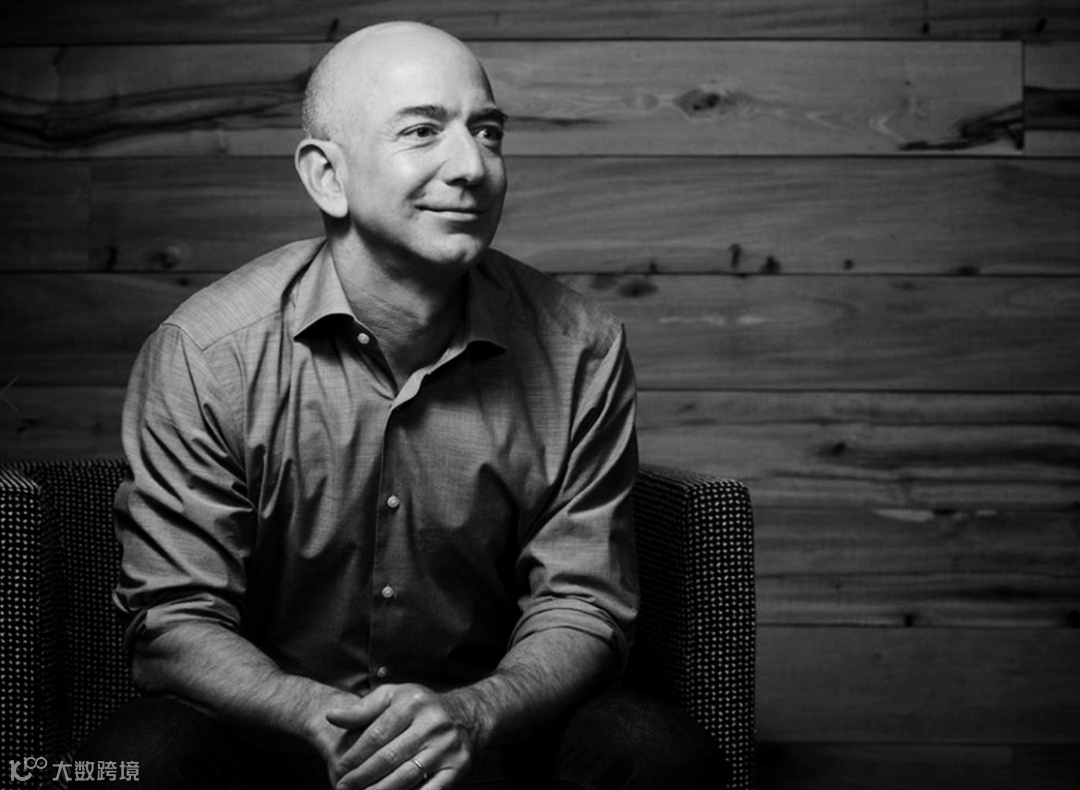
杰夫 • 贝索斯,亚马逊创始人。他在演讲中提到:天赋和选择不同。聪明是一种天赋,而善良是一种选择。天赋与生俱来,而选择则颇为不易。如果一不小心,你可能被天赋所诱惑,作出损害到你自己的选择。
当从零开始塑造自己人生之时,你们会如何运用自己的天赋? 又会作出怎样的抉择?你们是被惯性所引导,还是追随内心的热情? 会墨守陈规,还是勇于创新? 你们会选择安逸的生活,还是选择奉献与冒险的人生? 你们会屈从于批评,还是会坚守信念?

在未来,你们会试图掩饰错误,还是会坦诚道歉? 你们会因害怕拒绝而掩饰内心,还是会在面对真爱勇往直前? 面对生活,你们想要波澜不惊,还是想要乘风破浪?
在严峻的现实之下,你们是会选择放弃,还是会义无反顾地前行? 你们要做愤世嫉俗者,还是脚踏实地者? 你们要不计一切代价地展示聪明,还是退一步选择善良?
在你们80岁时,某个追忆往昔的时刻,一个人静静对内心诉说自己的人生故事。其中最充实、最有意义的那段讲述,会填满你们一生中作出的无数选择,是选择塑造了我们的人生。
为你自己塑造一个伟大的人生故事吧。
英文演讲全文
As a kid, I spent my summers with my grandparents on their ranch in Texas. I helped fix windmills, vaccinate cattle, and do other chores. We also watched soap operas every afternoon, especially "Days of our Lives." My grandparents belonged to a Caravan Club, a group of Airstream trailer owners who travel together around the U.S. and Canada. And every few summers, we'd join the caravan. We'd hitch up the Airstream trailer to my grandfather's car, and off we'd go, in a line with 300 other Airstream adventurers. I loved and worshipped my grandparents and I really looked forward to these trips. On one particular trip, I was about 10 years old. I was rolling around in the big bench seat in the back of the car. My grandfather was driving. And my grandmother had the passenger seat. She smoked throughout these trips, and I hated the smell.
At that age, I'd take any excuse to make estimates and do minor arithmetic. I'd calculate our gas mileage -- figure out useless statistics on things like grocery spending. I'd been hearing an ad campaign about smoking. I can't remember the details, but basically the ad said, every puff of a cigarette takes some number of minutes off of your life: I think it might have been two minutes per puff. At any rate, I decided to do the math for my grandmother. I estimated the number of cigarettes per days, estimated the number of puffs per cigarette and so on. When I was satisfied that I'd come up with a reasonable number, I poked my head into the front of the car, tapped my grandmother on the shoulder, and proudly proclaimed, "At two minutes per puff, you've taken nine years off your life!” I have a vivid memory of what happened, and it was not what I expected. I expected to be applauded for my cleverness and arithmetic skills. "Jeff, you're so smart. You had to have made some tricky estimates, figure out the number of minutes in a year and do some division." That's not what happened. Instead, my grandmother burst into tears. I sat in the backseat and did not know what to do. While my grandmother sat crying, my grandfather, who had been driving in silence, pulled over onto the shoulder of the highway. He got out of the car and came around and opened my door and waited for me to follow. Was I in trouble? My grandfather was a highly intelligent, quiet man. He had never said a harsh word to me, and maybe this was to be the first time? Or maybe he would ask that I get back in the car and apologize to my grandmother. I had no experience in this realm with my grandparents and no way to gauge what the consequences might be. We stopped beside the trailer. My grandfather looked at me, and after a bit of silence, he gently and calmly said, "Jeff, one day you'll understand that it's harder to be kind than clever.”
What I want to talk to you about today is the difference between gifts and choices. Cleverness is a gift, kindness is a choice. Gifts are easy -- they're given after all. Choices can be hard. You can seduce yourself with your gifts if you're not careful, and if you do, it'll probably be to the detriment of your choices. This is a group with many gifts. I'm sure one of your gifts is the gift of a smart and capable brain. I'm confident that's the case because admission is competitive and if there weren't some signs that you're clever, the dean of admission wouldn't have let you in.
Your smarts will come in handy because you will travel in a land of marvels. We humans — plodding as we are -- will astonish ourselves. We'll invent ways to generate clean energy and a lot of it. Atom by atom, we'll assemble tiny machines that will enter cell walls and make repairs. This month comes the extraordinary but also inevitable news that we've synthesized life. In the coming years, we'll not only synthesize it, but we'll engineer it to specifications. I believe you'll even see us understand the human brain. Jules Verne, Mark Twain, Galileo, Newton -- all the curious from the ages would have wanted to be alive most of all right now.As a civilization, we will have so many gifts, just as you as individuals have so many individual gifts as you sit before me. How will you use these gifts? And will you take pride in your gifts or pride in your choices?
I got the idea to start Amazon 16 years ago. I came across the fact that Web usage was growing at 2,300 percent per year. I'd never seen or heard of anything that grew that fast, and the idea of building an online bookstore with millions of titles -- something that simply couldn't exist in the physical world -- was very exciting to me. I had just turned 30 years old, and I'd been married for a year. I told my wife MacKenzie that I wanted to quit my job and go do this crazy thing that probably wouldn't work since most startups don't, and I wasn't sure what would happen after that. MacKenzie (also a Princeton grad and sitting here in the second row) told me I should go for it. As a young boy, I'd been a garage inventor. I'd invented an automatic gate closer out of cement-filled tires, a solar cooker that didn't work very well out of an umbrella and tinfoil, baking-pan alarms to entrap my siblings. I'd always wanted to be an inventor, and she wanted me to follow my passion.
I was working at a financial firm in New York City with a bunch of very smart people, and I had a brilliant boss that I much admired. I went to my boss and told him I wanted to start a company selling books on the Internet. He took me on a long walk in Central Park, listened carefully to me, and finally said, "That sounds like a really good idea, but it would be an even better idea for someone who didn't already have a good job." That logic made some sense to me, and he convinced me to think about it for 48 hours before making a final decision.Seen in that light, it really was a difficult choice, but ultimately, I decided I had to give it a shot. I didn't think I'd regret trying and failing. And I suspected I would always be haunted by a decision to not try at all. After much consideration, I took the less safe path to follow my passion, and I'm proud of that choice.
Tomorrow, in a very real sense, your life -- the life you author from scratch on your own -- begins.How will you use your gifts? What choices will you make?Will inertia be your guide, or will you follow your passions?Will you follow dogma, or will you be original?Will you choose a life of ease, or a life of service and adventure?Will you wilt under criticism, or will you follow your convictions?Will you bluff it out when you're wrong, or will you apologize?Will you guard your heart against rejection, or will you act when you fall in love?Will you play it safe, or will you be a little bit swashbuckling? When it's tough, will you give up, or will you be relentless?Will you be a cynic, or will you be a builder?Will you be clever at the expense of others, or will you be kind?
I will hazard a prediction. When you are 80 years old, and in a quiet moment of reflection narrating for only yourself the most personal version of your life story, the telling that will be most compact and meaningful will be the series of choices you have made. In the end, we are our choices. Build yourself a great story.
Thank you and good luck!
5
失败,不过意味着全新的开始
奥普拉 • 温弗瑞 哈佛大学,2013
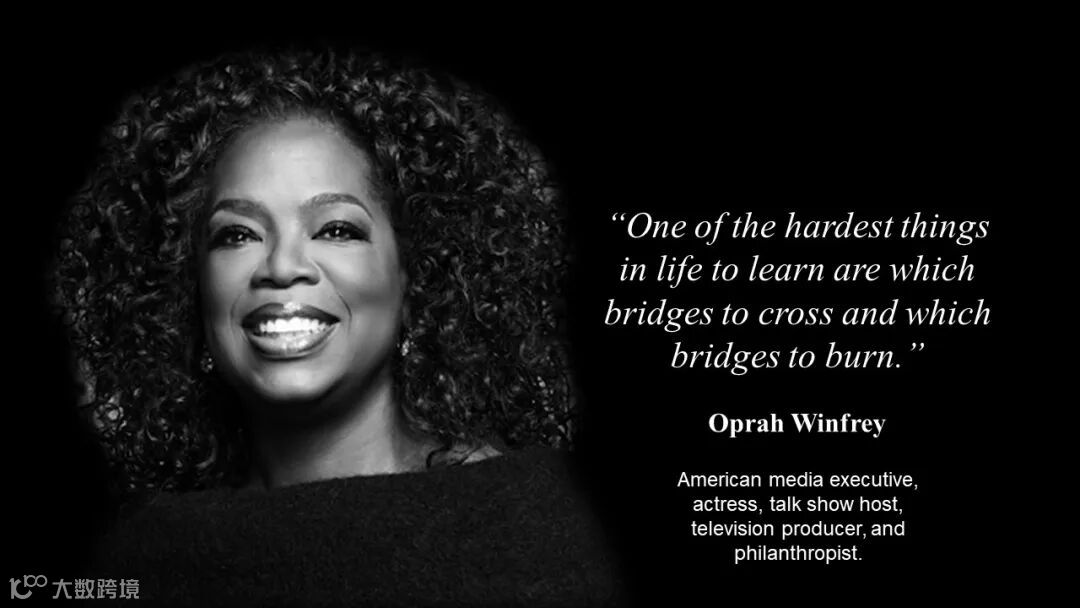
奥普拉 • 温弗瑞,美国著名制片/主持人,金球奖终身成就奖获得者。
无论你已经达到怎样的成就,如果你一直不断让自己向更高的目标前行,那么在某个节点,你必然会跌倒。当你跌倒之时,我想让你知道并牢记:「世间并不存在失败,那不过是生活想让我们换个方向而已。」

当你处于人生低谷之时,你可以难过一段时间,给自己时间去哀悼你认为可能失去的一切,但关键在于:从每个失败和遭遇中学习。每个错误都会教会,并迫使你成为真正的自己,指引你未来可能的道路。
无论你处于人生哪个阶段,如果可以,请拿出时间、天赋以及金钱,做你力所能及的事。无论你在哪里,请将爱心和仁慈带给他人。

你可能会失足跌倒,我们之中谁也难以幸免。对未来之路你会彷徨、忧虑、无所适从,但我知道:只要你肯听从内心深处的声音,你体内隐藏的定位系统,能让你回归人生的本真,你会因此活的更加光彩夺目。
如果真的能做到。你一定会快乐,世界也一定因你而不同。
英文演讲全文
To President Faust, my fellow honorands, Carl that was so beautiful, thank you so much, and James Rothenberg, Stephanie Wilson, Harvard faculty with a special bow to my friend Dr. Henry Lewis Gates.
All of you alumni with a special bow to the class of '88, your hundred fifteen million dollars.And to you, members of the Harvard class of 2013! Hello!
I thank you for allowing me to be a part of the conclusion of this chapter of your lives and the commencement of your next chapter. To say that I'm honored doesn't even begin to quantify the depth of gratitude that really accompanies an honorary doctorate from Harvard. Not too many little girls from rural Mississippi have made it all the way here to Cambridge. And I can tell you that I consider today as I sat on the stage this morning getting teary for you all and then teary for myself, I consider today a defining milestone in a very long and a blessed journey. My one hope today is that I can be a source of some inspiration. I'm going to address my remarks to anybody who has ever felt inferior or felt disadvantaged, felt screwed by life, this is a speech for the quad.
Actually I was so honored I wanted to do something really special for you. I wanted to be able to have you look under your seats and there would be free master and doctor degrees but I see you got that covered already. I will be honest with you. I felt a lot of pressure over the past few weeks to come up with something that I could share with you that you hadn't heard before because after all you all went to Harvard, I did not. But then I realized that you don't have to necessarily go to Harvard to have a driven obsessive Type A personality. But it helps. And while I may not have graduated from here I admit that my personality is about as Harvard as they come. You know my television career began unexpectedly.
As you heard this morning I was in the Miss Fire Prevention contest. That was when I was 16 years old in Nashville, Tennessee and you had the requirement of having to have red hair in order to win up until the year that I entered. So they were doing the question and answer period because I knew I wasn't going to win under the swimsuit competition. So during the question and answer period the question came "Why, young lady, what would you like to be when you grow up?" And by the time they got to me all the good answers were gone. So I had seen Barbara Walters on the Today Show that morning so I answered "I would like to be a journalist. I would like to tell other people's stories in a way that makes a difference in their lives and the world." And as those words were coming out of my mouth I went whoa! This is pretty good! I would like to be a journalist. I want to make a difference. Well I was on television by the time I was 19 years old.
And in 1986 I launched my own television show with a relentless determination to succeed at first. I was nervous about the competition and then I became my own competition raising the bar every year, pushing, pushing, pushing myself as hard as I knew. Sound familiar to anybody here? Eventually we did make it to the top and we stayed there for 25 years.
The Oprah Winfrey Show was number one in our time slot for 21 years and I have to tell you I became pretty comfortable with that level of success. But a few years ago I decided as you will at some point, that it was time to recalculate, find new territory, break new ground. So I ended the show and launched OWN, the Oprah Winfrey Network. The initials just worked out for me. So one year later after launching OWN nearly every media outlet had proclaimed that my new venture was a flop.
Not just a flop but a big bold flop they call it. I can still remember the day I opened up USA Today and read the headline "Oprah, not quite standing on her OWN." I mean really, USA Today? Now that's the nice newspaper! It really was this time last year the worst period in my professional life. I was stressed and I was frustrated and quite frankly I was actually I was embarrassed. It was right around that time that President Faust called and asked me to speak here and I thought you want me to speak to Harvard graduates? What could I possibly say to Harvard graduates, some of the most successful graduates in the world in the very moment when I had stopped succeeding? So I got off the phone with President Faust and I went to the shower. It was either that or a bag of Oreos. So I chose the shower. And I was in the shower a long time and as I was in the shower the words of an old hymn came to me. You may not know it.
It's "By and by, when the morning comes." And I started thinking about when the morning might come because at the time I thought I was stuck in a hole. And the words came to me "Trouble don't last always" from that hymn, "this too shall pass." And I thought as I got out of the shower I am going to turn this thing around and I will be better for it. And when I do, I'm going to go to Harvard and I'm going to speak the truth of it! So I'm here today to tell you I have turned that network around!
And it was all because I wanted to do it by the time I got to speak to you all so thank you so much. You don't know what motivation you were for me, thank you. I'm even prouder to share a fundamental truth that you might not have learned even as graduates of Harvard unless you studied the ancient Greek hero with Professor Nagy. Professor Nagy as we were coming in this morning said "Please Ms. Winfrey, walk decisively."
I shall walk decisively. This is what I want to share. It doesn't matter how far you might rise. At some point you are bound to stumble because if you're constantly doing what we do, raising the bar. If you're constantly pushing yourself higher, higher the law of averages not to mention the Myth of Icarus predicts that you will at some point fall. And when you do I want you to know this, remember this: there is no such thing as failure. Failure is just life trying to move us in another direction. Now when you're down there in the hole, it looks like failure. So this past year I had to spoon feed those words to myself. And when you're down in the hole, when that moment comes, it's really okay to feel bad for a little while.
Give yourself time to mourn what you think you may have lost but then here's the key, learn from every mistake because every experience, encounter, and particularly your mistakes are there to teach you and force you into being more who you are. And then figure out what is the next right move. And the key to life is to develop an internal moral emotional G.P.S. that can tell you which way to go. Because now and forever more when you Google yourself your search results will read "Harvard, 2013". And in a very competitive world that really is a calling card because I can tell you as one who employs a lot of people when I see "Harvard" I sit up a little straighter and say "Where is he or she? Bring them in." it's an impressive calling card that can lead to even more impressive bullets in the years ahead: lawyer, senator, C.E.O., scientist, physicist, winners of Nobel and Pulitzer Prizes or late night talk show host.
But the challenge of life I have found is to build a resume that doesn't simply tell a story about what you want to be but it's a story about who you want to be. It's a resume that doesn't just tell a story about what you want to accomplish but why. A story that's not just a collection of titles and positions but a story that's really about your purpose. Because when you inevitably stumble and find yourself stuck in a hole that is the story that will get you out. What is your true calling? What is your dharma? What is your purpose? For me that discovery came in 1994 when I interviewed a little girl who had decided to collect pocket change in order to help other people in need. She raised a thousand dollars all by herself and I thought well if that little 9 year old girl with a bucket and big heart could do that I wonder what I could do? So I asked for our viewers to take up their own change collection and in one month just from pennies and nickels and dimes we raised more than three million dollars that we used to send one student from every state in the United States to college. That was the beginning of the Angel Network.
And so what I did was I simply asked our viewers "Do what you can wherever you are, from wherever you sit in life. Give me your time or your talent your money if you have it." And they did. Extend yourself in kindness to other human beings wherever you can. And together we built 55 schools in 12 different countries and restored nearly 300 homes that were devastated by hurricanes Rita and Katrina. So the Angel Network I have been on the air for a long time, but it was the Angel Network that actually focused my internal G.P.S. It helped me to decide that I wasn't going to just be on TV every day but that the goal of my shows, my interviews, my business, my philanthropy all of it, whatever ventures I might pursue would be to make clear that what unites us is ultimately far more redeeming and compelling than anything that separates me.
Because what had become clear to me and I want you to know it isn't always clear in the beginning because as I said I had been on television since I was 19 years old. But around '94 I got really clear. So don't expect the clarity to come all at once to know your purpose right away, but what became clear to me was that I was here on earth to use television and not be used by it; to use television to illuminate the transcendent power of our better angels. So this Angel Network, it didn't just change the lives of those who were helped, but the lives of those who also did the helping. It reminded us that no matter who we are or what we look like or what we may believe it is both possible and more importantly it becomes powerful to come together in common purpose and common effort. I saw something on the Bill Moore Show recently that so reminded me of this point. It was an interview with David and Francine Wheeler.
They lost their 7 year old son, Ben in the Sandy Hook tragedy. And even though gun safety legislation to strengthen background checks had just been voted down in Congress at the time that they were doing this interview they talked about how they refused to be discouraged. Francine said this, she said "Our hearts are broken but our spirits are not. I'm going to tell them what it's like to find a conversation about change that is love, and I'm going to do that without fighting them." And then her husband David added this, "You simply cannot demonize or vilify someone who doesn't agree with you, because the minute you do that, your discussion is over. And we cannot do that any longer. The problem is too enormous. There has to be some way that this darkness can be banished with light."
In our political system and in the media we often see the reflection of a country that is polarized, that is paralyzed and is self-interested. And yet, I know you know the truth. We all know that we are better than the cynicism and the pessimism that is regurgitated throughout Washington and the 24-hour cable news cycle. Not my channel, by the way. We understand that the vast majority of people in this country believe in stronger background checks because they realize that we can uphold the Second Amendment and also reduce the violence that is robbing us of our children. They don't have to be incompatible.
And we understand that most Americans believe in a clear path to citizenship for the 12,000,000 undocumented immigrants who reside in this country because it's possible to both enforce our laws and at the same time embrace the words on the Statue of Liberty that have welcomed generations of huddled masses to our shores. We can do both.And we understand. I know you do because you went to Harvard. There are people from both parties and no party believe that indigent mothers and families should have access to healthy food and a roof over their heads and a strong public education because here in the richest nation on earth we can afford a basic level of security and opportunity. So the question is what are we going to do about it? Really what are you going to do about it? Maybe you agree with these beliefs. Maybe you don't. Maybe you care about these issues and maybe there are other challenges that you, class of 2013, are passionate about.
Maybe you want to make a difference by serving in government. Maybe you want to launch your own television show. Or maybe you simply want to collect some change. Your parents would appreciate that about now. The point is your generation is charged with this task of breaking through what the body politic has thus far made impervious to change. Each of you has been blessed with this enormous opportunity of attending this prestigious school. You now have a chance to better your life, the lives of your neighbors and also the life of our country. When you do that let me tell you what I know for sure. That's when your story gets really good. Maya Angelou always says "When you learn, teach. When you get, give. That my friends is what gives your story purpose and meaning."
So you all have the power in your own way to develop your own Angel Network and in doing so your class will be armed with more tools of influence and empowerment than any other generation in history. I did it in an analog world. I was blessed with a platform that at its height reached nearly 20,000,000 viewers a day. Now here in a world of Twitter and Facebook and YouTube and Tumbler, you can reach billions in just seconds. You're the generation that rejected predictions about your detachment and your disengagement by showing up to vote in record numbers in 2008. And when the pundits said they said they talked about you, they said you'd be too disappointed, you'd be too dejected to repeat that same kind of turnout in 2012 election and you proved them wrong by showing up in even greater numbers. That's who you are.
This generation your generation I know has developed a finely honed radar for B.S. Can you say "B.S." at Harvard? The spin and phoniness and artificial nastiness that saturates so much of our national debate. I know you all understand better than most that real progress requires authentic- an authentic way of being, honesty, and above all empathy. I have to say that the single most important lesson I learned in 25 years talking every single day to people was that there is a common denominator in our human experience. Most of us I tell you we don't want to be divided. What we want, the common denominator that I found in every single interview, is we want to be validated. We want to be understood.
I have done over 35,000 interviews in my career and as soon as that camera shuts off everyone always turns to me and inevitably in their own way asks this question "Was that okay?" I heard it from President Bush, I heard it from President Obama. I've heard it from heroes and from housewives. I've heard it from victims and perpetrators of crimes. I even heard it from Beyonce and all of her Beyonceness. She finishes performing, hands me the microphone and says "Was that okay?" Friends and family, yours, enemies, strangers in every argument in every encounter, every exchange I will tell you they all want to know one thing: was that okay? Did you hear me? Do you see me? Did what I say mean anything to you? And even though this is a college where Facebook was born my hope is that you would try to go out and have more face-to-face conversations with people you may disagree with.
That you'll have the courage to look them in the eye and hear their point of view and help make sure that the speed and distance and anonymity of our world doesn't cause us to lose our ability to stand in somebody else's shoes and recognize all that we share as a people. This is imperative for you as an individual and for our success as a nation. "There has to be some way that this darkness can be banished with light," says the man whose little boy was massacred on just an ordinary Friday in December. So whether you call it soul or spirit or higher self, intelligence, there is I know this, there is a light inside each of you all of us that illuminates your very human beingness if you let it. And as a young girl from rural Mississippi I learned long ago that being myself was much easier than pretending to be Barbara Walters. Although when I first started because I had Barbara in my head I would try to sit like Barbara, talk like Barbara, move like Barbara and then one night I was on the news reading the news and I called Canada Can-a-da, and that was the end of me being Barbara. I cracked myself up on TV. Couldn't stop laughing and my real personality came through and I figured out oh gee, I can be a much better Oprah than I could be a pretend Barbara.
I know that you all might have a little anxiety now and hesitation about leaving the comfort of college and putting those Harvard credentials to the test. But no matter what challenges or setbacks or disappointments you may encounter along the way you will find true success and happiness if you have only one goal, there really is only one and that is this: to fulfill the highest most truthful expression of yourself as a human being. You want to max out your humanity by using your energy to lift yourself up, your family and the people around you. Theologian Howard Thurman said it best. He said "Don't ask yourself what the world needs. Ask yourself what makes you come alive and then go do that because what the world needs is people who have come alive." The world needs-
People like Michael Stolzenberg from Fort Lauderdale. When Michael was just 8 years old Michael nearly died from a bacterial infection that cost him both of his hands and both of his feet. And in an instant this vibrant little boy became a quadruple amputee and his life was changed forever. But in losing who he once was Michael discovered who he wanted to be. He refused to sit in that wheelchair all day and feel sorry for himself so with prosthetics he learned to walk and run and play again. He joined his middle school lacrosse team and last month when he learned that so many victims of the Boston Marathon bombing would become new amputees Michael decided to banish that darkness with light. Michael and his brother Harris created Mikeysrun.com to raise 1,000,000 dollars for other amputees.
By the time Harris runs the 2014 Boston Marathon. More than 1,000 miles away from here these two young brothers are bringing people together to support this Boston community the way their community came together to support Michael. And when this 13 year old man was asked about his fellow amputees he said this "First they will be sad. They're losing something they will never get back and that's scary. I was scared. But they'll be okay. They just don't know that yet." We might not always know it. We might not always see it, or hear it on the news or even feel it in our daily lives but I have faith that no matter what class of 2013 you will be okay and you will make sure our country is okay.
I have faith because of that 9 year old girl who went out and collected the change. I have faith because of David and Francine Wheeler, I have faith because of Michael and Harris Stolzenberg and I have faith because of you, the network of angeles sitting here today. One of them Kadija Williams who came to Harvard four years ago. Kadija had attended 12 schools in 12 years living out of garbage bags amongst pimps and prostitutes and drug dealers, homeless, going in to department stores, Wal-Mart in the morning to bathe herself so that she wouldn't smell in front of her classmates and today she graduates as a member of the Harvard class of 2013.
From time to time you may stumble fall, you will for sure count in this no doubt, you will have questions and you will have doubts about your path but I know this, if you're willing to listen to be guided by that still small voice that is the G.P.S. within yourself, to find out what makes you come alive you will be more than okay. You will be happy, you will be successful, and you will make a difference in the world. Congratulations class of 2013, congratulations to your family and friends, good luck and thank you for listening. Was that okay?
北京英恒数字科技
专注于中国未来数字科技发展的创新型科技企业