近年来,中国的收藏界风起云涌,很多藏品大幅升值,而其中升值最快的、升值幅度最大的品种之一便是钱币,而古钱币收藏大军也不断壮大。方孔钱是我国古代钱币中最常见的一种,是指中间有方孔的圆形钱币,由环形钱演变而来,成为我国古代铜钱的固定形式。圆形方孔钱在形制上完全符合“天圆地方”传统哲学观念,所以在中国通行了两千多年,无论是秦统一中国后颁行的半两钱、汉代通行的五铢钱,还是唐代以后通行 的各种“通宝”、“元宝”,在形制上都完全一样。由于历代帝王将相和文人艺术家的参与,使小小的钱币成为文化艺术的载体和结晶,拥有一段悠久而丰富的历史。
In recent years, China's collections have been surging, and many collections have appreciated sharply. Among them, one of the fastest-rising and most appreciated varieties is coins, and the ancient coins collection army has also grown. Square hole money is the most common type of ancient Chinese coins. It refers to the round coin with square holes in the middle, which evolved from the ring money and became a fixed form of ancient Chinese copper coins. The circular square hole money completely conforms to the traditional philosophical concept of “Tianyuan Place”, so it has been used in China for more than 2,000 years, whether it is half of the money issued by Qin unified China, and the five money passed by the Han Dynasty. The various "Tongbao" and "Yuanbao" that passed through the Tang Dynasty are exactly the same in shape. Thanks to the participation of emperors and literati artists, the small coins have become the carrier and crystallization of culture and art, and they have a long and rich history.
康熙通宝,顾名思义就是在清圣祖康熙年间(1662-1722年)铸成并在清代流通的货币。作为我国的古代钱币之一,康熙通宝是非常具有考古价值的。由于当时社会秩序相对稳定,经济发展迅速,并且世界各地通商贸易频繁,货币经济也十分发达。所以康熙年间的钱币通常都铸造得非常精致,大都很规整,钱型厚重,文字美观大方,因此康熙通宝也具有一定的艺术价值。
Kangxi Tongbao, as its name suggests, was the currency that was cast in the Qing dynasty during the Kangxi period (1662-1722) and circulated in the Qing Dynasty. As one of the ancient coins of our country, Kangxi Tongbao is very archaeological. Because the social order was relatively stable at that time, the economy developed rapidly, and trade in the world was frequent, and the monetary economy was also very developed. Therefore, Kangxi years of coins are usually very refined, large and regular, heavy money, beautiful text, so Kangxi Tongbao also has a certain artistic value.
康熙帝命玄烨,生于顺治十一年(1654年5月4日),在位六十一年,是中国历史上在位时间最长的皇帝。康熙元年(1662年)清政府下令停铸上代“顺治通宝”钱,而改铸“康熙通宝”,并规定以后凡是嗣位改元,所铸钱制皆如此例。纵观康熙一朝,在全国开设了大大小小总共二十四处铸钱局。由于受当时冶铸工本和钱币私铸等问题的影响,每一文康熙钱曾分别重一钱四分、一钱、七分,这样一来便产生了我们今天所见到的大、中、小三种不同重量的“康熙通宝”钱。康熙通宝面文楷书直读,背记局,分“满文”、“满汉文”二种,满文钱仿“顺治四式”,钱背满文“宝泉”、“宝源”左读,是户、工两部所造。满汉文钱仿“顺治五式”,穿左为满文“宝”,穿右为汉文记局名。后人为收藏和研究方便,将满汉文纪地的局名编在一起,形成了一首押韵、顺口的康熙钱“背文诗”。诗云:同福临东江,宣原苏蓟昌。南河宁广浙,台桂陕云漳。这首诗将“康熙通宝”钱背满汉文的二十局都囊括其中。所以有人将康熙的这套钱称为“诗文二十品”。
Emperor Kangxi of the Emperor Kangxi was born in the 11th year of Shunzhi (May 4, 1654). He was in the 61st year and was the longest emperor in Chinese history. In the first year of Emperor Kangxi (1662), the Qing government ordered the suspension of the previous generation of "Shunzhi Tongbao" money, and recasted "Kangxi Tongbao", and stipulated that in the future, all the money will be changed. Throughout the Kangxi era, a total of twenty-four money-making bureaus were opened in the country. Due to the problems of the smelting and casting of coins and the private casting of coins at the time, each Wen Kangxi money had to pay four cents, one yuan, and seven cents respectively, which produced the big, medium and small three that we have seen today. A variety of weights of "Kangxi Tongbao" money. Kangxi Tongbao face literary book direct reading, memorization bureau, divided into "Man Wen", "Man Han Wen" two kinds, Man Wen Qian imitation "Shunzhi four style", money back Manchu "Baoquan", "Baoyuan" left reading It is made by both households and workers. Man Hanwen money imitation "Shunzhi five styles", wear the left for the Manchu "treasure", wear the right for the Chinese character bureau. Later generations were convenient for collecting and researching, and together they compiled the names of the Manchu and the Chinese, and formed a rhyming and fluent Kangxi money “back poem”. Poetry Cloud: Tongfu Dongjiang, Xuanyuan Su Yuchang. Nanhe Ning Guangzhe, Taigui, Shaanxi and Yunnan. This poem includes the 20th round of the Kangxi Tongbao money backed by Chinese. Therefore, some people refer to Kangxi’s money as “20 poems”.
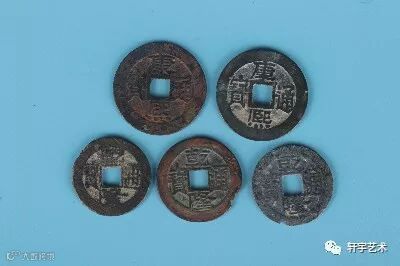
上面2枚康熙通宝即铸于清圣祖康熙年间,分别重:3.8g直径: 2.8cm;重:4.5g直径: 2.77cm。正面珠圈内印有“康熙通宝”四字,以楷书书写,从上而下而右而左直读,中间有方孔;钱币背面珠圈内印有满文字体。钱币印制规整,钱型厚重,文字美观大方,锈色自然流畅,整体古朴大气,是康熙年间钱币铸造的精品,极具历史收藏价值与市场价值。
The above two Kangxi Tongbao were cast in the Qing Emperor Kangxi years, weighing: 3.8g diameter: 2.8cm; weight: 4.5g diameter: 2.77cm. The front bead circle is printed with the words "Kangxi Tongbao", written in the script, read directly from top to bottom, right and left, with square holes in the middle; the back of the coin is printed with full fonts. The coins are printed regularly, the money is thick, the text is beautiful and generous, the rust is natural and smooth, and the overall simplicity is the essence of Kangxi's coin casting, which has great historical collection value and market value.
乾隆,寓意“天道昌隆”,乾隆帝25岁登基,在位的六十年里施展其“文治武功”的治国策略,创造了封建社会里最后一个辉煌盛世,之后民间便盛传佩带“乾隆通宝”铜钱可驱灾辟邪,又因乾隆二字谐音“钱隆”而成为备受后世藏家所喜爱的钱币。
Qianlong, meaning "Tiandao Changlong", Emperor Qianlong was enthroned at the age of 25, and in the 60 years of his reign, he exerted his strategy of managing the country with "Wenzhi martial arts" and created the last glorious flourishing life in the feudal society. After that, the folks rumored to wear "Qianlong Tongbao". Copper coins can drive out evils and ward off evil spirits, and because of Qianlong's two-character homonym "Qianlong", it has become a favorite coin of later generations.
雍正十三年(1735年),清高宗即位,改元乾隆。铸行“乾隆通宝”,要求仍重一钱二分,该钱书法铸工都比雍正时更为精美。最初清政府仍继续执行通货紧缩的政策。钱局较雍正时有所增减,首先在乾隆四年,停了宝河、宝巩、宝济三局,于乾隆五年时开宝福局,七年开宝桂局,十年开宝直局。乾隆朝以前的制钱不加锡,以铜、铅、锌配制,称之为“黄钱”,在乾隆五年规定在铸钱铜料之中加百分之二的锡,称为“青钱”。官方说是为杜绝私钱,实则无异于减重。“乾隆四十年时,私铸情况日盛,各省官员出现盗铸,政府对此无计可施,加上云南铜产量逐年递减,导致铜价飞涨,铸钱成本也随之水涨船高。清政府继而又采取了通货紧缩政策,先后停铸了宝直、大理、广西、临安等局,同时鼓励商人从海外进口铜材。但是这些措施未能从根本上解决问题,私铸虽有所减少,但官钱不见增加,民间交易缺钱,就出现了使用古钱的现象。
In the thirteenth year of Emperor Yongzheng (1735), Qing Gaozong was in the throne and changed to the Yuan Emperor Qianlong. Casting "Qianlong Tongbao", the request still pays a sum of money and two points, the money calligraphy casters are more beautiful than the time. Initially the Qing government continued to implement the policy of deflation. The money bureau has increased or decreased compared with the Zhengzheng. First, in the four years of Qianlong, the Baohe, Baogong and Baoji three bureaus were suspended. In the five years of Qianlong, the Baofu Bureau was opened, and in seven years, the Baogui Bureau was opened. Straight. Qianlong’s previous money was not tinned, and it was made of copper, lead and zinc. It was called “yellow money”. In the five years of Qianlong’s stipulation, 2% of tin was added to the cast copper material, called “green”. money". The official said that in order to prevent private money, it is tantamount to reducing weight. "For the forty years of Qianlong, private castings were flourishing, and officials from various provinces were robbed. The government has nothing to do with it, and Yunnan's copper output has been declining year by year, causing copper prices to soar, and the cost of casting money has risen. The Qing government then took it. The deflation policy has stopped the production of Baozhi, Dali, Guangxi, Lin'an and other bureaus, and encouraged businessmen to import copper from overseas. However, these measures failed to solve the problem fundamentally. Although the private casting has been reduced, the official money is not seen. Increase, the lack of money in private transactions, the phenomenon of the use of ancient money.
到了乾隆五十年后,又相继开了宝直等局,同时放宽了铸钱的标准,所以导致乾隆后期制钱的质量参差不齐,大不如初的情况。乾隆通宝连宝泉、宝源在内先后有29局开铸,多用黄铜与青铜,也引进国外洋铜浇制法,钱币精美,至为珍贵。
Fifty years after Qianlong, they successively opened the Bureau of Baozhi and relaxed the standard of casting money. As a result, the quality of money produced in the late Qianlong period was uneven, which was not as good as the initial situation. Qianlong Tongbao Lianbaoquan and Baoyuan have successively opened 29 projects, using brass and bronze, and also introduced foreign copper casting method. The coins are exquisite and precious.
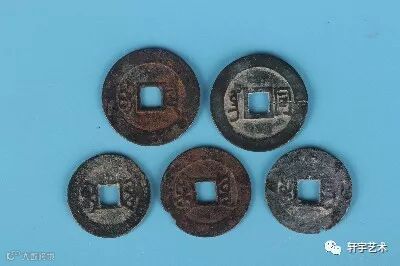
下面3枚乾隆通宝即铸于清高宗乾隆年间(1736-1795年),分别重3.6g直径: 2.37cm;重:3.4g直径: 2.57cm;重:3.4g直径: 2.43cm。钱面文字“乾隆通宝”以楷书书写,其字从上而下而右而左直读。钱背文字沿雍正满文钱式穿孔左右铸有满文。此币品相完整,包浆自然老气且流传数量少,是收藏家们青眯的对象,具有很高的收藏价值!
The following three Qianlong Tongbao were cast in Qing Emperor Qianlong's reign (1736-1795), weighing 3.6g respectively: 2.37cm; weight: 3.4g diameter: 2.57cm; weight: 3.4g diameter: 2.43cm. The face of the money "Qianlong Tongbao" is written in the script, and the words read directly from top to bottom and right and left. The text of the back of the money is filled with Manchu in the perforation of Yongzheng Manwen. This coin is complete in phase, the patina is naturally old and the number is small, and it is the object of the collectors. It has a high collection value!
这五枚钱币版面设计优雅,雕刻精良,且存世量极为稀少,都是被誉为中国近代制币中的名誉品。钱币正面文字清秀俊美,大气磅礴,包浆自然浓厚,铸造精湛。品相平添几分沧桑的历史韵味,相辅相成、相得益彰,属于难得珍品,极具收藏价值!
These five coins are elegantly designed, well-carved, and extremely rare in existence. They are all known as the honorary items in modern Chinese coins. The positive text of the coin is beautiful and beautiful, the atmosphere is majestic, the patina is naturally strong, and the casting is exquisite. The product adds a few points to the historical charm of the vicissitudes of life, complement each other, complement each other, is a rare treasure, very collectible value!
丰富艺术生活,传递艺术价值!如果您对这一组5枚康熙通宝、乾隆通宝感兴趣,欢迎联系轩宇(广州)艺术传媒有限公司!
Enrich art life and deliver artistic value! If you are interested in this group of 5 Kangxi Tongbao and Qianlong Tongbao, please contact Xuanyu (Guangzhou) Art Media Co., Ltd.!
分享是一种美德,分享是一种快乐,学会分享,快乐他人!
Sharing is a virtue, sharing is a pleasure, learning to share, happy others!

中国书画:历代著名画家及近现代名人绘画精品等;
中国陶瓷:历代陶瓷精品等高端艺术品;
翡翠玉器:明清玉、高古玉、近现代玉器、翡翠等;
杂项精品:木雕、印章、奇石、文房用品、古籍善本等。
轩宇(广州)艺术传媒有限公司
联系地址:广州市天河区珠江新城华夏路30号富力盈通大厦808
公司官网:http://xuanyupm.com/index.html
联系电话:400-156-3599