


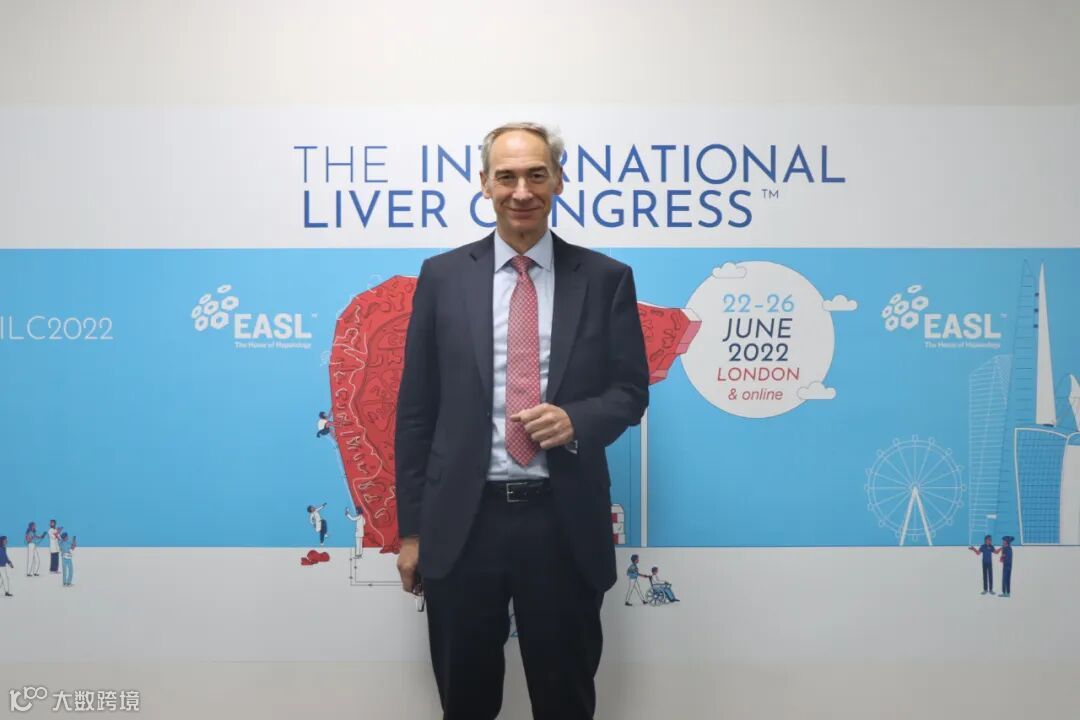
2022年6月22~26日,第57届欧洲肝病研究学会年会(EASL2022)暨2022年国际肝脏大会™(ILC 2022)于英国伦敦以线下同步线上的形式成功举行。这是COVID-19大流行以来,EASL年会首次回归线下,备受瞩目。《国际肝病》团队亲赴现场,并有幸邀请到EASL秘书长、德国莱比锡大学的肝病学家Thomas Berg教授为我们介绍大会盛况和亮点,同时分享本届会议给我们带来的肝病学领域,特别是病毒性肝炎方向的新发现。

《国际肝病》
您作为EASL现任秘书长,请介绍一下本届会议的盛况和亮点?


Thomas Berg教授
英文原文:(上下滑动查看更多)
Prof. Berg:First of all, as you know, since the start of the COVID pandemic nearly three years ago, this is the first international liver meeting we have been able to hold in person. First of all, I am really very proud that there is so much interest in that we have nearly 7000 attendees and more than 5500 online, and that we can conserve the external community by a digital extension of EASL-ILC 2022. I think it is also important that we try to have more space for posters and interactions showing research. I will show you in a minute several relevant and very important new findings coming up with respect to viral hepatitis, non-alcoholic fatty liver disease, but also quite interesting data on rare liver diseases and liver cancer.
《国际肝病》
请您谈谈乙型肝炎现阶段的治疗目标、新药研究进展,以及未来研究重点。


Thomas Berg教授
英文原文:(上下滑动查看更多)
Prof. Berg:With respect to hepatitis B, we all aim for cure. Currently, the definition of cure is loss of HBsAg. There are very interesting antiviral drugs being evaluated, and we have seen interesting data here with siRNA, with anti-sense nucleotides, and very interesting end-of-treatment data showing up to 30% HBsAg being undetectable, and in another study, after follow-up evaluation, where it has been shown that it is not so easy to reach HBsAg loss. So we need more long-term follow-up data, and it is a big question whether we are too ambitious with the wish to achieve HBsAg loss after 24 or 48 weeks of antiviral treatment and with a very short follow-up; and whether either extended treatment or extended follow-up is needed to really show the full potential of these new drugs. Of course, a big question, with a better understanding of the immunology of hepatitis B, is whether we can interfere with and stimulate the immune system.
《国际肝病》
您认为基于现有抗病毒治疗药物和方案能否实现HBsAg清除?


Thomas Berg教授
英文原文:(上下滑动查看更多)
Prof. Berg:As I mentioned before, HBsAg clearance can be achieved, but what we have seen so far is the likelihood that, with the current treatment regimens, we will not achieve a high rate of HBsAg loss, at least, not if we look only 24 weeks after stopping treatment. As I mentioned, there may be some patients for whom we have seen encouraging data, who although they may not have lost HBsAg, the level of HBsAg 24 weeks after treatment becomes very low (<100 IU/ml). It really will be very interesting to have a longer follow-up of these patients, and with ongoing observation, whether they will see further reduction in HBsAg, and then HBsAg loss.
《国际肝病》
请您谈谈目前全球消除丙型肝炎作为公共威胁的进展,以及重点和难点。


Thomas Berg教授
英文原文:(上下滑动查看更多)
Prof. Berg:Worldwide, we are not on track with the WHO aim of achieving a 90% reduction in the incidence of hepatitis C virus infection. Some countries are more advanced. Some countries have taken good measures to implement early screening for hepatitis viral infection, particularly hepatitis C, but still in many countries it is lacking.
We have seen interesting data on how we can improve on achieving these WHO goals, and I still think the concept of micro-elimination (targeting the fields where the highest rates of new infection take place) could be a very good approach. There is an interesting study here from the UK where they screened people in prisons, and when they were detected as positive, they were treated immediately. Perhaps, this is the way forward in those situations where you find the highest prevalence of people being infected and starting treatment immediately in order to prevent further transmission of the virus, and significantly reduce the incidence rate of new infection.
Then the second step (and this is more difficult) is finding these cases in the general population. Here we need broad screening with ALT and hepatitis C tests at the primary care physician level. We learnt a lot about early testing and onsite testing with the COVID situation, so why not implement some of these ideas in order to find people with viral hepatitis.
《国际肝病》
最后,您想对未能来参会的《国际肝病》中国读者说些什么呢?


Thomas Berg教授
很遗憾,有很多来自世界各地的好朋友和 EASL成员,尤其是来自亚太地区、拉丁美洲和中东地区的成员,因为与COVID有关的旅行限制而无法亲身参会,我们非常想念他们。我可以告诉你的是,我们有数字扩展平台,所以你可以加入EASL学院网站,你可以加入大会,从现在开始接下来的六个月,你可以访问肝脏会议的所有内容。我想鼓励大家加入我们。我们将有一个新的会员策略,学员费用更低,然后您可以以非常合理的价格访问全部内容。因此,请加入EASL大家庭并成为会员。
英文原文:(上下滑动查看更多)
Prof. Berg:Yes. We are very sorry that we are missing very good friends and members of EASL from around the world, especially from the Asia-Pacific region, also Latin America, and the Middle East, that could not come, most of them because of the travel restrictions related to COVID. What I can tell you is that we have the digital extension, so you can join the EASL website on campus, you can join the Congress, and from now for the next six months, you can access all the content from the liver meeting. I would like to encourage everyone to become a member. We will have a new member strategy with lower fees for trainees, and then you can access the whole content for a very reasonable price. So please join the EASL family and become a member.

往期推荐
(来源:《国际肝病》编辑部)