



编者按
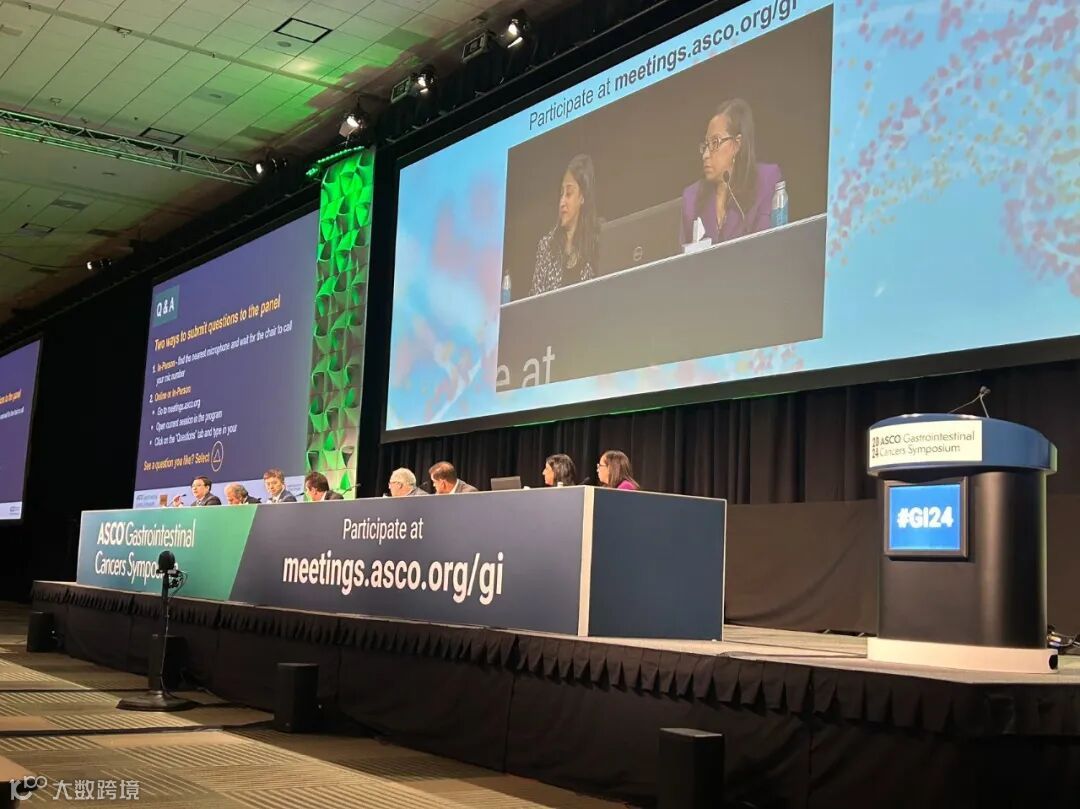
2024年美国临床肿瘤学会胃肠道肿瘤研讨会(ASCO GI 2024)于当地时间1月18~20日在旧金山召开。本次会议汇聚了世界各地的顶尖专家,共襄消化肿瘤盛举,共享学术研究盛宴。比萨大学医学院(University of Pisa School of Medicine)Riccardo Lencioni教授在当地时间19日的口头报告专场汇报了EMERALD-1研究(LBA432)最新数据。在现场采访中,Riccardo Lencioni教授分享了EMERALD-1研究的主要内容、现场讨论内容,以及对肝癌诊疗的见解。现整理相关内容,以飨读者!

一
您在本次大会上报告了“经动脉化疗栓塞和度伐利尤单抗联合或不联合贝伐珠单抗治疗不可切除肝癌患者”的最新结果,能否给我们分享一下这项研究的背景和主要结果?
We know that you have presented the latest results of “transarterial chemoembolization combined with durvalumab with or without bevacizumab in participants with unresectable hepatocellular carcinoma” at this conference, can you share with us the background and key findings of this study?
Dr. Lencioni:
The patient population that we studied in the EMERALD-1 trial are patients at the intermediate stage of HCC, so patients who are unsuitable for radical therapies such as surgery or ablation, but had disease still confined and limited to the liver. This patient population accounts for 20-30% of the 900 000 patients diagnosed with HCC every year worldwide. For more than 20 years, chemoembolization or TACE has been the standard-of-care for these patients. However, progression-free survival after TACE does not exceed 7-8 months, presenting a large unmet medical need. There is a strong rationale to explore the potential synergistic effects of chemoembolization with checkpoint inhibitors and VEGF inhibitors.
So EMERALD-1 was a double-blinded, randomized, placebo-controlled trial investigating the combination of chemoembolization plus durvalumab plus or minus bevacizumab. The trial had three arms. The first arm was TACE plus durvalumab followed by durvalumab. Arm B was TACE plus durvalumab followed by durvalumab plus bevacizumab. And Arm C was the control arm, which was TACE plus placebo followed by placebo. The primary endpoint was progression-free survival for the combination of durvalumab and bevacizumab.
EMERALD-1 met its primary endpoint, and the combination of durvalumab and bevacizumab with TACE resulted in a statistically significant and clinically meaningful improvement in progression-free survival with respect to TACE plus placebo. The median overall progression-free survival was 15 months in the combination of durvalumab and bevacizumab versus 8.2 months for placebo, with a hazard ratio of 0.77. Other endpoints, such as mTTP and objective response were also consistent with the outcome for the primary endpoint. The safety profile was manageable and in line with the known safety profiles of each drug. There were no new or unexpected adverse events.

二
大会现场专家们围绕这研究进行了哪些有意思的讨论?下一步的研究方向是?
What are the interesting discussions that the experts have conducted about this research at the conference, and what are your next research directions?
Dr. Lencioni:
Some questions were focused on the use of bevacizumab and the potential risk associated with bleeding. However, in the EMERALD-1 study, there were no deaths considered to be related to bevacizumab, and the percentage of grade 3/4 esophageal bleeding was relatively low. What is important in these patients is an assessment of the general condition of the patient, liver function, and the presence and risk of bleeding of varices, particularly esophageal varices. It is important to carefully select these patients.
I have to say that in the EMERALD-1 regimen, bevacizumab was not administered concurrently with TACE. In the protocol, there was a first part of the treatment that included 1-4 TACE procedures to be conducted within 16 weeks, with the number and timing at the discretion of the investigators. In this period, durvalumab was started, and once the TACE cycles were completed, patients started the combination of durvalumab and bevacizumab, or the relevant placebos. So there was no concurrent use of chemoembolization and bevacizumab.

三
您认为对于肝癌,临床还存在哪些治疗挑战?
What do you think are the clinical challenges for hepatocellular carcinoma?
Dr. Lencioni:
Hepatocellular carcinoma remains a very complex disease. Patients have two diseases. One is the tumor, and the other one is the underlying chronic liver disease, the cirrhosis. It is extremely important that each patient is assessed by a multidisciplinary tumor board to understand what is the best therapeutic strategy for each individual patient.
The available armamentarium is truly very broad now. It spans from surgery with transplantation or resection, a number of liver-directed therapies including ablation, TACE and radioembolization with Y90, and now several immune combinations that have shown efficacy across different stages of the disease. The armamentarium is much greater. Survival is improving in reported studies on HCC. But in clinical practice, it is always important to assess each individual patient and understand the risks and benefits of each of the available interventions. Certainly, I think with the EMERALD-1 trial, we opened a new horizon. This new horizon is the demonstration of a synergistic effect of a locoregional liver-directed therapy with a systemically active drug in an immune-based combination.

声明:本文仅供医疗卫生专业人士了解最新医药资讯参考使用,不代表本平台观点。该信息不能以任何方式取代专业的医疗指导,也不应被视为诊疗建议,如果该信息被用于资讯以外的目的,本站及作者不承担相关责任。
(来源:肿瘤瞭望-消化时讯)