

本期封面
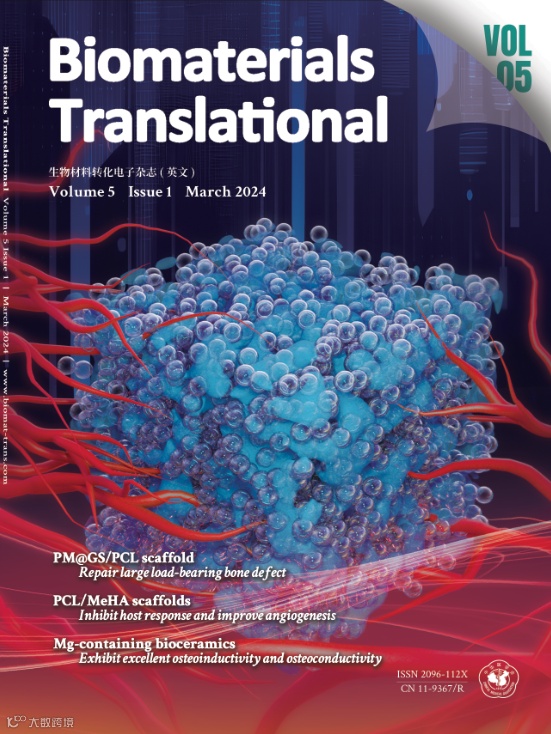
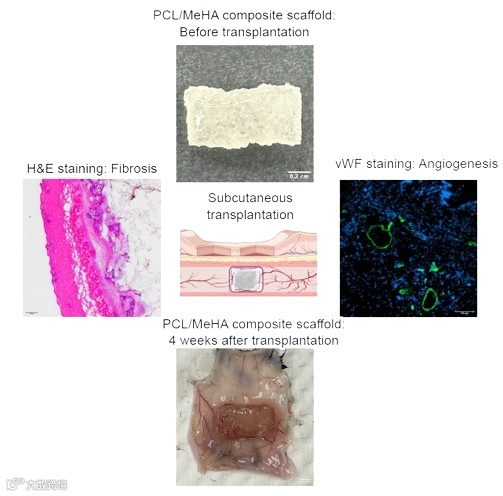
Cell therapy has the potential to revolutionise medicine, but its success relies on the engraftment, survival, and performance of the transplanted cells. This issue introduces a composite scaffold made of poly(ε-caprolactone) and methacrylated hyaluronic acid hydrogel, which shows mild foreign body reaction and intensive angiogenesis after subcutaneous transplantation. Such a scaffold might facilitate the cell engraftment and survival, and maintain the cell functions. The cover image illustrates the composite scaffold structure and its pro-angiogenic ability.

本期文章共 10 篇,Editorial 1 篇,Research Article 2 篇,Review 4 篇,Commentary 3 篇。
EDITORIAL
Generation artificial intelligence (GenAI) and Biomaterials Translational: steering innovation without misdirection
Long Bai, Zhidao Xia*, James T. Triffitt*, Jiacan Su*
内容简介
Generative artificial intelligence (GenAI) holds a significant contribution to biomaterials translational research with extensive application from discovering new materials, drugs, and proteins to identifying novel clinical treatment targets. To effectively manage the use of GenAI in biomaterials translational research whilst safegurading against the cleverly designed and seemingly plausible pitfalls, four policy recommendations were proposed in this editorial, including establishing interdisciplinary collaboration mechanism, continuously oversighting ethics, standardizing the scientific data and GenAI applications, and also enhancing their transparency, explainability and sharing. With implementation of these measures, a healthy ecosystem with fair and transparent multidisciplinary collaboration would be established to foster innovation and discovery in biomaterials translational research and also new research directions and fields.
DOI:10.12336/biomatertransl.2024.01.001
REVIEWS
Advances in magnesium-containing bioceramics for bone repair
Lei Qi, Tong Zhao, Jinge Yan, Weiwen Ge, Weidong Jiang, Jing Wang, Mazaher Gholipourmalekabadi, Kaili Lin*, Xiuhui Wang*, Lei Zhang*
内容简介
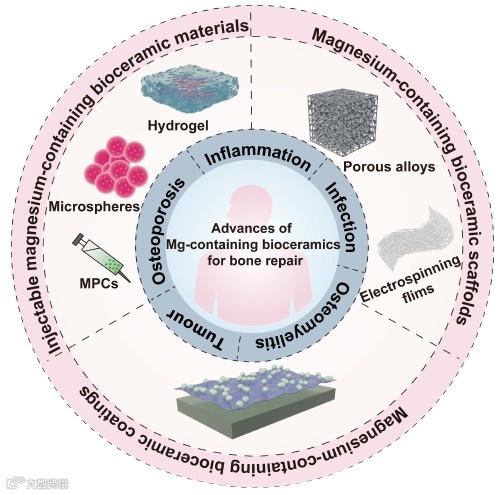
Reconstruction of bone defects or fractures caused by ageing, trauma and tumour resection is still a great challenge in clinical treatment. Although autologous bone graft is considered as gold standard, the source of natural bone is limited. In recent years, regenerative therapy based on bioactive materials has been proposed for bone reconstruction. Specially, numerous studies have indicated that bioactive ceramics including silicate and phosphate bioceramics exhibit excellent osteoinductivity and osteoconductivity, further promote bone regeneration. In addition, magnesium (Mg) element, as an indispensable mineral element, plays a vital role in promoting bone mineralisation and formation. In this review, different types of Mg-containing bioceramics including Mg-containing calcium phosphate-based bioceramics (such as Mg-hydroxyapatite, Mg-biphasic calcium phosphate), Mg-containing calcium silicate-based bioceramics (such as Mg2SiO4, Ca2MgSi2O7 and Mg-doped bioglass), Mg-based biocements, Mg-containing metal/polymer-bioceramic composites were systematacially summarised. Additionally, the fabrication technologies and their materiobiological effects were deeply discussed. Clinical applications and perspectives of magnesium-containing bioceramics for bone repair are highlighted. Overall, Mg-containing bioceramics are regarded as regenerative therapy with their optimised performance. Furthermore, more in-depth two-way researches on their performance and structure are essential to satisfy their clinical needs.

DOI:10.12336/biomatertransl.2024.01.002
REVIEWS
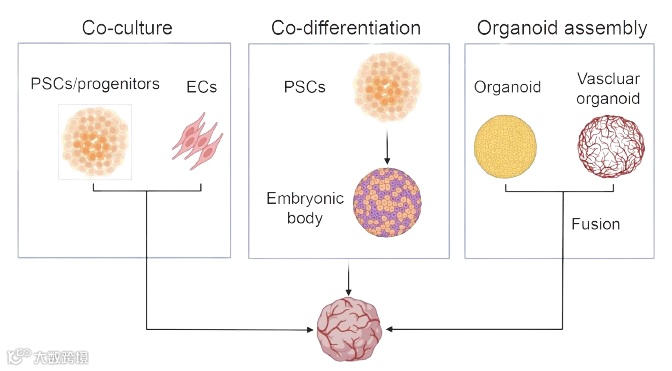
Engineering vascularised organoid-on-a-chip: strategies, advances and future perspectives
Zhangjie Li#, Dingyuan Yu#, Chenyang Zhou, Feifan Wang, Kangyi Lu, Yijun Liu, Jiaqi Xu, Lian Xuan, Xiaolin Wang*
内容简介
In recent years, advances in microfabrication technology and tissue engineering have propelled the development of a novel drug screening and disease modelling platform known as organoid-on-a-chip. This platform integrates organoids and organ-on-a-chip technologies, emerging as a promising approach for in vitro modelling of human organ physiology. Organoid-on-a-chip devices leverage microfluidic systems to simulate the physiological microenvironment of specific organs, offering a more dynamic and flexible setting that can mimic a more comprehensive human biological context. However, the lack of functional vasculature has remained a significant challenge in this technology. Vascularisation is crucial for the long-term culture and in vitro modelling of organoids, holding important implications for drug development and personalised medical approaches. This review provides an overview of research progress in developing vascularised organoid-on-a-chip models, addressing methods for in vitro vascularisation and advancements in vascularised organoids. The aim is to serve as a reference for future endeavors in constructing fully functional vascularised organoid-on-a-chip platforms.
DOI:10.12336/biomatertransl.2024.01.003
REVIEWS
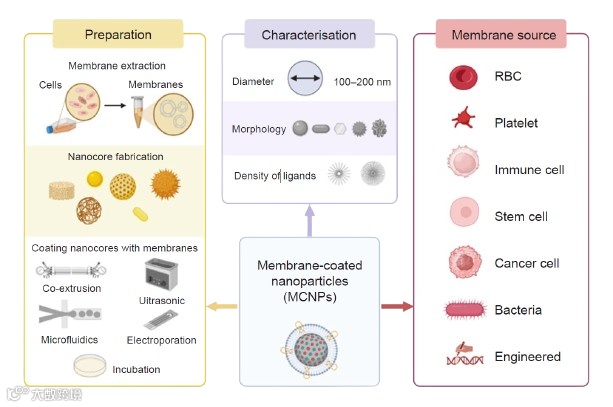
Membrane-coated nanoparticles as a biomimetic targeted delivery system for tumour therapy
Haoyu Guo#, Mingke Guo#, Zhidao Xia*, Zengwu Shao*
内容简介
Drug therapy towards tumours often causes adverse effects because of their non-specific nature. Membrane-coated technology and membrane-coated nanoparticles provide an advanced and promising platform of targeted and safe delivery. By camouflaging the nanoparticles with natural derived or artificially modified cell membranes, the nano-payloads are bestowed with properties from cell membranes such as longer circulation, tumour or inflammation-targeting, immune stimulation, augmenting the performance of traditional therapeutics. In this review, we review the development of membrane coating technology, and summarise the technical details, physicochemical properties, and research status of membrane-coated nanoparticles from different sources in tumour treatment. Finally, we also look forward to the prospects and challenges of transforming membrane coating technology from experiment into clinical use. Taken together, membrane-coated nanoparticles are bound to become one of the most potential anti-tumour strategies in the future.
DOI:10.12336/biomatertransl.2024.01.004
REVIEWS
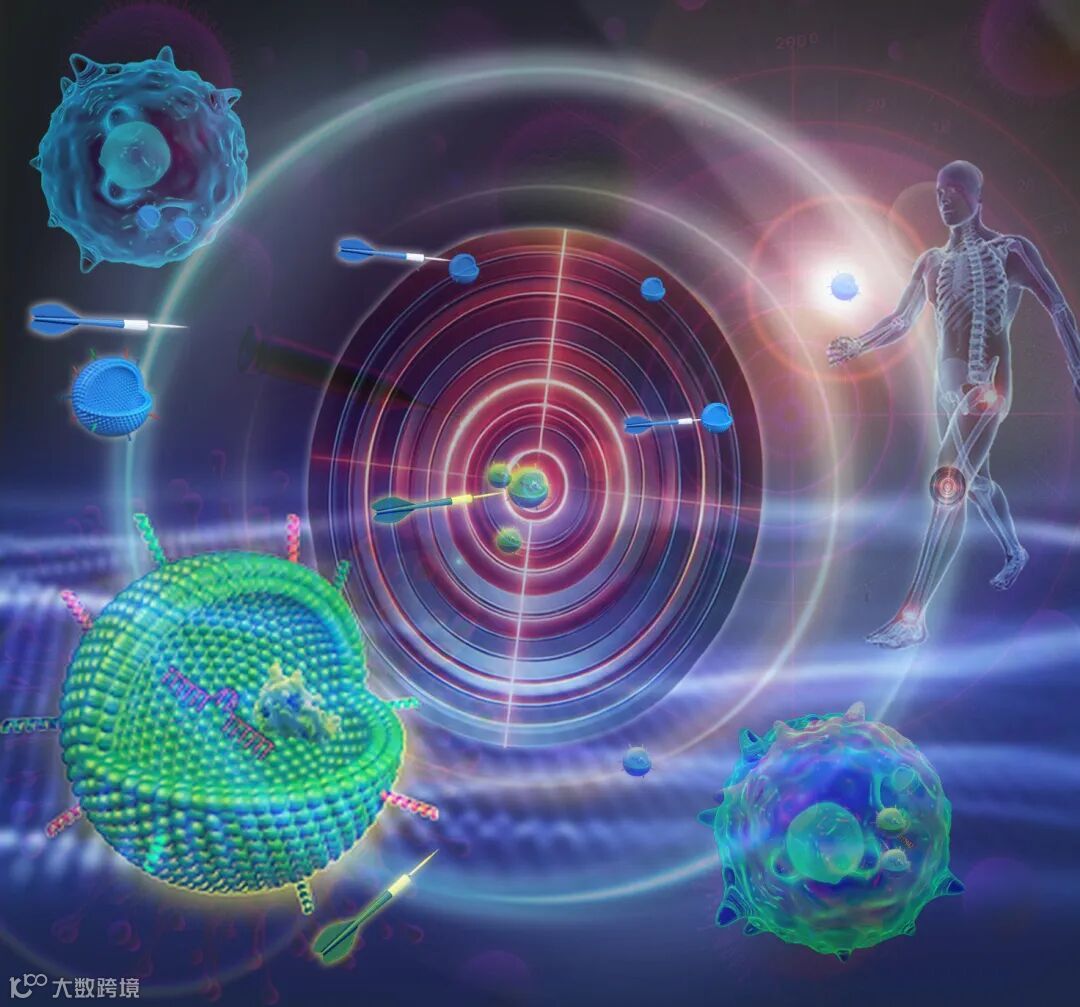
Harnessing exosomes for targeted therapy: strategy and application
Xiaoxiang Ren, Ruixue Xu*, Chenjie Xu*, Jiacan Su*
内容简介
Exosomes, nanoscopic extracellular vesicles produced by cells, are pivotal in mediating intracellular communication by transporting nucleic acids, proteins, lipids, and other bioactive molecules, thereby influencing physiological and pathological states. Their endogenous origin and inherent diversity confer distinct advantages over synthetic vehicles like liposomes and nanoparticles in diagnostic and therapeutic applications. Despite their potential, the clinical utility of exosomes is hampered by challenges such as limited storage stability, yield, purity, and targeting efficiency. This review focuses on exosomes as targeted therapeutic agents, examining their biogenesis, classification, isolation, and characterisation, while also addressing the current limitations in yield, purity, and targeting. We delve into the literature to propose optimisation strategies that can enhance their therapeutic efficacy and accelerate the translation of exosome-based therapies into clinical practice.

DOI:10.12336/biomatertransl.2024.01.005
RESEARCH ARTICLES
Enhanced angiogenesis in porous poly(ε-caprolactone) scaffolds fortified with methacrylated hyaluronic acid hydrogel after subcutaneous transplantation
Huaxin Yang, Mengjia Zheng, Yuyue Zhang, Chaochang Li, Joseph Ho Chi Lai, Qizheng Zhang, Kannie WY Chan, Hao Wang, Xin Zhao, Zijiang Yang*, Chenjie Xu*
内容简介
A composite scaffold composed of a porous scaffold and hydrogel filling can facilitate engraftment, survival, and retention in cell transplantation processes. This study presents a composite scaffold made of poly(ε-caprolactone) (PCL) and methacrylated hyaluronic acid (MeHA) hydrogel and describes the corresponding physical properties (surface area, porosity, and mechanical strength) and host response (angiogenesis and fibrosis) after subcutaneous transplantation. Specifically, we synthesise MeHA with different degrees of substitution and fabricate a PCL scaffold with different porosities. Subsequently, we construct a series of PCL/MeHA composite scaffolds by combining these hydrogels and scaffolds. In experiments with mice, the scaffold composed of 3% PCL and 10–100 kDa, degree of substitution 70% MeHA results in the least fibrosis and a higher degree of angiogenesis. This study highlights the potential of PCL/MeHA composite scaffolds for subcutaneous cell transplantation, given their desirable physical properties and host response.

DOI:10.12336/biomatertransl.2024.01.006
RESEARCH ARTICLES
Meticulously engineered three-dimensional-printed scaffold with microarchitecture and controlled peptide release for enhanced bone regeneration
Jin Yang, Kanwal Fatima, Xiaojun Zhou, Chuanglong He*
内容简介
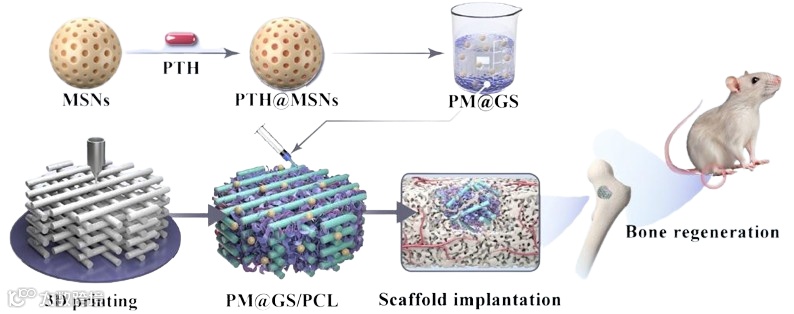
The repair of large load-bearing bone defects requires superior mechanical strength, a feat that a single hydrogel scaffold cannot achieve. The objective is to seamlessly integrate optimal microarchitecture, mechanical robustness, vascularisation, and osteoinductive biological responses to effectively address these critical load-bearing bone defects. To confront this challenge, three-dimensional (3D) printing technology was employed to prepare a polycaprolactone (PCL)-based integrated scaffold. Within the voids of 3D printed PCL scaffold, a methacrylate gelatin (GelMA)/methacrylated silk fibroin (SFMA) composite hydrogel incorporated with parathyroid hormone (PTH) peptide-loaded mesoporous silica nanoparticles (PTH@MSNs) was embedded, evolving into a porous PTH@MSNs/GelMA/SFMA/PCL (PM@GS/PCL) scaffold. The feasibility of fabricating this functional scaffold with a customised hierarchical structure was confirmed through meticulous chemical and physical characterisation. Compression testing unveiled an impressive modulus of 17.81 ± 0.83 MPa for the composite scaffold. Additionally, in vitro angiogenesis potential of PM@GS/PCL scaffold was evaluated through Transwell and tube formation assays using human umbilical vein endothelium, revealing the superior cell migration and tube network formation. The alizarin red and alkaline phosphatase staining assays using bone marrow-derived mesenchymal stem cells clearly illustrated robust osteogenic differentiation properties within this scaffold. Furthermore, the bone repair potential of the scaffold was investigated on a rat femoral defect model using micro-computed tomography and histological examination, demonstrating enhanced osteogenic and angiogenic performance. This study presents a promising strategy for fabricating a microenvironment-matched composite scaffold for bone tissue engineering, providing a potential solution for effective bone defect repair.
DOI:10.12336/biomatertransl.2024.01.007
COMMENTARIES
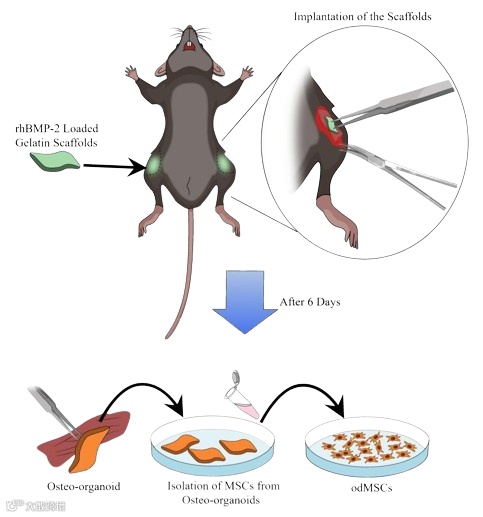
Large scale, high purity, high quality isolation of mesenchymal stem cells from osteo-organoids
Yan Xu, Fuxin Wei*
内容简介
DOI:10.12336/biomatertransl.2024.01.008
COMMENTARIES
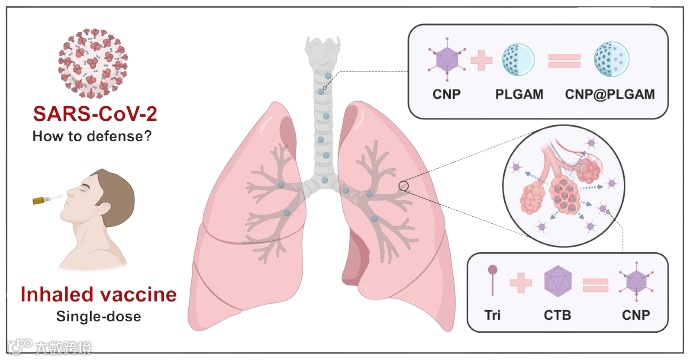
Exploring the potential of micro-nano composite structures for COVID-19 vaccines and beyond
Danli Cui, Yiting Lei*
内容简介
DOI:10.12336/biomatertransl.2024.01.009
COMMENTARIES
HIF-1α: linking subchondral bone and cartilage as a therapeutic target in osteoarthritis
Kaibo Zhang, Weili Fu*
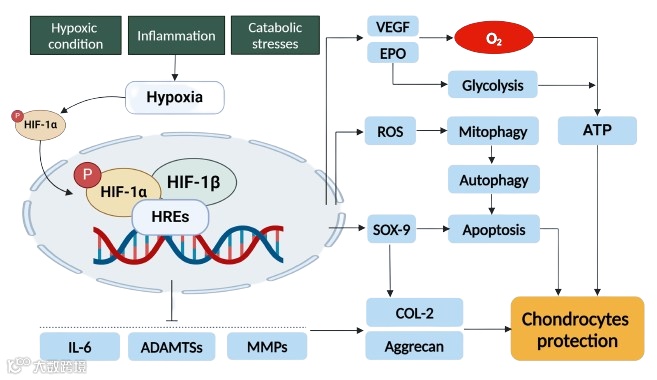
内容简介
DOI:10.12336/biomatertransl.2024.01.010
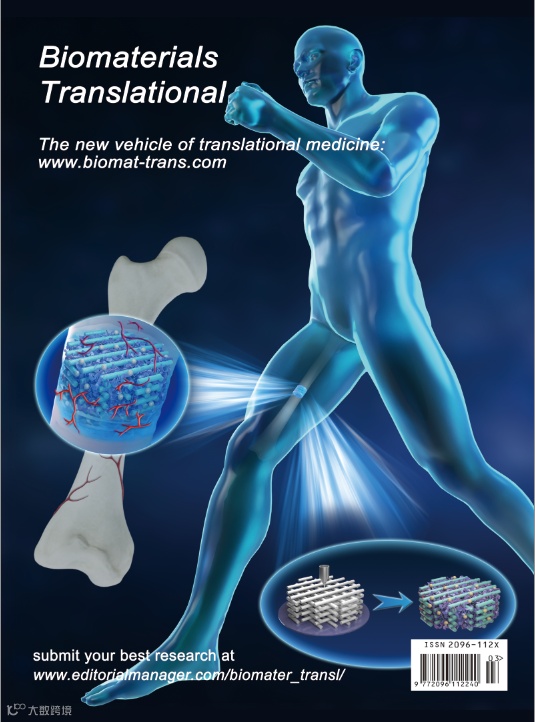
本期封底

关于我们
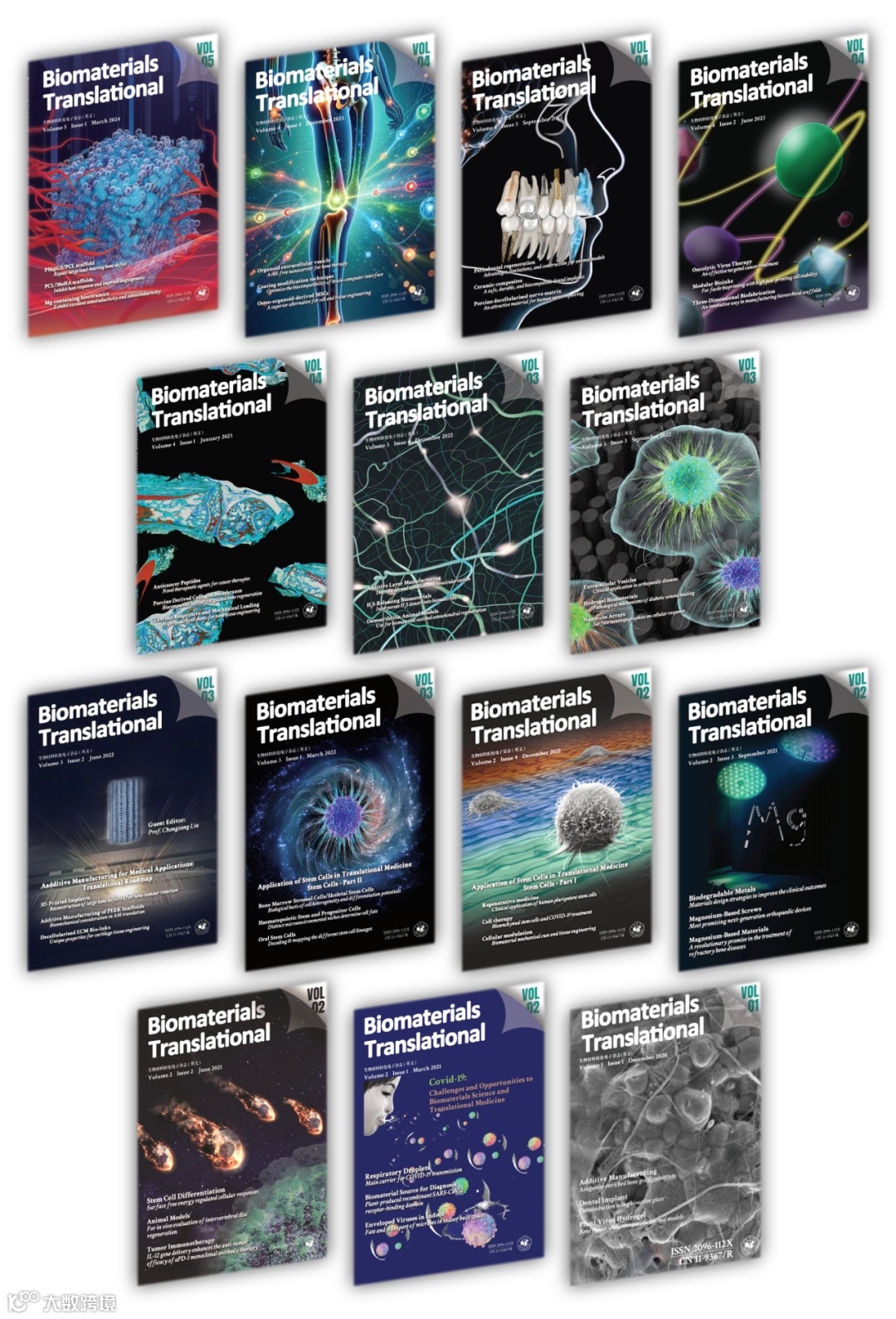
Biomaterials Translational (BMT)由中华人民共和国国家卫生健康委员会主管,中华医学会主办,中华医学电子音像出版社出版,上海大学承办。BMT致力于搭建生物材料-转化医学之间桥梁的国际期刊。该期刊发表原创、高质量的同行评审论文,包括研究性、综述性、观点性和评论性论文。期刊涵盖的研究领域包括但不限于:生物材料科学最新进展、生物材料结构构建及生物学特征、生物材料转化医学方面研究等。期刊目前已被Pubmed、Scopus等收录,SCI收录正在审核中。欢迎各位专家赐稿!
创始兼名誉主编
曹 旭 教授
王 倩 教授
名誉主编
张英泽 院士
付小兵 院士
王迎军 院士
James T Triffitt 教授
主编
刘昌胜 院士
邵增务 教授
执行主编
苏佳灿 教授
副主编
夏志道 教授
李 斌 教授
期刊网址:
http://www.biomat-trans.com
投稿链接:
https://www.editorialmanager.com/biomater_transl/
邮箱:
bmt_editors@oa.shu.edu.cn
欢迎关注
