

本期分享的合集主题是“人工智能赋能生物材料研究”,涵盖了人工智能、生成式人工智能在类器官研究、外泌体研究、自组装肽发现及科学写作等方面的应用,供广大专家学者阅读、参考。

生成式人工智能(GenAI)与生物材料转化:引导正确创新
Generation artificial intelligence (GenAI) and Biomaterials Translational: steering innovation without misdirection
Long Bai, Zhidao Xia*, James T. Triffitt*, Jiacan Su*
内容简介:
Generative artificial intelligence (GenAI) tools, like OpenAI’s Sora and DALL·E, have brought both innovation and controversy to scientific research. These tools' inaccuracies highlight the risks of unrestricted GenAI use. Despite significant contributions to biomaterials translational research, such as material and drug discovery, GenAI's application poses ethical and technical challenges.
To manage these risks, the editorial suggests:
1. Promoting interdisciplinary collaboration.
2. Implementing continuous ethical review.
3. Enhancing transparency and explainability.
4. Standardizing data sharing.
These measures aim to foster innovation while ensuring quality and ethical standards in biomaterials research.
DOI: 10.12336/biomatertransl.2024.01.001
人工智能辅助类器官及类器官外泌体研究
Artificial intelligence-enabled studies on organoid and organoid extracellular vesicles
Han Liu, James T. Triffitt, Zhidao Xia*, Jiacan Su*
内容简介:
Organoids and organoid extracellular vesicles (OEVs) are revolutionizing medical research. AI enhances the efficiency and accuracy of studying these systems by automating cell behavior analysis and extracting valuable insights from complex datasets. AI also accelerates biomarker discovery and personalized medicine through advanced data analysis.
Challenges include ensuring AI accuracy, interpretability, and data privacy. Future integration of AI in organoid research promises significant advancements in diagnostics and treatment, fostering a new era of precision medicine.
DOI: 10.12336/biomatertransl.2024.02.001
人工智能用于科学写作与研究
The emergence of AI tools in scientific writing and research
Zhidao Xia*, Qian Wang*
内容简介:
Biomaterials Translational hosted its first virtual forum on advanced biomaterial research, featuring key technologies like angiogenesis and lasermicrotome. AI tools such as ChatGPT4 and GoogleBard have begun influencing scientific writing, though their use is debated. AI can aid in drafting manuscripts but cannot replace human expertise.
The journal encourages AI use for improving language and readability, with oversight, and warns against using AI for data interpretation or listing it as a co-author. The editors assure that AI will not control or edit the journal.
DOI: 10.12336/biomatertransl.2023.01.001
在数字化时代中承载激情
Carrying passion in a numerical world
Qian Wang*
内容简介:
In a world obsessed with numerical success metrics, this editorial emphasizes the importance of passion in scientific research. Barry Sharpless' Nobel Prize-winning Click Chemistry exemplifies how dedication and enthusiasm can drive scientific breakthroughs, despite initial skepticism. The editorial encourages researchers to maintain a genuine interest in their work, beyond quantifiable achievements.
Biomaterials Translational continues to showcase impactful research, reinforcing that true success is defined by the passionate pursuit of excellence, not just numbers.
DOI: 10.12336/biomatertransl.2023.02.001
人工智能加速自组装肽的发现
AI accelerated discovery of self-assembling peptides
Yejiao Shi*, Honggang Hu*
内容简介:
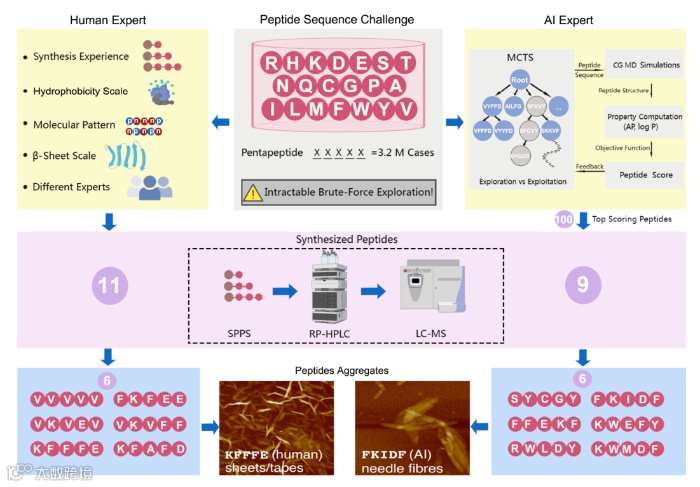
Self-assembling peptides, driven by non-covalent interactions, form diverse biological structures. Traditional peptide design relies on natural sequences and expertise, which is inefficient for exploring vast amino acid combinations. AI, integrating Monte Carlo tree search and molecular dynamics simulations, offers a solution. AI efficiently identifies high aggregation propensity peptides, surpassing human-designed methods. This "human-in-the-loop" approach, validated by successful peptide synthesis, demonstrates AI's potential to overcome human bias and accelerate peptide discovery for therapeutic and material applications.
DOI: 10.12336/biomatertransl.2023.04.008
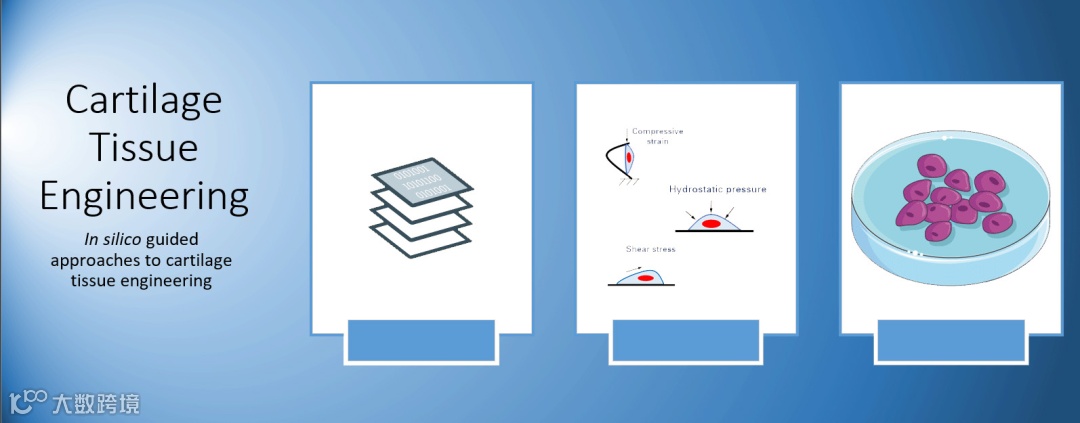
计算模拟体外软骨组织工程机械环境
Mechanical environment for in vitro cartilage tissue engineering assisted by in silico models
Rob Jess#, Tao Ling#, Yi Xiong,*, Chris J. Wright, Feihu Zhao*
内容简介:
Mechanobiological study of chondrogenic cells and multipotent stem cells for articular cartilage tissue engineering (CTE) has been widely explored. The mechanical stimulation in terms of wall shear stress, hydrostatic pressure and mechanical strain has been applied in CTE in vitro. It has been found that the mechanical stimulation at a certain range can accelerate the chondrogenesis and articular cartilage tissue regeneration. This review explicitly focuses on the study of the influence of the mechanical environment on proliferation and extracellular matrix production of chondrocytes in vitro for CTE. The multidisciplinary approaches used in previous studies and the need for in silico methods to be used in parallel with in vitro methods are also discussed. The information from this review is expected to direct facial CTE research, in which mechanobiology has not been widely explored yet.

DOI: 10.12336/biomatertransl.2023.01.004
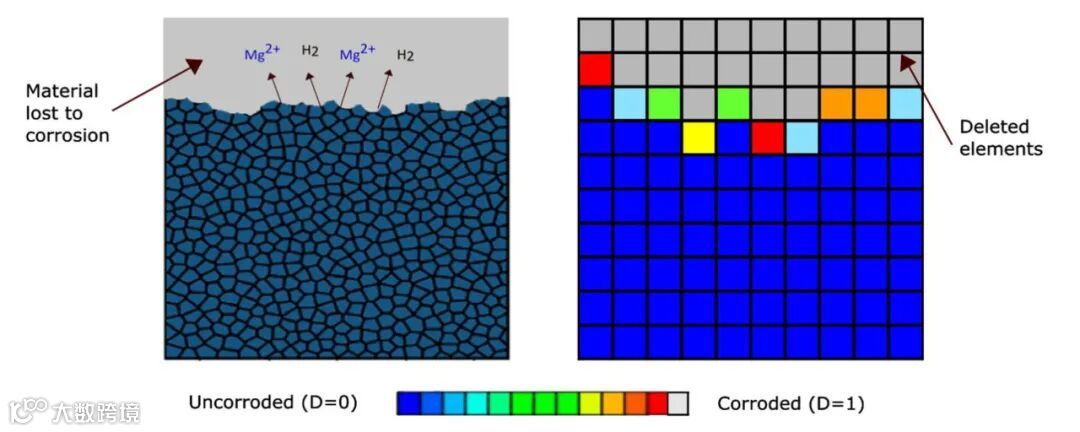
可降解镁基生物材料腐蚀的计算机建模:建模方法、验证及未来展望
In silico modelling of the corrosion of biodegradable magnesium-based biomaterials: modelling approaches, validation and future perspectives
Aditya Joshi#, George Dias, Mark P. Staiger#
内容简介:
Metallic biomedical implants based on magnesium, zinc and iron alloys have emerged as bioresorbable alternatives to permanent orthopaedic implants over the last two decades. The corrosion rate of biodegradable metals plays a critical role in controlling the compatibility and functionality of the device in vivo. The broader adoption of biodegradable metals in orthopaedic applications depends on developing in vitro methods that accurately predict the biodegradation behaviour in vivo. However, the physiological environment is a highly complex corrosion environment to replicate in the laboratory, making the in vitro-to-in vivo translation of results very challenging. Accordingly, the results from in vitro corrosion tests fail to provide a complete schema of the biodegradation behaviour of the metal in vivo. In silico approach based on computer simulations aim to bridge the observed differences between experiments performed in vitro and vivo. A critical review of the state-of-the-art of computational modelling techniques for predicting the corrosion behaviour of magnesium alloy as a biodegradable metal is presented.
DOI: 10.12336/biomatertransl.2021.03.008

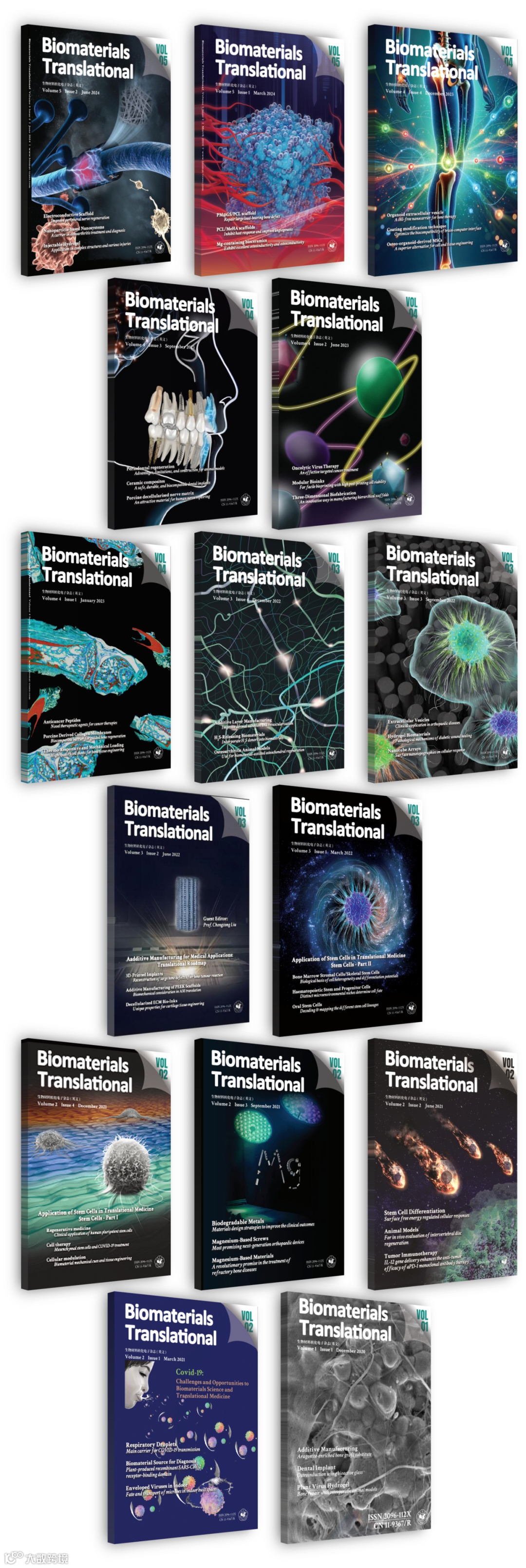
Biomaterials Translational (BMT)由中华人民共和国国家卫生健康委员会主管,中华医学会主办,中华医学电子音像出版社出版,上海大学承办。BMT致力于搭建生物材料-转化医学之间桥梁的国际期刊。该期刊发表原创、高质量的同行评审论文,包括研究性、综述性、观点性和评论性论文。期刊涵盖的研究领域包括但不限于:生物材料科学最新进展、生物材料结构构建及生物学特征、生物材料转化医学方面研究等。期刊目前已被Pubmed、Scopus等收录,SCI收录正在审核中。欢迎各位专家赐稿!
创始兼名誉主编
曹旭 教授
王倩 教授
名誉主编
张英泽 院士
付小兵 院士
王迎军 院士
James T Triffitt 教授
主编
刘昌胜 院士
邵增务 教授
执行主编
苏佳灿 教授
副主编
夏志道 教授
李斌 教授
徐臣杰 教授
期刊网址:
http://www.biomat-trans.com
投稿链接:
https://www.editorialmanager.com/biomater_transl/
邮箱:
bmt_editors@oa.shu.edu.cn
欢迎关注