本期封面

Preclinical evaluation of aligned fibrin nanofibre hydrogels in a non-human primate model of spinal cord injury: A pilot study
Jia Yang, Weitao Man, Kaiyuan Yang, Zheng Cao, Chao Ma, Kunkoo Kim, Zhe Meng, Yaosai Liu, Yuzhe Ying, Jie Zhang, Zide Wang, Yang Lu, Xiaolei Zhang, Guihuai Wang, Xiumei Wang
本期文章共 10 篇,Viewpoint 1 篇,Research Article 3 篇,Review 6 篇。
Viewpoint
Cosmogenic intelligence: The silent power
Zhidao Xia
内容简介
This Viewpoint explores the concept of cosmogenic intelligence (CI)—a form of silent, structure-based cognition that transcends human language. While artificial intelligence (AI) appears linguistic through tools like large language models, its reasoning unfolds in non-verbal, high-dimensional patterns. Such “silent power” reflects a broader natural intelligence seen in adaptive and self-organizing systems. AI thus acts as a translator between this non-linguistic intelligence and human symbolic thought. Recognizing CI requires shifting from commanding machines to co-listening with them, learning to interpret their logics rather than their words. This perspective invites a rethinking of human–AI collaboration—not as dominance or imitation, but as an expansion of how intelligence itself can be perceived and understood.

DOI: doi.org/10.12336/bmt.25.00178
REVIEW
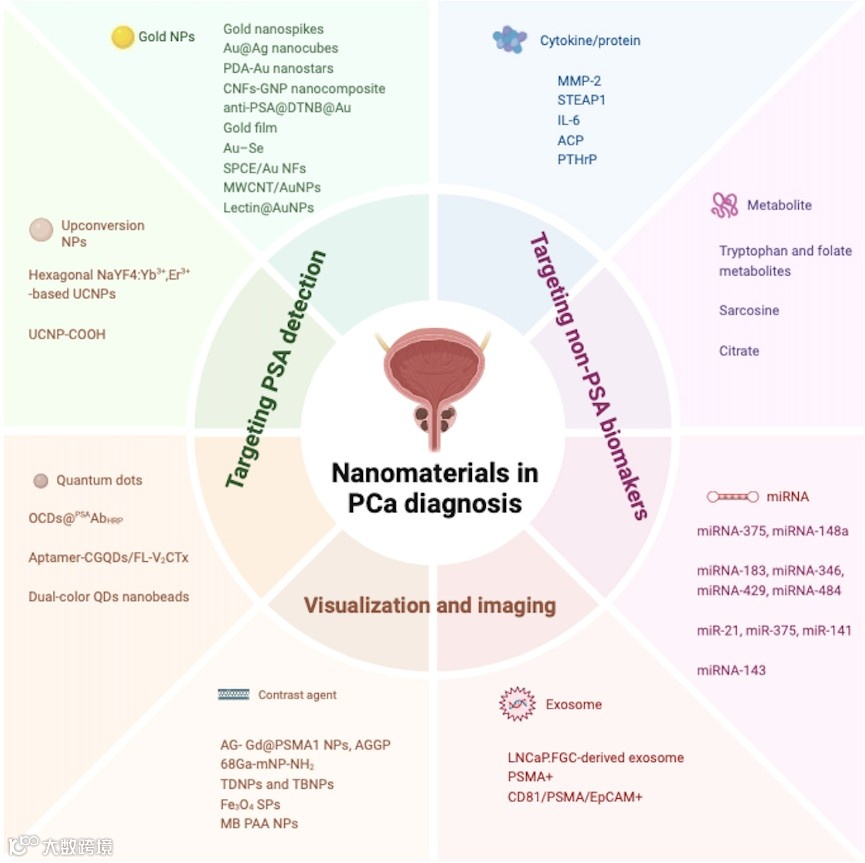
Nanoformulation-assisted early diagnosis of prostate cancer: Advances and perspectives
Zhiyuan Zhou, Mingyu Chang, Jingcheng Lyu, Jianhua Zhao, Zongwei Wang, Fengbo Zhang, Yinong Niu, Boyu Yang
内容简介
Prostate cancer is one of the most common cancers affecting men worldwide. Owing to late diagnosis, the mortality rate associated with prostate cancer remains relatively high. Traditional diagnostic methods are, in most cases, unfriendly to patients or have diagnostic lag defects. Further diagnosis requires prostate biopsy. The most common biomarker is prostate-specific antigen, which is quantified as the content of the prostate health index to describe the risk of prostate cancer. Traditional biochemical analysis methods are costly, time-consuming, and lack specificity. They are also limited by the detection range, preventing high sensitivity. The exploration of novel biomarkers has identified several promising alternatives. The development of integrated nanomaterial technology provides a feasible potential method for the rapid, sensitive and non-invasive determination of these biological markers and assists in the optimisation of imaging diagnosis, which is expected to solve the current challenges in the diagnosis of prostate cancer. This paper reviews the advances in the diagnostic screening and imaging of prostate cancer using nanostructure-based biofunctional sensors, probes and contrast agents such as gold nanoparticles, upconversion nanoparticles, quantum dots, and magnetic nanoparticles. It also highlights the potential of emerging paradigms in nanoarchitectonics to definitive cancer diagnosis.

DOI: doi.org/10.12336/bmt.24.00077
REVIEW
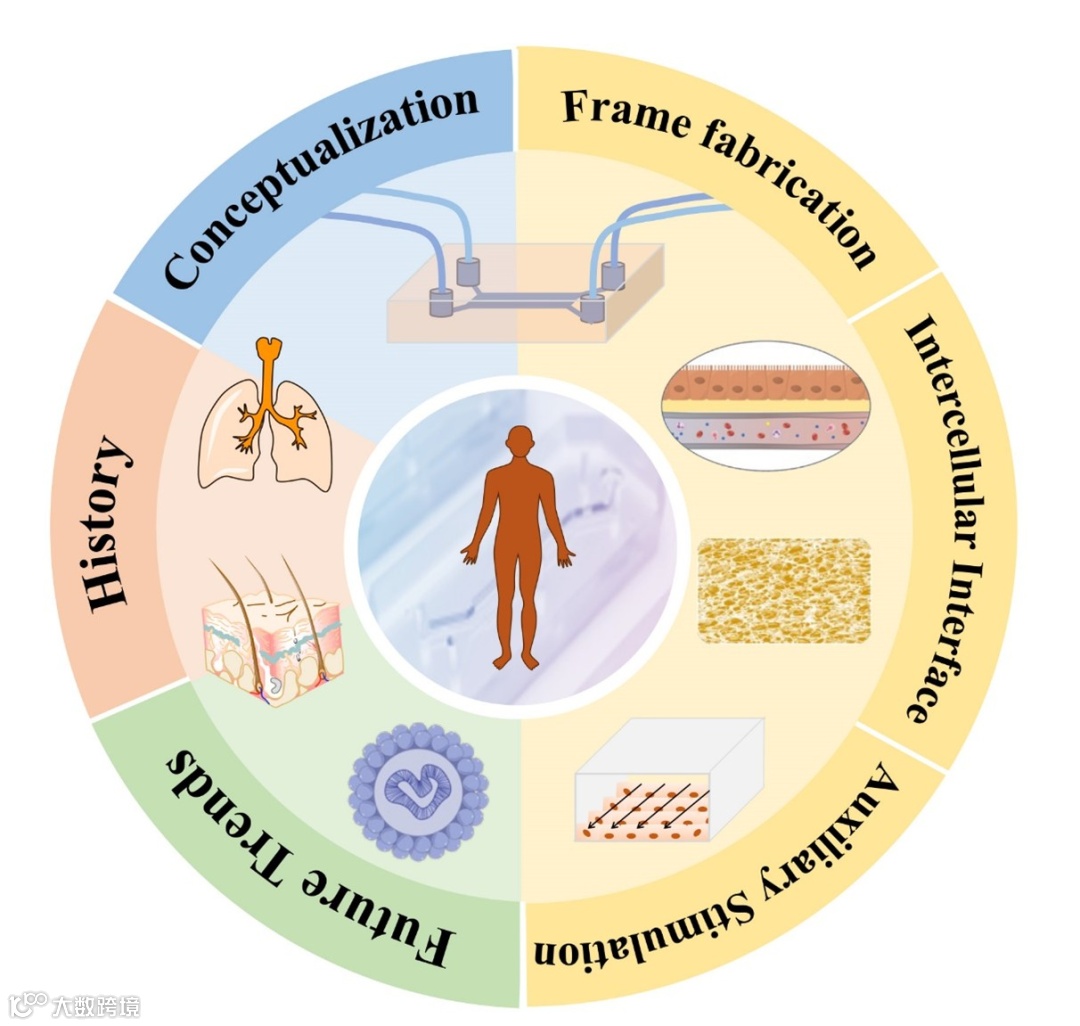
Design strategy primer for organ-on-chips
Ting Cao, Peicheng Xu, Chen Yang, Yu Chen, Yongcheng Wang, Jiayu Zhang, Fangfu Ye
内容简介
Organ-on-a-chip (OoC) has emerged as a revolutionary technique in recent decades, capable of replicating essential aspects of physiological and pathophysiological processes of human organs in vitro. Serving as an effective tissue culture method for creating digital twins, OoCs show significant promise and have found applications in disease modelling, drug screening, and tissue engineering. However, there has been a lack of emphasis on the fundamental design principles of OoCs in existing literature, a crucial aspect that cannot be overlooked, especially for beginners venturing into the realm of OoCs. Therefore, this paper endeavors to provide a comprehensive overview by delving into the historical development of OoCs, outlining the characteristics of their scaffolds, presenting design strategies for both conceptualisation and fabrication processes, and offering a detailed description of design mechanisms and guidelines based on recent research publications. Furthermore, it explores future prospects and challenges within the OoC domain. Serving as a foundational guide for those new to OoC exploration, this paper aims to furnish a thorough introduction to the fabrication and design strategies employed in OoCs.
DOI: doi.org/10.12336/bmt.24.00070
REVIEW
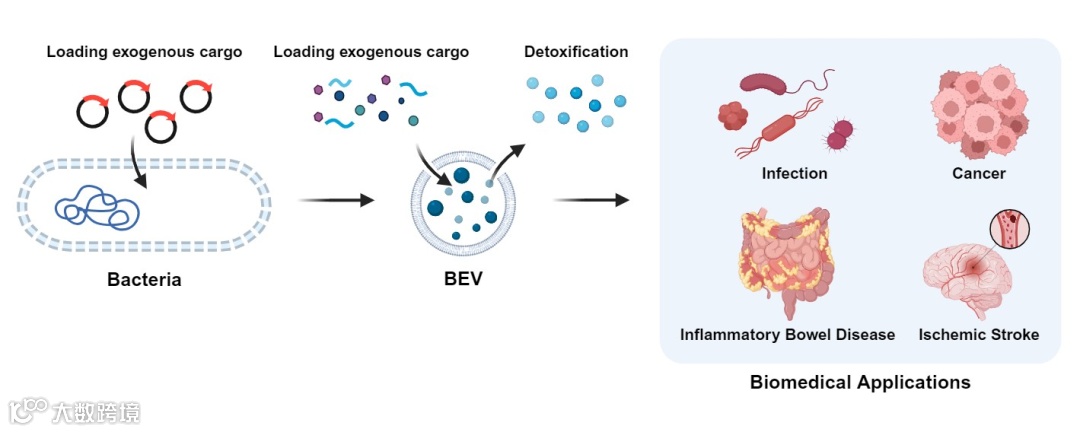
Engineering strategies and biomedical applications of bacterial extracellular vesicles
Xuying Liang, Qianbei Li, Lei Zheng, Bo Situ
内容简介
Bacterial extracellular vesicles (BEVs) are emerging as promising therapeutic agents and drug delivery vehicles due to their unique properties. These nanoscale vesicles possess stable membrane structure and naturally encapsulate a variety of bioactive molecules, making them versatile tools in biomedical applications. However, clinical translation of BEVs faces challenges such as insufficient display of disease-specific antigens, excessive toxicity, and rapid clearance. Addressing these issues is crucial for the clinical translation of BEVs. In this review, we discuss recent advances in BEV engineering strategies aimed at addressing these limitations and expanding their therapeutic applications. We highlight approaches for loading exogenous cargo into BEVs, detoxification strategies, and the latest progress in the application of engineered BEVs for treating infectious diseases, cancer, and other disorders. Despite promising preclinical results, clinical translation is hindered by safety concerns, standardisation difficulties, and scalability issues. Future research should focus on optimising detoxification processes, establishing global standardisation, and improving production methods to facilitate successful clinical translation of engineered BEVs. This review provides insights into the current status and future perspectives of BEV engineering for therapeutic applications.
DOI: doi.org/10.12336/bmt.24.00032
REVIEW
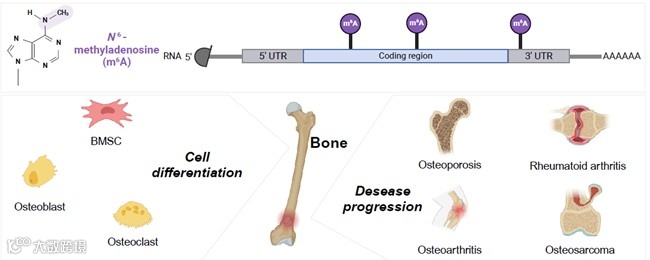
m6A in bone homeostasis and related diseases
Bo Ma, Junyu Su, Yuanchao Zhu, Fengshi Zhang, Hailin Ma, Tianze Sun, Hanwen Cheng, Kangling Xu, Baixin Gu, Rou Wen, Yien Zheng, Qi Yang, Deli Wang, Fei Yu
内容简介
N6-methyladenosine RNA methylation (m6A) is one of the most common and widespread RNA modifications in eukaryotic cells. m6A plays a crucial role in the regulation of pathophysiological processes of eukaryotes. Three types of m6A regulators, including methyltransferases, demethylases and m6A-binding proteins, are involved in the reversible epigenetic modification of m6A. Bone is a vital organ with irreplaceable functions of movement, haematopoiesis, and protection of other organs. Its physiological homeostasis is mainly determined by the synergy of corresponding cells such as bone marrow derived stem cells, osteoblasts, and osteoclasts. Once the physiological equilibrium is broken, the bones will transform into a pathological state, resulting with diseases such as osteoporosis, osteoarthritis, rheumatoid arthritis, and osteosarcoma. Here, we review the composition of m6A and its regulation mechanism in bone physiology and pathology.
DOI: doi.org/10.12336/bmt.24.00058
REVIEW
Electrostrategies in orthopaedic research
Jing-Cheng Cao, Ze-Yu Shang, Yi-Fan Zhang, Hong-Zhi Lv, Tai-Long Shi, Yu-Qin Zhang, Hai-Cheng Wang, Yi-Peng Jiang, Yi-Sheng Chen, Wei Chen, Meng-Xuan Yao
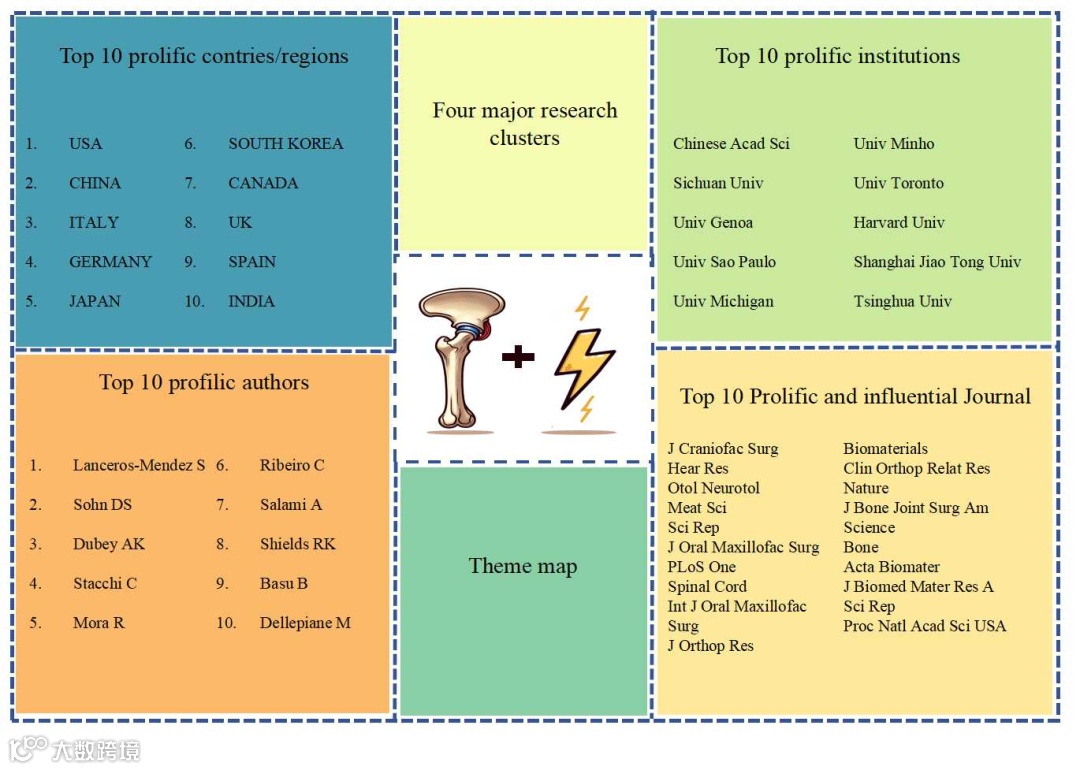
内容简介
Electrostrategies encompassing electrical stimulation and biomaterials with conductive or piezoelectric properties have garnered escalating interest within the orthopaedic research domain. We conducted a comprehensive bibliometric analysis of 2810 publications on electrostrategies in orthopaedic research a field for which no extensive overview has been provided to date. This study highlighted two main phases of progress since 1980 indicating an increasing emphasis on electrostrategies. We identified key contributors including institutions and authors with concentrated activity in North America, Europe and Asia. The study also outlined the most influential and co-cited journals in this domain. Our keyword analysis underscored “electrical-stimulation” “bone” and “in vitro” as prevalent themes with a significant focus on the effects of electrical stimulation on bone growth proliferation differentiation and its applications in bone surgeries. The keyword co-occurrence analysis revealed four major thematic clusters: “electrical-stimulation” “bone” “surgery” and “bone-mineral density.” Our findings underscored essential research directions such as the manufacturing and application of conductive and piezoelectric biomaterials and electrically-guided stem cell differentiation. The study also pointed out the potential to enhance orthopaedic treatment methods and patients’ quality of life. Future research should focus on refining electrical stimulation conditions developing new piezoelectric materials and advancing personalised tissue engineering strategies. In conclusion this study illuminates the global trends and emerging hotspots of electrostrategies in orthopaedic research providing a valuable reference for its further application and understanding in the field.
DOI: doi.org/10.12336/bmt.24.00011
REVIEW
Therapeutic potential of natural polymer-based transdermal drug delivery system for musculoskeletal disorders
Yantao Zhang, Guirong Wang, Yan Zhou

内容简介
The transdermal drug delivery system is a highly safe and well-tolerated therapeutic approach with significant potential for treating musculoskeletal disorders. However, its clinical application is limited by the low skin permeability of many active drugs in its formulations. To overcome this challenge, advancements in skin permeation enhancement techniques are essential. Over the past decade, natural polymers have been increasingly incorporated into various nanocarriers due to their availability, biodegradability, and biocompatibility, offering new options for the effective dispersion of suspended solids. Furthermore, surface functionalisation of the numerous functional groups found in natural polymers allows them to be transformed into targeted and stimulus-responsive materials, enabling precise drug delivery to musculoskeletal tissues. This review examines the mechanisms of action of natural polymer-based transdermal drug delivery system, covering penetration enhancers, nanoparticles, microneedles, hydrogels, and nanofibres derived from chitosan, hyaluronic acid, sodium alginate, cellulose, and proteins, and their applications in treating musculoskeletal disorders. Moreover, it outlines the current challenges and prospects of polymer-based transdermal drug delivery system for localised treatment, offering insights into current therapeutic approaches and proposing new directions for advancements in this field.
DOI: doi.org/10.12336/bmt.24.00045
RESEARCH ARTICLE
Preclinical evaluation of aligned fibrin nanofibre hydrogels in a non-human primate model of spinal cord injury: A pilot study
Jia Yang, Weitao Man, Kaiyuan Yang, Zheng Cao, Chao Ma, Kunkoo Kim, Zhe Meng, Yaosai Liu, Yuzhe Ying, Jie Zhang, Zide Wang, Yang Lu, Xiaolei Zhang, Guihuai Wang, Xiumei Wang
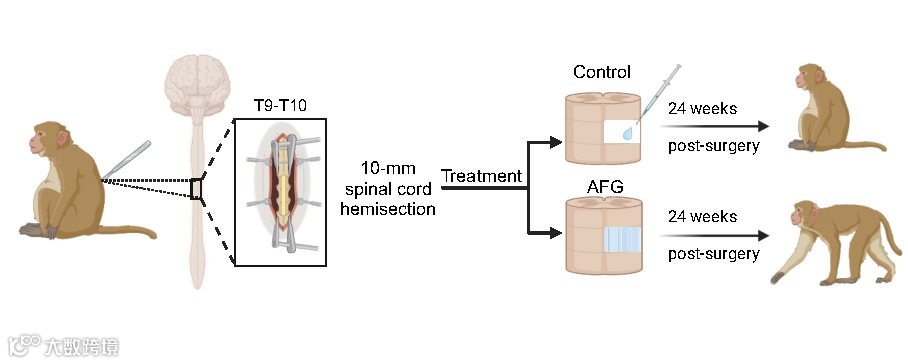
内容简介
Spinal cord injury (SCI) often leads to partial or complete loss of motor, sensory, and autonomic functions. We have previously shown that the transplantation of hierarchically aligned fibrin nanofibre hydrogel scaffolds (AFGs) facilitates robust neuroregeneration and functional recovery in rat and dog SCI models. Given these positive results, we aimed to evaluate the biosafety and efficacy of AFGs in a non-human primate SCI model before exploring its potential in the clinic. In the present study, no significant adverse reactions were observed over 24 weeks following AFG implantation into 1-cm gaps in the hemisected thoracic spinal cords of monkeys (Macaca fascicularis). Scaffold implantation also reduced cystic cavity formation and encouraged axonal sprouting across the lesion site. Notably, detailed histological analysis demonstrated that AFG promoted high-density, sequential, and aligned nerve fibre regeneration, resulting in remyelination and vascularisation, ultimately leading to remarkable motor function recovery. These results indicate that AFG transplantation exhibits reliable biocompatibility and effectiveness in promoting spinal cord repair in a non-human primate SCI model. Owing to the similarities in genetics and physiology between non-human primates and humans, AFG transplantation therapy is likely suitable for use in human spinal cord repair.
DOI: doi.org/10.12336/bmt.24.00079
RESEARCH ARTICLE
The role of Wnt signalling in osteoporosis: A bibliometric analysis
Yanran Huang, Runhan Zhao, Zhule Wang, Jingtao Xu, Yukun Jia, Xiao Qu, Hao Liang, Dagang Tang, Ningdao Li, Jun Zhang

内容简介
Osteoporosis has long been a key area of medical research, as the Wnt signalling pathway is essential for bone formation and maintaining bone balance. The purpose of this study was to perform a bibliometric analysis of the literature on osteoporosis and Wnt signalling to identify research trends, hot topics, and emerging areas of interest in this field. A visual analysis of the literature on osteoporosis and Wnt signalling offers a clearer perspective on the current research landscape, highlighting key topics and emerging trends in this area. The present study analysed publications related to osteoporosis and Wnt signalling from January 1, 2002 to December 31, 2021, using data from the Web of Science Core Collection. A total of 1553 publications were examined via tools, such as Microsoft Excel, CiteSpace, Vosviewer, and the Bibliometrics online analysis platform. The findings indicated that China has the highest number of publications in this area, with 489 articles. Warman Mathew’s work has the most citations, totalling 1031 articles, and the journal Bone has published the most articles, with 89 publications. Current research in this field has focused primarily on osteogenesis, metabolism, fractures, and osteoblasts. The present study highlights the significant role of Wnt signalling in bone homeostasis and disease, suggesting that future research will explore novel metabolic therapies for osteoporosis by targeting the Wnt signalling pathway with drugs.
DOI: doi.org/10.12336/bmt.24.00036
RESEARCH ARTICLE
Thiophene-based water-soluble C70 fullerene derivatives as novel antioxidant agents
Margarita Chetyrkina, Pavel Umriukhin, Elizaveta Ershova, Elena Proskurnina, Vasilina Sergeeva, Ekaterina Savinova, Svetlana E. Kostyuk, Larisa Kameneva, Olga Kraevaya, Valeriya Bolshakova, Pavel Troshin, Tatiana Salimova, Ivan Rodionov, Sergey Kutsev, Natalia Veiko, Svetlana V. Kostyuk
内容简介
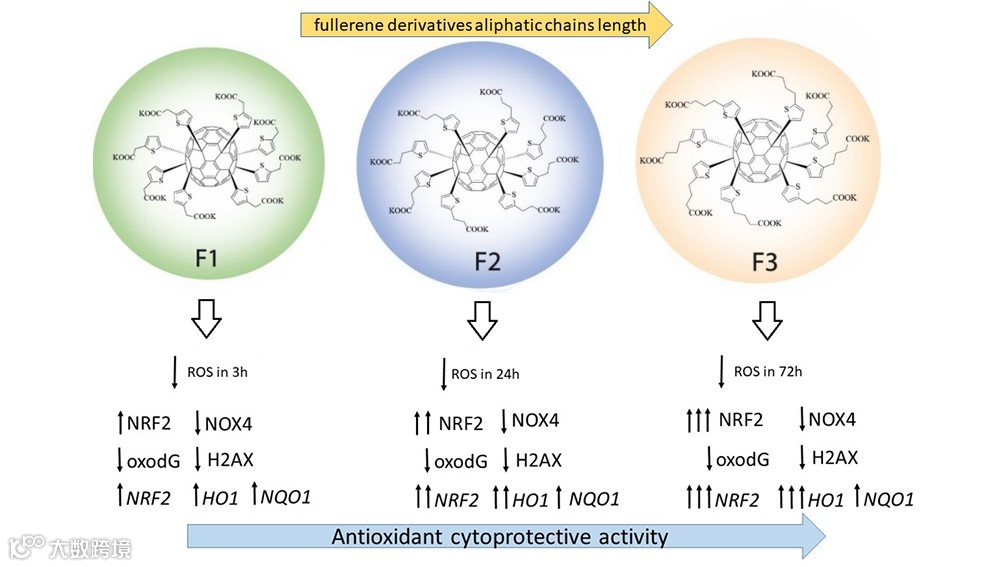
Fullerenes are one of the most popular nanomaterials, and C70 fullerene is the second most common fullerene after C60 buckminsterfullerene. Minor modification of fullerenes derivatives can change their biological effects and antioxidant properties. A plethora of water-soluble derivatives can be synthesised based on buckminsterfullerenes. In the present study, we synthesised three water-soluble C70 fullerene derivatives with thiophene-based solubilising addends and tested their cytotoxicity and the transcriptional activity of genes, which regulate an oxidative metabolism. Aliphatic chain length in the structure of the solubilising addend of the water-soluble fullerene derivative has been varied, and we revealed that a longer chain resulted in more pronounced antioxidant activity. Thus, the surface modification enhances the antioxidant properties of the compound and changes the nanoparticles impact on the genetic apparatus of the cell. Interestingly, even slight modifications of the functional addend’s structure can significantly affect the final cell response. The data obtained can be harnessed to develop novel and efficient medications for the management of ischaemia, stress-related conditions, the prevention of ageing, and the resolution of other practical healthcare challenges.
DOI: doi.org/10.12336/bmt.24.00064
本期封底
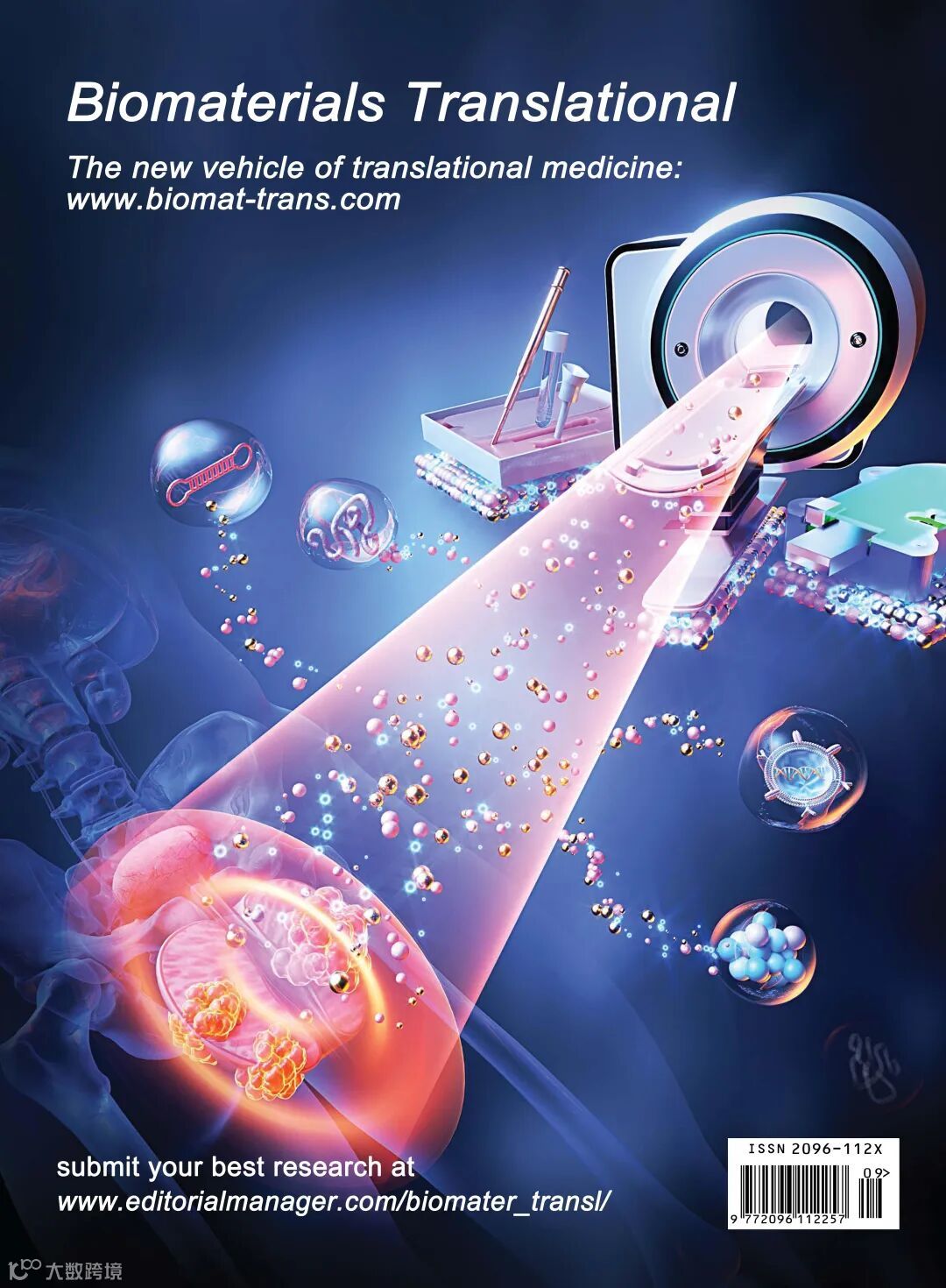
Nanoformulation-assisted early diagnosis of prostate cancer: Advances and perspectives
Zhiyuan Zhou, Mingyu Chang, Jingcheng Lyu, Jianhua Zhao, Zongwei Wang, Fengbo Zhang, Yinong Niu, Boyu Yang

Biomaterials Translational (BMT)由中华人民共和国国家卫生健康委员会主管,中华医学会主办,中华医学电子音像出版社出版,上海大学承办。BMT致力于搭建生物材料-转化医学之间桥梁的国际期刊。该期刊发表原创、高质量的同行评审论文,包括研究性、综述性、观点性和评论性论文。期刊涵盖的研究领域包括但不限于:生物材料科学最新进展、生物材料结构构建及生物学特征、生物材料转化医学方面研究等。期刊目前已被PubMed、Scopus、CAS等收录,SCI收录正在审核中。欢迎各位专家赐稿!
创始兼名誉主编
曹旭 教授
王倩 教授
名誉主编
张英泽 院士
付小兵 院士
王迎军 院士
James T Triffitt 教授
主编
刘昌胜 院士
邵增务 教授
执行主编
苏佳灿 教授
副主编
夏志道 教授
李斌 教授
徐臣杰 教授

期刊网址:
http://www.biomat-trans.com
投稿链接:
https://www.editorialmanager.com/biomater_transl/
邮箱:
bmt_editors@oa.shu.edu.cn
欢迎关注