探索未知、拓展边界
Biomaterials Translational杂志带您一同踏上生物材料与转化医学的前沿之旅!
这份十篇文章专题合集涵盖了生物制造和骨组织工程领域的最新研究进展,分别从不同角度深入探讨了生物制造技术和骨组织工程在医学和生物学中的前沿应用,展现了研究者们在这一领域的探索和拓展!

用于软骨再生的去细胞化细胞外基质基生物墨水的3D生物打印:系统综述
Three-dimensional bio-printing of decellularized extracellular matrix-based bio-inks for cartilage regeneration: a systematic review
Melika Sahranavard*, Soulmaz Sarkari, SeyedehMina Safavi, Farnaz Ghorbani
内容简介:
The review addresses the challenge of healing cartilage injuries, a growing issue with an aging population. It highlights the use of three-dimensional bio-printing in cartilage tissue engineering, which enables the creation of functional scaffolds using bio-inks made from biomaterials and cells. A significant focus is on a novel bio-ink developed from decellularized extracellular matrix, which provides essential biological cues for cell interaction. The paper reviews the characteristics and preparation of these bio-inks and their application in cartilage engineering, particularly emphasizing cell behavior and practical uses. The conclusion touches on current challenges and the future potential of this technology in regenerative medicine.


DOI: 10.12336/biomatertransl.2022.02.004
增材制造聚醚酮植入物的骨科应用:综述
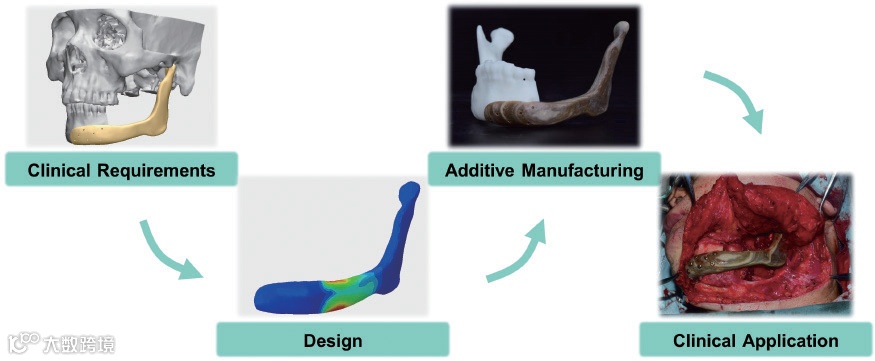
Additive manufactured polyether-ether-ketone implants for orthopaedic applications: a narrative review
Changning Sun, Jianfeng Kang, Chuncheng Yang, Jibao Zheng, Yanwen Su, Enchun Dong, Yingjie Liu, Siqi Yao, Changquan Shi, Huanhao Pang, Jiankang He, Ling Wang*, Chaozong Liu, Jianhua Peng, Liang Liu, Yong Jiang, Dichen Li*
内容简介:
PEEK is recognized as a promising biomaterial for orthopaedic implants, outpacing metals due to its biocompatibility, mechanical strength, and radiolucency. This review highlights the interdisciplinary approach in biomaterials, merging additive manufacturing with advanced technologies to innovate in regenerative medicine. Despite PEEK implants' clinical success, custom additive-manufactured versions lack market approval, with ongoing clinical trials. The article outlines design and manufacturing strategies for PEEK implants, focusing on clinical applications like cranioplasty and limb prostheses.

DOI:10.12336/biomatertransl.2022.02.001
3D打印钛合金假体配合骨小梁实现骨肿瘤切除后的机械-生物重建
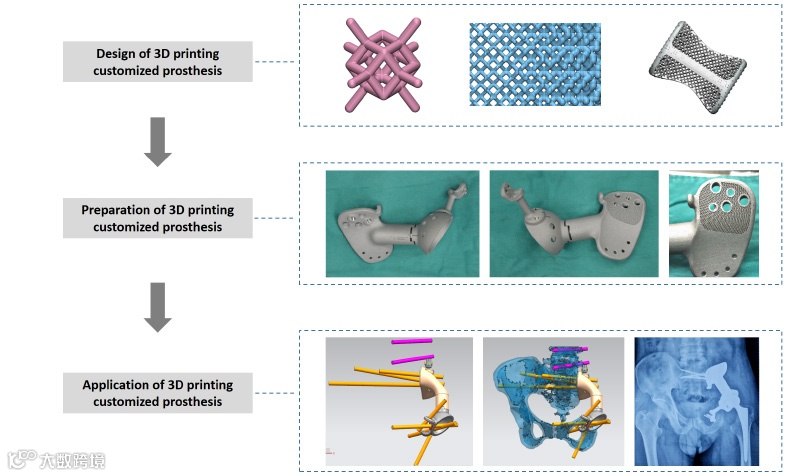
Three-dimensional-printed titanium prostheses with bone trabeculae enable mechanical-biological reconstruction after resection of bone tumours
Feifei Pu, Wei Wu, Doudou Jing, Yihan Yu, Yizhong Peng, Jianxiang Liu, Qiang Wu, Baichuan Wang, Zhicai Zhang*, Zengwu Shao*
内容简介:
This study explores the use of three-dimensional printing technology to create personalized Ti6Al4V prostheses for reconstructing large bone defects after bone tumor resections. By employing individualized reverse-engineering based on patients' medical images, the research successfully overcomes traditional limitations, offering tailored solutions with reduced stress shielding and improved biological activity. The application of these prostheses in 12 patients demonstrated no local tumor recurrence or metastasis, highlighting the technique's effectiveness and promising short-term clinical efficacy in bone defect reconstruction.

DOI: 10.12336/biomatertransl.2022.02.005
增材制造聚醚酮支架修复大段骨缺损的力学研究
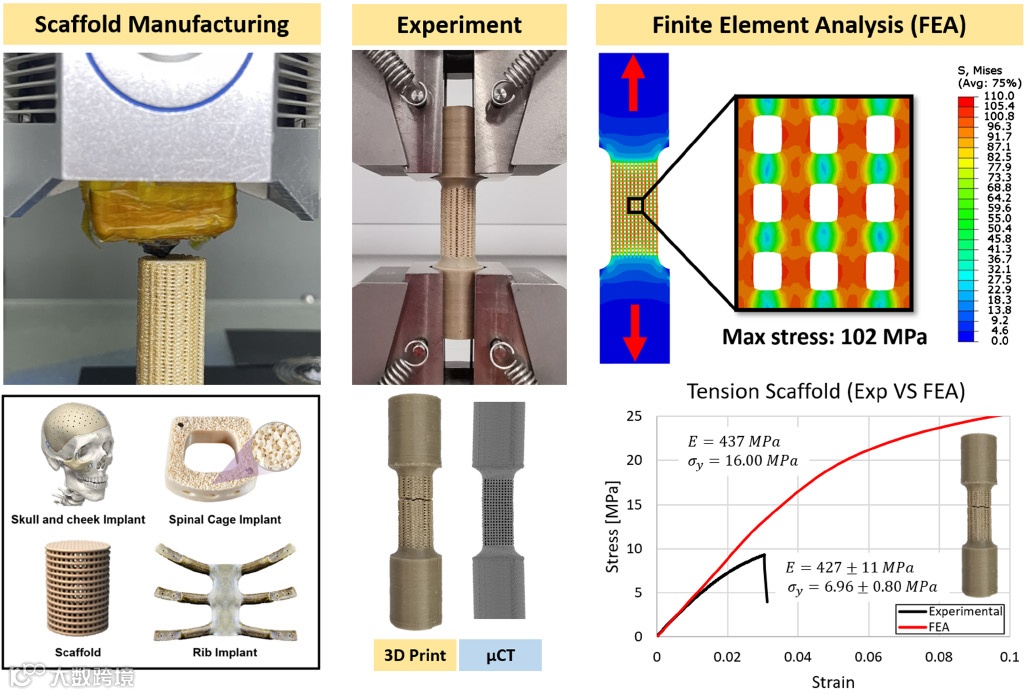
On the mechanical aspect of additive manufactured polyether-ether-ketone scaffold for repair of large bone defects
Seyed Ataollah Naghavi, Changning Sun, Mahbubeh Hejazi, Maryam Tamaddon, Jibao Zheng, Leilei Wang, Chenrui Zhang, Swastina Nath Varma, Dichen Li, Mehran Moazen, Ling Wang*, Chaozong Liu*
内容简介:
This study delves into the mechanical performance of additive manufactured polyether-ether-ketone (PEEK) scaffolds for large bone defect repairs, highlighting their biocompatibility and similarity to natural bone mechanics. Through mechanical testing and finite element analysis, the research confirms the scaffolds' promising mechanical properties and their ductile fracture mode under tensile strain due to additive manufacturing's impact on crystallinity. This work not only illustrates the potential of PEEK scaffolds mimicking cancellous bone for future implant applications but also emphasizes the need to overcome design challenges related to yield strength for their effective use.

DOI:10.12336/biomatertransl.2022.02.006
增材制造骨整合透皮植入物优化软组织生长的体内研究
Optimising soft tissue in-growth in vivo in additive layer manufactured osseointegrated transcutaneous implants
Elena Giusto*, Gordon Blunn, Roberta Ferro de Godoy, Chaozong Liu, Catherine Pendegrass
内容简介:
This study investigates the enhancement of soft tissue integration in osseointegrated transcutaneous implants for amputees through additive layer manufactured (ALM) porous flanges. By comparing the effects of different pore sizes on soft tissue in-growth and attachment against traditional machined controls in an ovine model, it demonstrates that ALM flanges significantly improve soft tissue integration and revascularisation. This research highlights the potential of ALM technology to address common implant failures like epithelial down-growth and infections, presenting a significant advancement in prosthetic attachment techniques to improve amputees' quality of life.
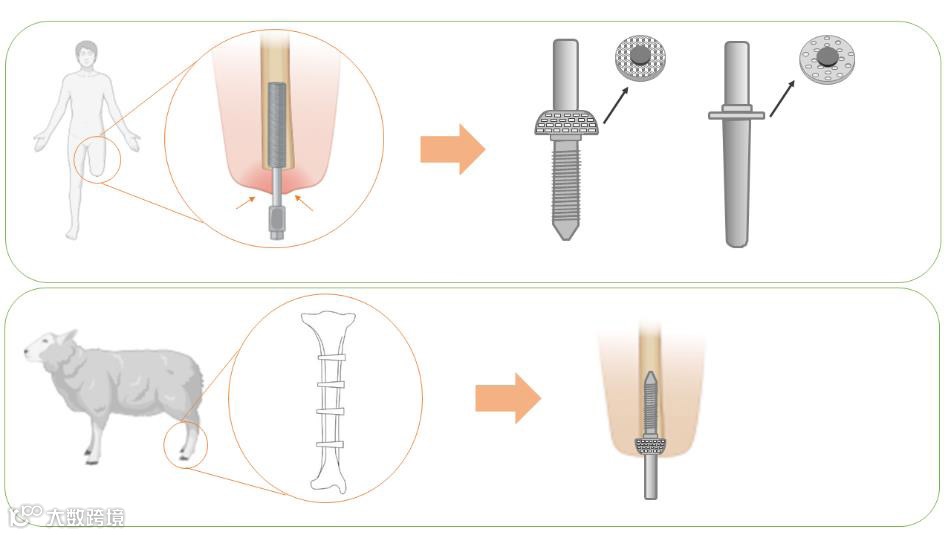

DOI: 10.12336/biomatertransl.2022.04.004
3D打印多孔钽在骨科中的研究进展及临床应用
Research progress and clinical translation of three-dimensional printed porous tantalum in orthopaedics
Jiawei Ying, Haiyu Yu, Liangliang Cheng, Junlei Li, Bin Wu, Liqun Song, Pinqiao Yi, Haiyao Wang, Lingpeng Liu, Dewei Zhao*
内容简介:
With continuous developments in additive manufacturing technology, tantalum (Ta) metal has been manufactured into orthopaedic implants with a variety of forms, properties and uses by three–dimensional printing. Based on extensive research in recent years, the design, processing and performance aspects of this new orthopaedic implant material have been greatly improved. Besides the bionic porous structure and mechanical characteristics that are similar to human bone tissue, porous tantalum is considered to be a viable bone repair material due to its outstanding corrosion resistance, biocompatibility, bone integration and bone conductivity. Numerous in vitro, in vivo, and clinical studies have been carried out in order to analyse the safety and efficacy of these implants in orthopaedic applications. This study reviews the most recent advances in manufacturing, characteristics and clinical application of porous tantalum materials.
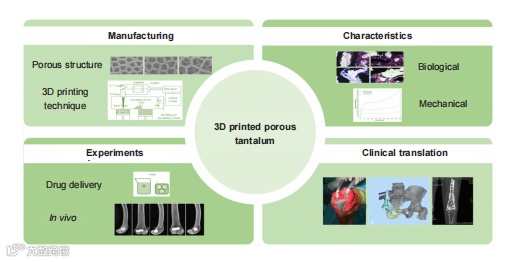

DOI:10.12336/biomatertransl.2023.03.005
先进陶瓷增强复合材料的制备、显微结构和性能研究进展
Fabrication, microstructure and properties of advanced ceramic–reinforced composites for dental implants: a review
Mugilan Thanigachalam#,*, Aezhisai Vallavi Muthusamy Subramanian#
内容简介:
The growing field of dental implant research and development has emerged to rectify the problems associated with human dental health issues. Bio–ceramics are widely used in the medical field, particularly in dental implants, ortho implants, and medical and surgical tools. Various materials have been used in those applications to overcome the limitations and problems associated with their performance and its impact on dental implants. In this article we review and describe the fabrication methods employed for ceramic composites, the microstructure analyses used to identify significant effects on fracture behaviour, and various methods of enhancing mechanical properties. Further, the collective data show that the sintering technique improves the density, hardness, fracture toughness, and flexural strength of alumina– and zirconia–based composites compared with other methods. Future research aspects and suggestions are discussed systematically.
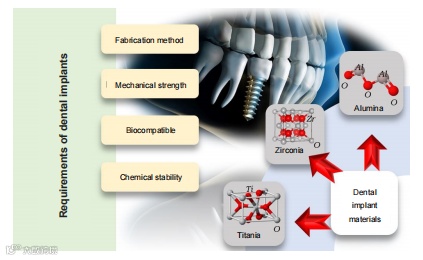

DOI: 10.12336/biomatertransl.2023.03.004
整合去细胞化基质微凝胶的模块化生物墨水用于提升生物打印质量及细胞存活率
Harnessing decellularised extracellular matrix microgels into modular bioinks for extrusion-based bioprinting with good printability and high post-printing cell viability
Hanyu Chu, Kexin Zhang, Zilong Rao, Panpan Song, Zudong Lin, Jing Zhou2, Liqun Yang, Daping Quan*, Ying Bai*
内容简介:
This study introduces a hydrogel-based composite bioink, blending gelatin methacryloyl (GelMA) with decellularised extracellular matrix microgels (DMs), for extrusion-based bioprinting. The bioink maintains the shear-thinning properties and mechanical strength of GelMA while ensuring high post-printing cell viability, thanks to the DMs providing an extracellular matrix-like environment and shear resistance. Optimal DM sizes and printer needle diameters were determined for effective nozzle-based extrusion. A proof-of-concept bioprinting created a modular co-culture system with distinct cell and material distribution, demonstrating the bioink's potential in precision biofabrication for tissue engineering and drug screening applications.
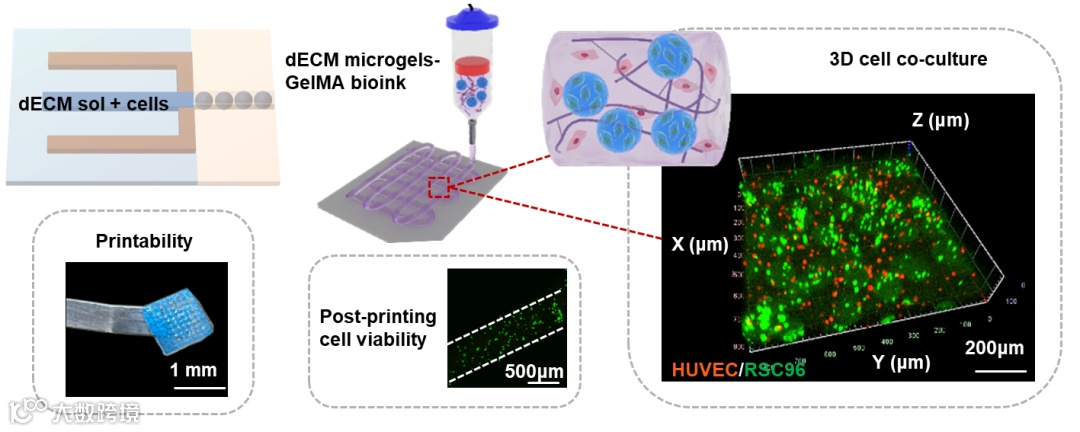

DOI:10.12336/biomatertransl.2023.02.006
述评:微创生物可降解聚(甘油-十二酸酯)髓核支架的功能再生创新设计
Comments on Innovative design of minimal invasive biodegradable poly(glycerol-dodecanoate) nucleus pulposus scaffold with function regeneration
Hao Zhou, Aimin Wu*
内容简介:
This study introduces a minimally invasive, plant vine-inspired poly(glycerol-dodecanoate) (PGD) scaffold for intervertebral disc regeneration. Infused with SDF-1α to attract stem cells, the scaffold adapts to disc morphology, maintaining disc height and fostering nucleus pulposus regeneration. With shape memory and controlled degradation, this novel scaffold offers significant potential for clinical application in treating intervertebral disc degeneration.
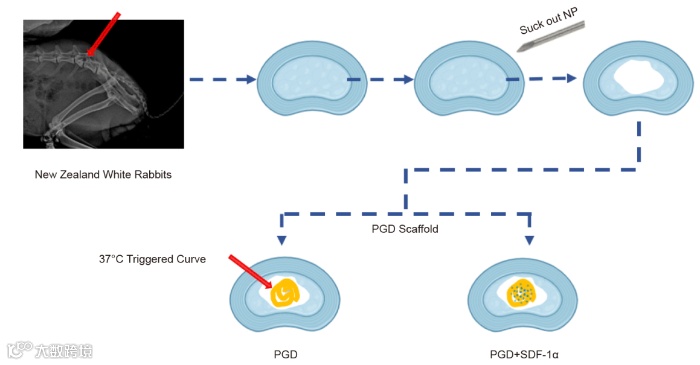

DOI: 10.12336/biomatertransl.2023.04.010
用于骨再生的镁掺杂多孔聚乳酸微球的制备
Fabrication of magnesium-doped porous polylactic acid microsphere for bone regeneration
Ziwei Tao#, Ziyang Yuan#, Dong Zhou#, Lang Qin, Lan Xiao, Shihao Zhang, Changsheng Liu*, Jinzhong Zhao*, Yulin Li*
内容简介:
This study highlights the development of biodegradable poly (L-lactic acid) microspheres (PLLA) for drug delivery, emphasizing controllable surface morphology and enhanced bioactivity. By incorporating magnesium oxide/carbonate, the modified microspheres (PMg) exhibit a porous structure and slow Mg2+ release, improving biocompatibility, anti-inflammatory properties, and osteogenic activity. These advancements position PMg as promising drug carriers with potential for bone regeneration applications.
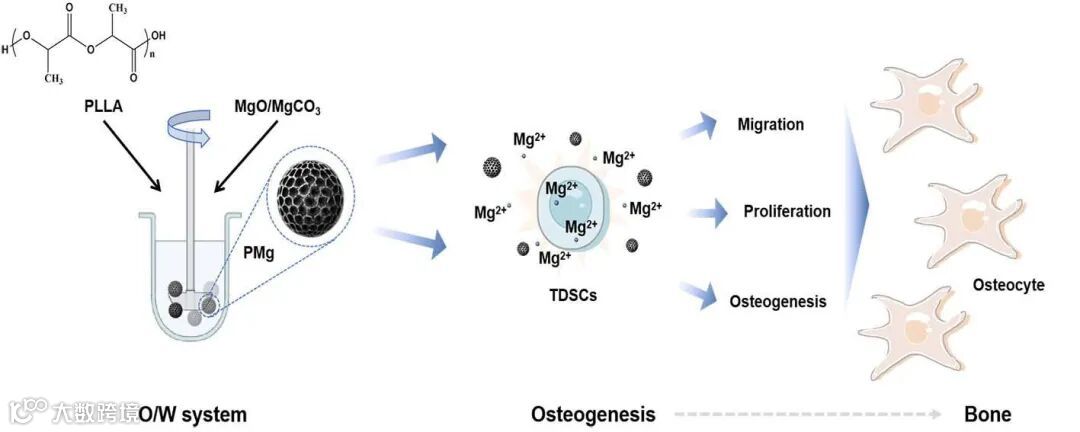

DOI:10.12336/biomatertransl.2023.04.007

关于我们
Biomaterials Translational (BMT)由中华人民共和国国家卫生健康委员会主管,中华医学会主办,中华医学电子音像出版社出版,上海大学承办。BMT致力于搭建生物材料-转化医学之间桥梁的国际期刊。该期刊发表原创、高质量的同行评审论文,包括研究性、综述性、观点性和评论性论文。期刊涵盖的研究领域包括但不限于:生物材料科学最新进展、生物材料结构构建及生物学特征、生物材料转化医学方面研究等。期刊目前已被Pubmed、Scopus等收录,SCI收录正在审核中。欢迎各位专家赐稿!
创始兼名誉主编
曹 旭 教授 王 倩 教授
名誉主编
张英泽 院士 付小兵 院士
王迎军 院士 James T Triffitt 教授
主编
刘昌胜 院士 邵增务 教授
执行主编
苏佳灿 教授
副主编
夏志道 教授 李 斌 教授
期刊网址:
http://www.biomat-trans.com
投稿链接:
https://www.editorialmanager.com/biomater_transl/
欢迎关注