



How much do you know about Qixi Festival or the Chinese Valentine's Day?
Its Chinese name is 七夕节 (Qīxī Jié), or Double Seven Festival, and this week we look at the story behind it and share some insights on why it's been so popular in China.
When Is Qixi Festival
Celebrated?
It's celebrated on the 7th day of the 7th month of the Lunar calendar.
In 2022, it falls on August 4, Thursday.
Origins: Qiqiao Festival
In the beginning, this festival served quite a different purpose: it was the day when girls showcased their needlework skills. They also prayed to Goddess Zhinü for ingenuity, that’s why the original name of this festival was 乞巧节 (Qǐqiǎo Jié), literally, “ingenuity-begging-festival”.
Love Story:
Weaver Girl & Cowherd
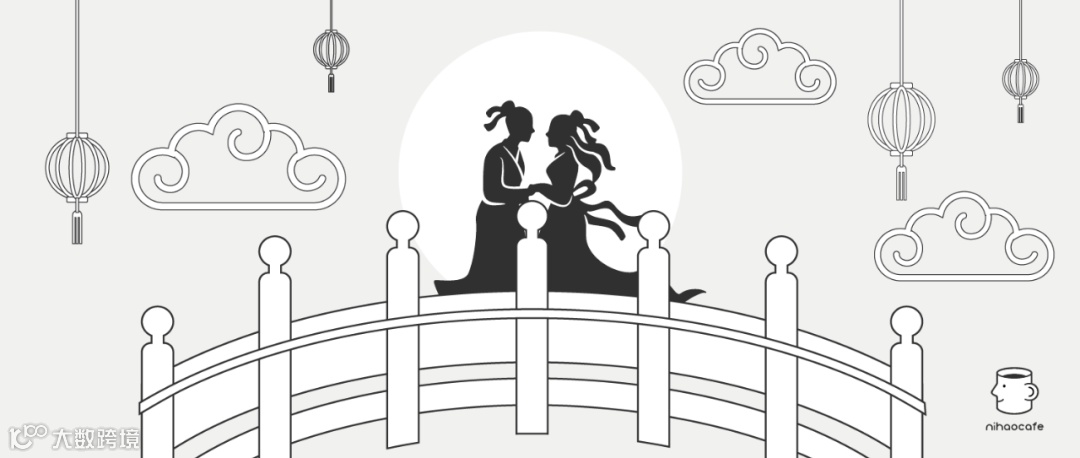
The two protagonists in the story behind Qixi Festival are 织女 (Zhīnǚ), the Weaver Girl, and 牛郎 (Niúláng), the Cowherd.
Separated in the night sky by the Milky Way, the two lovers are allowed to meet only once a year across a bridge of magpies on the evening of the Qixi Festival.
Chinese American Family
Once upon a time, there was a fairy called 织女 (Zhīnǚ), or literally, "weaving-girl". She came from the family of the powerful Jade Emperor in Heaven.
One day, she went down to Earth with her friends. There she met a boy called 牛郎 (Niúláng), literally "cowherd-boy". They instantly fell in love with each other. Zhīnǚ decided to stay on Earth and got married to Niúláng without her family's permission. They lived together for several years and gave birth to two kids.
Unfortunately, her family found out about it and got very angry, because it was unacceptable for a fairy to get married to a human. So, the Jade Emperor took her from their house and brought her back to Heaven.
To stop Zhīnǚ from going out again, he created the Milky Way (银河 Yínhé) to separate the lovers. The lovers could no longer see each other. Zhīnǚ would spend all day crying on the other side of the Milky Way.
The sound of her crying was felt by the whole world. On the 7th day of the 7th month, thousands of magpies gathered together and used their bodies to build a bridge to the Milky Way. Then Niúláng and Zhīnǚ could meet on the bridge! From then on, this day became the only time of the year when they could be with each other again.
Qixi Festival:
Star Facts
Did you know that this story originated, literally, in the sky?
Ancient people observed the stars and noticed that two very bright stars (Altair & Vega, part of the famous Summer Triangle), are on two opposite sides of the Milky Way. On the 7th day of the 7th lunar month, these stars get very close to each other, so people worshipped their ‘reunion’.
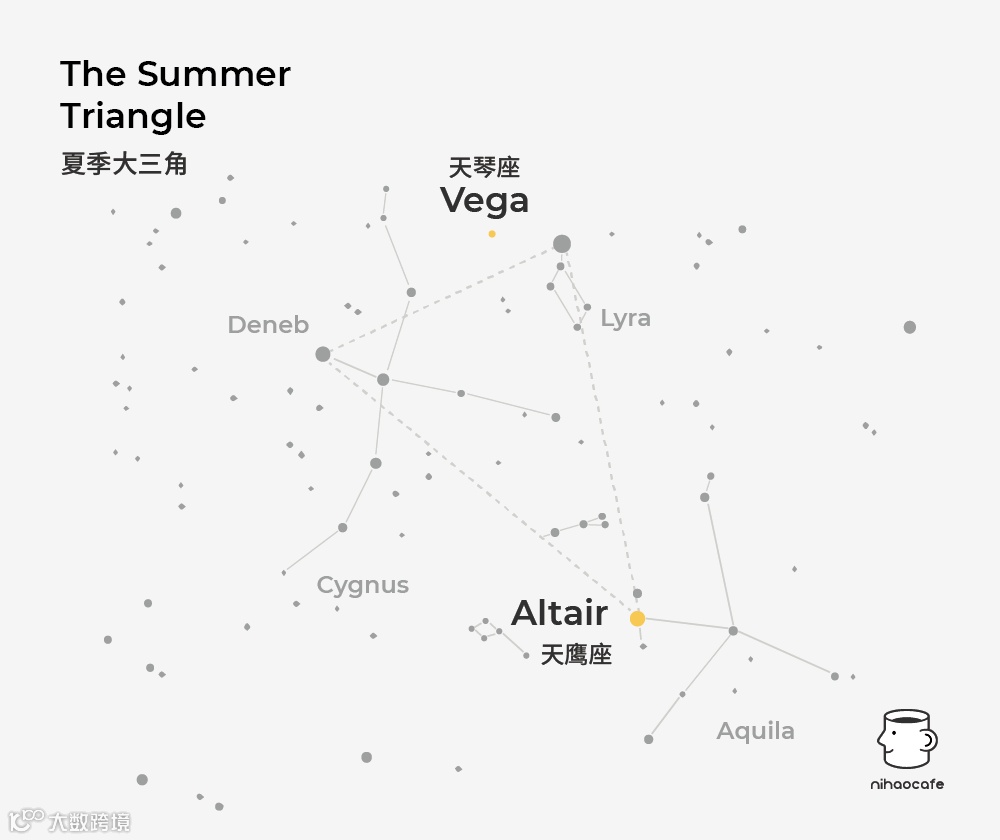
Niúláng’s star: Altair | 天鹰座 (Tiānyīngzuò)
It’s sometimes called 牵牛星 (Qiānniú Xīng), or “Cowherd Star”;

Zhīnǚ’s star: Vega | 天琴座 (Tiānqínzuò)
It’s sometimes called 织女星 (Zhīnǚ Xīng), or “Weaver Girl Star”.

Celebrating Qixi
Festival Today
In the modern day and age, couples in China celebrate Qixi Festival just like they would celebrate Valentine’s Day — by giving gifts, flowers & chocolate, and going on romantic dates. And, of course, by sending their Qixi wishes!
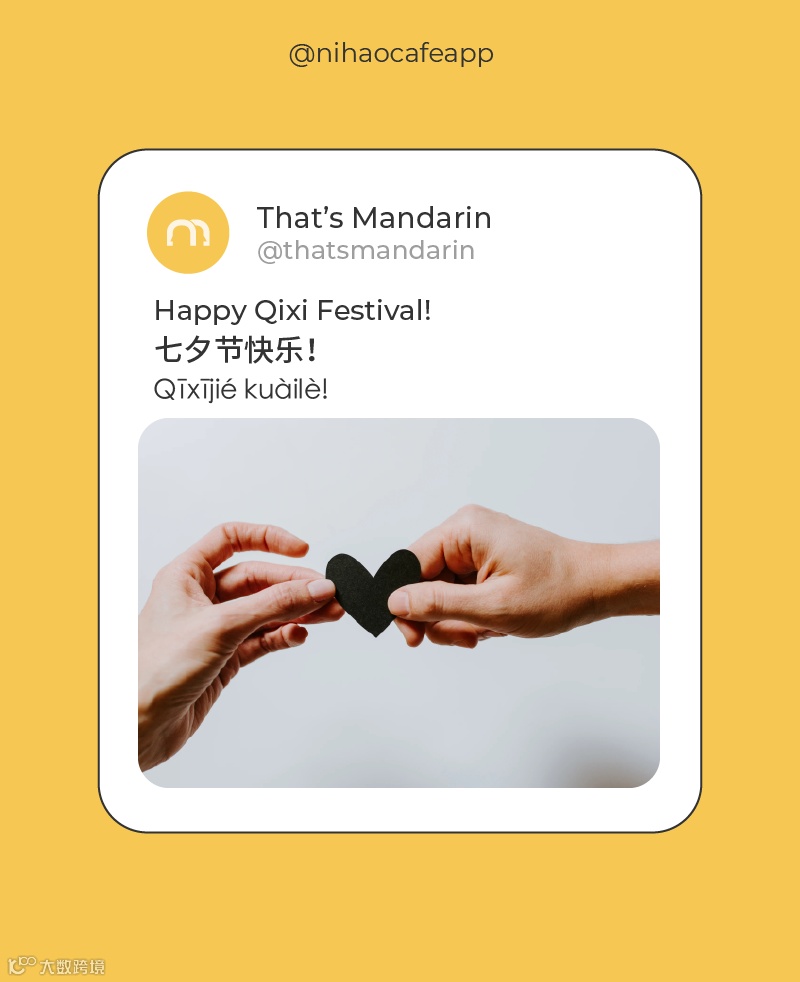
七夕节快乐!
Qīxī Jié kuài lè!
Happy Qixi Festival!
💬 NihaoCafe
Teachers Say
What would our teachers say if you had a Chinese class with NihaoCafe about Qixi Festival? They have a lot to add!
How come the ancient Chinese named the stars after Niulang and Zhinü?

古人发现天上有两颗非常亮的星星
被银河分开。
一个像两只角三只足的牛,
一个像织布的女孩儿。
Yī gè xiàng liǎng zhī jiǎo sān zhī zú
de niú, yī gè xiàng zhī bù de nǚháir.
One was like a cow with two horns
and three feet, and the other resembled
a weaver girl.
联系当时的中国社会情况是男耕女织
(男的种田,女的织布),就把他们
命名为牵牛星和织女星。
Liánxì dāngshí de Zhōngguó shèhuì
qíngkuàng shì nán gēng nǚ zhī
(nán de zhòngtián, nǚ de zhī bù),
jiù bǎ tāmen mìngmíng wèi Qiānniú Xīng
hé Zhīnǚ Xīng.
In China's society at that time, “men
ploughed and women weaved” (men
did farm work and women did the
weaving), so they named them
Cowherd Star & Weaver Girl Star
后来就有了牛郎和织女的故事。
Hòulái jiù yǒu le Niúláng hé Zhīnǚ de gùshi.
And then the story of
Cowherd & Weaver Girl came to life.
Check out the full post with their comments
on the NihaoCafe blog:


That's Mandarin
Have
questions?
Ask us!