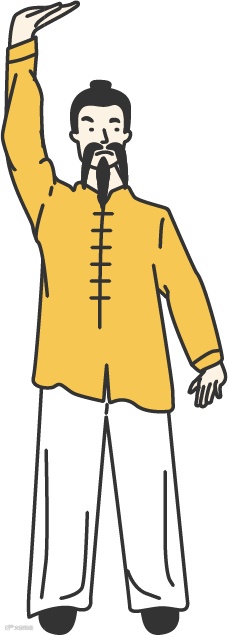
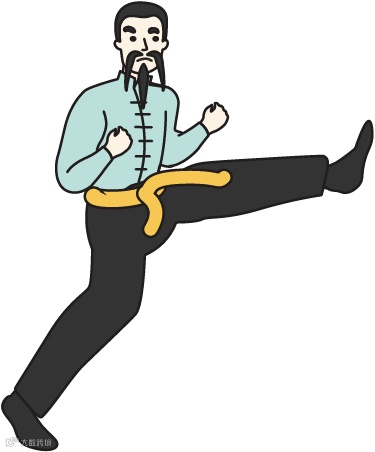
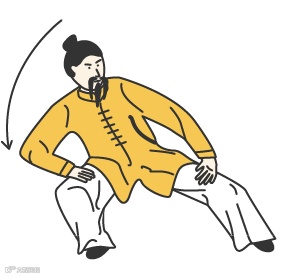
You've probably heard how Chinese culture is packed with ancient and modern methods for staying fit.
Baduanjin (八段锦 Bāduànjǐn), also known as Eight Pieces of Brocade, doesn't demand much space or time and uses special breathing and concentration techniques to improve both physical and mental well-being.
Today, let's take a closer look at these Chinese exercises that have been helping people stay healthy for centuries.
About the 八段锦,
8 Pieces of Brocade
Baduanjin, or Eight Pieces of Brocade, is one of the most ancient forms of Chinese qigong (a system of deep-breathing exercises). It is renowned for its health benefits, combining gentle movements with breath control.
Eight Pieces of Brocade
八 (bā) ∙ eight
段 (duàn) ∙ segment, part, piece
锦 (jǐn) ∙ brocade
This qigong style centers on breathing — by taking slow, deep breaths, it helps muscles relax and calms the mind as well.
八段锦 (Bāduànjǐn), which originated in the Bei Song Dynasty and has a history of more than 800 years, was initially developed as a way to enhance the physical health of soldiers. Over time, it evolved into a comprehensive system of exercises practiced by both martial artists and common people.
In ancient times, 锦 (jǐn) was a kind of high-graded silk. The ancients compared a set of movements to "jin", which means colorful, beautiful, and luxurious brocade.
Regular practice of Baduanjin is believed to bring numerous health benefits, such as:
The great advantage of Baduanjin lies in its accessibility. People of all ages and fitness levels can practice it without any special equipment or prior experience. Whether performed in the park or the comfort of one's home, Baduanjin provides gentle yet effective care for both body and mind.
There are a total of eight movements in Baduanjin, each with its specific focus. The Eight Pieces of Brocade has been handed down through the centuries as eight short, simple sentences.
Let's go through them one by one:
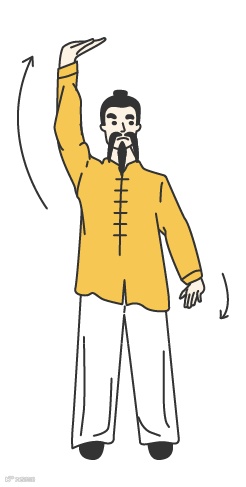
01. 第一式 (Dì yī shì) - 1st posture
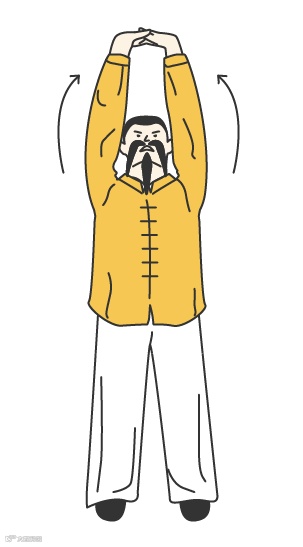
The first movement benefits the shoulders, arms, and upper back, enhancing flexibility and circulation in these areas. It also opens up the chest, improving lung capacity and promoting deeper breathing.
Liǎng shǒu tuō tiān lǐ sānjiāo
Holding Up the Sky with Both Hands
to Regulate the Sanjiao (Triple Burner)
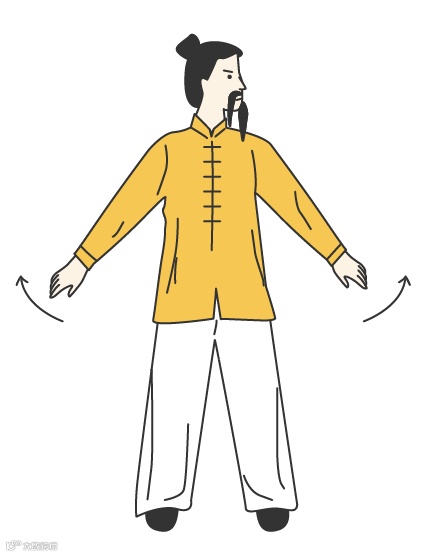
02. 第二式 (Dì èr shì) - 2nd posture
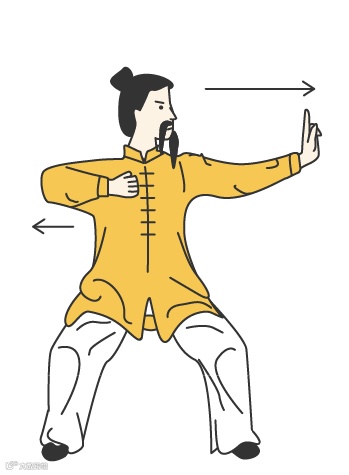
This movement stretches the spine and improves flexibility in the waist and lower back. It can alleviate stiffness in the lumbar region and promote better posture.
Zuǒyòu kāigōng shì shè diāo
Drawing the Bow to Shoot the Hawk
03. 第三式 (Dì sān shì) - 3rd posture
This posture stretches the sides of the torso, promotes spinal flexibility, and improves circulation to the internal organs, aiding digestion and detoxification.
Lifting the Arms to Regulate
04. 第四式 (Dì sì shì) - 4th posture
Turning the head to look over the shoulder, this movement enhances neck flexibility and relieves tension in the cervical spine.
Wǔ láo qī shāng xiàng hòu qiáo
Looking Backwards to Relieve
the Five Fatigues and Seven Injuries
05. 第五式 (Dì wǔ shì) - 5th posture
This movement involves gently swaying the torso from side to side while bending forward slightly, resembling the movement of a shaking tail. It stretches the spine, releases tension in the lower back, and massages the internal organs.
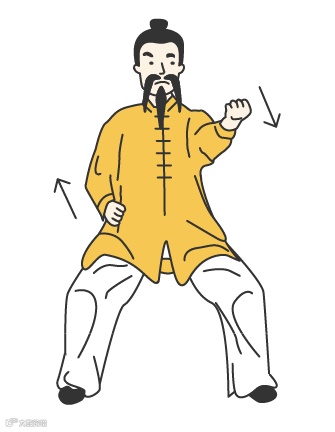
Punching with a Fierce Gaze
06. 第六式 (Dì liù shì) - 6th posture
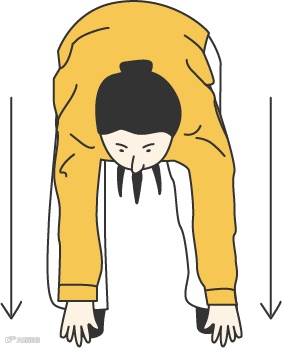
Bending forward to touch the toes, this movement stretches the hamstrings, calves, and lower back, improving flexibility and relieving tension in the lumbar region. It also stimulates the kidneys and promotes vitality.
Liǎng shǒu pān zú gù shèn yāo
Holding the Feet with Two hands
to Strengthen the Kidney and Lumbar Area
07. 第七式 (Dì qī shì) - 7th posture
In this movement, the fists are pulled towards the chest, accompanied by a fierce glare. It strengthens the arms, wrists, and fingers, promoting circulation in the upper body and releasing tension in the shoulders and arms.
Clearing the Heart Fire by Shaking
the Head and Wagging the Tail
08. 第八式 (Dì bā shì) - 8th posture
This final movement involves bouncing gently on the toes while shaking the body, promoting circulation and releasing tension throughout the body. It invigorates the legs and feet, strengthens the lower body, and boosts overall energy levels.
Bèihòu qī diān zhū bìng xiāo
Come and practice the mind-body exercise of Baduanjin (八段锦 Bāduànjǐn) together with our teacher on Saturday, May 18.
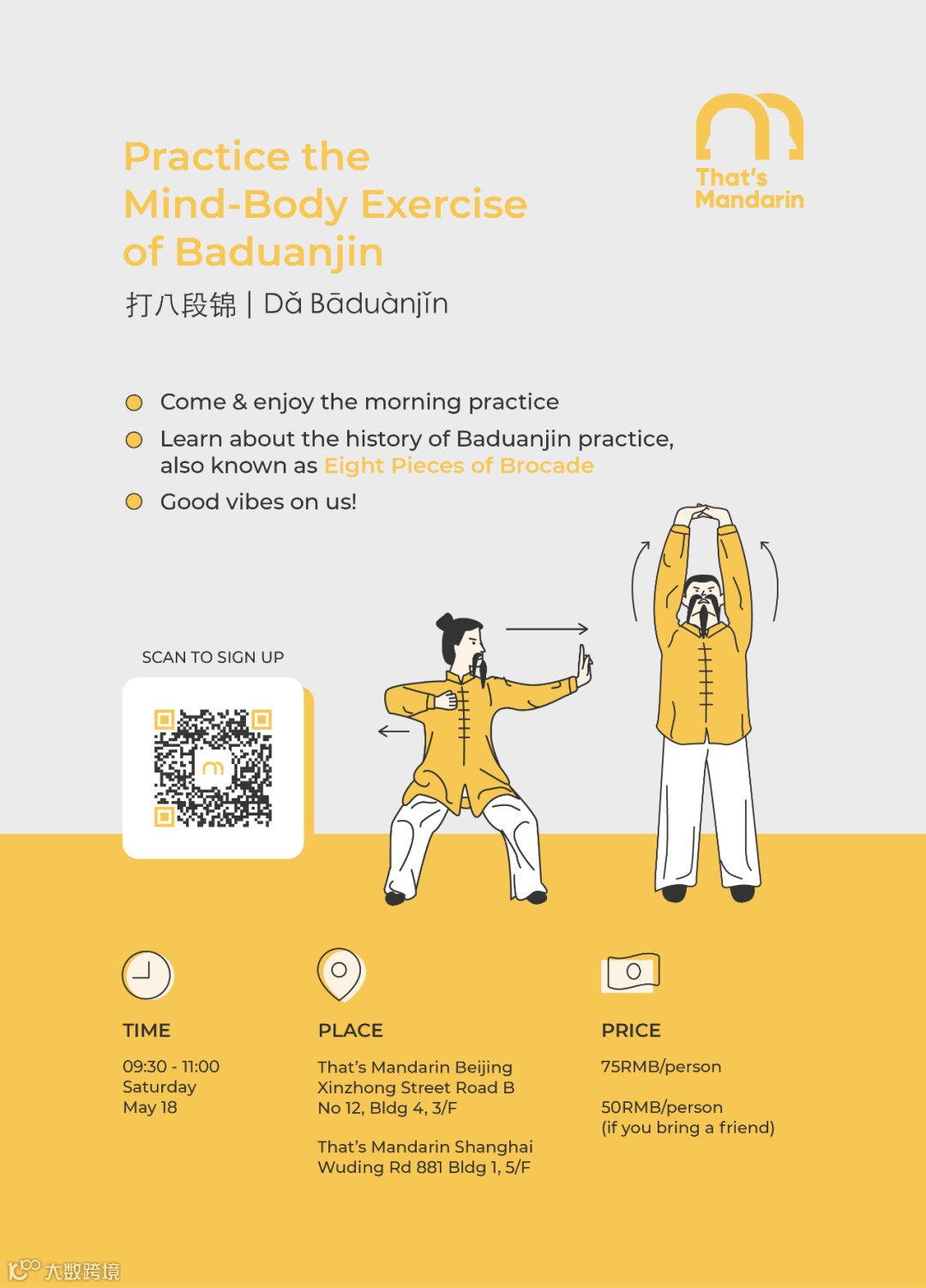
To join the event, long-press the QR code and sign up via our website.

To discuss the practice of Baduanjin
book a free trial class with That's Mandarin 👇
Have questions?
Ask us on WeChat!
@thatsmandarin006