▲ 更多精品,关注“搜建筑”
詹姆斯库克大学(JCU)工程与创新场所(EIP)项目设想了一个工程和相关学科的变革空间。该建筑是协作、创新和学习的中心,将工程与创新场所、创意市场和大学购物中心整合成一个有凝聚力的多功能空间。这种整合促进了连接和互动,为校园创造了一个充满活力的聚集点。
The James Cook University (JCU) Engineering and Innovation Place (EIP) project envisions a transformative space for engineering and allied disciplines. The building is a hub for collaboration, innovation, and learning, integrating the Engineering & Innovation Place, Ideas Market, and University Mall into a cohesive, multifunctional space. This integration fosters connectivity and interaction, creating a vibrant gathering point for the campus.
EIP项目战略性地定位于JCU校园的一个重要门户,它位于斯图尔特山和磁岛轴线的十字路口。北部和西部边缘激活了斯图尔特山高街和大学购物中心,形成了一个充满活力的十字路口枢纽。
Strategically positioned at a significant gateway on the JCU campus, the EIP project capitalizes on its location at the crossroads of the Mount Stuart and Magnetic Island axes. The northern and western edges activate the Mount Stuart Axis high street and University Mall, forming a dynamic crossroad hub.

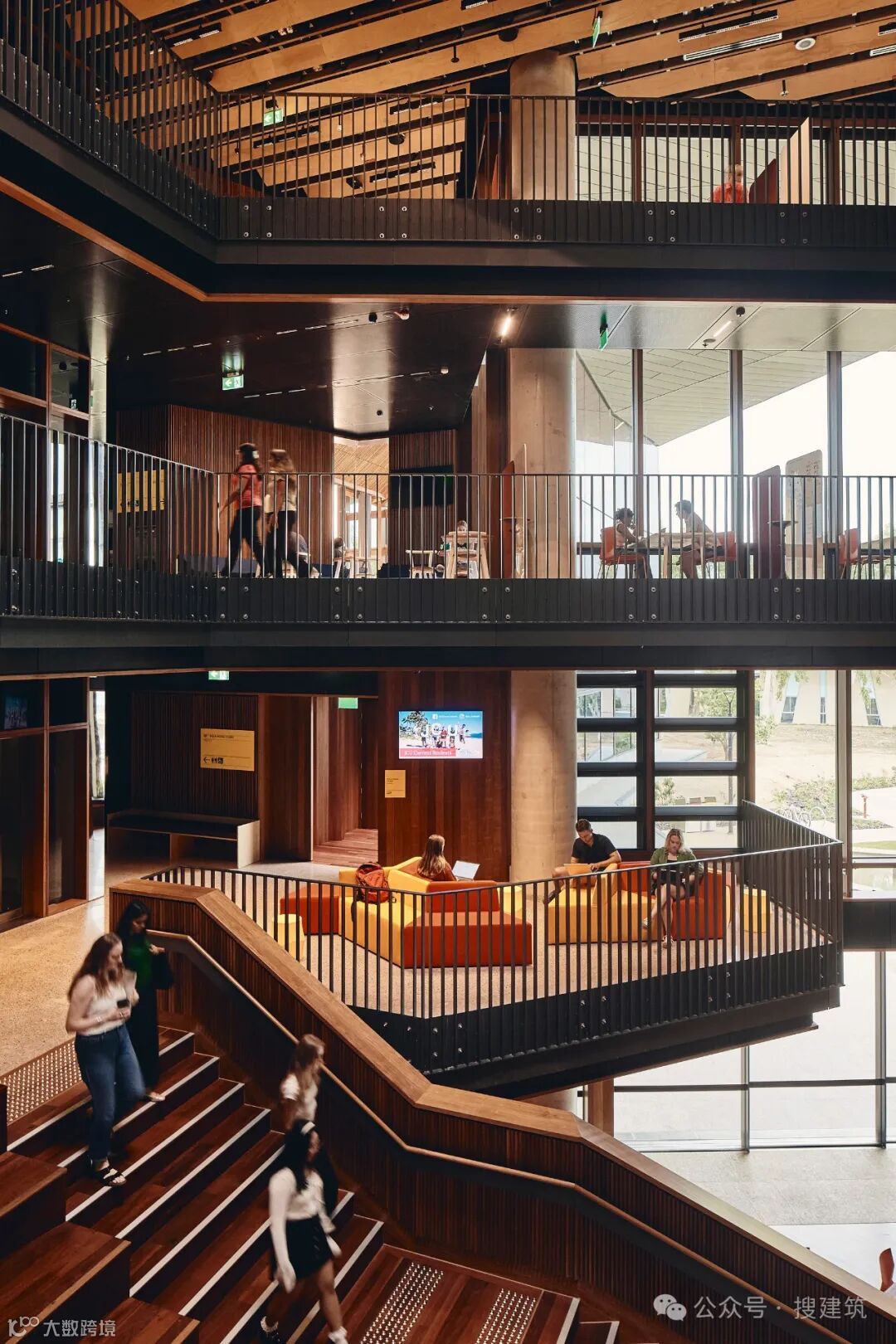
EIP的一个核心特点是它的下一代教学创新。它用10000平方米灵活的多模式空间取代了20000平方米的传统学习空间,为学生、学者和行业之间的动态互动而设计。这种布局促进了社会学习、交叉授粉和协作。
A core feature of the EIP is its next-generation pedagogical innovation. It replaces 20,000m² of conventional learning spaces with 10,000m² of flexible, multi-modal spaces designed for dynamic interaction among students, academics, and industry. This layout promotes social learning, cross-pollination, and collaboration.
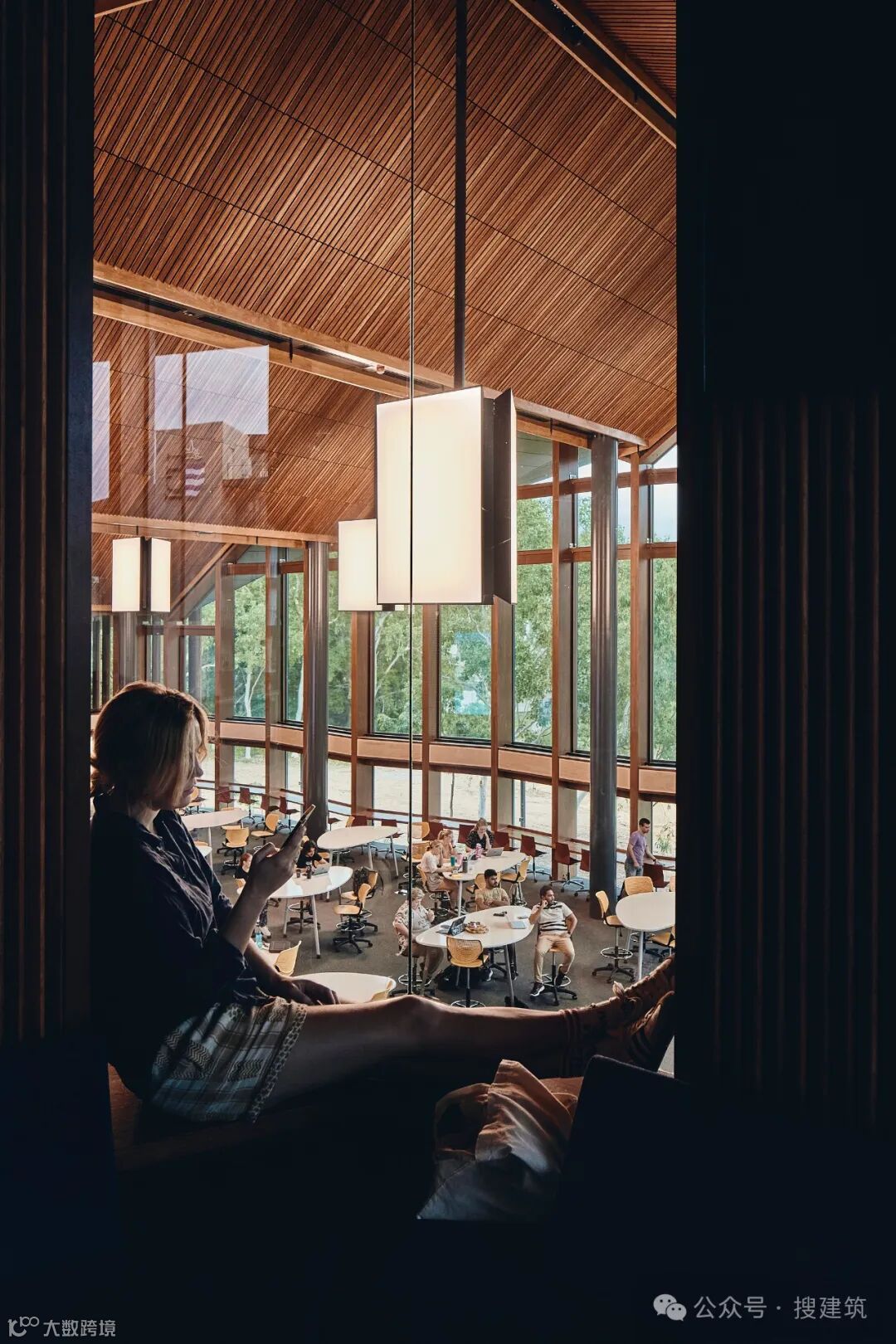
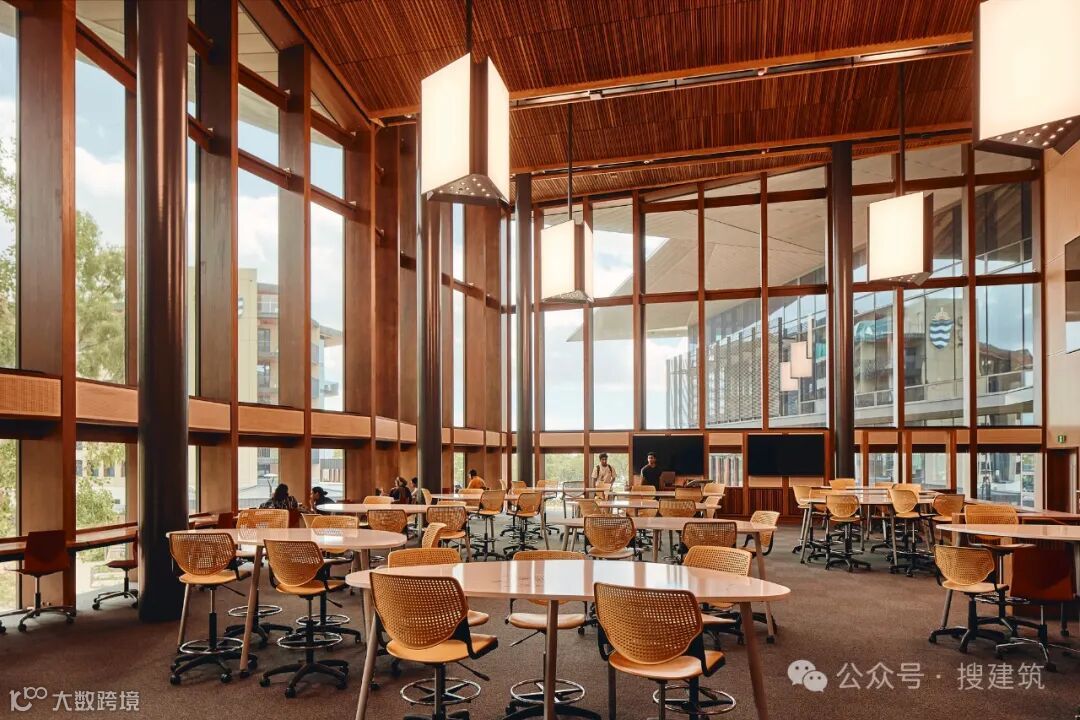
多模式工作室(MMS)体现了协作和灵活性。这是一个与非正式学习和当代教学法相结合的探索空间。这个空间增强了典型的教室形式的小组桌,并以分层的水平变化为特色,创造了一个功能齐全的工作室空间。可容纳180名学生,多个小组可以在不同的学习模式下占据空间-教学,合作和非正式。
The Multi-Modal Studio (MMS) epitomizes collaboration and flexibility. It is an exploratory space aligned to informal learning and contemporary pedagogy. This space enhances the typical classroom format of group tables and features a tiered level change to create a fully functioning studio space. Seating 180 students, multiple groups can occupy the space under differing learning modes – didactic, collaborative, and informal.
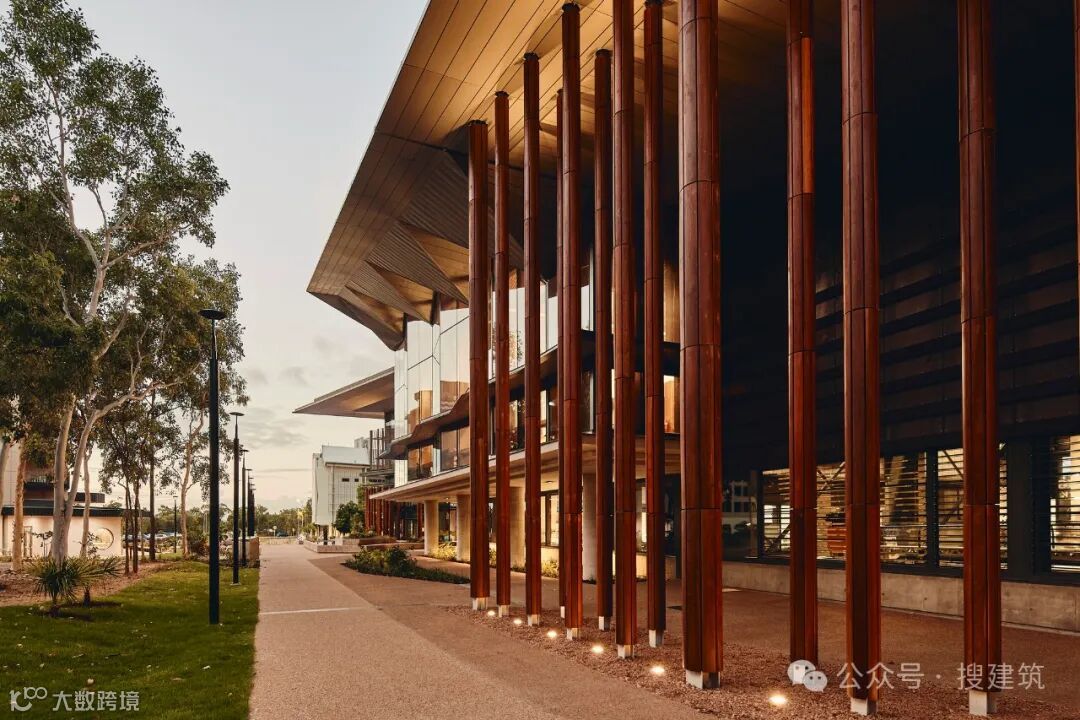
该建筑响应了独特的干燥热带气候,为可持续建筑设计树立了新的标杆。它的形式利用折叠板的戏剧性遮阳伞屋顶,提供透明和可渗透的立面,允许空气在混合模式条件下流动。对被动冷却的关注,结合低能耗的主动系统,证明了热带地区大规模可持续设计的可行性,减少了对主动系统的依赖。
The building responds to the unique dry tropical climate, setting a new benchmark for sustainable architectural design. Its form leverages a dramatic parasol roof of folded plates to provide a transparent & permeable façade to allow air movement in mixed mode conditions. The focus on passive cooling, combined with low-energy active systems, demonstrates the feasibility of large-scale sustainable design in the tropics that reduces reliance on active systems.

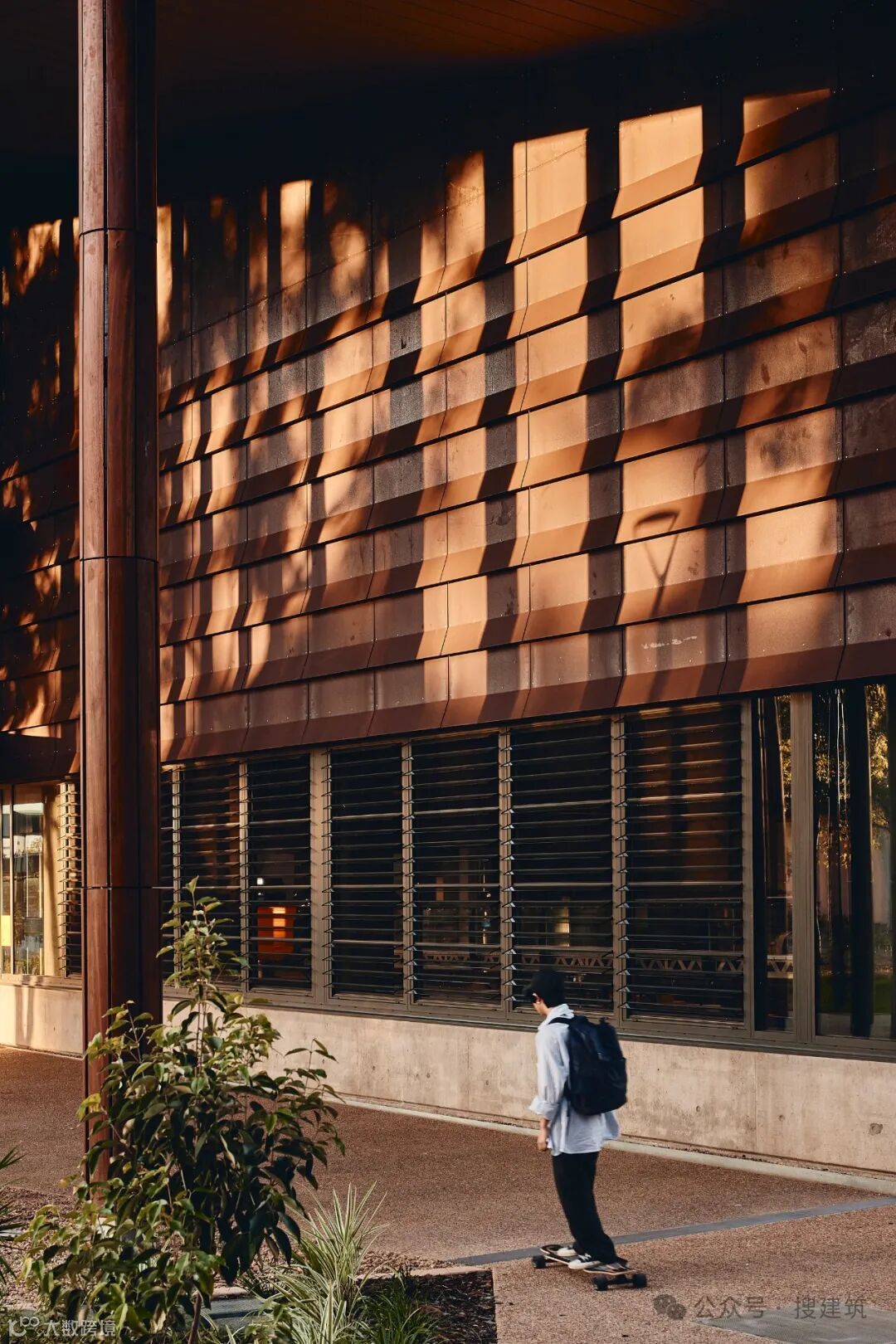
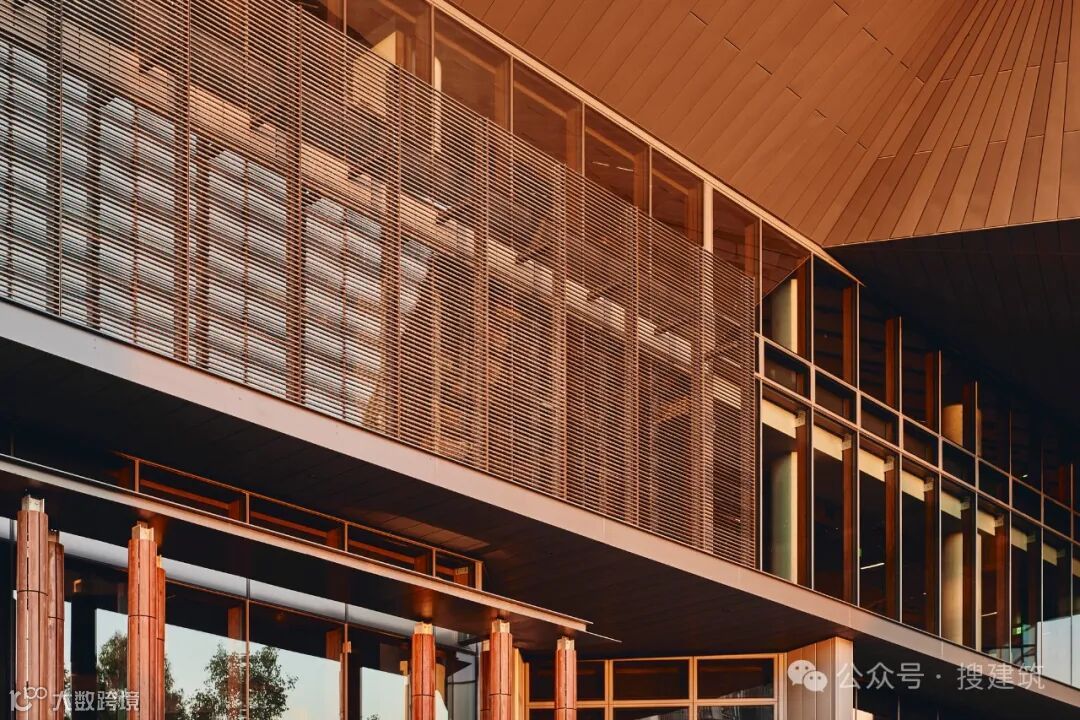
建筑立面采用了创新的混合胶合木(GLT)系统,带有抗碎片冲击的玻璃,既提供了热性能,又提供了抗旋风冲击碎片的能力,而不需要传统的防护屏障。这反过来又支持了充足的采光和透明度——这对热带环境来说是一个挑战,但对教育设施来说却是必要的。结构实验室包裹在定制的耐候钢百叶中,为通高空间提供永久通风。这种材料提供了一种独特的、识别性的表达,让人想起当地景观的丰富色调,并庆祝JCU与工业的联系。耐候钢的设计是随着时间的推移而氧化,它提供了一个耐用、坚固、有弹性的外壳,既具有渗透性,又具有保护性,确保了持续的弹性。
The building facade features an innovative hybrid timber glulam (GLT) system with debris impact-resistant glass that provides both thermal performance and cyclone impact debris resistance without the need for conventional protective screening. This in turn supports abundant daylighting and transparency — a challenge for tropical settings, yet an imperative for educational facilities. The Structures Lab is wrapped in bespoke weathering steel louvers, allowing permanent ventilation to the double-height space. This material provides a unique and identifying expression that recalls the rich tones of the local landscape and celebrates JCU's connection with industry. Designed to oxidize over time, weathering steel provides a durable, robust, and resilient envelope that is both permeable and protective, ensuring ongoing resilience.

该项目通过综合设计策略,利用自然环境因素,优先考虑可持续性。该建筑通过分离结构来改善空气流通,创造舒适的步行连接,从而增强了校园的小气候。这些元素与JCU对互联和创新校园的愿景相一致,同时展示了对可持续发展的承诺。
The project prioritizes sustainability through integrated design strategies that capitalize on natural environmental factors. The building enhances the campus microclimate by separating structures to improve air circulation and creating comfortable, walkable connections. These elements align with JCU's vision for a connected and innovative campus while showcasing a commitment to sustainable development.

JCU EIP项目是重新定义校园设计和功能的催化剂。它体现了热带建筑的创新、教育的进步和可持续性,将JCU定位为热带建筑设计和教学的领导者。通过其综合的、前瞻性的方法,EIP成为未来大学设施的典范。
The JCU EIP project is a catalyst for redefining campus design and functionality. It embodies tropical architectural innovation, educational advancement, and sustainability, positioning JCU as a leader in tropical building design and pedagogy. Through its integrated, forward-thinking approach, the EIP serves as a model for the future of university facilities.



平面图
 平面图
平面图
 平面图
平面图
 平面图
平面图
 平面图
平面图
 平面图
平面图
 平面图
平面图
 剖面图
剖面图
 剖面图
剖面图
项目信息
建筑师:Charles Wright Architects,KIRK, i4 Architecture
地点:澳大利亚
面积:10933 m²
年份:2024
本资料声明:
1.本文为建筑设计技术分析,仅供欣赏学习。
2.本资料为要约邀请,不视为要约,所有政府、政策信息均来源于官方披露信息,具体以实物、政府主管部门批准文件及买卖双方签订的商品房买卖合同约定为准。如有变化恕不另行通知。
3.因编辑需要,文字和图片无必然联系,仅供读者参考;

微信公众号“搜建筑”(ID:sjz9999)
合作、宣传、投稿
联系微信:soujianzhu006